
 English
  Spanish
  Portuguese
  German
  Italian
  Japanese
  French
  Polish
  Russian
  Netherlands
  Hungarian
  Turkish
  Videos
  Thedink Pickleball

Pickleball shot selection doesn't have to be complicated. One rule covers most situations: slide forehand when the ball is low, sit backhand when the ball is high.
Bad pickleball shot selection is one of the fastest ways to lose points you should be winning.
Most players don't have a system. They react to whatever comes at them and hope the shot they pick is the right one.
That guessing game costs you rallies, tournaments, and rating points.There is a cleaner way to think about it.
One simple rule covers the majority of situations you'll face at the kitchen line, and once you commit it to memory, your decision-making becomes automatic.
This article breaks down exactly what that rule is, why it works, and how to build it into your game.
Love pickleball? Then you'll love our free newsletter. We send the latest news, tips, and highlights for free each week.
The Pickleball Shot Selection Rule Is Simple: Low Slides Forehand, High Sits Backhand
This tip comes from Richard Pickleball on YouTube, and it is one of those reminders that sounds almost too simple until you realize how often players do the exact opposite.
The rule: when the ball is low, slide your forehand to it. When the ball is high, sit into your backhand.That's it. Two scenarios, two answers. No overthinking required once you train your body to respond this way automatically.
Why Does Ball Height Change Which Shot You Should Hit?
Ball height tells you everything about what kind of shot is physically available to you.
Good pickleball shot selection starts there, every time.When a ball drops low, especially below the tape, you are in a defensive position by definition.
You need to lift the ball back over the net without gifting your opponent an easy attack.
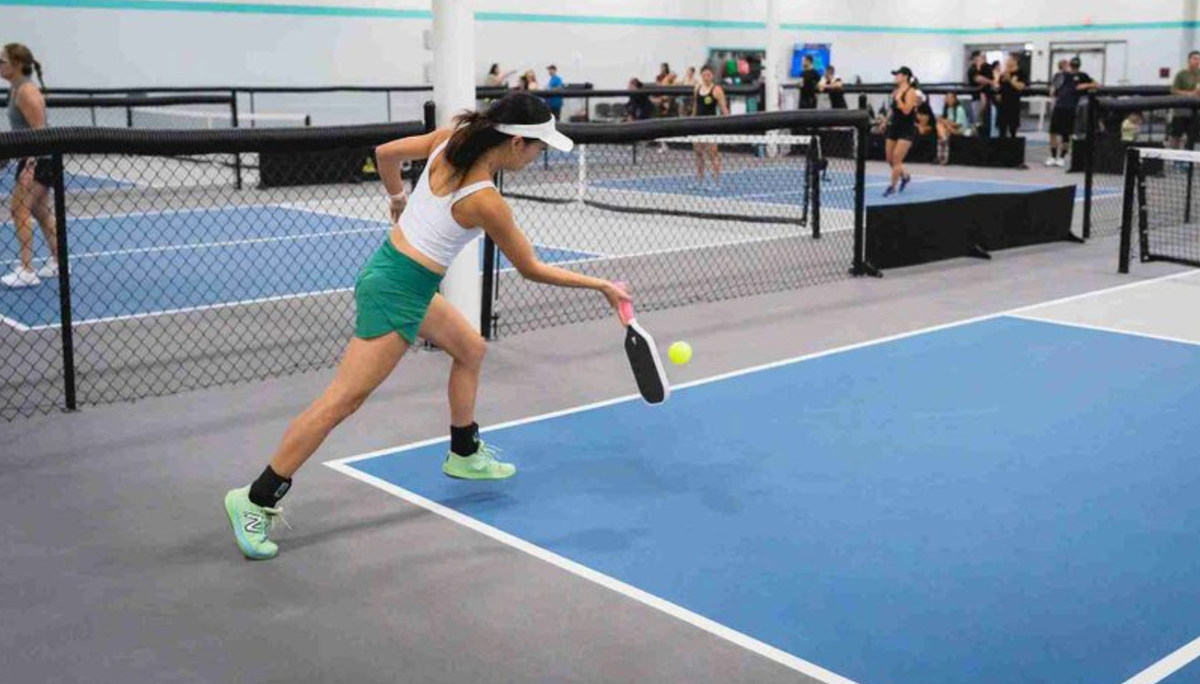
The forehand slide gives you a wider range of motion, more natural wrist extension, and a better paddle angle to handle that low contact point without popping the ball up.A low backhand, by contrast, often forces players into an awkward, cramped swing.
You end up either jabbing at the ball or rolling your wrist too early, and both of those mistakes tend to produce exactly the kind of floaty ball your opponent wants to attack.
When a ball sits up high, the geometry flips. A high backhand lets you get your elbow in front of your body and drive through the ball with control.
Your backhand volley on a high ball is a compact, powerful shot.
It keeps opponents pinned and doesn't require the same reach that a forehand would at that height.
Understanding how to handle shots at your feet is part of the same skill set.
Ball height, including whether it catches you at your feet or lifts to your shoulder, changes your pickleball shot selection every single time.
💡
Need some new pickleball gear? Get 20% off select paddles, shoes, and more with code THEDINK at
Midwest Racquet SportsWhat Does "Slide Forehand" Actually Mean?
Sliding your forehand means physically moving your body laterally to get behind a low ball with your forehand side, rather than reaching across your body with your backhand.
It is not a passive move. You are actively stepping or sliding toward the ball so that you can set up the forehand contact point cleanly.
This takes footwork, which is why a lot of players skip it. They reach with the backhand instead because it feels easier in the moment.But easier in the moment means harder in the rally. The backhand reach on a low ball almost always produces a weaker shot with less margin over the net.
That is pickleball shot selection working against you.If you want to build the habit of moving to the ball instead of reaching for it, proper knee bend is the foundation.
Getting low with your legs instead of your back puts you in position to slide efficiently without straining or losing balance.
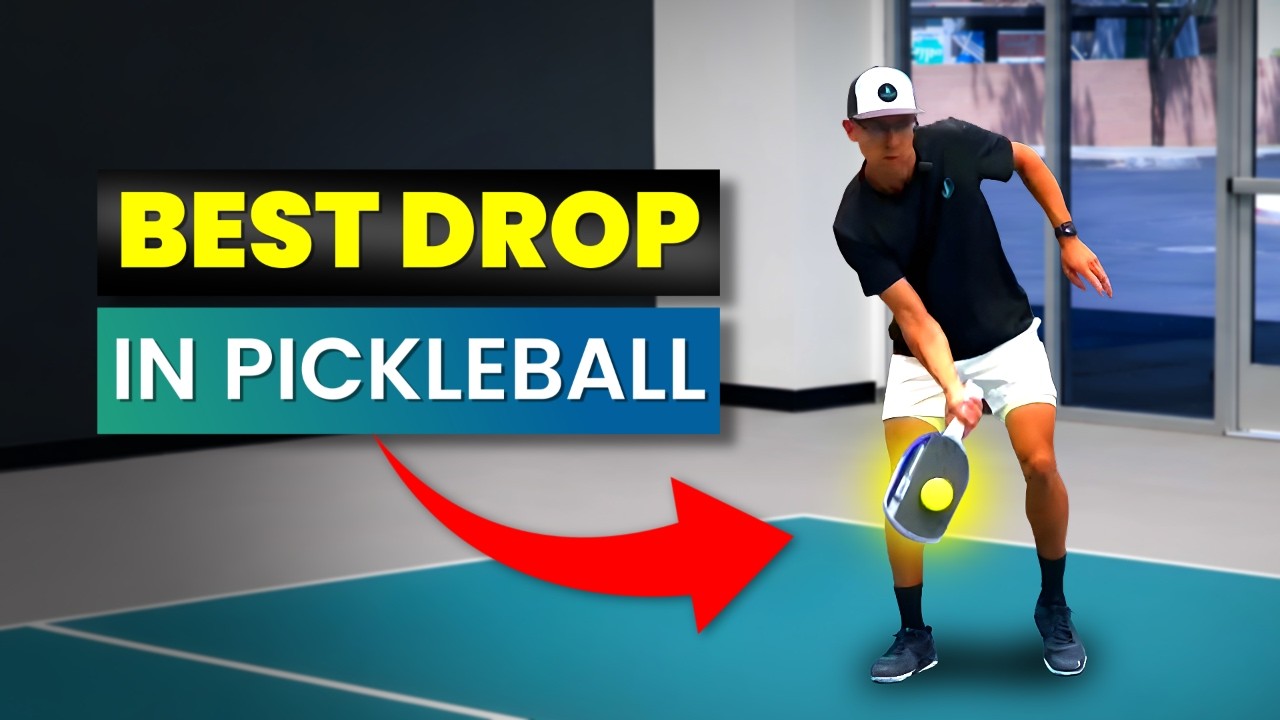
3 Forehand Drop Techniques for Pickleball Players
The forehand drop in pickleball is not one shot. It’s three, and knowing which to use changes everything about your transition game.
 The Dink PickleballThe Dink Media Team
What Does "Sit Backhand" Mean on High Balls?
"Sitting into your backhand" means loading your weight slightly into your back leg and setting up the backhand as your primary weapon on high contact points.
This is different from just reacting to the ball with your backhand because it arrived on your left side.
Sitting backhand is a deliberate pickleball shot selection choice you make the moment you read a high ball coming your way.
You are not waiting to see where it goes. You are already preparing the shot.This matters most when opponents try to attack you with speed.
A high ball coming fast at your body is actually an opportunity if you are set up on your backhand.
Players like Ben Johns use the backhand as a control weapon precisely because they commit to it early on high contact, rather than scrambling to find the forehand.
If you want to see this in action at the pro level, look at how Parris Todd uses her two-handed backhand counter to neutralize high attacks.
She is not reacting. She is already there.Backhand Volley Fixes That Stop Bangers at the Kitchen
If hard shots at the kitchen are beating you on the backhand side, the problem is almost never your paddle. These backhand volley fixes will help you block bangers cleanly and with confidence.
 The Dink PickleballThe Dink Media Team
The Two Scenarios You Need to Drill
Here are the two situations this rule directly addresses, broken down into what you should be doing in each:
- Low ball arriving to your forehand side or middle: Slide laterally so your forehand is behind the ball. Use an open paddle face, soft hands, and lift the ball with a controlled forehand dink or reset. Do not reach backhand across your body.
- High ball arriving to your backhand side or middle: Sit into your backhand, get your elbow forward, and drive through the ball with a compact backhand volley or counter. Do not try to run around it with your forehand.
Drilling these two scenarios separately is the fastest way to make your pickleball shot selection automatic.
You want your body to recognize ball height and immediately begin moving into the correct position, without a conscious decision in real time.
5 Pickleball Drills That Will Transform Your Game in 2026
Five simple yet powerful pickleball drills can completely reshape how you play. These mechanics focus on consistency, footwork, and positioning to help you see immediate results on the court.
 The Dink PickleballThe Dink Media Team
Why Players Get This Wrong So Often
Most players have a dominant side, and they chase that shot regardless of ball height.
Forehand-dominant players will run around high balls to hit forehand when they should be sitting backhand.Backhand-dominant players will reach with the backhand on low balls instead of sliding forehand.
Both are comfort choices, not smart choices.
Comfort is the enemy of good pickleball shot selection.The problem with comfort choices is that they produce inconsistent results. You might get away with it on a soft ball.
You will not get away with it when an opponent is attacking you with pace.
One of the clearest signs of a player moving from 3.5 to 4.0 is that they stop chasing their preferred side and start responding to what the ball is actually doing.Your habits reveal your level instantly, and this one gives you away faster than almost anything else.
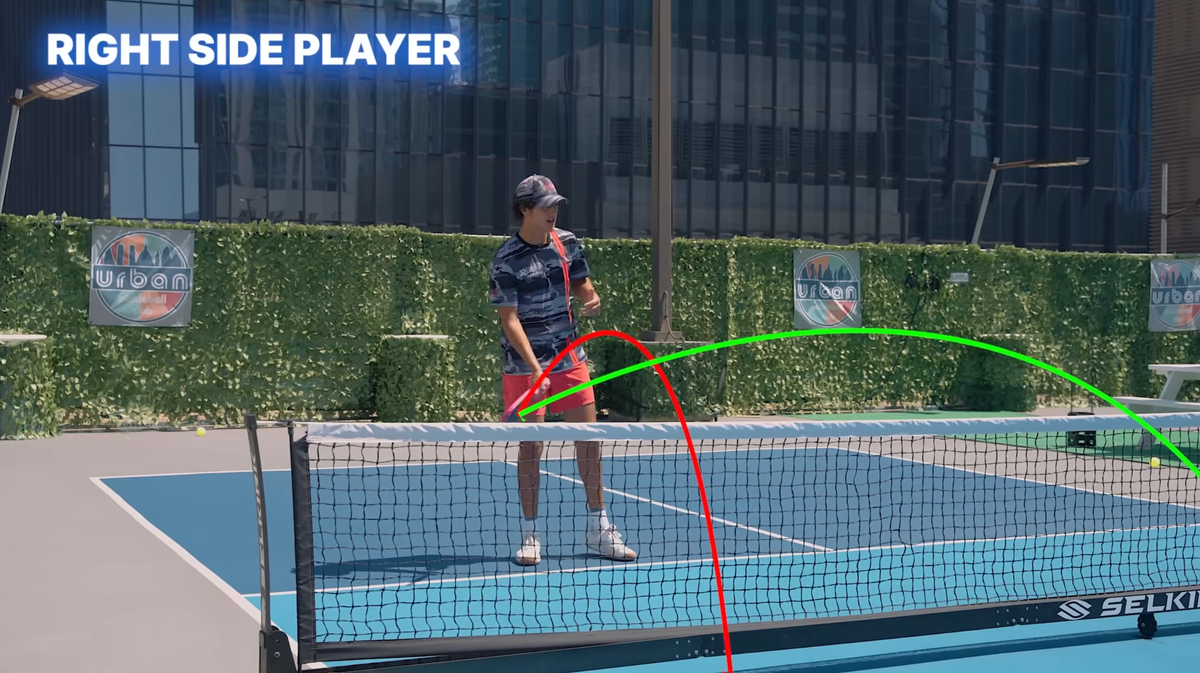
Right Side or Left Side? How Modern Doubles Is Rewriting the Pickleball Playbook
Understanding your position’s traditional responsibilities is important, but being able to adapt and create offense from anywhere on the court is what separates good players from great ones.
 The Dink PickleballThe Dink Media Team
How to Build This Into Your Game Without Overthinking It
The goal is to make this pickleball shot selection rule automatic, not something you consciously compute during a fast exchange.
Here is a practical approach to building the habit:
- Call the ball height out loud during drilling. Say "low" or "high" the moment you read the incoming ball. This trains your brain to recognize height before it registers anything else.
- Shadow drill the two movements at home. Practice the forehand slide step and the backhand sit separately, without a ball, until each movement feels natural from a neutral stance.
- Use live drilling with a partner who randomly feeds low and high balls to your middle. Your only job is to route each one correctly, not to win the point.
- Review your mistakes. After a game, think about the shots you mishit. Ask whether you chose the right shot for that ball height.
Consistent practice with limited court time is still possible when you are drilling specific scenarios like these. You do not need hours of play.
You need focused repetition on the exact decision points that break down under pressure.
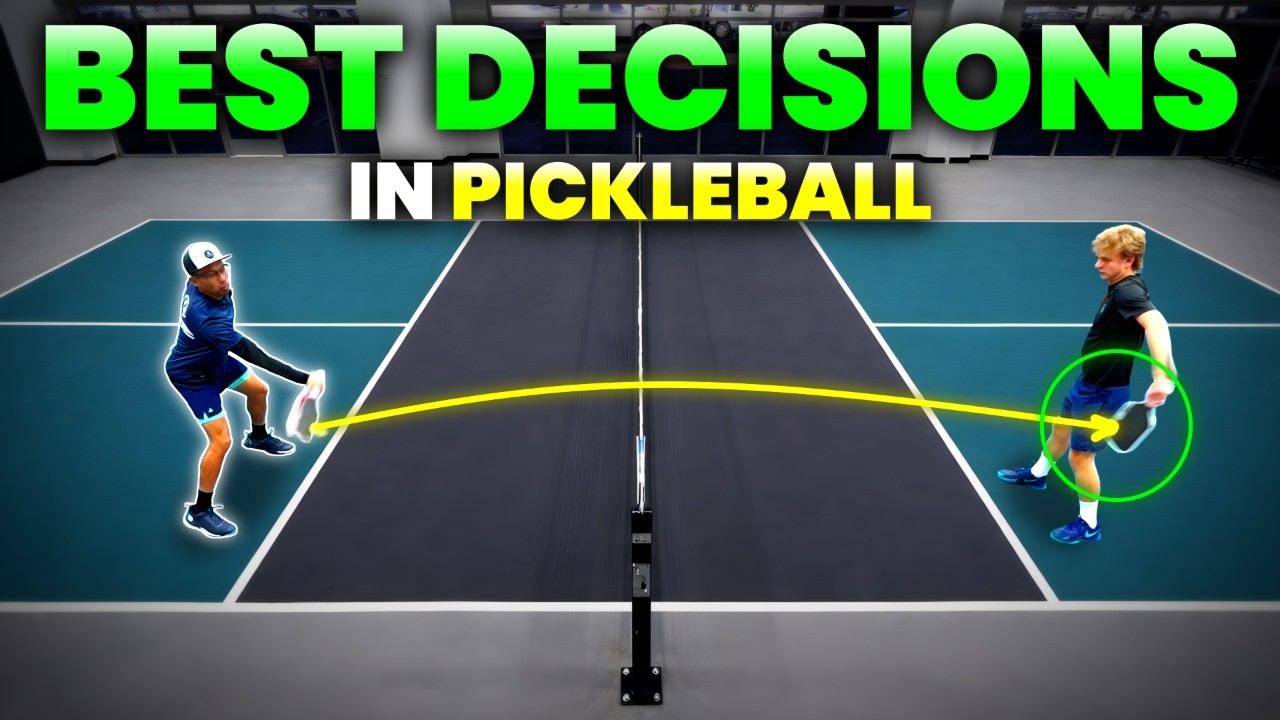
Pickleball Decision Making: Master Your Shot Selection
Pickleball decision making separates casual players from competitive ones. Master when to drive, drop, reset, and attack to transform your game.
 The Dink PickleballThe Dink Media Team
Where This Rule Fits Into a Bigger Shot Selection System
Ball height is the starting point of good pickleball shot selection, but it is not the whole picture.
You also need to factor in where the ball is in relation to the kitchen line, whether you are moving forward or backward, and what your opponent is doing with their positioning.
A simple strategy framework ties all of those elements together in a way that is usable during a match.What the low-forehand, high-backhand rule does is give you a default answer for the most common moments in a rally.
Most exchanges at the kitchen will feature balls that are either below or above the net tape.
If your default response to each is correct, you eliminate a huge percentage of forced errors before they happen.Players who want to stop making unnecessary mistakes at the kitchen should also look at what causes unforced errors and attack those root causes directly.
Height-based pickleball shot selection is one of the biggest contributors when it goes wrong.
Pickleball Scoring Rules: Complete Guide (2026)
Pickleball scoring rules aren’t complicated, but they trip up new and experienced players alike. This guide breaks down side-out and rally scoring so you can step on the court knowing exactly what’s happening.
 The Dink PickleballThe Dink Media Team
Putting It Together on the Court
The next time you step onto the court, give yourself one job: read ball height and route it correctly.
Not pace. Not spin. Not where your opponent is standing.Just height. Low goes forehand. High goes backhand. T
hat single mental filter will clean up more errors than most multi-step systems you could add to your game right now.
Once that becomes automatic, layering in the rest of your decision-making gets much easier.
You are building on a stable foundation instead of trying to figure out four variables at once in a fast rally.If you want to go deeper on specific shot mechanics once your routing is dialed in, these forehand drop techniques will help you make more of those low-ball forehand situations count.
And for the backhand side, understanding punch vs. counter on the backhand gives you two tools instead of one when the ball sits up.
Commit the rule. Build the movement. Watch your rally consistency go up almost immediately.
💡
Heads up: hundreds of thousands of pickleballers read our free newsletter.
Subscribe herefor cutting edge strategy, insider news, pro analysis, the latest product innovations and more.
Frequently Asked Questions
What is the basic rule for pickleball shot selection based on ball height?
When the ball is low, slide your forehand to it. When the ball is high, sit into your backhand. This two-part rule covers the majority of exchanges at the kitchen line and gives you a reliable default when the rally speeds up.
Why is the forehand better for low balls in pickleball?
The forehand gives you a wider range of motion and a more natural paddle angle at low contact points below the net tape. Reaching with a backhand on a low ball typically produces a cramped, upward-popping shot that your opponent can attack easily.
Why should I use my backhand on high balls instead of running around them with my forehand?
A high backhand volley keeps your elbow in front and lets you drive through the ball with control. Running around to forehand a high ball wastes time and often leaves your court position wide open for your opponent to exploit.
How do I drill this shot selection rule effectively?
Have a partner feed random low and high balls to your middle and route each one correctly based on height alone. Call out "low" or "high" as you read the ball to train your brain to register height before anything else. Focus on moving into position rather than reaching.
Does this rule apply to both dinking and speed-up situations?
Yes, the height-based rule applies whether the ball is coming in softly as a dink or hard as an attack. A low speed-up still calls for the forehand slide. A high speed-up still calls for the backhand sit.
The pace changes the urgency, not the routing decision.
Anuncie Aqui / Advertise Here
Sua marca para o mundo Pickleball! / Your brand for the Pickleball world!




 English (US) ·
  Portuguese (BR) ·