
 English
  Spanish
  Portuguese
  German
  Italian
  Japanese
  French
  Polish
  Russian
  Netherlands
  Hungarian
  Turkish
  Videos
  Thedink Pickleball

Your third shot drop is not just about getting the ball over the net. The real key is combining forward momentum and smart topspin to reach the kitchen line before your opponents can reset.
Your third shot drop might be landing in the kitchen, but you are still getting caught in no man's land on almost every point.
That means the shot itself is not the whole problem. The way you are moving through it is what is keeping you stuck.This breakdown covers the key mechanics that turn a passive drop into a shot that creates pressure, including when to add topspin and why your momentum before contact matters more than most players realize.
The content comes from More Briones Pickleball on YouTube, and the detail here is worth slowing down for.
Love pickleball? Then you'll love our free newsletter. We send the latest news, tips, and highlights for free each week.
The Real Problem With Your Third Shot Drop
Most players treat the third shot drop as a survival shot. They hit it, hope it lands soft, then wait to see what happens next.
That passive approach is exactly what keeps you pinned behind the baseline.
The third shot drop is supposed to be the beginning of your transition, not a pause in it.If you hit your drop and then stand still or drift sideways, you are handing your opponents all the time they need to reset.
It belongs in the same tier as the essential pickleball shots that decide whether you stay stuck at 3.5 or start winning rallies from the middle of the court.
Why Forward Momentum Changes Everything
Forward momentum during your third shot drop is the single biggest factor in how quickly you close the kitchen line.
This does not mean sprinting through your shot.
It means your overall weight and direction should be moving toward the net as you hit the ball, not away from it or sideways.When you get behind the ball and contact it out in front of your body, two things happen.
- First, your swing stays controlled.
- Second, the moment the ball leaves your paddle, you are already moving forward and can close the gap to the kitchen line much faster.
Think about what happens when you do the opposite.
You hang back, your contact point drifts late, and you have to stop and reset your footwork before you can move.
That half second of hesitation is enough for your opponents to reset comfortably and extend the rally from the kitchen line.For more on how footwork affects your ability to move through this zone, this footwork drill covers the mechanics in detail, and the four key strategies behind modern pickleball all trace back to the same idea.
💡
Need some new pickleball gear? Get 20% off select paddles, shoes, and more with code THEDINK at
Midwest Racquet SportsWhat Does "Getting Behind the Ball" Actually Mean?
Getting behind the ball means positioning your body so the ball is slightly in front of you at the moment of contact, not to your side or behind your hip.
This is a definition worth nailing down because players often hear this cue and think it means standing directly behind the ball's path. That is not it.It means adjusting your footwork early enough that when the ball arrives, your paddle meets it in front of your body with your weight moving forward.
Your momentum carries through the shot instead of stopping at contact.Here is what the setup looks like in practice:
- Read the return of serve early and move toward the ball before it bounces
- Plant your back foot to generate a stable base
- Let your front foot step toward the kitchen as you swing
- Contact the ball out in front, not beside your hip
- Continue moving forward after contact without hesitating
That last point matters more than most people think.
A lot of players hit the drop and immediately look up to check where it went, which kills their forward momentum. Keep moving and trust the shot.
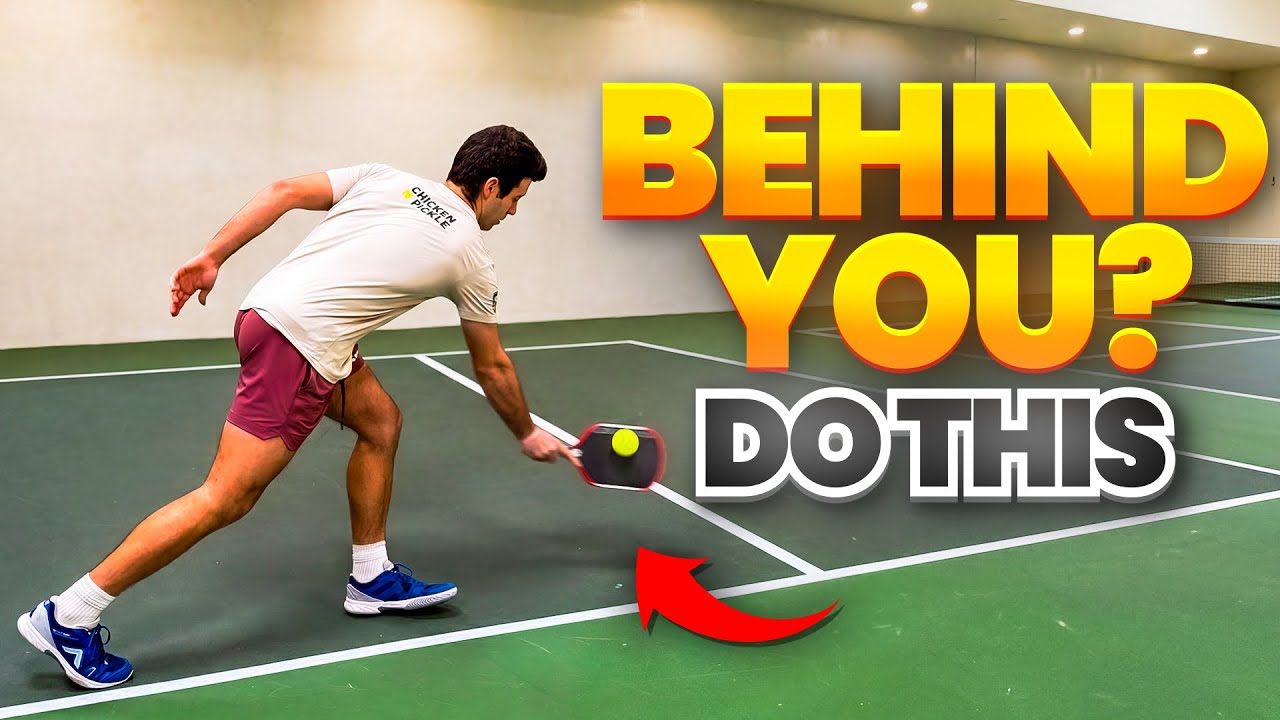
How to Handle a Ball Behind You in Pickleball
Getting caught with a ball behind you in pickleball doesn’t have to mean losing the point. Richard Livornese breaks down exactly how to handle this tricky situation at both the baseline and the net.
 The Dink PickleballThe Dink Media Team
Should You Always Hit a Pure Drop?
No. The return of serve you receive should directly influence what kind of third shot you hit.
If the return sits up, a pure drop works. If you are getting returns with pace or at awkward heights, the hybrid roll gives you a way to apply pressure while still landing soft enough to force a difficult fourth shot.A short return near the service line changes the math again.
At that point the ball may be high enough that driving it makes more sense, which is where the drive drop combo earns its keep.
There are distinct third shot situations worth knowing so you are not guessing in the moment. Read the return quickly and commit before you swing.
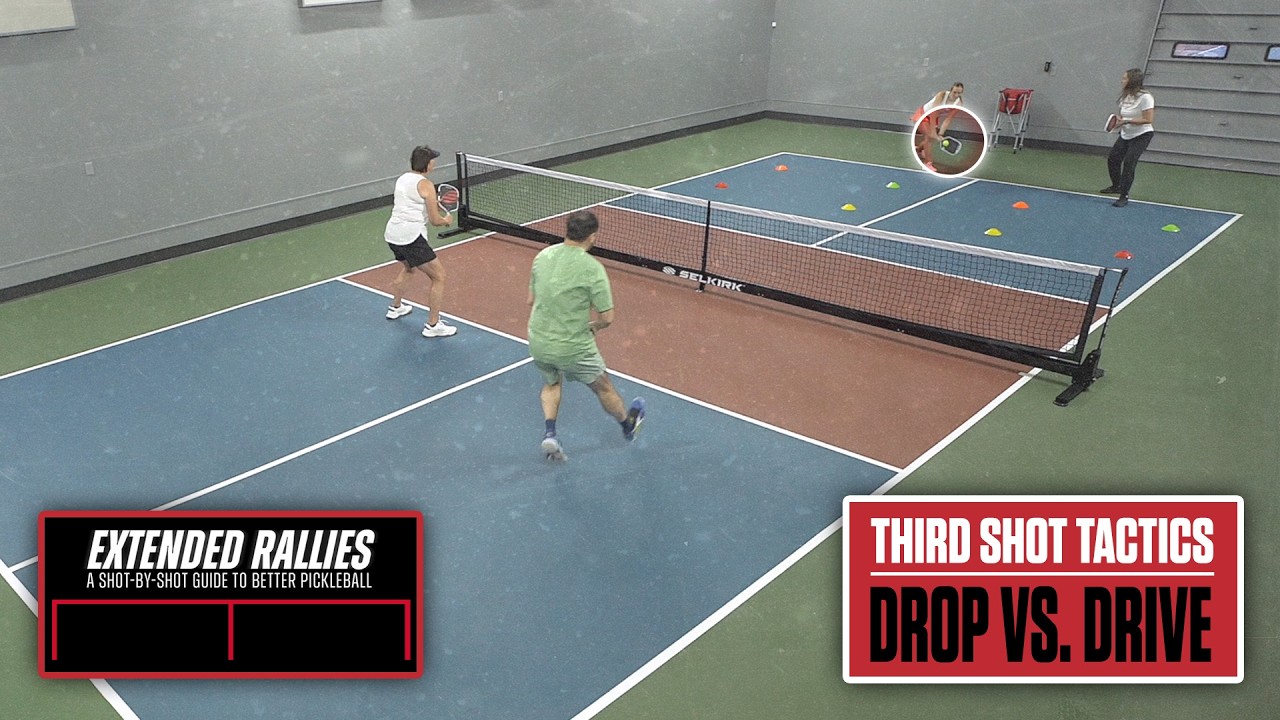
Third Shot Drop or Drive in Pickleball: The 3-Zone System
Most players guess when to drop or drive their third shot. This 3-zone system gives you a clear, court-based rule for making the right call every time.
 The Dink PickleballThe Dink Media Team
How Topspin Makes the Drop More Dangerous
Adding topspin to your third shot drop is not just about looking fancy. It serves a specific tactical purpose.
Topspin causes the ball to dip faster after crossing the net, which gives you a wider margin for error on the height of your shot while still keeping it low.
It also makes the ball harder to attack because it bounces up toward your opponents with forward spin rather than sitting flat.Here is what changes with a topspin drop versus a flat one:
- Higher net clearance, same landing depth: The ball can travel a bit higher over the net and still drop into the kitchen because the spin pulls it down faster
- More awkward bounce: Topspin causes the ball to jump up into your opponent's body after it bounces, making a clean reset harder
- More pressure, less float: A flat drop that hangs can be pounced on. A topspin drop that dips keeps your opponents honest
The tradeoff is that generating topspin requires a faster swing path.
If you are still building your drop from scratch, start flat and add spin once the basic mechanics feel automatic.This shift is the same reason pros abandoned the slice shot on so many third balls, and this breakdown on common topspin mistakes explains where most players go wrong.
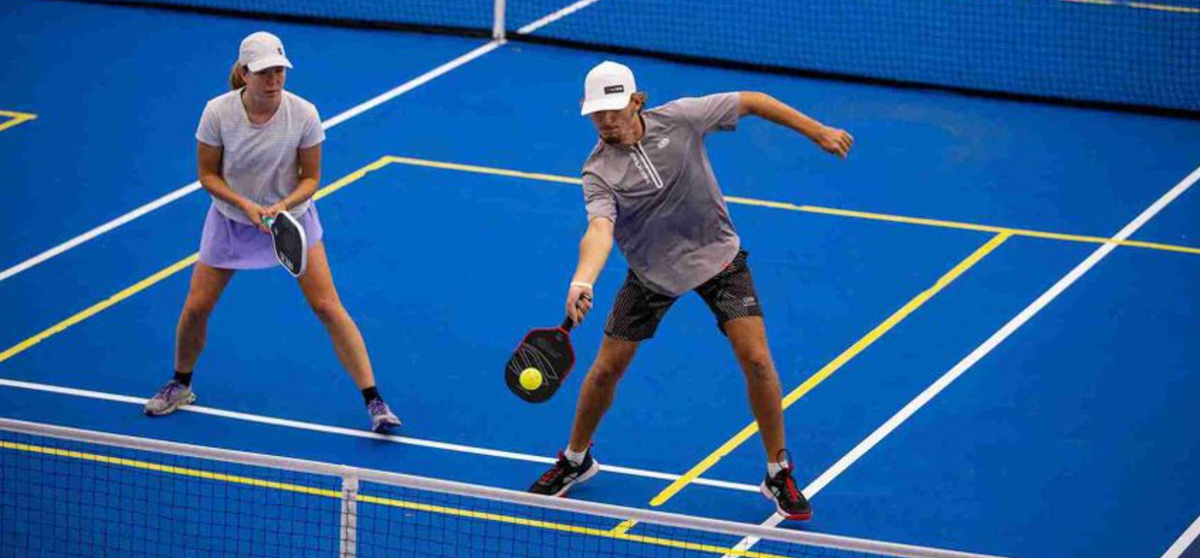
Topspin Pickleball Technique: Brush Angle & Paddle Path
Topspin pickleball technique is built on two fundamentals: a steep brush angle and a low-to-high paddle path. Nail both, and you’ll hit shots that land deep, kick high, and force your opponents into uncomfortable defensive positions.
 The Dink PickleballThe Dink Media Team
What Happens When You Pop It Up?
Popping up the drop is almost always a momentum and timing problem, not a technique problem.
When players rush their swing or have their weight moving sideways instead of forward, they tend to scoop or flip the paddle face at contact.
That sends the ball up rather than forward and soft. Your opponents at the kitchen line will punish it immediately.The fix is not slowing down your swing. It is slowing down your feet early enough that your swing can stay smooth.
This article on why you miss your third shot drop covers the specific errors that cause popups and how to correct them.
Here is a quick checklist to run through if you keep popping drops up:
- Are you moving toward the ball early enough or arriving late?
- Is your contact point in front of your body or beside your hip?
- Is your paddle face staying stable through contact or are you flipping your wrist?
- Is your weight moving forward or are you backing up as you swing?
One of those four things is almost always the culprit. Most of the time it is the contact point.
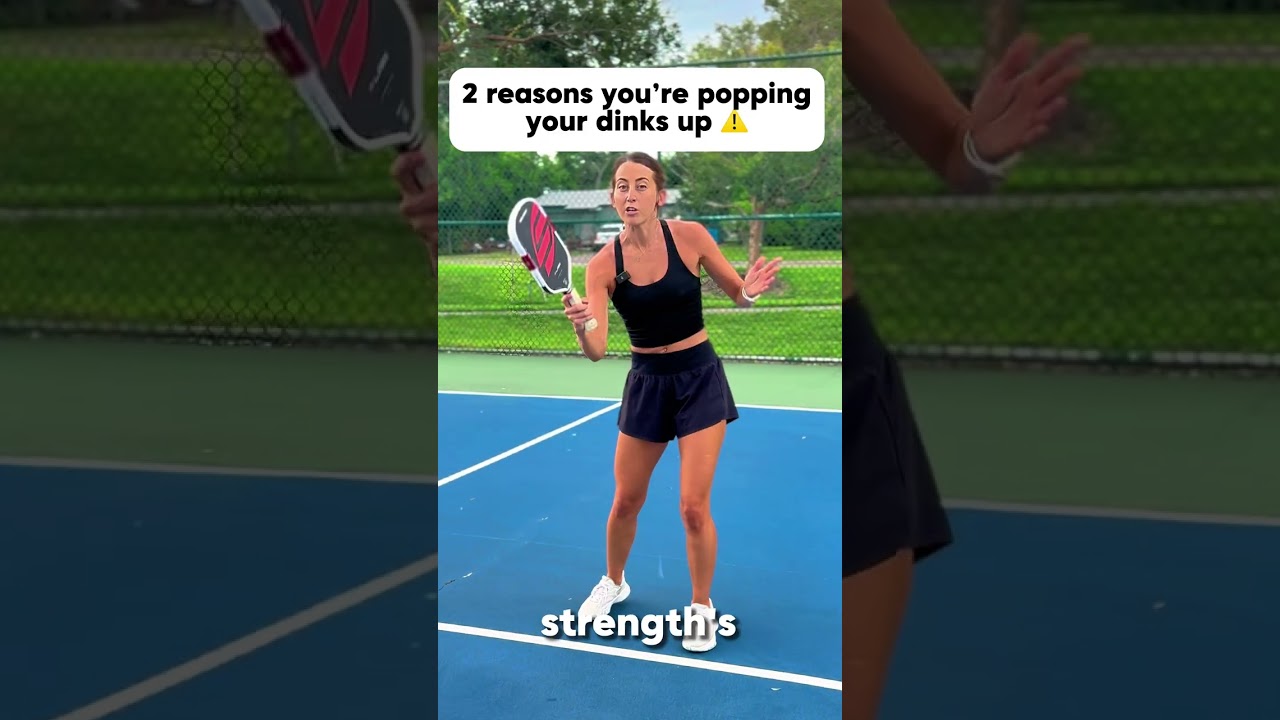
Why You Keep Popping Up Your Dinks (2 Fixes)
Popping up your dinks is one of the fastest ways to hand your opponent a free point at the kitchen line. These two fixes will help you take control of your dinking game for good.
 The Dink PickleballThe Dink Media Team
Does This Change Based on Where the Return Goes?
Yes, and reading the return quickly is what makes all of this work in real matches.
- An average return that sits up without much pace is the ideal scenario for a clean third shot drop with forward momentum.
- A deep, heavy return with topspin requires more adjustment in your footwork and may call for the drip rather than a pure drop.
There are six distinct third shot situations worth knowing so you are not guessing in the moment.
A short return that lands near the service line gives you options too. At that point the ball may be high enough that driving it makes more sense than dropping it.
The drive to fifth shot drop combo is worth learning for exactly those situations.
Pickleball Return of Serve Placement: 3 Spots That Win
Smart pickleball return of serve placement wins points before the rally even starts. These three targets pin the server deep, open the middle, and hand you an easier fourth shot every time.
 The Dink PickleballThe Dink Media Team
Putting It Together in Practice
The biggest shift you can make right now is deciding before the return lands what your default third shot will be.
If you wait until the ball is already in the air to decide, you will always be late.
Train yourself to assume drop, then adjust to drive or roll if the return is clearly attackable.
That mental default keeps your footwork proactive instead of reactive, and it fits neatly into a simple system you can carry into every match.
During drilling, focus on whether you are moving forward through the shot and closing the gap immediately after contact.
Mastering the transition zone is really just mastering that habit of continuous forward movement paired with a controlled drop.Drill the topspin version separately until it feels natural.
This target drill gives you a structured way to build consistency and precision, and it slots easily into the 12 drills worth rotating through this season.
Your footwork is the foundation of all of this. Small adjustments in how you move to the ball and through it change what your third shot drop looks like entirely.
Stop rushing the kitchen without purpose and build the habit of moving through a controlled, forward shot every single time.It is one of the shots you must master before the jump to 5.0 stops feeling impossible.
The players who look smooth in the transition zone are not hitting magic drops. They are just moving better before and after contact.
💡
Heads up: hundreds of thousands of pickleballers read our free newsletter.
Subscribe herefor cutting edge strategy, insider news, pro analysis, the latest product innovations and more.
Frequently Asked Questions
What is the third shot drop in pickleball?
The third shot drop is the shot hit by the serving team on the third shot of a rally, designed to arc softly into the opponent's kitchen so the serving team can advance to the net. It is the primary tool for closing the gap between the baseline and the kitchen line. A well executed drop lands low enough that opponents cannot attack it aggressively.
Why do I keep popping up my third shot drop?
Popping up the drop almost always comes from late contact, meaning you are hitting the ball beside your hip rather than out in front of your body. When contact happens late, your wrist tends to flip to compensate and sends the ball up instead of forward and soft. Fix your contact point first and the popup rate drops significantly.
Should I use topspin on my third shot drop?
Yes, in the right situations. Topspin causes the ball to dip faster after crossing the net, giving you more margin for error while still keeping the ball low and difficult to attack. Start with a flat drop until your mechanics are solid, then add topspin once you can make consistent contact.
What is a drip shot in pickleball?
The drip shot is a hybrid between a drive and a drop. It has more pace than a traditional drop but is designed to still land soft enough in or near the kitchen to prevent a clean attack. It is useful when the return of serve has pace or sits at a height that makes a pure drop harder to execute.
How do I get to the kitchen line faster after my third shot drop?
The key is making sure your momentum is already moving forward before and through contact, not waiting until after the ball leaves your paddle to start moving. Contact the ball out in front of your body and continue walking or jogging toward the kitchen immediately after the shot. Players who pause to watch their drop lose valuable ground every single point.
Anuncie Aqui / Advertise Here
Sua marca para o mundo Pickleball! / Your brand for the Pickleball world!




 English (US) ·
  Portuguese (BR) ·