
 English
  Spanish
  Portuguese
  German
  Italian
  Japanese
  French
  Polish
  Russian
  Netherlands
  Hungarian
  Turkish
  Videos
  The Pickler

Few topics in pickleball spark more debate than body shots.
Some players view hitting at an opponent as poor sportsmanship, while others recognize it as an essential part of high-level strategy. The truth lies somewhere in the middle.
The goal should never be to hit your opponent. Instead, experienced players target the areas that are the most difficult to defend. These shots create awkward contact, force weak returns, and often lead to pop-ups, all without relying on sheer power.
As players improve, your opponents move well, anticipate shots, and cover angles efficiently, making it more difficult to find open court space. Many advanced players stop trying to hit around their opponents and instead aim for specific body targets that disrupt mechanics and decision-making.
Here are four of the most effective places to aim and why they work.
1. Aim at the Feet
If there’s one target that consistently creates trouble, it’s your opponent’s feet.
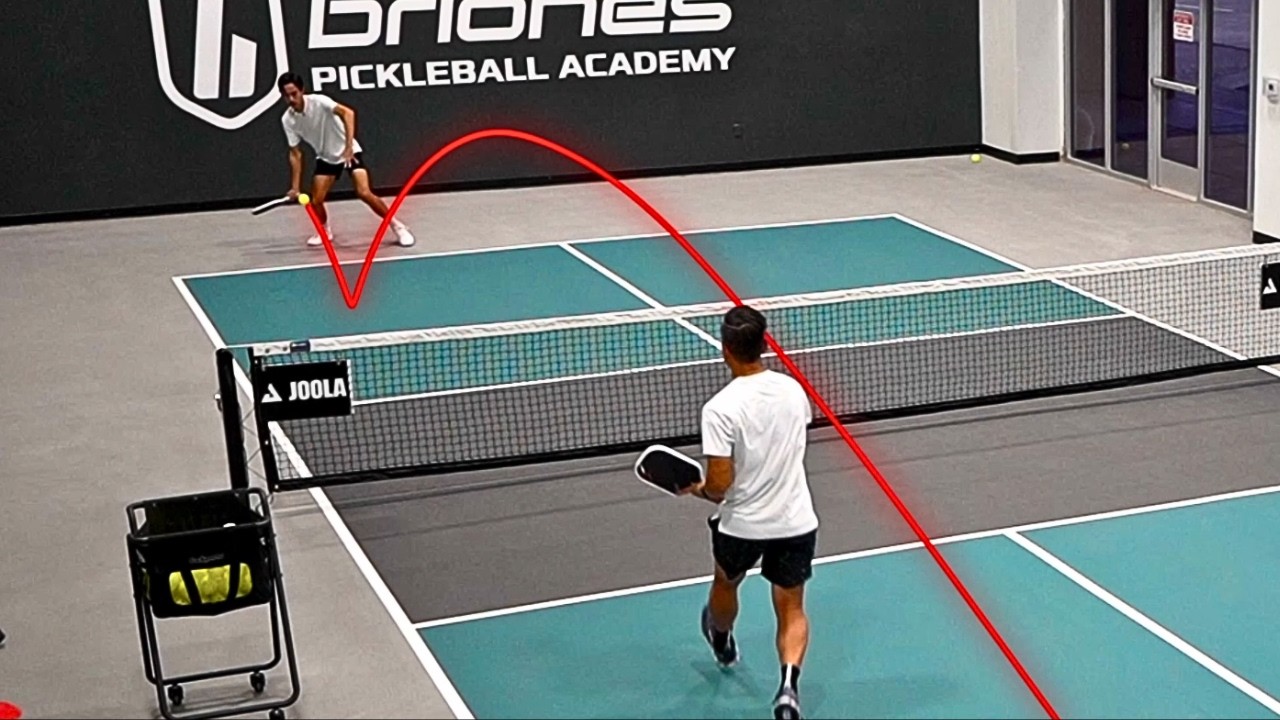
Whether you are hitting a dink, volley, or overhead at the Kitchen Line, try hitting the pickleball down toward your opponents’ feet, especially on their backhand side. Shots at the feet force your opponents to hit upward from an uncomfortable position, making it much harder to deliver an aggressive return. The result is often a weak block, a pop-up, or an unforced error.
Targeting the feet is also effective against players caught in the transition zone, where they have limited time and space to adjust.
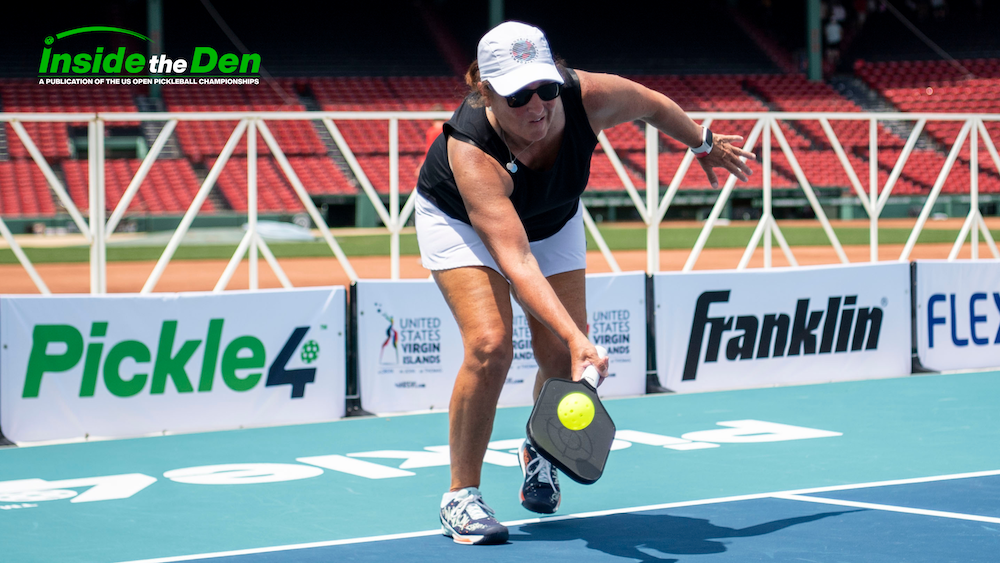
From an etiquette standpoint, this is one of the safest and most widely accepted forms of body targeting because you’re attacking the lowest contact point rather than the player themselves. It applies pressure while minimizing the risk of the ball actually hitting your opponent.
2. Aim for the Paddle-Side Hip
The paddle-side hip is one of pickleball’s most overlooked attack zones.
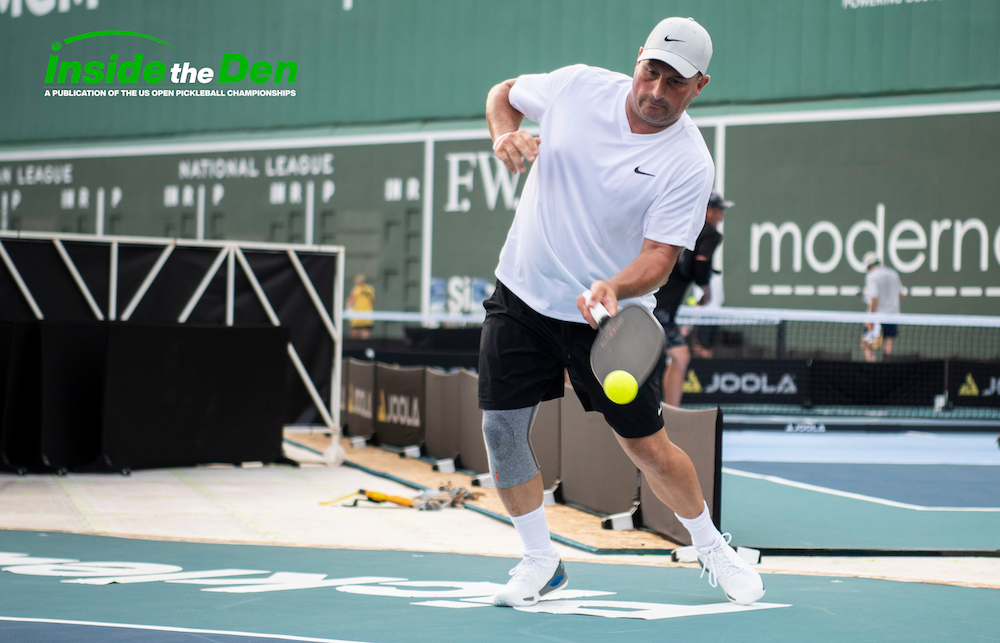
A ball directed at the hip crowds the player’s natural swing path, making it difficult to extend the paddle comfortably. Even experienced players often struggle to decide whether to step around the ball or simply block it back.
Since the target is close to the body, you don’t need to use maximum power. A controlled speed-up placed accurately at the hip is often more effective than trying to blast a winner down the line.
Remember, the objective isn’t to hit your opponent; it’s to limit their ability to produce a clean, offensive shot.
3. Aim for “The Chicken Wing” (Paddle-Side Shoulder or Elbow)
Ask advanced players about difficult targets, and many will mention the “chicken wing.”
This refers to attacking your opponent’s paddle-side shoulder area, where the ball arrives between their forehand and backhand. The hesitation while deciding whether to switch grips or strokes often forces an awkward elbow-up motion that gives the “chicken wing” its name. The result is frequently a mishit, weak block, or pop-up.
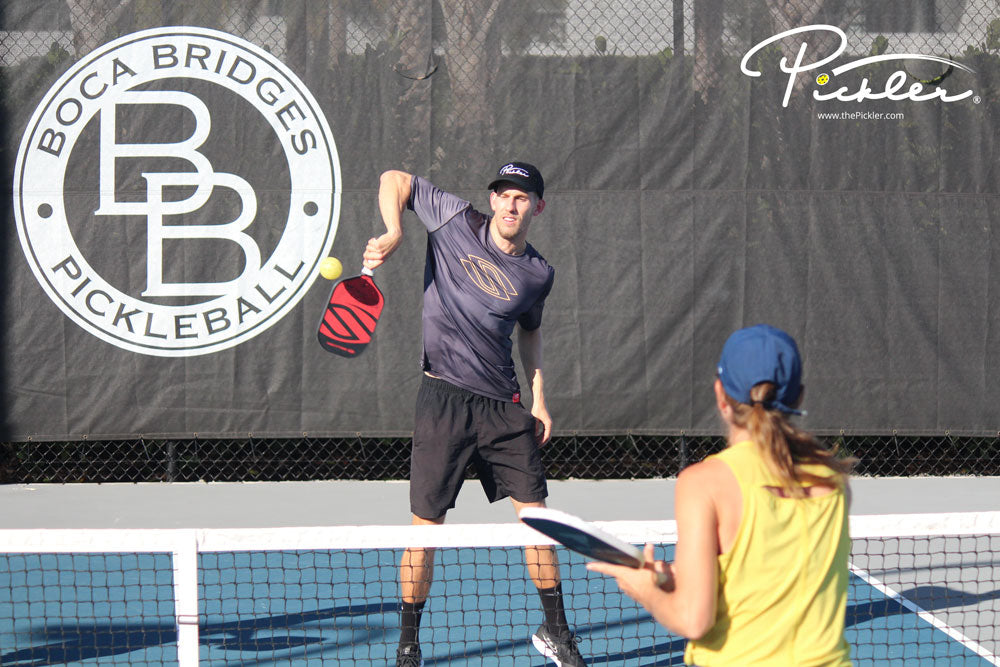
The chicken wing is especially effective during fast hands exchanges at the kitchen line, when players have little time to react.
The key is placement, not power. Pick a spot near your opponent’s paddle-side shoulder and target that spot with controlled drives, speed-ups, or hard volleys to jam your opponent. Be careful not to hit up too much on the pickleball, causing the pickleball to fly out of bounds. It is a careful balance of placement and power.
4. Aim for the Chest
The chest may seem like an unusual target, but it can be surprisingly effective.
Unlike shots to the feet or hip, a ball directed toward the upper torso gives your opponent very little room to extend their arms or create a comfortable swing. Many players instinctively freeze, lean away, or make a rushed defensive block.
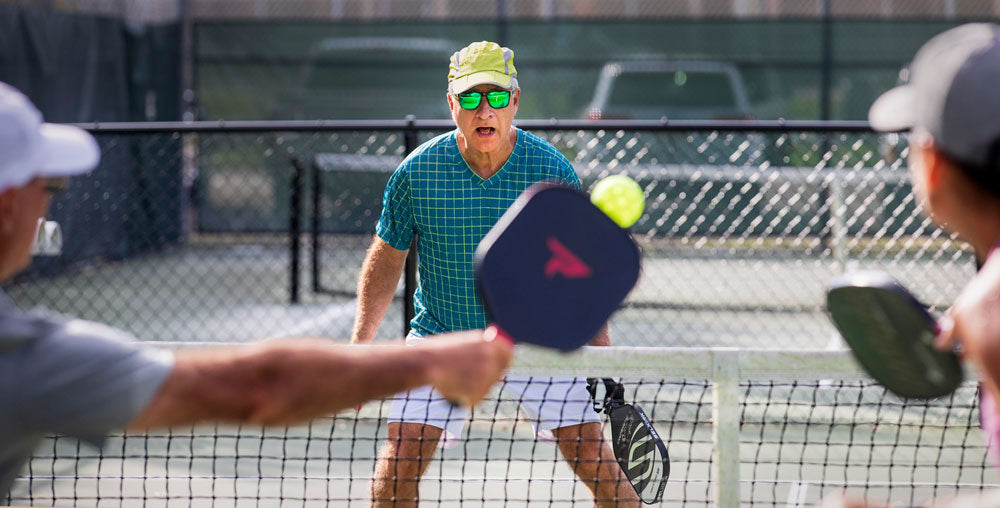
This target works best during quick exchanges at the Non-Volley Zone when your opponent has little time to react. Even if they make contact, they’re often unable to attack the ball with confidence.
As with every body target, control matters. The objective is to challenge your opponent’s mechanics, not to intimidate or injure them. A well-placed shot with moderate pace is usually more effective than an overpowering drive.
Play Aggressively—But Respectfully
Strategic body targeting is completely legal and an important part of competitive pickleball, but intent matters.
Aim for difficult contact points, not to strike your opponent. Use controlled aggression instead of reckless power. If a ball unintentionally hits someone, a quick apology is both common and appreciated.
It’s also worth adjusting your approach based on who you’re playing. Beginners, juniors, and players with limited mobility may not react as quickly, so maintaining control is every bit as important as choosing the right target.
The best competitors challenge their opponents while still respecting them.
Drill It: Precision Targeting
Want to become more accurate without simply swinging harder?
Precision Targeting Drill
Goal: Improve your ability to consistently attack difficult target zones during competitive play.
How to Do It:
- Position one player in the transition zone or at the Non-Volley Zone line.
- The other player hits controlled drives or speed-ups.
- Rotate through these targets every 10 shots: Feet, Paddle-side hip, Paddle-side shoulder or elbow (“chicken wing”), Chest
- Switch roles and repeat.
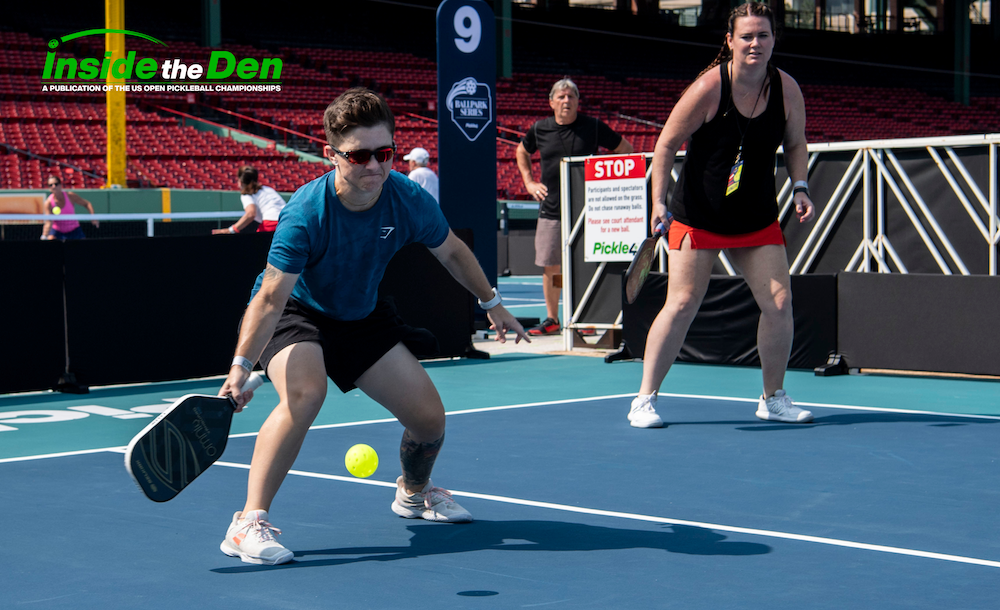
Focus on accuracy, consistency, and control, not power. The better you become at placing the ball in these uncomfortable locations, the more often you’ll force weak returns without taking unnecessary risks.
Final Thoughts
The best attackers in pickleball focus on hitting smarter.
By targeting your opponent’s feet, hip, “chicken wing”, or decision zone, you force awkward contact that leads to weaker shots and more opportunities to finish the point. Combined with good judgment and proper etiquette, these targets become valuable strategic tools rather than controversial tactics.
Remember: smart strategy and good sportsmanship go hand in hand. The best pickleball players bring both to every match.
WANT MORE PICKLEBALL TIPS AND STRATEGIES?
Want to sharpen your decision-making skills on the pickleball court? Learn How to Avoid Getting “Body Bagged” in Pickleball
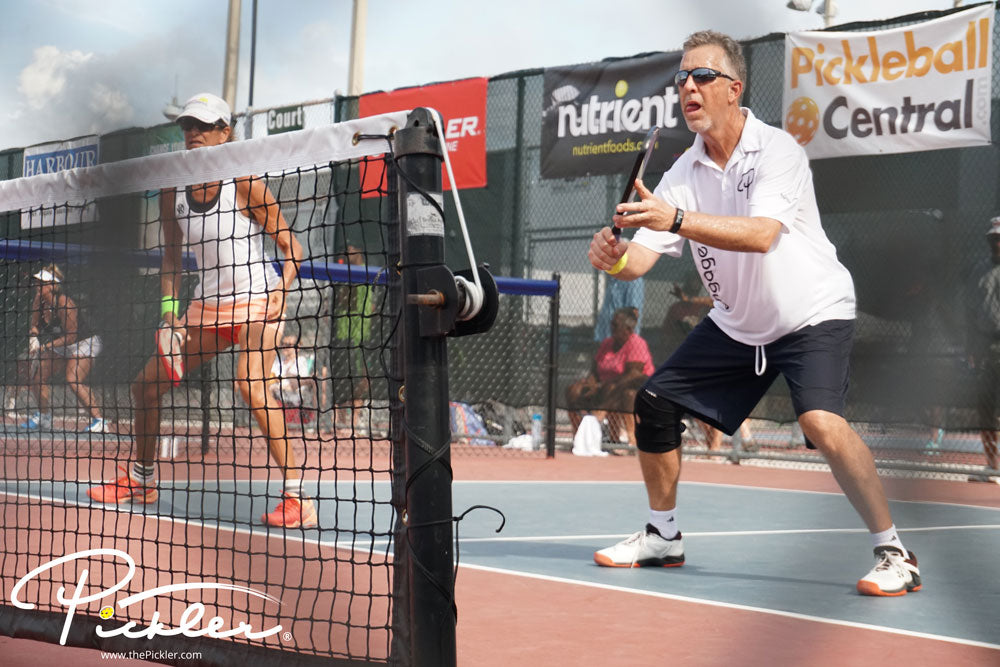
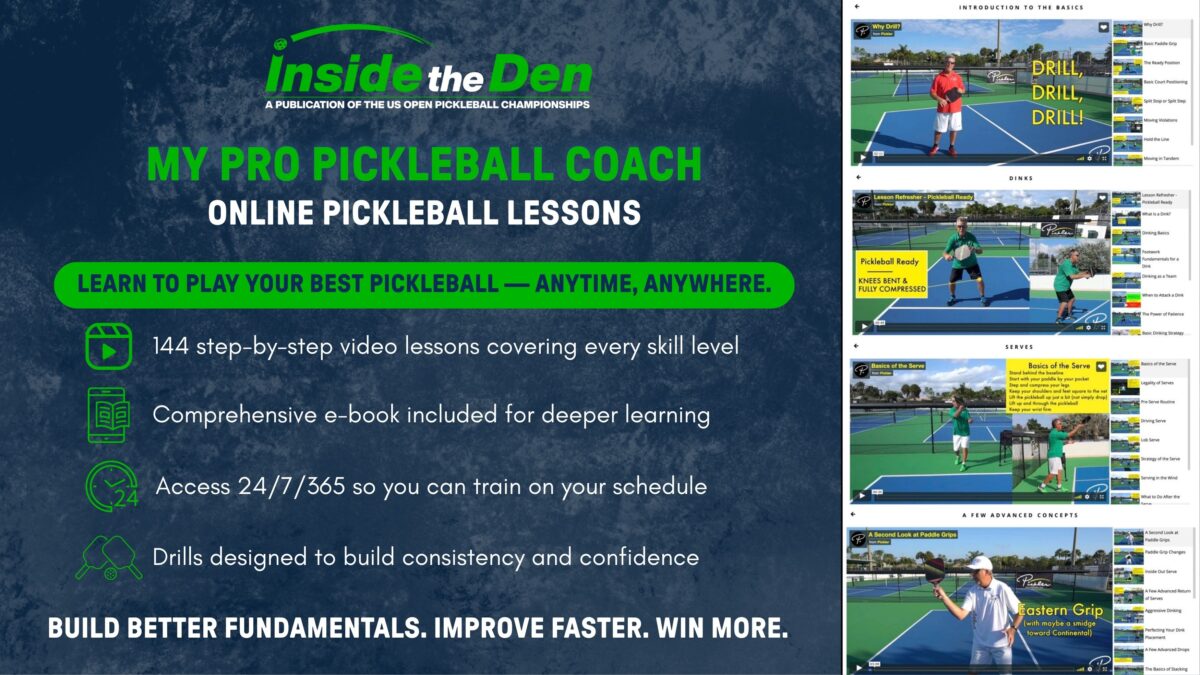
If you want more pickleball tips and strategies on every aspect of your pickleball game, check out Inside the Den’s online video lesson collection called My Pro Pickleball Coach. My Pro Pickleball Coach is a fraction of the price of one clinic or even one lesson, and features over 140 video lessons (over 7 hours of instruction!), as well as a corresponding e-book. These online video lessons are available on demand 24/7 and breakdown every aspect of the sport of pickleball, including pickleball drills, strategy, and advanced concepts, so you will play your best pickleball.
Anuncie Aqui / Advertise Here
Sua marca para o mundo Pickleball! / Your brand for the Pickleball world!




 English (US) ·
  Portuguese (BR) ·