
 English
  Spanish
  Portuguese
  German
  Italian
  Japanese
  French
  Polish
  Russian
  Netherlands
  Hungarian
  Turkish
  Videos
  Thedink Pickleball

Becoming a better doubles partner in pickleball is the single most overlooked path to winning more matches. This guide breaks down the communication habits, positioning principles, and trust-building strategies that turn two good players into one great team.
Your singles game can be tight, your third shot drop can be reliable, and your reset can be decent, and you can still be the reason your team keeps losing.
That's the uncomfortable truth about becoming a better doubles partner pickleball players actually want: individual skill only takes you so far.
Doubles is a different sport. Not a variation. Not a scaled-up singles game.
A genuinely different sport with its own language, its own trust requirements, and its own win conditions.
The teams that consistently take home the gold aren't just two good players standing next to each other.
They're a functioning unit. And that's something you can build, starting today.
Love pickleball? Then you'll love our free newsletter. We send the latest news, tips, and highlights for free each week.
Why Doubles Chemistry Is More Important Than Raw Skill
The best doubles teams in pickleball, think Ben Johns and Matt Wright, or Anna Leigh Waters and Lea Jansen, aren't just individually elite.
They anticipate each other. That's not a talent. That's a pattern you build through repetition and communication.
Research published in the Journal of Sports Sciences (2025) found that communication between sport partners in racket-based doubles formats significantly predicted winning percentage, more than individual skill metrics alone.The implication is clear: the court talk happening between points matters as much as the shot you hit during them.
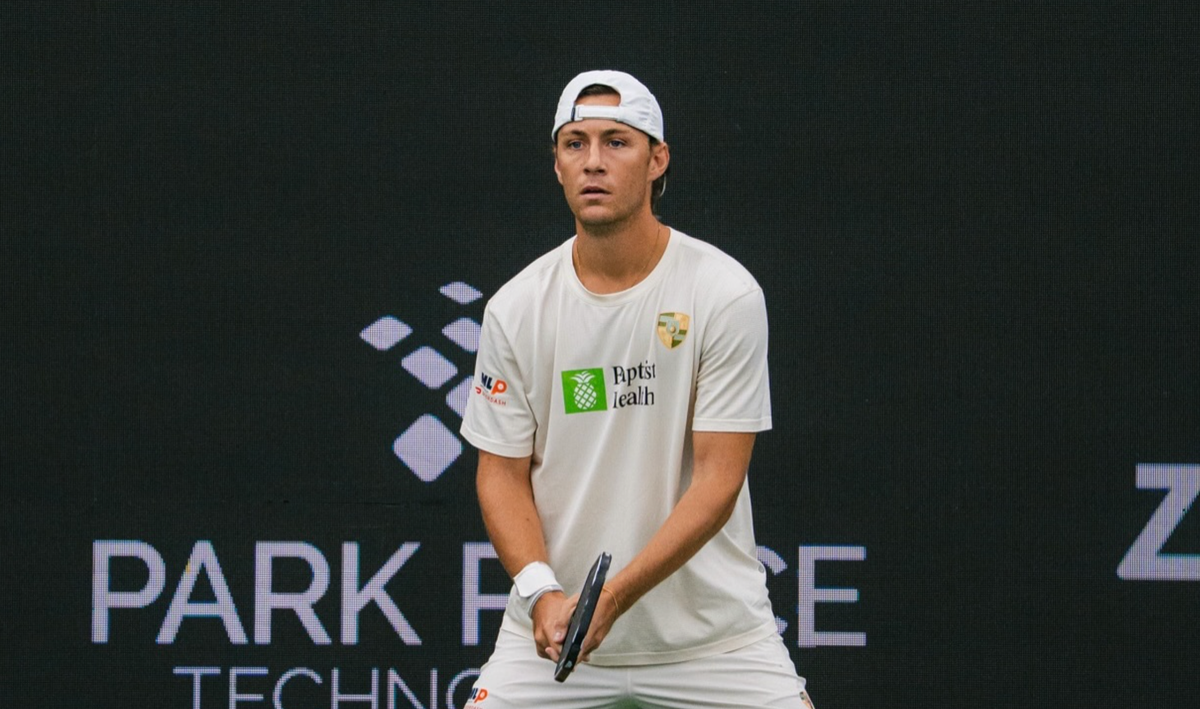
In MLP Debut, Casey Diamond Makes SportsCenter Top 10 Twice
His unfathomable behind-the-back winner is an instant favorite for pro pickleball shot of the year
 The Dink PickleballAlex E. Weaver
Here's the thing. When you don't communicate, you default to assumptions.
You assume your partner has the middle ball. They assume you have it. It lands between you. Everyone shakes their head. Sound familiar?Good shot or bad positioning, that question is almost always about partnership clarity, not just one player's decision-making.
Chemistry isn't magic. It's repetition, communication, and the willingness to have uncomfortable conversations about roles.
How On-Court Communication Makes You a Better Doubles Partner in Pickleball
Communication in doubles pickleball is not just calling "mine" or "yours." That's the floor, not the ceiling.
Simple tips to improve teamwork start with establishing a shared language, a vocabulary that both players use so there's zero ambiguity during rallies.
Before every match, run through these pre-point agreements with your partner:
- Middle ball ownership, Who takes the ball that splits the middle? The forehand player? The player with momentum toward it? Decide before the first point.
- Lob coverage, Who retreats on a deep lob, and who holds the kitchen line?
- Poach signals, Are you calling your poach out loud, or using a paddle tap as a signal before the serve?
- "Switch" vs. "stay", Agree on verbal cues when court positions need to change mid-rally.
These aren't complicated. But most rec players never have this conversation. The ones who do win more matches at every level.
During the rally, the one-word system works best. "Mine." "Yours." "Switch." "Back." No sentences. No explanations. Just the word, called early.
Called loud. The faster you say it, the more time your partner has to adjust.
💡
Need some new pickleball gear? Get 20% off select paddles, shoes, and more with code THEDINK at
Midwest Racquet SportsWhat Is Court Coverage in Doubles, and Why Does It Break Down?
Court coverage refers to how two players divide the court between them to eliminate open spaces and eliminate easy put-away opportunities for the opposing team.
In theory, it's a 50/50 split down the center line. In practice, it shifts constantly based on ball position, player momentum, and shot selection.
The breakdown happens for one of three reasons:
- Both players go for the same ball (no pre-agreed middle coverage)
- Both players yield the same ball (each assumes the other has it)
- One player over-rotates and leaves a wide open corner
Doubles strategy for T and sideline placement is one of the best frameworks for understanding court geometry.
The idea is simple: your goal is to keep the opposing team hitting toward the center of your team's coverage zone, not toward the corners.
When both players understand that principle, court coverage stops being reactive and starts being strategic.
The 4th shot tips for court coverage in doubles break down exactly how transitional shots affect where you and your partner need to be positioned, and it's worth studying.
Most coverage breakdowns happen during the transition from the baseline to the kitchen line, not during steady-state dinking rallies.
Pro tip: After a point where coverage broke down, don't blame.
Just say "I'll take the next middle" or "I've got the left side this game." Fix it operationally.
Competitive Doubles Strategy 4.0 Pickleball: Patterns That Win
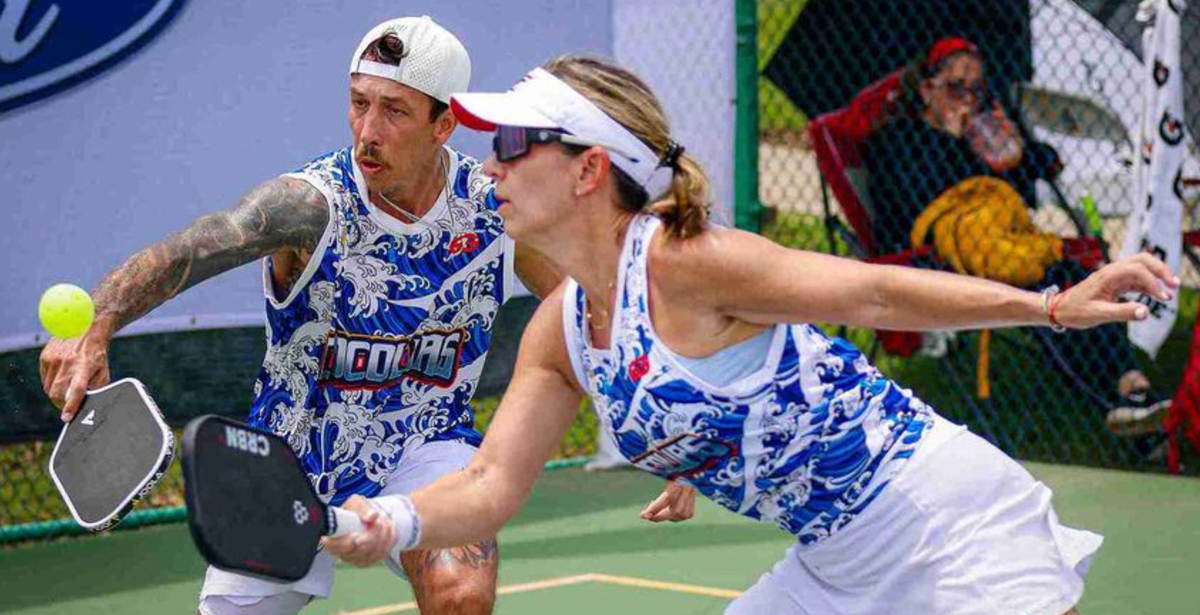
Competitive doubles strategy 4.0 pickleball is less about hitting harder and more about controlling patterns, court positioning, and forcing opponents into losing situations.
 The Dink PickleballThe Dink Media Team
Does Poaching Actually Help, or Does It Just Cause Problems?
Poaching is polarizing. Some players love it. Their partners usually hate it.
Here's the honest answer: poaching is a net positive when it's coordinated, and a net negative when it's a surprise.
The pickleball doubles strategy built around effective poaching requires that your partner knows the poach is coming.
Not because they need to approve it, but because they need to cover the court you just vacated.
If you cross to poach a soft forehand volley and your partner doesn't shift to cover your side, the open court sits there like a neon sign for your opponents.
Mid-court pickleball tips address exactly this transition problem.
The best poachers in recreational doubles do two things that make them actually effective partners:
- They poach predictively, reading the incoming ball early, not reacting to it late
- They call it out loud before they go, giving their partner a half-second to shift
That half-second is everything.
Advanced pickleball drill for shot selection can help you develop the read that makes predictive poaching possible.
But the communication piece? That's free. You just have to commit to it.
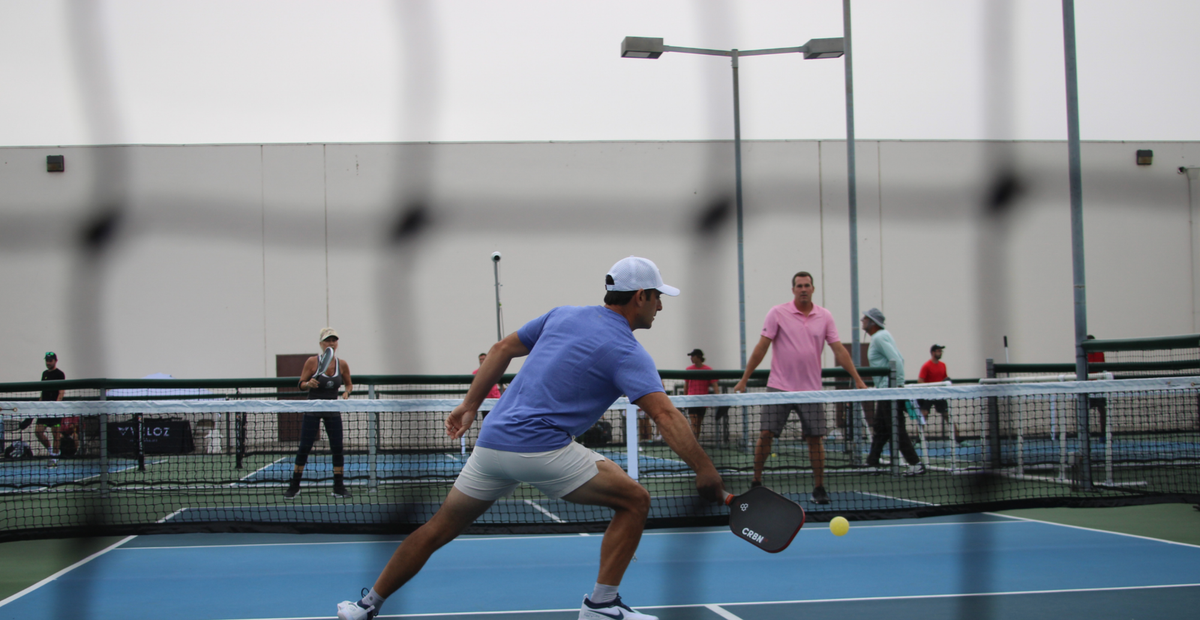
Stop Apologizing and Start Poaching More Shots in Pickleball
Poaching applies pressure, shrinks the court for your opponents, and helps cover a weaker partner — all tactics that increase unforced errors.
 The Dink PickleballAlex E. Weaver
Pickleball Stacking: The Partner Skill Most Players Skip
Stacking in pickleball is a doubles positioning technique where both players start on the same side of the court before the serve or return, then shift to their preferred positions after the ball is in play.
It exists to keep both players in their dominant forehand or backhand position regardless of which side of the court they serve or receive from.
Definition: Stacking means intentionally misaligning with the traditional left-right split before the serve, then rotating to correct positions once the ball is hit.
It's legal under USA Pickleball official rules (2025), and elite teams use it constantly.
This is a partnership skill because it only works with full buy-in.
Both players have to understand the movement pattern, agree on the trigger (the serve contact), and trust each other to rotate correctly.
When one player stacks and the other forgets to move, you've just gifted your opponents a wide open court.
Pickleball stacking rules and strategy, understanding this turns you into a genuinely better doubles partner at the 4.0 level and above.
Even if you're not running full stacking yet, the underlying concept teaches something crucial: positioning in doubles is a shared responsibility, not an individual one.
Doubles Stacking 101: The Fool-Proof Positioning Strategy That Wins Points
Stacking might be the single most underrated positional tool in doubles pickleball – and it’s way simpler than you think
 The Dink PickleballThe Dink Media Team
How Being a Better Doubles Partner in Pickleball Changes Your Mental Game
Here's what nobody talks about enough. When you trust your partner, you play better individually.
That's not feel-good nonsense. It's exactly why working to become a better doubles partner pickleball coaches prioritize produces measurable performance gains.
When you know your partner has the middle covered, you stop creeping toward their side.
You stay in your lane. You hit with more conviction because you're not also mentally managing their court coverage.
The cognitive load drops, and your decision speed improves.
Secrets that advanced pickleball players don't want you to know often come down to this kind of mental efficiency, the freedom that comes from trusting the system.
Research in Frontiers in Psychology (2025) found that team sport athletes who reported high partner trust executed motor skills more accurately under pressure than those who reported low partner trust.The data tracks. Trust reduces the mental overhead that eats into execution.
Between points, reset the energy. Make eye contact. Say something useful, "nice reset," "good coverage," "let's go."Positive doubles communication on the pickleball court reinforces the partnership loop. The team that stays connected between points stays connected during them.
The #1 Doubles Strategy New Pickleball Players Must Know
The proof is in real statistics from professional pickleball: When the serving team fails to reach the kitchen line, they lose 65% of the time
 The Dink PickleballThe Dink Media Team
Becoming a Better Doubles Partner Pickleball Players Trust: Three Drills to Build Real Chemistry
Skill in pickleball doubles partnership is coachable. These three practice structures build the specific habits that make two players into a cohesive team.
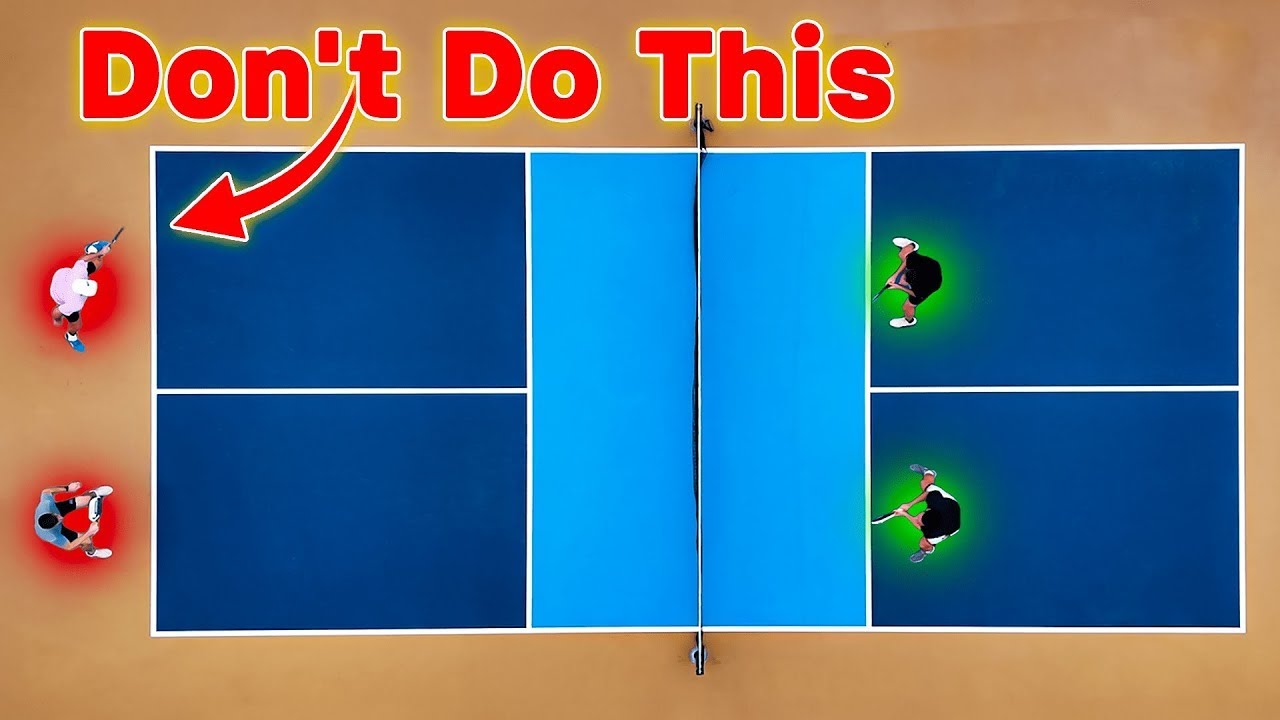
1. The Shadow Drill: One player hits crosscourt dinks while the other mirrors their lateral movement, no ball involved. This trains simultaneous movement and builds the muscle memory of moving together rather than independently. Run it for two minutes before any session.
2. Loud Calls Only: Play a full practice game where the only rule is that every ball must be verbally called, "mine" or "yours", before either player hits it. No silent shots. It feels awkward for the first three minutes and becomes automatic by game three.
3. Post-Point Debrief: After every rally, before the next serve, one player says one word about the rally: "coverage," "reset," "patience," or "nice." Not a critique. Just an anchor. It keeps both players mentally in the same game and dramatically improves focus continuity.
These drills aren't about technique. They're about trust.
And trust, it turns out, is the primary variable that separates the doubles teams winning at 4.5 and above from everyone else.
How to Be a Better Doubles Partner in Pickleball
Becoming a better doubles partner in pickleball starts with two things: clear communication and smart court coverage. This guide breaks down the tactics, habits, and positioning strategies that separate good doubles teams from great ones.
 The Dink PickleballThe Dink Media Team
Key Takeaways
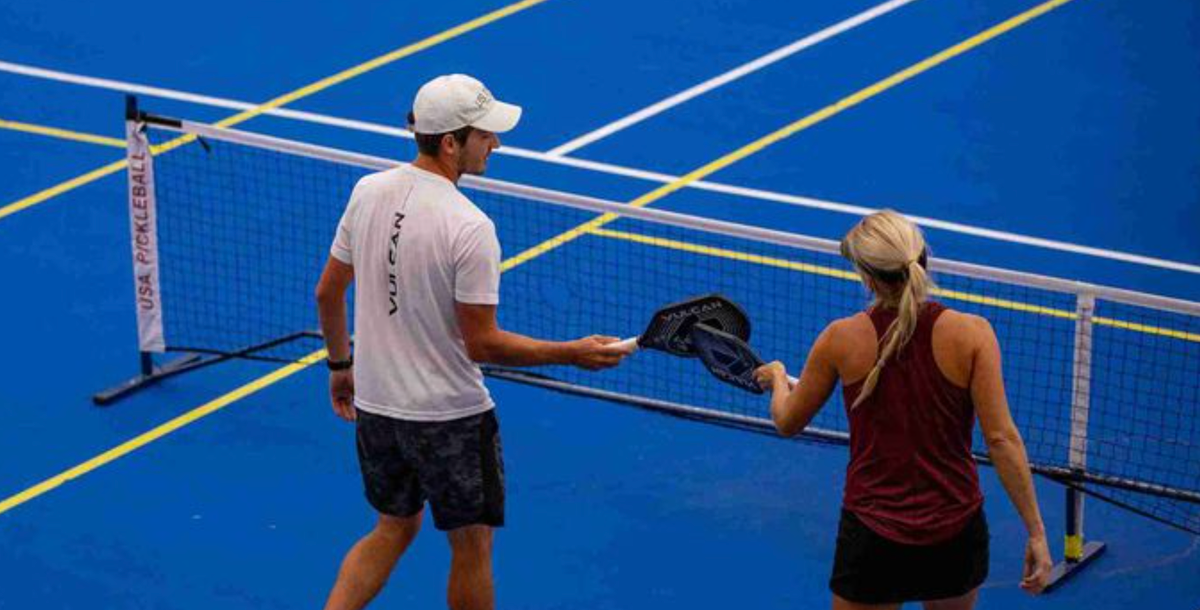
- Being a better doubles partner in pickleball requires deliberate communication before, during, and after every point
- Court coverage decisions should be pre-agreed, not improvised under pressure
- Poaching and stacking only work when both players are communicating and fully aligned
- Trust in your partner's shot selection directly lowers your error rate
- The teams that win most at the rec and competitive level share one trait: they move as one
💡
Heads up: hundreds of thousands of pickleballers read our free newsletter.
Subscribe herefor cutting edge strategy, insider news, pro analysis, the latest product innovations and more.
Frequently Asked Questions
How Does Being a Better Doubles Partner Pickleball Teams Build Actually Change the Score?
Being a better doubles partner in pickleball comes down to communication, court awareness, and trust. The most impactful habits are calling balls early, agreeing on middle coverage before the match, and staying positive between points. Skill matters, but the partnership layer compounds it, two average players with great chemistry will regularly beat two good players who don't communicate.
How do I talk to my pickleball doubles partner during a match?
Use single words, not sentences. "Mine," "yours," "switch," "back," and "up" are the core doubles vocabulary. Call them loudly and early, before the ball reaches either of you. Pre-match conversations about middle coverage and lob responsibility eliminate the majority of confusion that comes up during play.
What is stacking in pickleball doubles, and should I use it?
Stacking is when both players position on the same side of the court before the serve or return, then shift to their preferred sides after the ball is struck. It keeps both players in their strongest hitting positions regardless of which side of the court they're starting from. It's worth using at the 4.0+ level, but only if both partners have agreed on the movement pattern and practiced the rotation together.
How do I stop fighting with my doubles partner over middle balls?
Decide before the first point who takes the middle. The most common rule: the player with a forehand facing the middle takes it. But the specific rule matters less than having one. Pick a system, commit to it for the match, and adjust based on what you learn. Most middle-ball conflicts disappear the moment a clear agreement exists.
Does poaching help or hurt in recreational doubles pickleball?
Poaching helps when it's called out loud before it happens and your partner has time to shift. It hurts when it's a surprise. In recreational doubles, unannounced poaching causes more points lost than won because the vacated court gets exposed. Coordinate it first and it becomes a weapon, use a verbal cue or a pre-serve signal to tell your partner you're going.
Anuncie Aqui / Advertise Here
Sua marca para o mundo Pickleball! / Your brand for the Pickleball world!



 English (US) ·
  Portuguese (BR) ·