
 English
  Spanish
  Portuguese
  German
  Italian
  Japanese
  French
  Polish
  Russian
  Netherlands
  Hungarian
  Turkish
  Videos
  Thedink Pickleball

Right side pickleball isn't just a different position—it's practically a different sport, according to top pro Hayden Patriquin.
If you've ever wondered why professional pickleball players guard their right side so fiercely, or why switching sides mid-career feels like learning a new sport entirely, you're onto something real.
Right side pickleball isn't just a positional difference—it's a fundamentally different game with its own geometry, attack patterns, and defensive nightmares.
According to elite pros Gabe Tardio and Hayden Patriquin, who joined us for a recent episode of the PicklePod, the differences between left and right side play as a right-handed player are so stark that pros often specialize in one or the other.
Along with co-hosts Zane Navratil and Nico the Lefty, they broke down exactly what makes right side pickleball so much harder to master.
Love pickleball? Then you'll love our free newsletter. We send the latest news, tips, and highlights for free each week.
The Geometry Problem: Why Court Layout Makes Right Side Pickleball Harder
Here's the thing about right side pickleball: the court geometry works against you.
When you're a righty on the right side and your opponent hits a good drop shot into the kitchen, your options for keeping the ball away from your opponent across the net are severely limited.
You've got less court to work with, and the angles force you into tighter, more defensive positions.
Gabe Tardio explained it plainly:
"When I'm on the right and someone hits a good drop to me, where can I go to keep the ball away from the left side player? It's really tough to kind of keep that ball away."The geometry of the court means that most of your natural shot options will either travel toward your partner or leave your opponents in attacking positions.
Compare that to the left side. If someone hits a good drop to you on the left, you've got options.
You can easily keep the ball away from your right-side partner because there's more court to work with.
Learning to recognize your court position early is what separates players who plateau from those who keep climbing.
The left side player has what Hayden Patriquin called "a lot of court to work with" — and that extra space changes everything about how you can construct points.
Attack Angles and Vulnerability on the Right Side
The spots where you get attacked on the right side are completely different from the left.
Your opponents know where to target you, and the court geometry gives them natural angles that are harder for you to defend.
Every aspect of the game flips when you move from left to right.Tardio and Patriquin emphasized that "everything is different" between the two sides.
💡
Need some new pickleball gear? Get 20% off select paddles, shoes, and more with code THEDINK at
Midwest Racquet SportsThe spots you can't attack, the dinks you need to cover, where you're hitting your drops — it all changes.
For players used to dominating the left side, moving to the right side in pickleball feels like stepping into an entirely new sport.
One of the biggest differences is how your partner can poach.
- On the left side, your partner is looking to poach off your partner's third shot with their backhand, which limits their aggressive options.
- On the right side, your partner has more natural poaching opportunities, which means you're defending a wider area and can't rely on them to cover as much ground.
Understanding how to attack the right spots on your opponents is equally critical — because if you know where they're targeting you, you can anticipate and neutralize the threat before it develops.
Paddle Grip Technique: Gabe Tardio’s Choking Up Secret
Gabe Tardio’s paddle grip technique of choking up on the paddle is revolutionizing how pro pickleball players approach hand speed and spin. The method, which involves positioning your index finger near the throat of the paddle, is spreading across the professional circuit.
 The Dink PickleballThe Dink Media Team

Dinking Strategy Shifts Dramatically in Right-Side Pickleball
The dinking game — the soft, controlled shots that dominate modern pickleball — requires completely different thinking on the right side.
Your dink targets, your depth control, and your ability to set up offensive opportunities all shift based on your position.- When you're dinking on the right side, you're constantly aware that your opponent can attack certain zones more easily than they could from the left.
- This means your dink placement needs to be more precise, and your margin for error shrinks considerably.
- You can't afford to leave the ball in the middle of the court or too high, because the geometry gives your opponents better attacking angles.
The left side offers more forgiveness. You can dink with slightly less precision because the court layout naturally protects you from certain attacks.
It's not that left-side players are less skilled — it's that the geometry gives them more room to operate.
Understanding what a dead dink actually is will sharpen your dink strategy on both sides of the court.
On the right side especially, leaving a dead dink is essentially a gift to your opponents.
How to Escape Dinking Pressure in Pickleball
Being targeted isn’t a death sentence. It’s actually an opportunity to show your opponents you’ve got more tricks up your sleeve than they bargained for.
The Dink PickleballThe Dink Media Team

Why Pros Specialize in Right-Side Pickleball (And Why You Should Too)
Professional pickleball players don't casually switch between sides.
Tardio and Patriquin made it clear that mastering one side takes years of repetition and court sense.
When a pro switches sides mid-career, it's a massive undertaking because they're essentially relearning the game.
The differences are so significant that many top players build their entire game around one side.
They develop shot patterns, footwork habits, and court awareness that are optimized for their primary side.
Fed Staksrud’s Right-Side Gamble & Pickleball Doubles Strategy
Hayden Patriquin is one of the most dangerous players on the planet. Everyone knows this. But he was being neutralized by a system that didn’t let him be himself.
The Dink PickleballThe Dink Media Team

Switching means unlearning those patterns and building new ones from scratch.
A perfect example is how Fed Staksrud's right side gamble paid off and reinvented a winning doubles team — proof that committing to one side at the highest level can be a defining career move.
For recreational players, this is important context.
If you're trying to improve your game, specializing in one side — at least initially — might be smarter than trying to be equally comfortable on both.
You'll develop better court sense, more reliable shot selection in advanced pickleball, and a deeper understanding of how the geometry affects your options.
The modern right side game has even prompted a broader rethinking of doubles positioning.
Right side or left side: how modern doubles is rewriting the pickleball playbook is essential reading if you want the full picture of where the pro game is heading.
The State of the Right Side — An Interview with Dylan Frazier
Learn how Dylan Frazier is redefining the right side pickleball strategy and why modern doubles teams are using a more aggressive 50/50 court approach.
The Dink PickleballJohn Sanders

The Mental Game on the Right Side of the Court
Beyond the physical and geometric differences, there's a mental component to right side pickleball that's worth acknowledging.
You're constantly aware that you have fewer options, less court to work with, and more vulnerable positions.
That awareness can affect your decision-making and confidence.
Players who excel on the right side develop a different kind of mental toughness.They learn to make the most of limited options, to construct points with precision rather than power, and to stay composed when the geometry is working against them.
It's not easier — it's just different.The 6-second mental reset is one of the most underrated tools a right-side player can have.
When the geometry punishes you on a bad exchange, recovering fast mentally is what keeps the next point clean.
Pickleball Mental Game: Stay Calm Under Pressure and Win
The mental game competitive pickleball demands is just as important as your backhand or your third shot drop. Learn how top players stay calm under pressure, reset after errors, and build the focus that wins matches.
The Dink PickleballThe Dink Media Team
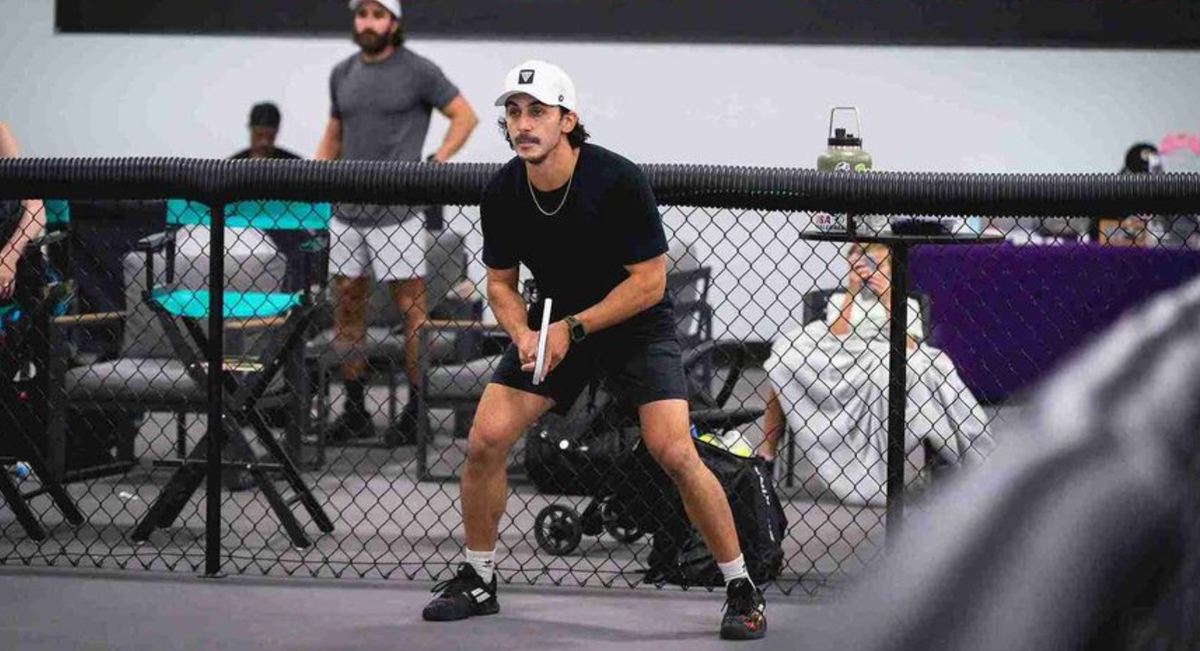
What Right Side Pickleball Means for Your Game
If you're serious about improving your pickleball, understanding the differences between right side pickleball and left-side play is crucial.
- It explains why certain players dominate one side and struggle on the other.
- It also explains why switching sides feels so disorienting — you're not just changing your position, you're changing the fundamental geometry of how you play.
The doubles stacking strategy connects directly to this — knowing which side gives your team the best geometric advantage is part of how elite pairs set themselves up to win.
The next time you're on the court, pay attention to how the geometry shifts when you move from left to right.
Notice how your options change, how your partner's positioning affects your coverage, and how your opponents' attack angles shift.
That awareness is the first step toward mastering both sides of the court.
If you're still working on solidifying your fundamentals before locking into a side, these 8 doubles strategies nobody talks about are a great place to build that foundation.
And if you want to understand how your positioning decisions connect to shot selection under pressure, ball height and court positioning gives you a clean framework for making better decisions in real time.
💡
Heads up: hundreds of thousands of pickleballers read our free newsletter.
Subscribe herefor cutting edge strategy, insider news, pro analysis, the latest product innovations and more.
Frequently Asked Questions
Frequently Asked Questions
Why is right side pickleball harder than left side?
Right side pickleball is harder because the court geometry gives you fewer options when defending. When your opponent hits a drop shot to you on the right, you have limited angles to keep the ball away from your left-side partner. The left side offers more court space and more forgiving geometry, making it naturally easier to defend and construct points.
Can professional pickleball players play both sides equally well?
Most professional players specialize in one side because the differences in right side pickleball are so significant. While top pros can play both sides competently, they typically dominate one side and use the other as a secondary position. Switching sides mid-career is a major undertaking that requires years of practice to master.
What's the biggest difference in dinking strategy between left and right side pickleball?
On the right side, your dink placement needs to be more precise because the geometry gives your opponents better attacking angles. On the left side, you have more margin for error because the court layout naturally protects you from certain attacks. This means right-side players must develop more refined dinking skills than their left-side counterparts.
Should I specialize in one side or try to be equally comfortable on both?
For most recreational players, specializing in one side of the court initially is the smarter path. You'll develop better court sense, more reliable shot selection, and a deeper understanding of how geometry affects your game. Once you've mastered one side, you can work on building out your secondary side.
How does partner positioning affect right side play?
Your partner's positioning on the right side is crucial because they have more natural poaching opportunities than on the left. This means you're defending a wider area and can't rely on them to cover as much ground. Understanding your partner's tendencies and adjusting your coverage accordingly is essential for success in right side pickleball.
The Dink Pickleball is the leading source for pickleball news, strategy, and community. For more insights from top players and coaches, subscribe to their channel and join the conversation.
Anuncie Aqui / Advertise Here
Sua marca para o mundo Pickleball! / Your brand for the Pickleball world!



 English (US) ·
  Portuguese (BR) ·