
 English
  Spanish
  Portuguese
  German
  Italian
  Japanese
  French
  Polish
  Russian
  Netherlands
  Hungarian
  Turkish
  Videos
  Thedink Pickleball

Getting beat down the line usually starts before the final shot is hit. Fix the angles you create and the coverage system you use, and that opening disappears.
Getting beat down the line in pickleball feels random in the moment, but it almost never is. The opening was created one shot earlier, not by your opponent's brilliance but by where your shot landed.
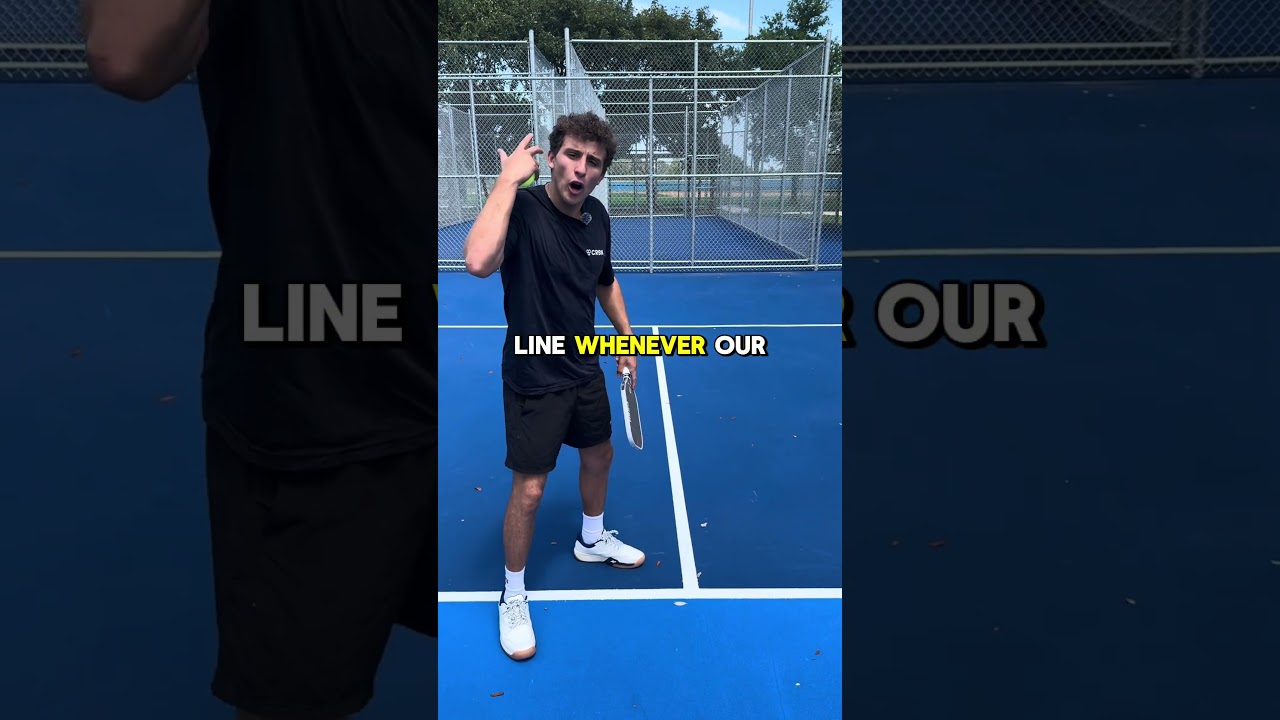
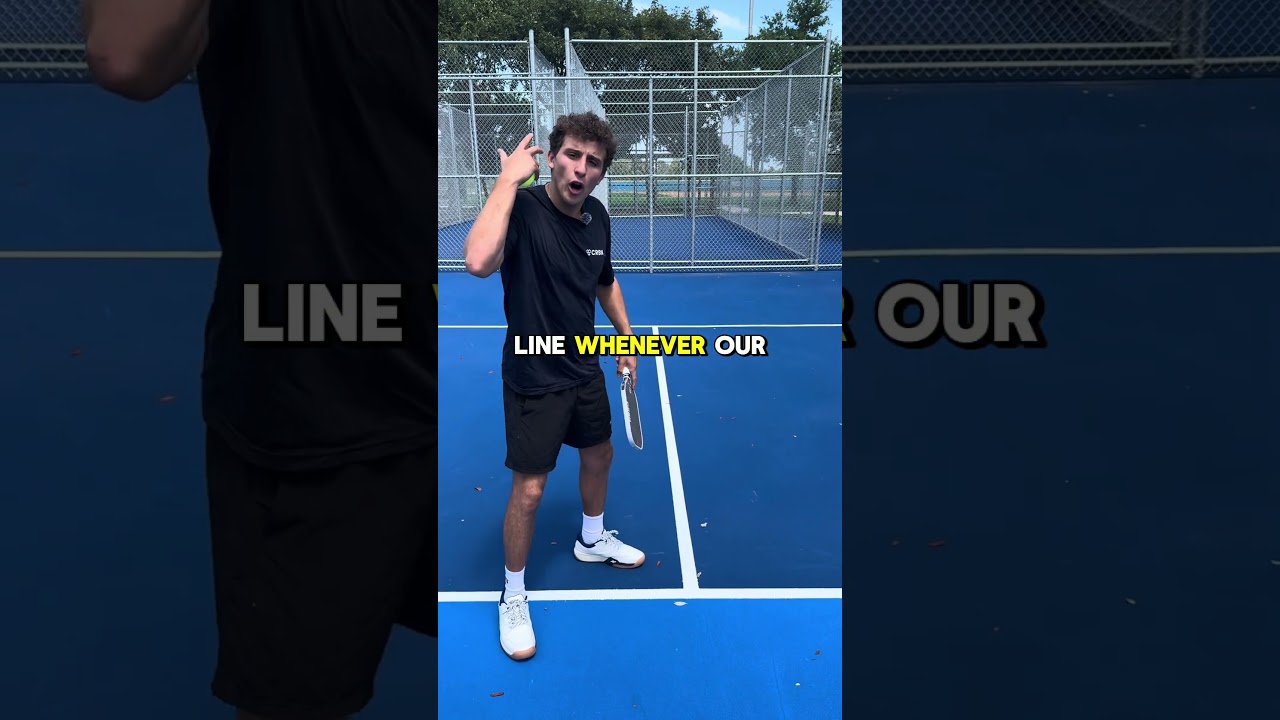
That is the core problem. Most players react to the down-the-line winner with frustration, when they should be looking at their own shot first.This breakdown comes from Better Pickleball on YouTube, where coach CJ Johnson walks through the exact mechanics of how angles get created and what you and your partner need to do to close them down.
Love pickleball? Then you'll love our free newsletter. We send the latest news, tips, and highlights for free each week.
The Shot Before the Shot Is Where It Goes Wrong
Here is the truth that most players miss: you often create the down-the-line opening yourself with the shot you hit before the winner lands.
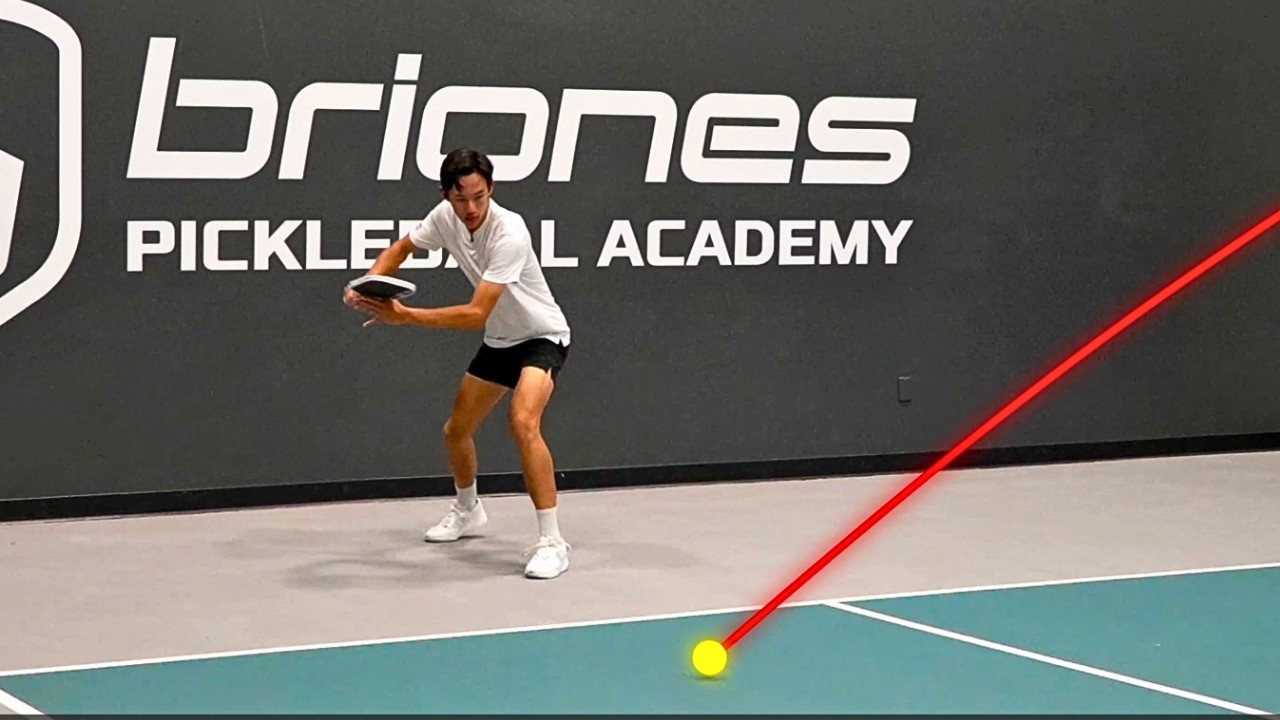
When the ball comes to your opponent's forehand side and you return it back toward that same side of the court, you are pulling your own partner out of position.
The sideline opens up. Your opponent does not have to do anything clever.
They just have to hit to the space you left.This is exactly what CJ demonstrates in the video. The ball goes to Sarah's forehand. The return goes back to Sarah's right.
That one shot creates a triangle of open space down the line that takes at minimum two coordinated movements to close.
Understanding this cause-and-effect relationship is the first step toward better pickleball positioning.
Simple pickleball strategy always starts with recognizing what your shot does to the court geometry, not just where it lands.
What Does "Creating an Angle" Actually Mean?
An angle in pickleball is created any time your shot pulls your opponent wide of the center of the court.
The wider they are, the more open court exists on the opposite side.Think of it this way. When the ball is in the center of the court, your opponent has very few places to put it. The sidelines are far away.
Both of them are at risk of going wide.But the moment you hit the ball out toward their forehand wing, you hand them a straight sideline shot that barely has to travel any distance at all to be a winner.
This is not about your opponent being better than you. It is about court geometry and pickleball positioning.
Cross-court strategy in pickleball works precisely because of these angular principles. When you understand them, you stop being surprised by them.
💡
Need some new pickleball gear? Get 20% off select paddles, shoes, and more with code THEDINK at
Midwest Racquet SportsHow Should You and Your Partner Move to Cover the Line?
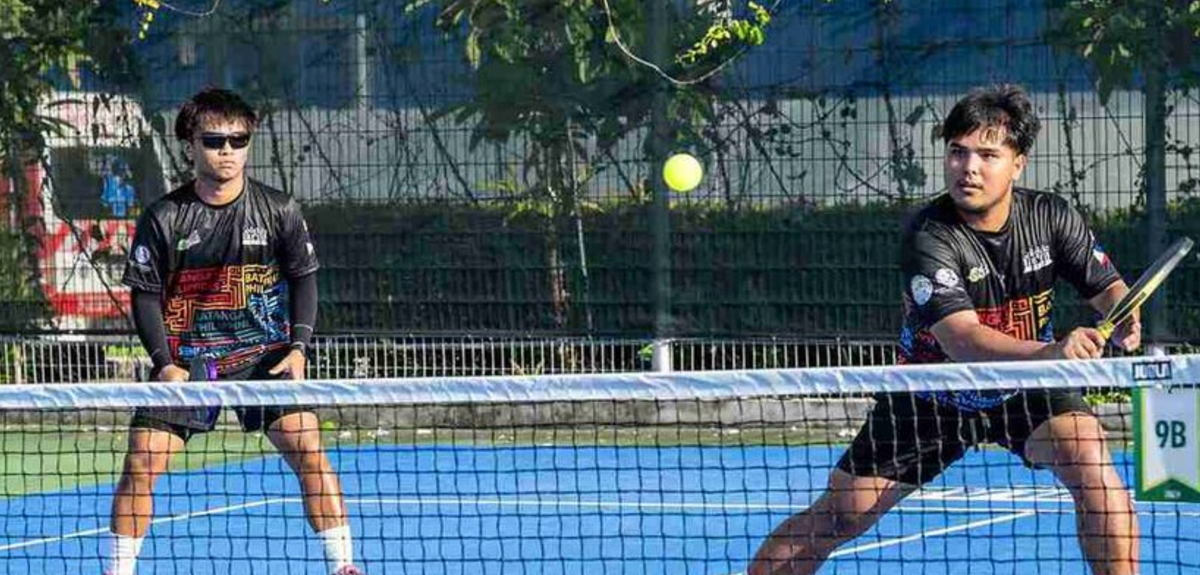
The covering player needs to take two steps toward the sideline, and the off player needs to shift one step toward the center.
Both movements happen at the same time, the moment the ball goes wide.Here is the step-by-step pickleball court coverage movement CJ outlines:
- The near player moves two steps toward the sideline. This closes the down-the-line angle before the opponent can use it.
- The off player shifts one step toward the center. This prevents leaving the middle wide open while you cover the line.
- The off player angles their body toward the ball. Do not stay parallel to the non-volley zone line. Turn to face the side of the court where the ball is.
- Both players keep their paddles up and ready. The shift does nothing if your hands are slow when the ball comes.
Senior Doubles Strategy in Pickleball: What Changes
Senior doubles strategy in pickleball differs from regular doubles in three specific ways: coverage assignments, shot selection standards, and how early partners communicate. The rules, court, and scoring stay identical.
 The Dink PickleballThe Dink Media Team
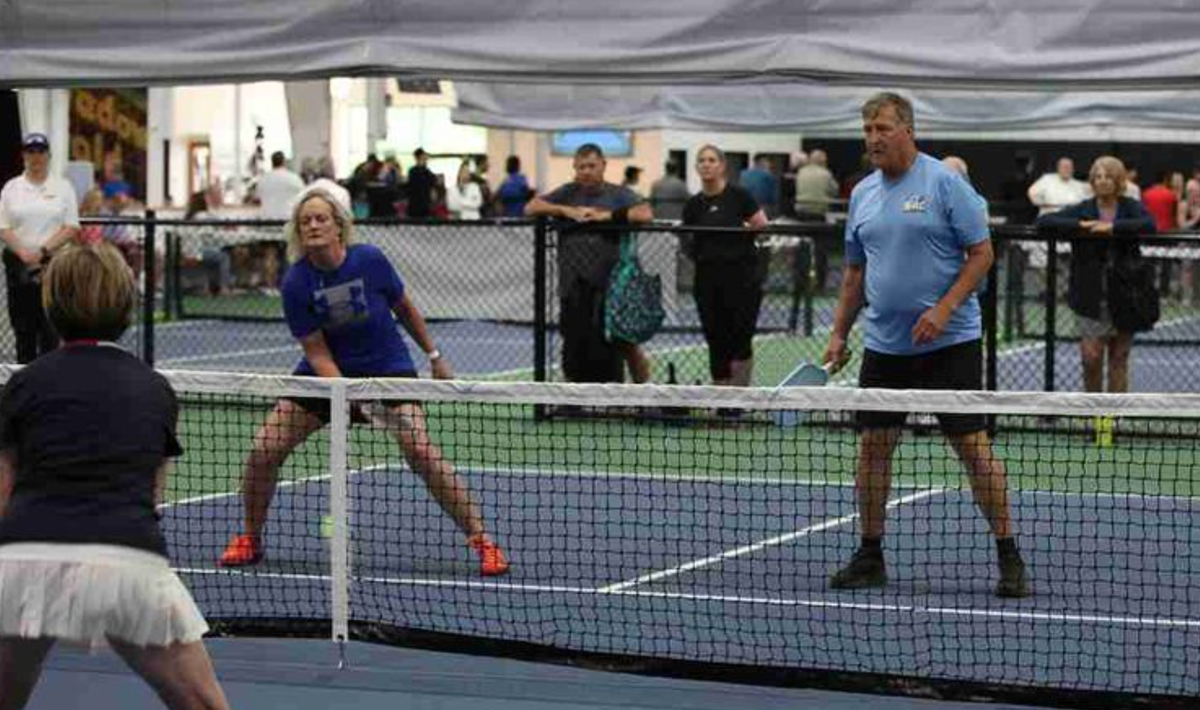
The critical mistake most doubles teams make is only one player moves. The near player slides over to cover the line and leaves a massive hole in the center.
Then the opponent just changes direction and goes through the middle instead.
You have to move as a unit.If you want to understand how these positional errors show up repeatedly in doubles play, this breakdown of common pickleball positioning mistakes is worth your time.
When to Cross the Center Line and Cover Your Partner in Pickleball
Most 3.5 to 4.0 pickleball players treat the center line pickleball like an invisible wall they can’t cross. This fundamental misunderstanding is costing them matches and limiting their doubles strategy. Here’s what you need to know to fix it.
 The Dink PickleballThe Dink Media Team
The Goalie Concept: Angle Your Body to the Ball
Think of yourself as a goalkeeper. A soccer goalie never stands flat and parallel to the goal line when a player is attacking from the left wing.
They angle their body so the V of their coverage faces the ball.
CJ uses this exact mental model. When the ball is on your side of the court, your body should be angled toward that side.
When the ball is on your partner's side, your body should rotate to face that corner.
The V formed by your two outstretched arms, or in this case your reach and your paddle range, should always point at the ball.This matters because most players stand square to the net out of habit.
That feels organized, but it actually leaves diagonal gaps that a smart opponent can find quickly.
Sound pickleball court positioning is not just lateral, and covering your partner without leaving gaps requires this kind of body rotation.
The same principle applies as both teams move up toward the non-volley zone. Your pickleball positioning does not freeze once you reach the kitchen line.
As the ball shifts from side to side, your body angle has to shift with it.
Every shot is a new read.How to Set Realistic, Achievable Pickleball Goals
Your pickleball future isn’t decided by how much you play. It’s decided by how well your body holds up. Build a schedule you can live with, not one that destroys you.
 The Dink PickleballThe Dink Media Team

Why Hitting to the Center Solves the Problem Before It Starts
The simplest fix for getting beat down the line is to stop creating the angle in the first place.
Hit to the center target, and your opponents have almost nowhere to go.When the ball is in the center of the court, here is what happens to your opponents' options:
- The sidelines are equally far away on both sides.
- Any shot toward the line carries a higher risk of going out of bounds.
- Neither player has a comfortable forehand wing attack.
- Your team's pickleball court coverage holds both sides without leaving a gap in the middle.
Pickleball Footwork Tips for Seniors: Save Your Knees
Most pickleball footwork tips for seniors get sold as knee insurance, which is the wrong frame. The real win is arriving earlier so your knees never have to bail you out of an emergency reach.
 The Dink PickleballThe Dink Media Team
CJ demonstrates this clearly.
When he and his partner hold the center target, they can both extend their paddles outward and cover the vast majority of the court without taking a single step.
The angles simply do not exist because nobody created them.This is core pickleball strategy that works at every level. Beginners get beat down the line because they hit the ball wide without thinking about what that creates.
Players who understand angles hit to the center by default, and they force opponents to create their own opportunities rather than handing them open court.
When to Cross the Center Line and Cover Your Partner in Pickleball
Most 3.5 to 4.0 pickleball players treat the center line pickleball like an invisible wall they can’t cross. This fundamental misunderstanding is costing them matches and limiting their doubles strategy. Here’s what you need to know to fix it.
 The Dink PickleballThe Dink Media Team
What Happens If You Do Create an Angle?
If you hit the ball wide, you have to immediately commit to the coverage movement before your opponent even swings.
Waiting to see where the shot goes is too late.
The moment your ball travels toward your opponent's forehand wing, start moving. Do not wait to confirm they are going down the line.
By the time you see the paddle face angle toward the sideline, the ball is already past you.
Early movement is the only way to get there in time.Your partner's job in that same half-second is to start sliding toward the center. This is trained pickleball positioning, not a reaction.
The two of you need to have an understanding before points are played: wide ball means automatic coverage shift, every single time.
Pickleball defense mastery comes down to these pre-committed movement patterns, not improvised scrambles.
One more thing worth noting from CJ's breakdown: the sideline shot does carry risk for the opponent.
If they miss, the ball is out. That is a consequence that exists when you force them wide.When the ball sits in the center, there is no risk for them to take. Every ball they hit is comfortably away from the out-of-bounds lines.
Kitchen Line Angles Pickleball: Shot Placement System
Kitchen line angles in pickleball are the difference between dinking to survive and dinking to win. This shot placement system shows you exactly how to use angles to move opponents, create openings, and take control at the non-volley zone.
 The Dink PickleballThe Dink Media Team
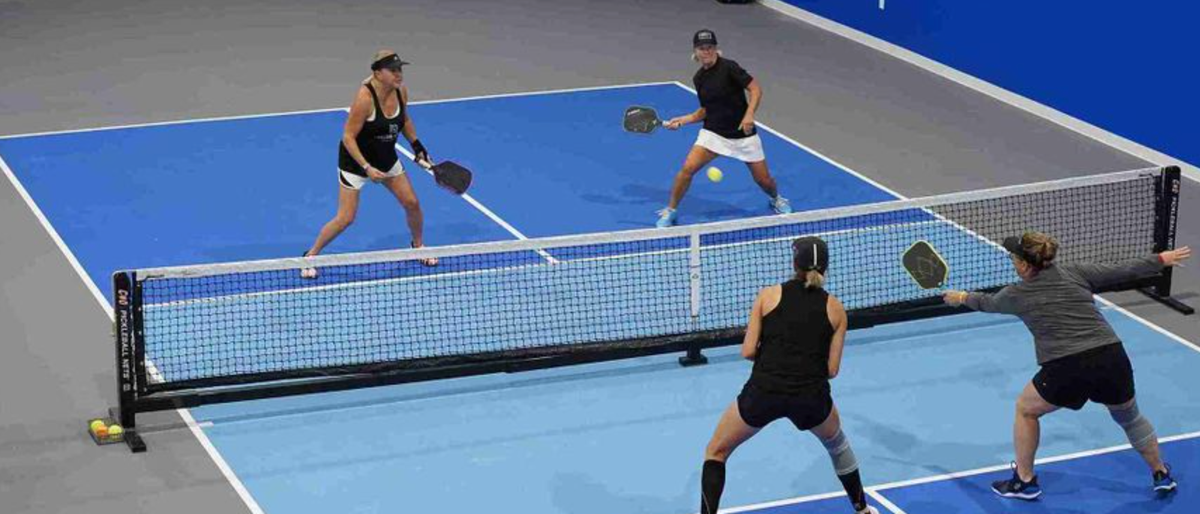
Putting It All Together in a Real Rally
Pickleball court coverage is a team system, not an individual response. One player moving correctly while the other stays flat does almost nothing.
Here is the full mental checklist to run through during a rally:
- Before you hit: Where is the ball going to land relative to your opponent's position? Are you about to create a wide angle?
- As you hit: If the answer is yes, start your lateral movement the moment you make contact. Do not wait.
- Your partner: They need to mirror your movement by shifting toward the center as you slide toward the line.
- Body angle: Both players should be angling the V of their coverage toward the ball at all times, not standing parallel to the net.
- Long-term fix: Build the habit of targeting the center so you create fewer wide angles in the first place.
These habits take repetition. Work on this specifically in drills where one player feeds wide and both players practice the coverage shift together.
Advanced pickleball drills should include exactly this kind of coordinated movement work, not just solo shot mechanics.If you want to go further with your doubles pickleball positioning, look at how your shot selection during the transition zone creates or eliminates angles before you even reach the kitchen.
The staggered transition is one of the most overlooked ways to control where the ball ends up before you are even at the line.
The down-the-line shot is not magic. It is geometry.Once you see the angles clearly, you stop giving your opponents free winners and start forcing them into uncomfortable positions instead.
Knowing how to beat different player types starts with pickleball court positioning that never hands any of them open court they did not earn.
Get the center target habit locked in. Move as a unit. Angle your body to the ball.The down-the-line problem does not disappear overnight, but it does get significantly smaller the first time you actually run this system in a real match.
💡
Heads up: hundreds of thousands of pickleballers read our free newsletter.
Subscribe herefor cutting edge strategy, insider news, pro analysis, the latest product innovations and more.
Frequently Asked Questions
Why do I keep getting beat down the line even when I think I'm covering it?
The most common reason is that you are moving after you see the shot instead of before it. The moment your ball travels wide to your opponent's forehand, you need to start sliding toward the sideline. Waiting to react to their paddle face is too late at any competitive speed.
What is the best shot to hit so opponents can't attack down the line?
Hit to the center of the court. When the ball lands in the center, your opponents have to travel far in either direction to create a sharp angle, and any shot toward the sidelines carries a real risk of going out. Center targets are the simplest and most consistent way to eliminate down-the-line openings.
How should my partner and I coordinate coverage when the ball goes wide?
The near player moves two steps toward the threatened sideline, and the off player shifts one step toward the center at the same time. Both players angle their bodies toward the side of the court where the ball is, rather than standing parallel to the non-volley zone line. This has to be a pre-agreed habit, not a real-time conversation.
Does the goalie angle concept apply when both teams are at the kitchen line?
Yes, and it matters even more at the kitchen line because exchanges happen faster there. As the ball moves from side to side during a dinking rally, both players should continuously rotate their body angle so the V of their coverage stays aimed at the ball. Players who stay flat to the net consistently get caught out of position.
What is the risk my opponent takes when they go down the line?
A down-the-line shot travels close to the sideline, which means any error in direction or pace sends the ball out of bounds. When you force opponents wide, you make them take that risk. When the ball sits in the center, they can attack anywhere without any sideline danger, which is exactly why center targets matter so much.
Anuncie Aqui / Advertise Here
Sua marca para o mundo Pickleball! / Your brand for the Pickleball world!




 English (US) ·
  Portuguese (BR) ·