
 English
  Spanish
  Portuguese
  German
  Italian
  Japanese
  French
  Polish
  Russian
  Netherlands
  Hungarian
  Turkish
  Videos
  Thedink Pickleball

If you keep swinging at balls that were always going to fly out, this pickleball drill is built for you. The Walker Sisters' Dodgeball drill trains your body to step aside and let the point come to you.
You know exactly what this feels like.
A hard drive comes at you, your arm goes up on instinct, and you make contact with a ball that was sailing two feet out of bounds.
Your partner groans. You already know what happened. But knowing it and stopping it are two completely different things.
This pickleball drill from Walker Sisters Pickleball, Angie and Alex Walker, is designed specifically to train that instinct out of you.
It is called the Dodgeball drill, and it is one of the most practical court exercises you can add to your practice routine right now.
Love pickleball? Then you'll love our free newsletter. We send the latest news, tips, and highlights for free each week.
Why Hitting Out Balls Is Such a Costly Habit
Most players understand the rule: if a ball is going out, let it go. The problem is that your body does not get the memo fast enough.
When a hard drive comes directly at you or just past your shoulder, your paddle moves before your brain has a chance to evaluate the trajectory.
That reaction is hardwired. It takes deliberate training to override it.
This is one of the most common unforced errors in pickleball, and it costs points at every skill level.
You are handing the opponent a gift every time you put a ball back in play that they hit out.
The Dodgeball drill gives you a structured, repeatable way to practice the movement your body needs to stop doing the wrong thing automatically.
How Does the Dodgeball Drill Actually Work?
The setup is simple and you only need two players.
- One player stands at or near the kitchen line as the net player.
- The other player, the feeder, stands across the net and hits hard drives directly at or near the net player.
Before the drill begins, the net player picks a secret magic number between one and ten and tells their partner what it is.
The feeder counts out loud while hitting drives, one number per shot.
When the feeder calls the magic number, the net player turns their body and lets the ball go, no matter where it is headed.
In or out, it does not matter for this drill.
That last part is important. The goal is not to judge the ball. The goal is to practice the physical act of turning away and clearing space so the ball can pass.
💡
Need some new pickleball gear? Get 20% off select paddles, shoes, and more with code THEDINK at
Midwest Racquet SportsStep-by-Step Breakdown of the Drill
- Choose a magic number. The net player picks any number between one and ten and tells their partner before the drill starts.
- Feeder begins driving. The feeder hits steady, hard drives at the net player, calling out numbers as they go.
- Net player receives normally. For every number that is not the magic number, the net player handles the ball as they would in a match.
- On the magic number, the net player turns. As soon as the magic number is called, the net player pivots their body and lets the ball fly past them completely.
- Repeat until the movement becomes natural. Run the drill enough times that stepping aside no longer feels awkward or hesitant.
- Switch roles. Once the net player is comfortable, the players swap positions so both players get the repetition.
The random element of the magic number is what makes this drill work.
You cannot anticipate exactly when you will need to move, which mirrors what happens in a real match.
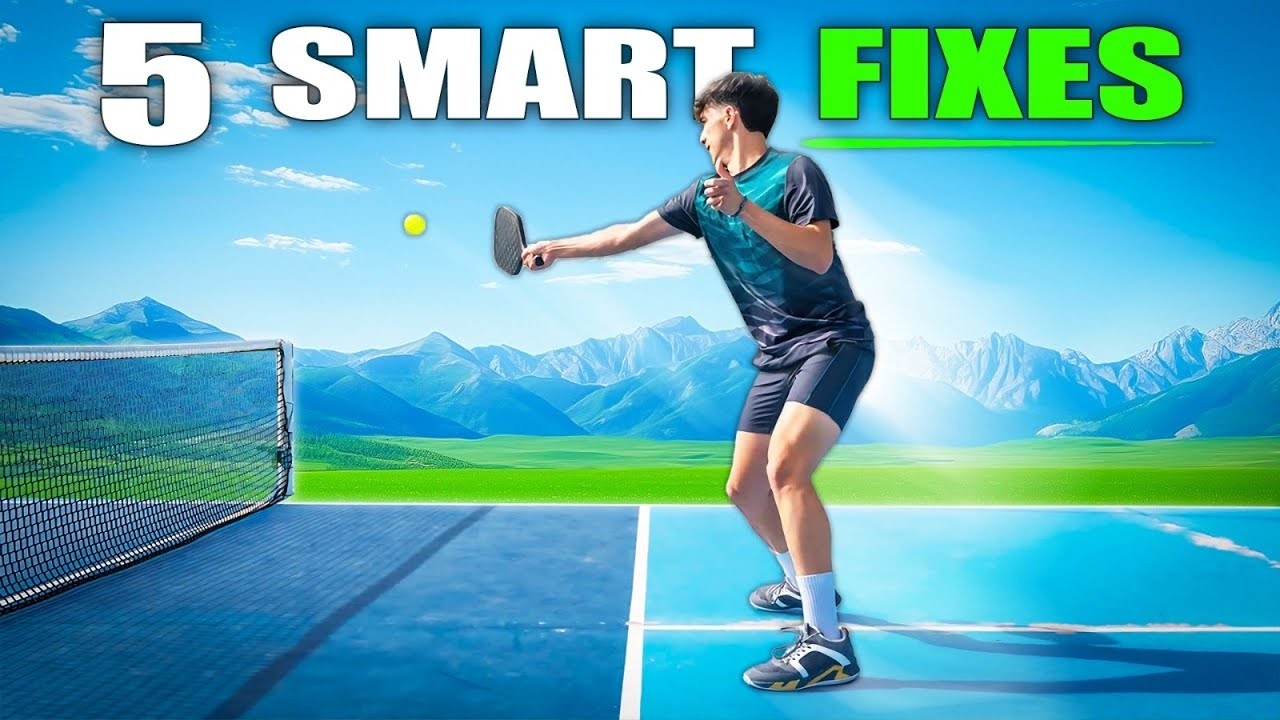
5 Pickleball Drills That Will Transform Your Game in 2026
Five simple yet powerful pickleball drills can completely reshape how you play. These mechanics focus on consistency, footwork, and positioning to help you see immediate results on the court.
 The Dink PickleballThe Dink Media Team
What Are You Actually Training Here?
You are training two things at once: body awareness and decision speed.
Body awareness means knowing how to physically get out of the path of a ball without panic.
Many players who try to let a ball go still end up tipping it with their paddle because they never practice the actual movement of clearing their body.
Decision speed means compressing the time between seeing a ball heading out and committing to the let-it-go choice.
Right now, that gap is probably too long. This drill shortens it through repetition.
If you have been working on impulse control in pickleball, the Dodgeball drill is a perfect physical complement to that mental work.
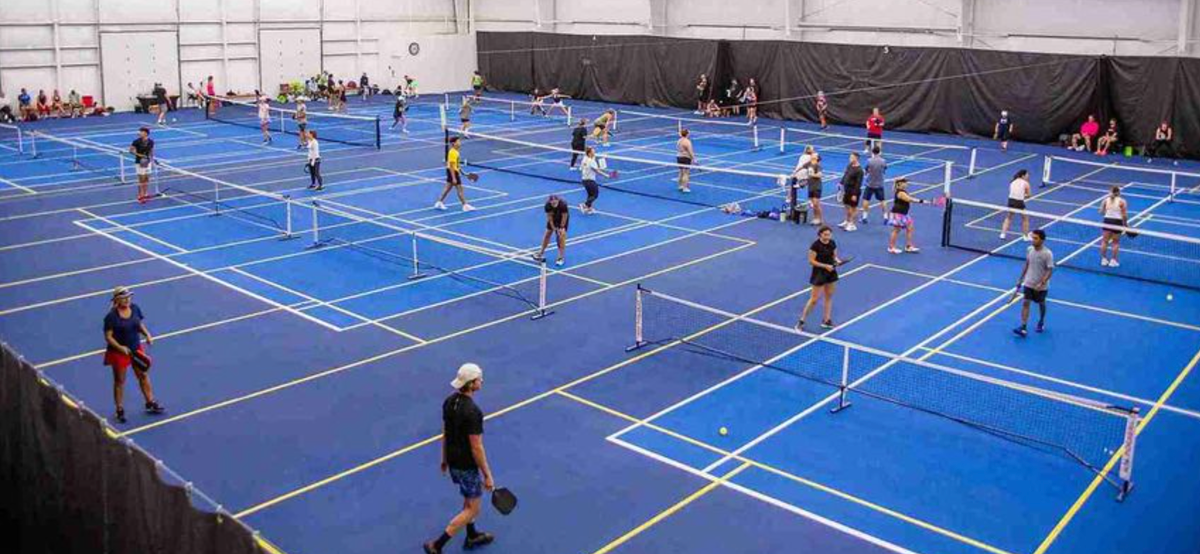
Pickleball Court Measurements: Every Line Explained
Pickleball court measurements follow exact USA Pickleball standards, with a total playing surface of 44 feet long by 20 feet wide. This guide breaks down every line, zone, and dimension so you never second-guess what’s in bounds or out.
 The Dink PickleballThe Dink Media Team
Why the Magic Number System Works So Well
You might wonder why you need a random cue at all. Why not just practice letting balls go whenever they look out?
The answer is that in practice, you will start predicting. If you always dodge the fifth ball, your body learns a pattern and it stops being a real test.
The random number forces genuine surprise, which is exactly what you face in a match.
This also keeps the drill honest. You cannot cheat a random number. When it comes, you either commit to the movement or you do not.
Think about how hard drives come at you in a real game. There is no countdown. There is no warning.
The Dodgeball drill trains your nervous system to respond to an unexpected trigger, which is a much closer match to real conditions than any predictable drill can offer.
Players who want to handle hard hit balls at the body more confidently will find that the Dodgeball drill builds the foundation for those reactions.
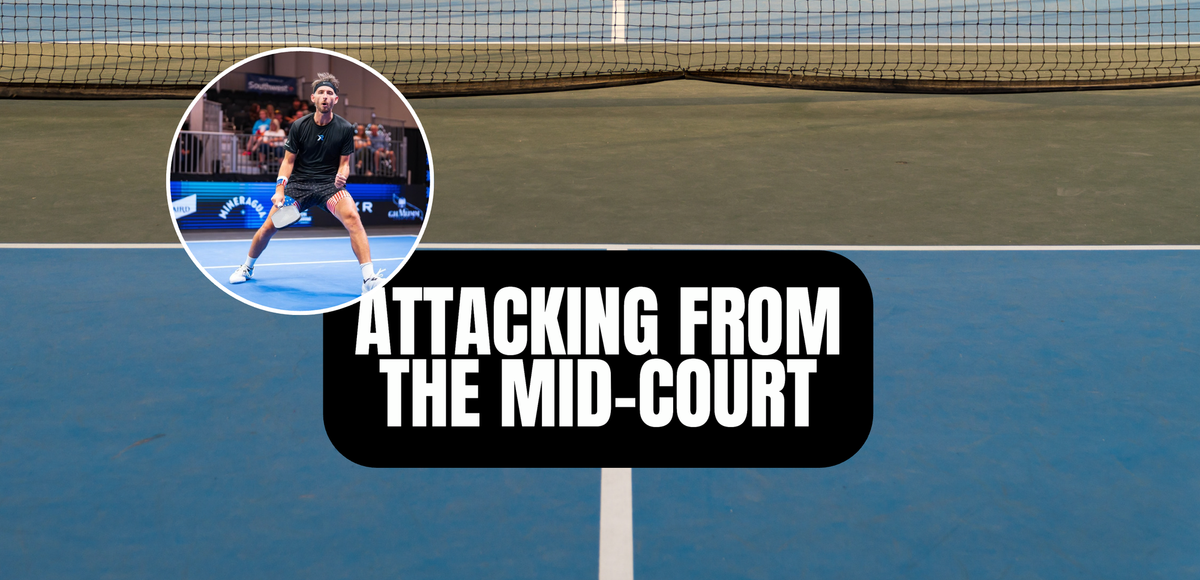
How to Attack (and Dodge Attacks) from the Pickleball Transition Zone
Due to technological advancements and pickleball athletes getting better and better, certain shots that were once rare or even considered taboo are now at the forefront of the game.
 The Dink PickleballEric Roddy
How Do You Know When to Let a Ball Go in a Real Match?
This is the question the drill is ultimately preparing you to answer faster. There is no perfect formula, but there are strong signals.
- The ball is above shoulder height and moving away from the court. A drive that rises above your shoulder at the kitchen line is almost always going long.
- The ball travels past your hip without dropping. If a fast ball has not started descending by the time it reaches your body, let it continue.
- Your partner calls out. If you hear your partner say "out," trust them and get your paddle out of the way immediately.
- The drive has no topspin pulling it down. A flat drive hit hard with no topspin is far more likely to sail out than a ball with heavy topspin.
- You are already at the kitchen line. The closer you are to the net, the easier it is for a hard drive to fly over your head and out.
Knowing these signals is one thing. Reacting in time is another. That is exactly the gap the Dodgeball drill closes.
If you want to understand why certain balls keep going long on you, this breakdown of out of bounds shots is worth reading alongside this drill.
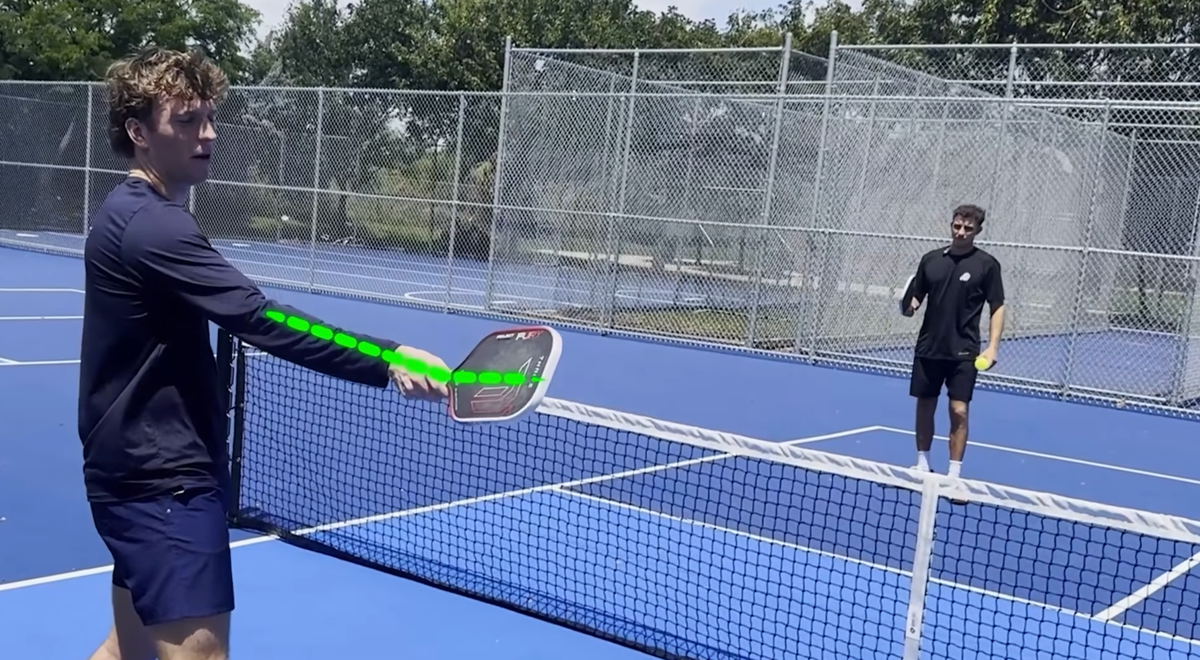
Fourth Ball Pressure: The Shot Changing Pickleball in 2026
Fourth ball pressure is the shot that separates elite players from the rest. This aggressive midcourt technique applies relentless pressure on opponents and makes it nearly impossible to establish net control.
 The Dink PickleballThe Dink Media Team
Can This Drill Help You Win More Free Points?
Yes, and the points you win this way are the easiest ones in the game.
When your opponent hits a ball that is going out and you let it land, you win the rally without touching it. No risk. No technique required.
Just patience and positioning.
Those free points add up faster than you think. Many of the mistakes costing beginners the most points come from not trusting the ball to go out on its own.
The Dodgeball drill teaches you that trust through repetition, not theory.
Advanced players who work on what separates them from recreational players consistently point to recognizing out balls as one of the clearest markers of skill progression.
How to Win Points Off Your Pickleball Serve
Winning points off your pickleball serve starts with understanding placement and spin, two tools most players massively underuse. This guide breaks down the exact combos that force weak returns and set you up to finish the point.
 The Dink PickleballThe Dink Media Team
How to Get the Most Out of This Drill in Practice
A few adjustments will make this drill much more effective than just running through the numbers mindlessly.
- Start with a low magic number range. If you use numbers one through five, the trigger comes more often and you get more repetitions of the evasion movement early in the session.
- Have the feeder vary ball placement. Drives directly at the body, to the backhand side, and slightly wide all require slightly different evasion movements. Get comfortable with all of them.
- Focus on your footwork, not your hands. The instinct when a ball comes at you is to move the paddle. Practice keeping the paddle low and moving your feet instead.
- Run the drill in sets. Do five to ten drives per set, then switch roles. Short focused sets beat long unfocused ones.
- Increase the feeder's pace over time. As you get comfortable, have the feeder hit harder. The reaction window gets shorter, and the drill gets more realistic.
If you have limited court time, this drill is efficient because it requires no complex setup and produces immediate, visible improvement.
Making the most of limited court time means choosing drills that give you high reps on high-value skills, and this one qualifies.
5 Pickleball Drills a PPA Pro Still Uses Every Practice
Most players waste practice time on the wrong pickleball drill. These five drills from a PPA pro build the exact skills that win real matches.
 The Dink PickleballThe Dink Media Team
What Comes After You Master Letting Balls Go?
Once your body stops flinching at hard drives and you are consistently letting out balls pass, the next step is reading the ball earlier in its flight.
Right now, you are reacting after the ball reaches you.
The goal is to start making the out-ball decision when the ball is still on your opponent's paddle side of the net.
That is where true point-winning awareness lives.
Pairing the Dodgeball drill with work on building faster hands at the net gives you a complete package.
You become someone who can handle the ball when it needs to be handled and step aside when it does not.
Players who also struggle with habits that keep intermediate players stuck will often find that chasing out balls is one of the patterns holding them back the most.
This drill is a direct fix.
The Dodgeball drill is one of those rare exercises that is almost embarrassingly simple but produces real, match-day results.
Run it consistently, and the points you used to give away will start staying in your column instead.
💡
Heads up: hundreds of thousands of pickleballers read our free newsletter.
Subscribe herefor cutting edge strategy, insider news, pro analysis, the latest product innovations and more.
Frequently Asked Questions
What is the Dodgeball pickleball drill?
The Dodgeball drill is a partner drill where a feeder hits drives at a net player while counting out loud. When the feeder reaches a pre-chosen magic number, the net player turns and lets the ball fly past instead of hitting it. The drill trains players to physically clear the path of out balls rather than reflexively swinging at them.
How do I know if a pickleball is going out before I hit it?
The clearest signs are a ball rising above shoulder height at the kitchen line, a flat drive that has not started dropping by the time it reaches your body, or a call from your partner. Developing this read takes repetition, which is exactly what the Dodgeball drill provides.
Why do I keep hitting balls that are out in pickleball?
Your paddle moves on instinct before your brain has time to judge the ball's trajectory. This is a natural reaction that takes deliberate practice to override. Drills like the Dodgeball drill train the physical evasion movement so your body stops defaulting to the swing.
How many players do you need for the Dodgeball drill?
You only need two players. One acts as the feeder hitting drives, and the other stands at the kitchen line as the net player. After a set, you switch roles so both players get repetitions on the evasion movement.
Is the Dodgeball drill good for beginners or more advanced players?
It works for both. Beginners need it because they have not yet developed any out-ball awareness at all. More advanced players benefit because it sharpens reaction speed and reduces the occasional reflex error that still slips through even at higher levels.
Anuncie Aqui / Advertise Here
Sua marca para o mundo Pickleball! / Your brand for the Pickleball world!




 English (US) ·
  Portuguese (BR) ·