
 English
  Spanish
  Portuguese
  German
  Italian
  Japanese
  French
  Polish
  Russian
  Netherlands
  Hungarian
  Turkish
  Videos
  Thedink Pickleball

Most players split step at the wrong moment and don't even know it. Fix your split step pickleball timing and you'll feel the difference on every single shot.
Split step pickleball footwork is the single move that separates players who look composed on the court from those who always seem to be a half-second behind the ball.
If you've ever felt like you're scrambling through shots, falling into the ball, or getting caught mid-stride when your opponent attacks, the split step is the fix you've been skipping.This breakdown covers exactly what the split step is, the timing mistake most players make, how to do it correctly, and three specific situations where it matters most.
The instruction here comes directly from Coach Jess of Athena Pickleball, who has coached thousands of hours on the court and breaks this down in a way that actually translates to real games.
Love pickleball? Then you'll love our free newsletter. We send the latest news, tips, and highlights for free each week.
What Is the Split Step in Pickleball?
The split step pickleball move is a small, controlled balancing movement that grounds your weight and resets you into a true pickleball ready position, prepared to react to whatever your opponent hits next.
It is not a big jump. It is not a wide stance stomp.It is a light, quiet moment of stability that gives your body a split second to read the ball and choose a direction.
The Best Pickleball Players Aren’t Following the Rules Anymore
Modern pickleball isn’t won by coloring inside the lines. More and more, the most successful players are also the most creative.
 The Dink PickleballZoey Weil
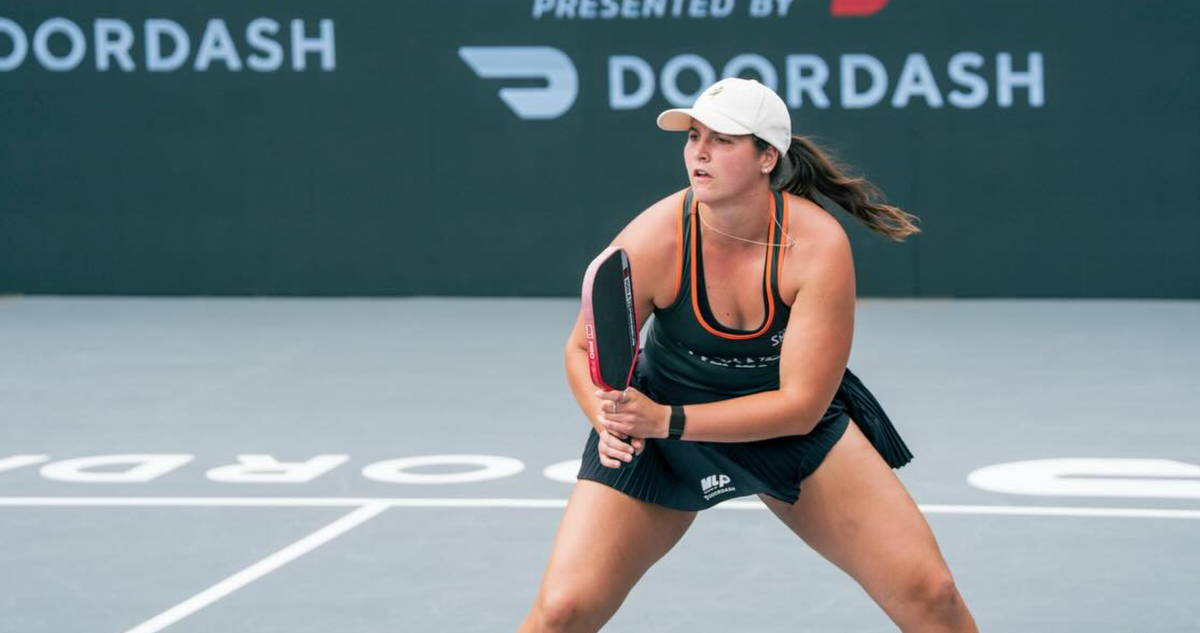
Think of it as an anchor point.
When you're moving toward the kitchen or recovering after a shot, the split step stops your forward momentum and resets your feet so you can react in any direction.
In its simplest form, imagine your heels rising slightly off the ground, then settling back into the balls of your feet with soft knees.
That's the feeling you're after. It's grounding, not forceful.How Do You Actually Do the Split Step?
Coach Jess compares the split step pickleball movement to playing hopscotch as a kid.
There's a center square (your lead step) and then two squares side by side (where your feet land after splitting).Here's the basic mechanics, broken down:
- Take a lead step forward as you approach the ball or the kitchen line.
- Split your feet into a comfortable, hip-width stance. You are not going wide. Hip width gives you shock absorption without trapping your lateral movement.
- Land quietly on the balls of your feet with soft knees. Your knees absorb the impact, not your heels.
- Stay vertical through the landing. You want to feel like you're lifting up slightly, not crashing forward into the ground.
A lot of players come in hot horizontally and let their momentum carry them forward through the split. That kills your ability to reset or redirect quickly.
Practice it first by simply stepping forward and splitting your feet in place. Then try it while walking.
Then try it while jogging and forcing yourself to land quietly.
Quiet landing equals good timing and good control.💡
Need some new pickleball gear? Get 20% off select paddles, shoes, and more with code THEDINK at
Midwest Racquet SportsWhat Are the Most Common Split Step Mistakes?
Three split step pickleball mistakes show up constantly, even in intermediate players who think they already have a split step.
- Too heavy: Players stomp into the split step like they're trying to stick to the court. The goal is lightness. Heavy landings slow your next movement down dramatically.
- Too wide: A stance that's beyond hip width locks your hips and makes lateral movement harder. You want to feel like you could spring in any direction immediately after landing.
- Too much forward lean: Letting your body tilt forward through the split means your momentum is still carrying you. Think about a slight upward lift as you land. That vertical quality stops your forward drift and keeps you mobile.
If you're doing any of these, the fix isn't complicated. S
low the whole thing down in practice, focus on landing quietly, and keep your stance narrow enough that you feel athletic rather than planted.
Split Step Pickleball: The Ready Position Most Players Skip
The split step in pickleball is a small hop that puts your body in the perfect ready position just before your opponent strikes the ball. Most recreational players skip it entirely, and that single habit is costing them more points than any other technique gap.
 The Dink PickleballThe Dink Media Team
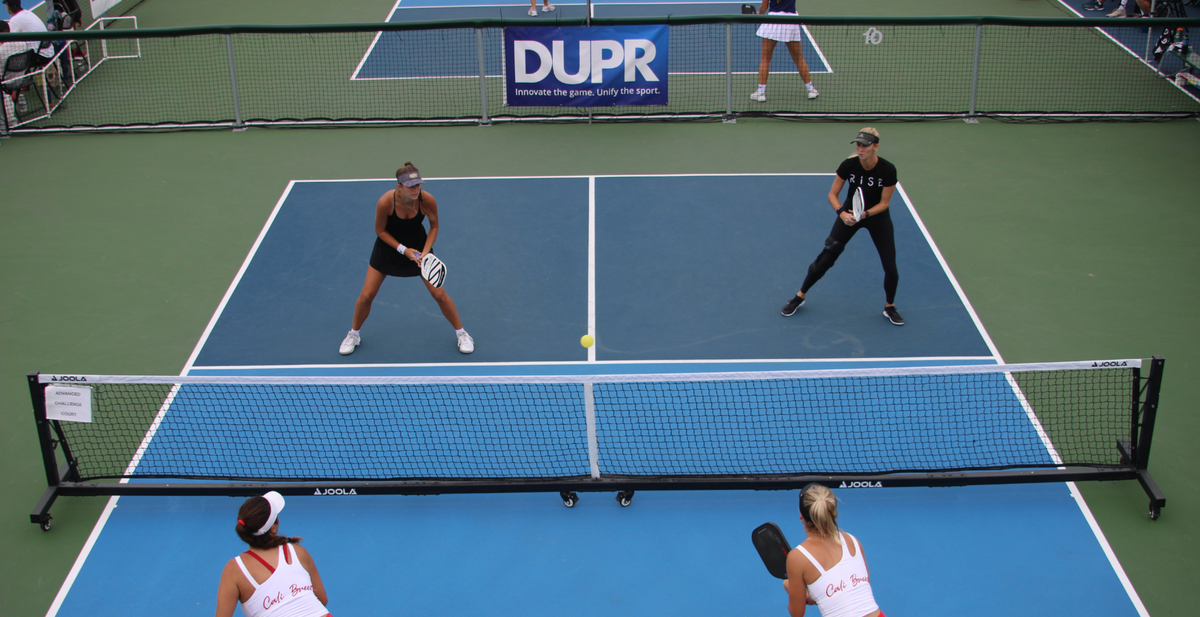
What's the Right Timing for the Split Step?
This is where most players go wrong, even players who already know what a split step is.The most common mistake is splitting as your opponent makes contact with the ball. That's too late.
By the time you've landed and stabilized, the ball is already on its way and you're still settling your feet.
The correct split step pickleball timing: you should be landing as you hear the pop of the paddle.That means you start the split step just before your opponent hits.
You're in the air (barely) during the swing, and your feet are touching down exactly when they make contact.
You are stable before the ball crosses the net.Coach Jess uses a drill to train this exact split step timing.
She holds a ball up, drops it as the signal to start moving, and then hits it while her partner focuses on landing their split step at the moment of contact.
The actual shot doesn't matter in this drill.
The only goal is getting the feet down at the right moment.
This drill is worth repeating even if you already use a split step. Most players discover they're about a half-step late once they run it honestly.For more on drills that build real on-court skills, it helps to pair pickleball footwork work with shot-specific practice so everything connects.
How to Speed Up From the Kitchen in Pickleball
Knowing when to speed up from the kitchen in pickleball is the difference between earning a point and handing one away. This guide breaks down the exact timing triggers, target zones, and attack patterns 3.5–4.0 players need to start winning more exchanges at the net.
 The Dink PickleballThe Dink Media Team
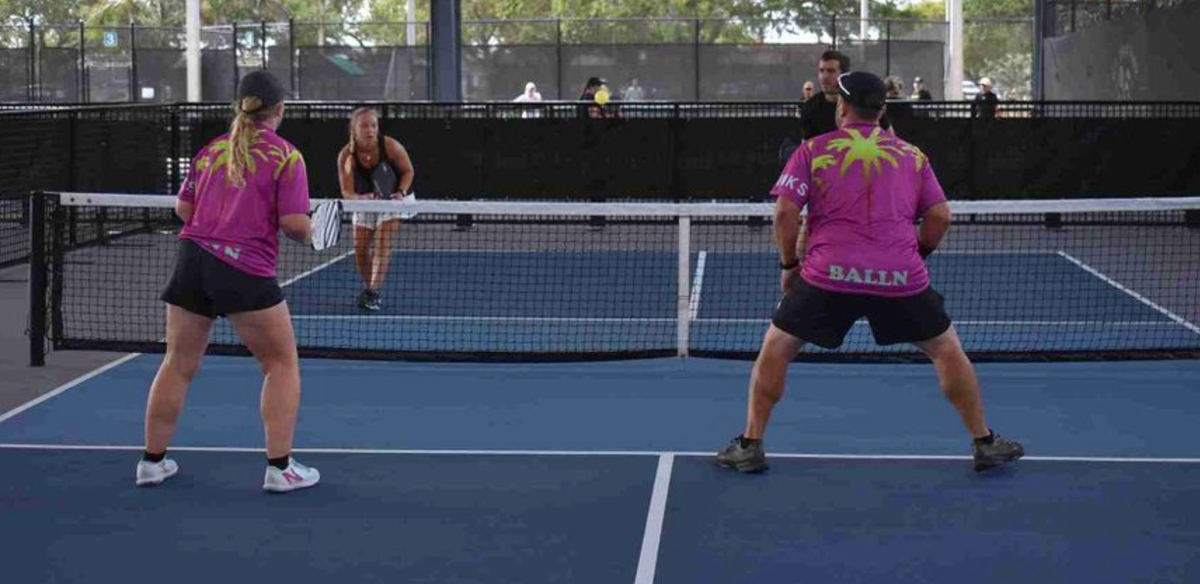
Where Should You Use the Split Step?
The split step pickleball technique applies all over the court, but there are three situations where it makes the biggest immediate difference.
1. Split Step Pickleball in the Transition Zone
The transition zone is where most points are lost at the intermediate level. Players rush through it, take balls off balance, and make errors they blame on the shot rather than the footwork.
The fix is simple: move when the ball is in the air, and split step as your opponent is about to hit.Every step forward through transition should be followed by a controlled split before contact.
This creates a rhythm. Move. Split.
Move. Split. In.You are never caught mid-stride when the ball is being struck. You are always stable when it matters.If you're struggling with the full journey from the baseline to the kitchen, look at the staggered transition approach for a more complete system.
2. On the Return of Serve
Most players think about the return of serve as just a shot.
It's actually a shot plus a movement sequence, and the split step is what connects those two things cleanly.
Stand slightly further back than usual. As your opponent's serve is about to make contact, give yourself a small split step.That grounds your weight into the balls of your feet and your quads.
Then you push forward into the return and use that momentum to get to the kitchen line faster.
Instead of taking a step back before the return (a common habit that kills forward momentum), you're using the split to create a launching point toward the net.This pairs well with serve return fundamentals that most recreational players never actually work on deliberately.
3. At the Kitchen Line
Watch any pro and you'll notice they are almost never completely flat-footed at the kitchen.
They are constantly making small weight adjustments, and those adjustments are split steps.
You don't need to split step between every single shot at your current level.
But there is one specific moment where it pays off immediately: when you've hit a dead dink and your opponent has an opportunity to speed the ball up.Take a small step back off the line, watch your opponent, and just before they attack, drop into your split.
Now you're stable and you can either reset or counter, rather than just reacting in a panic.
If resets are giving you trouble, the pickleball footwork is often the real cause.
A stable split step pickleball base creates the platform that makes a clean reset possible in the first place.
Without it, you're trying to execute a precise shot while your body is still moving.The kitchen line rewards players who are calm and balanced. The split step is the physical action that produces that calm.
It also gives you a split second of extra read time on balls that are speeding up at you, which is exactly what you need to decide between a reset and a counter.
For a closer look at how elite players control points from this position, Tyra Black's kitchen line approach is worth studying.
Split Step Pickleball: Footwork Tips for Seniors
By mastering this simple footwork move, you’ll stop your forward momentum and give your brain the split second it needs to read your opponent’s paddle.
 The Dink PickleballThe Dink Media Team
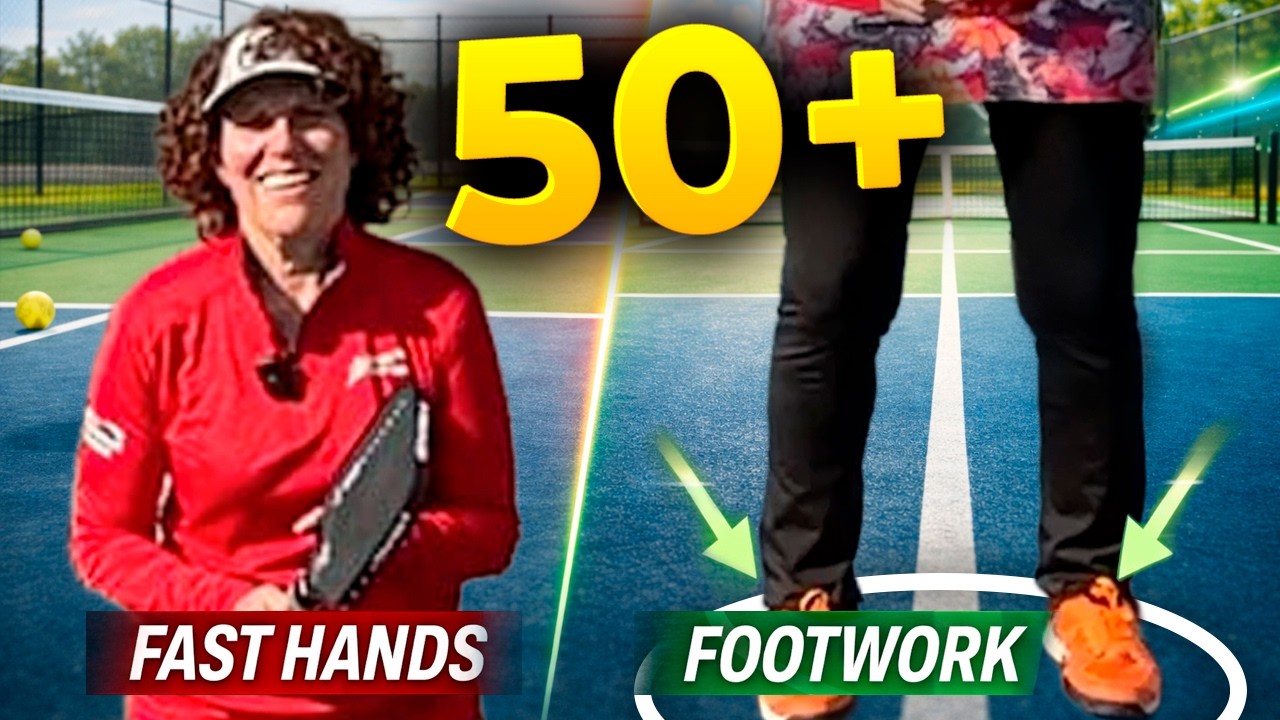
How to Practice the Split Step Deliberately
The biggest problem with footwork habits is that they disappear under pressure unless you've drilled them enough that they feel automatic.
Here's a simple progression to make the split step stick:
- Static split practice: Stand in place, rise onto the balls of your feet, and settle back down. Feel what a quiet, balanced landing actually feels like in your body.
- Walk and split: Take a step forward and split your feet at the end. Practice with both feet as the lead foot and notice which feels more natural.
- Run and land quietly: Move forward at a jog and practice stopping with a soft, quiet landing. Use your knees as shock absorbers.
- Drop drill with a partner: Your partner holds a ball up, drops it as your movement signal, and hits it while you focus entirely on landing your split at the moment of contact.
Spend two weeks being completely deliberate about this in every session. You won't regret it.
Pairing footwork practice with deliberate shot work means you're building real court habits.
Check out drills that turn weak shots into weapons to combine both at once.
Also worth noting: the split step is not just about defense or reaction.A stable base before the ball reaches you means you're attacking from balance rather than desperation.
That changes how many balls you can actually take offense on.
Look at habits that keep intermediate players stuck and you'll find footwork problems underneath almost every one of them.
If you want to know what separates 4.0 players from 4.5 and above, shot and footwork consistency is at the core of that gap.The split step is one of the few things you can fix this week that will show up immediately in your game.
Players who commit to deliberate footwork practice are also less likely to get caught in reactive, defensive patterns.
They read the court better. Their confidence goes up.
And they stop giving away easy points in the transition zone.
For players who want to protect their joints while still moving well, the split step is especially valuable because it reduces the hard lateral lunges that put stress on knees and hips.
💡
Heads up: hundreds of thousands of pickleballers read our free newsletter.
Subscribe herefor cutting edge strategy, insider news, pro analysis, the latest product innovations and more.
Frequently Asked Questions
What is a split step in pickleball?
A split step is a small balancing movement where you briefly rise onto the balls of your feet and land in a stable, hip-width stance just before your opponent makes contact with the ball. It grounds your momentum and prepares your body to move in any direction. Think of it as a reset button for your feet between shots.
When exactly should I do the split step?
You should be landing your split step at the exact moment your opponent's paddle makes contact with the ball. Most players split too late, which means they're still settling when the ball is already coming. Starting your split a split second before contact ensures you're stable when you need to react.
How wide should my feet be during a split step?
Hip width is the target. Going too wide traps your lateral movement and makes it hard to push off in either direction quickly. A hip-width stance gives you shock absorption through your knees while keeping you mobile and ready to move.
Should I use the split step at the kitchen line too?
Yes, especially when you've hit a weak or dead dink and your opponent might attack. Step slightly back off the kitchen line, watch your opponent, and use a small split step right before they make contact. This gives you a stable base to either reset or counter the speedup cleanly.
Why does my split step feel heavy and slow?
Heavy split steps usually come from coming in too fast horizontally and letting momentum crash you downward. Think of the landing as slightly vertical, like you're lifting up before you come down, rather than just running forward and stopping hard. Practice landing quietly and you'll notice the difference immediately.
Anuncie Aqui / Advertise Here
Sua marca para o mundo Pickleball! / Your brand for the Pickleball world!




 English (US) ·
  Portuguese (BR) ·