
 English
  Spanish
  Portuguese
  German
  Italian
  Japanese
  French
  Polish
  Russian
  Netherlands
  Hungarian
  Turkish
  Videos
  Thedink Pickleball

Most players have no idea they are handing opponents free angles every time they hit a weak cross court dink. This dinking tip fixes exactly that.
You are in a cross court dinking battle and you know you cannot attack the next ball. So you hit it cross court and hope for the best.
Then your opponent rips a winner wide and you are standing there wondering what just happened.
The problem is not your hands. It is your placement decision. Most players at the 3.5 and 4.0 level do not think about where their weak dinks land.They just keep the ball in play and assume that is good enough.
It is not.
This article breaks down a simple but powerful dinking tip that 5.0 players use constantly, covering where to place a weak dink, when to go wide, and how to shrink the court when you have a ball you can attack.
Love pickleball? Then you'll love our free newsletter. We send the latest news, tips, and highlights for free each week.
The Two Situations You Face on Every Dink
Every dink you hit falls into one of two categories. Either you have a ball you can be aggressive with, or you do not.
The mistake most players make is treating both situations the same way.When you recognize which situation you are in before you swing, your placement decisions become automatic.
That is exactly what separates players who get attacked constantly from players who control rallies at the kitchen.
This tip comes from tanner.pickleball on YouTube, who breaks down the exact targeting logic that 5.0 players use during cross court dinking exchanges.
It is simple on paper but almost nobody at the recreational level is actually doing it.
What Should You Do When You Cannot Be Aggressive?
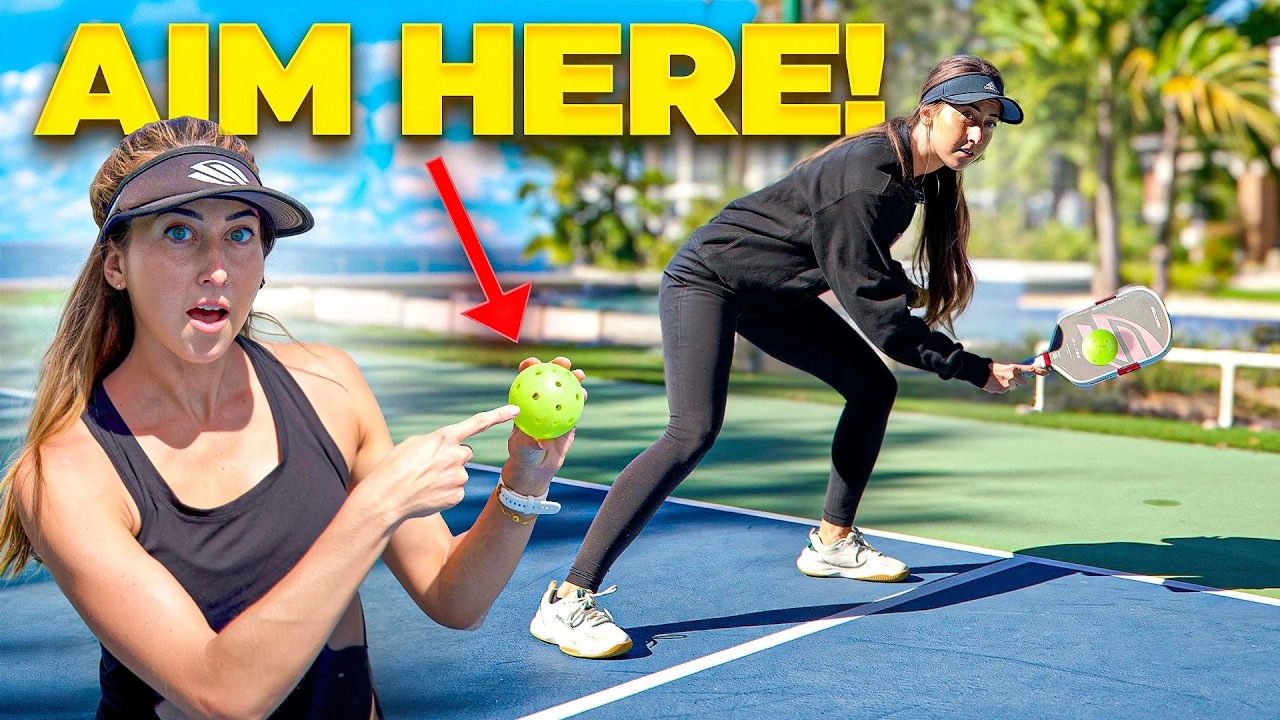
When you are out of position, reaching for a dink, or just keeping the ball alive, your shot needs to go to one of two places. Neither of them is cross court wide.
Here is where your weak dinks should land:
- Between your opponent's legs: A dink aimed at the body, particularly low at the feet or straight at the midsection, is extremely difficult to create angles from. Your opponent has to deal with the ball first before they can think about placement.
- The middle of the court: Hitting to the center of the court eliminates sharp angles entirely. There is nowhere for your opponent to redirect the ball aggressively without going for a very risky cross court shot with a lot of court to cover.
When your dink lands in the middle or straight at your opponent's body, you take that space away completely.
The Best Pickleball Players Aren’t Following the Rules Anymore
Modern pickleball isn’t won by coloring inside the lines. More and more, the most successful players are also the most creative.
 The Dink PickleballZoey Weil
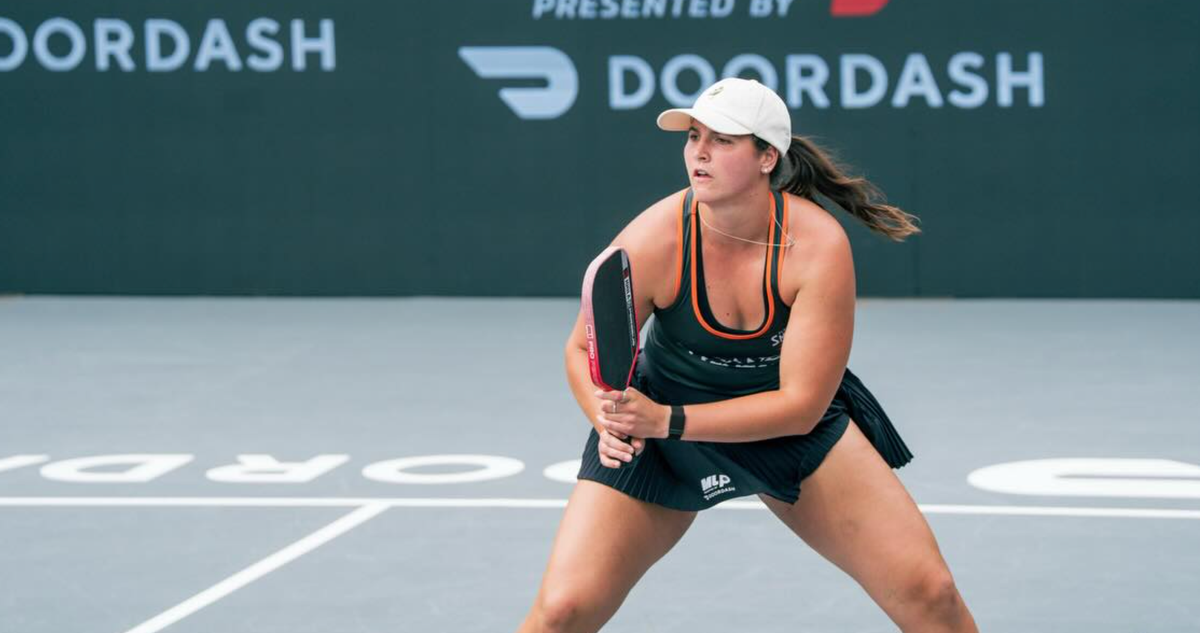
Compare that to a weak dink that lands near the sideline. Now your opponent has a wide open angle to attack cross court or redirect sharply down the line.
You basically handed them the point.
Think about how Ben Johns controls the kitchen. He rarely gives opponents a wide ball when he is not in a position to attack.
His resets land in the middle of the court or right at the body, forcing opponents into neutral positions before he starts building pressure.
If you want a deeper breakdown of how left side dinking works at the highest level, that is worth reading alongside this concept.
💡
Need some new pickleball gear? Get 20% off select paddles, shoes, and more with code THEDINK at
Midwest Racquet SportsWhy Do So Many Players Give Away Wide Dinks?
Most players aim for consistency and end up defaulting to cross court because the net is lower and the court is longer in that direction.
That is not wrong as a general rule, but it becomes a problem when the ball lands near the sideline on a weak, floaty shot.
A dink that lands wide and soft is basically an invitation. Your opponent can step into it, load up, and go anywhere with it.You gave them a platform to attack from without making them earn it.
Turning your dinks into weapons starts with understanding that placement matters more than pace on defensive shots.
You do not need to hit hard when you are not in position. You need to hit smart.The fix is to think about where your opponent can create from, not just whether the ball clears the net.
When you take away their angles by going to the middle or at the body, you stay neutral instead of losing ground.
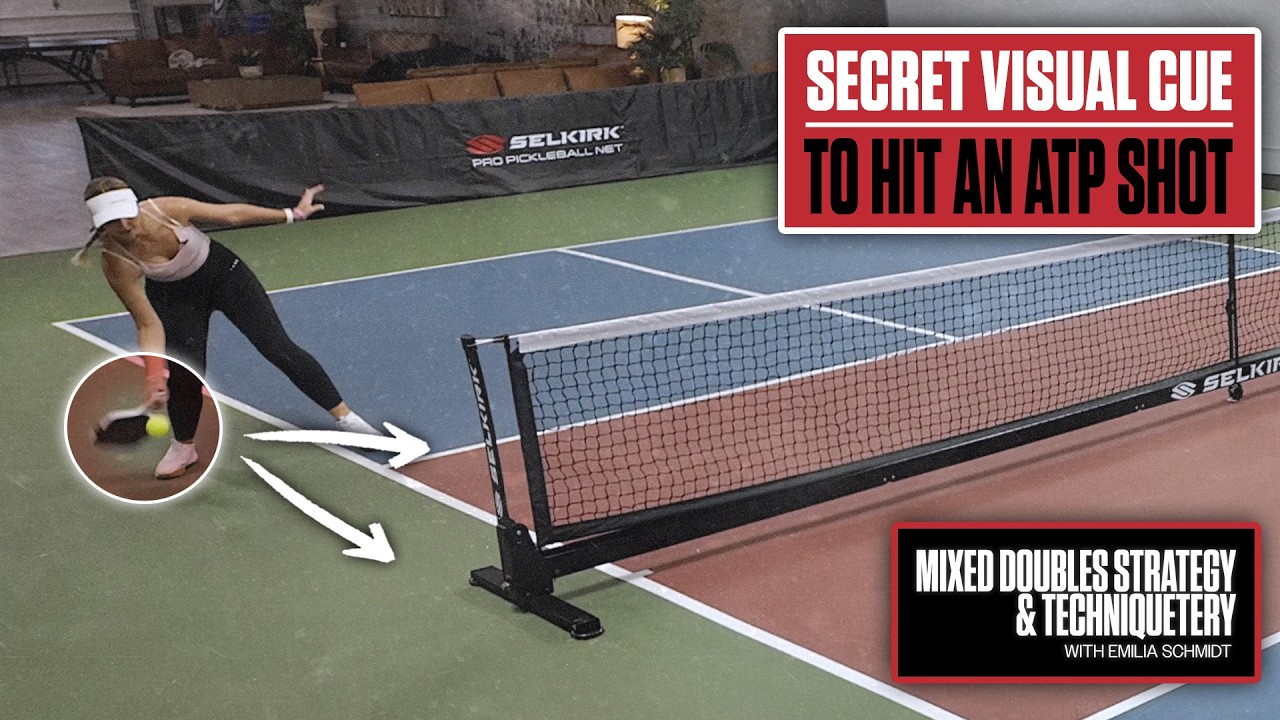
How to Hit an Around the Post Shot in Pickleball
The around the post shot turns a ball pulled wide into one of the most satisfying winners in pickleball. Here is how to set it up, time it, and recover after you hit it.
 The Dink PickleballThe Dink Media Team
What Should You Do When You Have a Ball You Can Attack?
This is where the strategy flips completely.
When you get a high ball, a slow floater, or anything you can step into comfortably, your target changes from the middle to the wide sideline.Here is the sequence for attacking a good dink:
- Identify the attackable ball early. You should be reading the incoming dink before it bounces. If it is sitting up or coming in slowly, that is your green light.
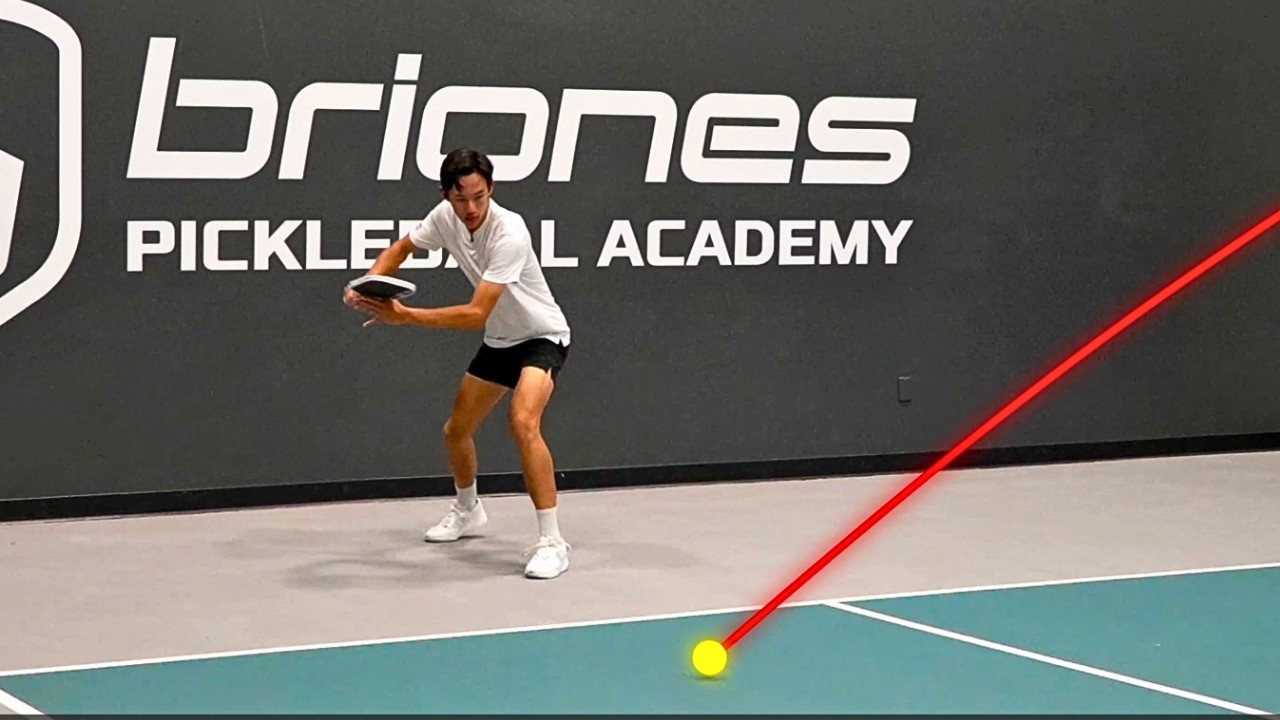
- Go wide with your shot. Aim for the outside edge of the court, away from your opponent's comfortable reach. This forces them to move laterally to cover the ball.
- Step over and shrink the court. After you hit wide, move toward the middle of the court. This repositioning cuts off your opponent's best angle for a return and puts you in a dominant position for the next ball.
- Apply pressure on the next shot. Because you moved toward the center after hitting wide, you are now covering more of the court while your opponent is scrambling from the sideline.
This is how advanced players build pressure in long dinking exchanges. They are not just hitting and hoping.
They are setting up geometrically favorable positions one shot at a time.
If you want to see this paired with specific dink patterns that pros use to create instant offense, that is a perfect companion read.
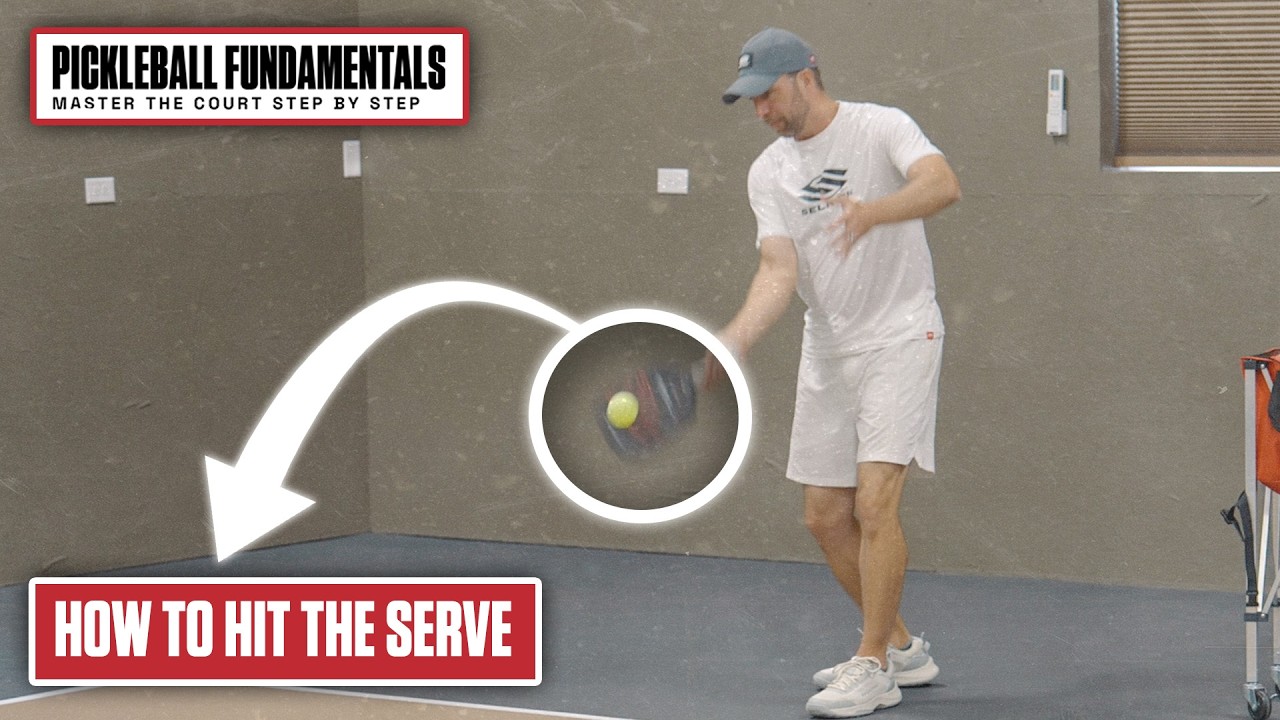
Perfect the Pickleball Serve: Rules, Technique & Strategy
A great pickleball serve is about more than just getting the ball over the net—it’s about applying pressure from the very first shot. Master the official rules, stance, and strategy to win more points.
 The Dink PickleballThe Dink Media Team
How Does Going Wide Actually Shrink the Court?
This part confuses a lot of players, so it is worth being specific about what "shrinking the court" actually means.
When you hit your dink wide and then step toward the center, you are physically moving to cover the court's most dangerous return zone.
Your opponent, now out wide, has limited options. They can try to go back cross court, but you are positioned to cover that.
They can try to go down the line, but that is a much lower percentage shot from the sideline.
You have effectively reduced their good options down to one or two risky ones. That is pressure, even without hitting the ball hard.
This is exactly how Tyra Black and Anna Leigh Waters operate at the kitchen line. They win points not just through speed but through positioning.
Every shot sets up their next position, and every position reduces their opponent's best available shot.
You can learn more about the kitchen line secrets that make Tyra Black so difficult to beat and see how this concept plays out at the pro level.
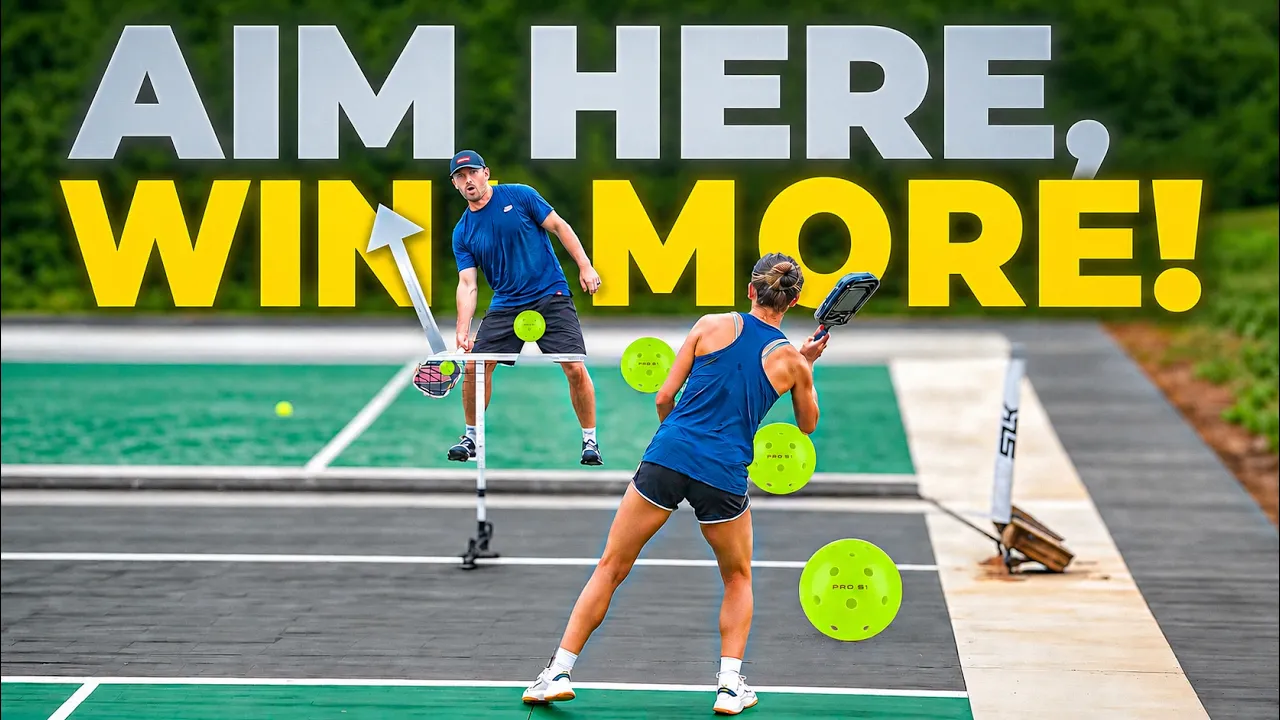
Pickleball Placement Strategy: Where to Aim Every Shot
Knowing where to aim in pickleball is the difference between winning and losing. Learn the exact placement strategy for every shot from serve to attack.
 The Dink PickleballThe Dink Media Team
How Do You Train These Two Decisions Separately?
The fastest way to build this habit is to practice the two situations in isolation before trying to blend them in live play.
Here is a simple drill structure:
- Defensive dink practice: Have a partner feed you difficult dinks, ones you have to reach for or that land low. Your only target is the middle of the court or straight at your partner's body. Count how many in a row you keep out of the wide zones.
- Offensive dink practice: Have a partner feed you comfortable, slightly high balls. Your job is to go wide every single time, then step to the center immediately after contact. Do this until the footwork becomes automatic.
- Decision-making drill: Mix both feeds randomly. Your partner alternates between difficult balls and easy balls without telling you which is coming. You have to read the incoming dink and choose the correct target before you swing.
The decision-making drill is the most important one.
The ability to read and react before you hit is what actually separates 4.0 players from 5.0 players in dinking exchanges.If you want to pair this with backhand dink drills that sharpen your kitchen control, those translate directly to this kind of work.
Also worth combining with a study of the speed up patterns every 5.0 player relies on, because knowing when to speed it up and when to reset is the same mental framework applied to a faster ball.
Smart Shot Decisions Beat Power in Advanced Pickleball
Every rally is a series of small choices, and those choices determine whether you win or lose.
 The Dink PickleballThe Dink Media Team
What Happens If You Apply This Inconsistently?
The biggest mistake players make after learning this concept is applying it selectively.
They go wide on good balls but still default to cross court wide on weak balls out of habit.
If you do not fix the weak ball placement, the concept does not work.
Opponents will keep getting free angles off your defensive shots and the wide attack only matters if you have already neutralized them first.
Consistency in defensive placement is not glamorous but it is the foundation that makes your offensive shots effective.
You can read more about the skills that actually separate 4.0 from 5.0 players to see how this connects to the bigger picture of game improvement.
How to Fix an Inconsistent Pickleball Serve Fast
If you want to know how to fix inconsistent pickleball serve mechanics, the fix usually lives in your toss, your contact point, and your follow through, not your talent. One focused practice session and three targeted drills can turn a shaky serve into your most reliable shot.
 The Dink PickleballThe Dink Media Team
Putting It Together in a Real Rally
Let's walk through a real exchange so the whole thing clicks.
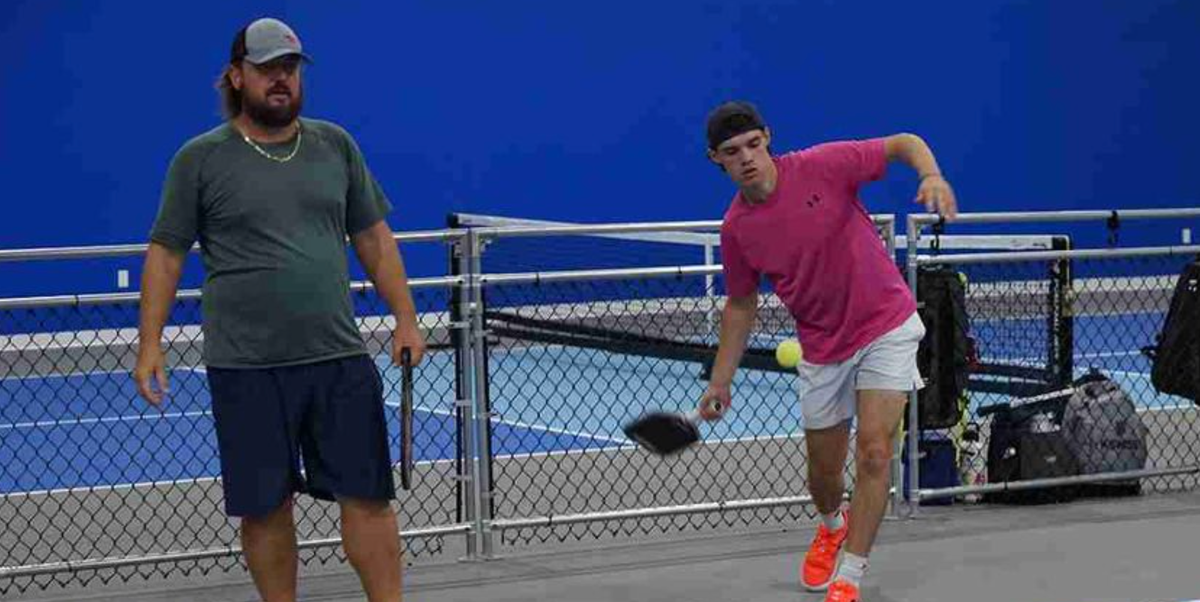
You are in a cross court dinking rally. Your opponent drops a ball low and fast at your feet. You dig it up but it is not a great dink, it is soft and a little high.You send it to the middle of the court, directly at their hip. They have to deal with the ball at their body and can only push it back to you neutrally.
Now the next ball comes back and it is sitting up. You are balanced and ready.
You take it wide, deep toward their sideline, and immediately step toward the center of the court.
Your opponent has to scramble wide to retrieve it. When they return it, they are out of position and the ball comes back short and soft.
That is the sequence. Defend to the middle or body, attack wide, shrink the court, collect the easy ball.This is not complicated but it requires you to decide before you swing, not after. That pre-shot awareness is the actual skill being trained here.
For more on how to turn soft dinks into weapons with topspin, that adds another layer to everything covered in this article.
Also check out how to stop letting opponents get comfortable at the kitchen, which is the mindset version of this exact tactical concept.
And if you want the full picture of what it takes to play at a higher level, the habits of every 5.0 pickleball player is a strong read to stack with this one.
💡
Heads up: hundreds of thousands of pickleballers read our free newsletter.
Subscribe herefor cutting edge strategy, insider news, pro analysis, the latest product innovations and more.
Frequently Asked Questions
What is the best place to hit a weak dink in pickleball?
The best targets for a weak dink are between your opponent's legs or to the center of the court. Both placements eliminate wide angles your opponent could otherwise attack from. Keeping the ball away from the sidelines on defensive shots is the single biggest adjustment most recreational players can make immediately.
Why should I go wide with my dink only when I can attack?
A wide dink only creates pressure when you can step into the ball with control and then reposition toward the center after contact. If you go wide on a weak ball, you hand your opponent a perfect angle to redirect the ball aggressively. Wide is an offensive target, not a safe default.
What does "shrinking the court" mean in a dinking rally?
Shrinking the court means repositioning after you hit so that you cover more of the dangerous return zones. When you hit wide and then step toward the center, your opponent's best available shots become fewer and riskier. It is a positioning concept, not a shot speed concept.
How do 5.0 players decide where to dink during a rally?
Advanced players read each incoming ball before it arrives and make a placement decision based on whether they can be aggressive or not. If the ball is tough, they go to the middle or the body to stay neutral. If the ball is easy, they attack wide and move to shrink the court immediately after.
Can this dinking strategy work at the 3.5 or 4.0 level?
Yes, and it will work faster at lower levels because opponents at 3.5 and 4.0 are much less likely to handle body shots or neutralize wide attacks effectively. The concept is simple enough to apply in your next game without drilling it first. Just focus on the one decision before each swing: can I attack this ball or not?
Anuncie Aqui / Advertise Here
Sua marca para o mundo Pickleball! / Your brand for the Pickleball world!




 English (US) ·
  Portuguese (BR) ·