
 English
  Spanish
  Portuguese
  German
  Italian
  Japanese
  French
  Polish
  Russian
  Netherlands
  Hungarian
  Turkish
  Videos
  Thedink Pickleball

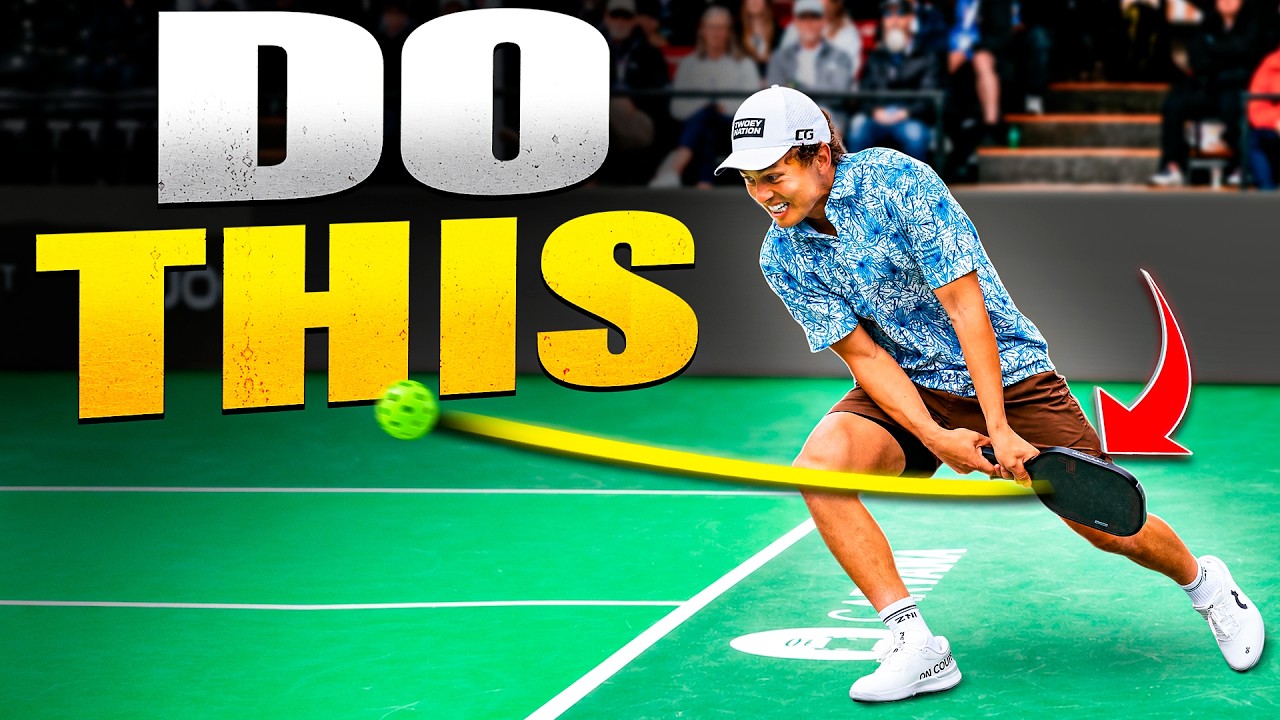
Most players skip the first two phases of a pickleball ground stroke and wonder why they have no power. Simone Jardim's private lesson reveals exactly what you're missing.
Your pickleball ground stroke feels flat because you're starting from the wrong place in your body.
Most players go straight to the arm, skip everything below the chest, and then wonder why the ball has no weight behind it.This is the exact problem Simone Jardim diagnosed in a full 77-minute private lesson that covers groundstrokes from start to finish.
The session is raw, uncut, and packed with the kind of specific feedback you rarely hear outside of elite coaching.
This breakdown covers the biggest technical fixes from that lesson, including the three-phase chain, the shoulder coil most players skip on the backhand, and why your contact point is robbing you of easy power.
The content comes from tanner.pickleball on YouTube, who traveled cross-country to Nashville for three days of intensive work with Jardim.
Love pickleball? Then you'll love our free newsletter. We send the latest news, tips, and highlights for free each week.
The 3-Phase Chain That Creates Real Power
The single biggest fix Simone Jardim identified was a missing kinetic chain.
Most recreational players start from the upper body and wonder why the shot feels weak.Jardim breaks the swing into three distinct phases that must connect in order.
- Phase 1: Load the legs. Your legs initiate everything. If you skip this step, you're hitting with your arm only, and arm-only shots have a ceiling on power that you will hit constantly.
- Phase 2: Engage the core. Your abs should feel like you're doing a crunch. Jardim's cue is simple: get tight, stay tight. That tension is what carries energy from your legs into the upper body, and it's the same engine behind generating effortless power through proper body rotation.
- Phase 3: Let the upper body follow. This is the only phase most players are actually doing. Your arms and paddle are the last link in the chain, not the first. Keep them loose. Tight arms kill the transfer, which is also why wrist lag shows up in every pro swing and almost no amateur one.
The cue that makes this click: tight, tight, loose.
Legs load, core fires, arms stay relaxed. When you get it right, you'll feel the difference immediately, and so will your opponent.If you've been struggling with your forehand drive specifically, this chain fix is the foundation everything else sits on.
Why Is Your Backhand So Much Weaker Than Your Forehand?
The backhand power problem almost always traces back to one missing piece: the shoulder turn.
Without a full shoulder coil, you have almost no core engagement, which means no chain, which means no power.
Jardim's cue is to point the paddle toward the back wall before you swing. That rotation is what loads your core on the backhand side.
If you're just sitting here with the paddle in front of you and swinging forward, you've already lost the point before contact.Once the shoulder turn is in place, think about where your left shoulder (for right-handed players) finishes.
It should drag through the shot and open toward your target. The shoulder is your direction finder on the backhand.This also connects directly to why your backhand flick has no power at the kitchen line. The mechanics share the same root problem.
💡
Need some new pickleball gear? Get 20% off select paddles, shoes, and more with code THEDINK at
Midwest Racquet SportsHere's one most players never figure out on their own. On the forehand, hitting the ball slightly further out in front creates significantly more power.
Jardim described it as the difference between contact here versus contact way out there.
The expression she uses from tennis applies perfectly: ready at the bounce.When the ball bounces, your paddle should already be back. Not going back. Already there.
That way the swing is a forward release, not a scramble to catch up.
When you take the paddle back late, you make contact too close to your body. Close contact means less extension, less leverage, and less pace on the ball.
Moving your contact point a few inches further in front can feel like a completely different shot.
Watching slow-motion pro swing mechanics makes the gap obvious in about ten seconds.This also means your prep must happen earlier than you think. As the ball is traveling toward you from the other side, the paddle is already going back.
By the time the ball bounces, you're already releasing forward.
Pickleball Drive Spin: The Contact Point Fix That Works
Most players lose pickleball drive spin because they make contact too close to their body. Move your contact point to your front leg and you will feel the difference immediately.
 The Dink PickleballThe Dink Media Team
How to Generate Your Own Pace (Instead of Just Using Theirs)
Jardim deliberately fed balls with no pace during the early part of the session.
This forces you to generate power from your own body rather than redirecting someone else's speed.It's harder than it sounds, and it exposes every weakness in your chain immediately.
When the feed has pace on it, the sequence changes slightly. Your take-back needs to happen even earlier, but you still must load your legs.
The mistake players make is dropping the load when the feed gets faster. They rush, skip phase one, and end up pushing.Jardim's rule: faster feed, earlier take-back, same load. The pace of the incoming ball changes your timing, not your technique.
Getting comfortable generating your own pace is also what makes your transition game sharper.
If you want to stop rushing the kitchen, this breakdown on the transition zone covers the decision-making piece that follows your ground stroke.
Block Volley Pickleball: Absorb Pace and Reset the Point
The block volley in pickleball is one of the most effective defensive tools you can add to your game, allowing you to absorb pace and neutralize hard attackers at the kitchen line. Learn the exact technique, grip adjustments, and drills to make the block volley a reliable reset weapon.
 The Dink PickleballThe Dink Media Team
What Does "Getting the Ball on the Rise" Actually Mean?
Taking the ball on the rise means making contact while the ball is still moving upward after the bounce, not waiting for it to reach its peak and start dropping.
Jardim emphasized this repeatedly during the session. When you let the ball die, it loses pace and spin. You're then stuck trying to create everything from scratch.When you move through it on the rise, you capture the energy from the bounce and redirect it.
This requires better footwork and earlier positioning. You have to get to the ball, not wait for the ball to get to you.
If you're consistently getting stuck in flat-footed positions, the fix starts before the ball even bounces.
Being on the balls of your feet (not your heels, not your toes) gives you the quick transfer needed to step into rising balls.Jardim called this out specifically, noting that flat-footed players almost always end up defending instead of attacking.
For anyone who wants to dig into lateral movement and footwork drills, that's where you'll build the habit that makes hitting on the rise repeatable.
Middle Court Control: Want the Ball, Hunt the Ball
The middle is the most valuable real estate on the court, and controlling it isn’t all about power — it’s about awareness, positioning, and the willingness to hunt.
 The Dink PickleballThe Dink Media Team
The Angle Backhand Passing Shot Most Players Drop Instead of Drive
Jardim introduced a specific shot late in the session: the angle backhand passing shot.
Most players try to drop this ball when they get an opportunity on the backhand side at a wide angle. That's the wrong call.A drop gives the opponent time. A driven, spinning angle ball bounces at their feet with pace and does not give them time. The technical keys for this shot are specific:
- Drop the head of the paddle underneath the ball before contact.
- Brush through on contact to create topspin and keep the ball in.
- Let your left shoulder (right-handed player) direct the ball toward the target as it opens through the swing.
- Hit the outside of the ball to create angle. Hitting the back of the ball produces a straighter shot with far less angle.
The deception element is real. If you hold your shoulders longer before opening, you hide the direction.
Your opponent can't cheat toward the angle if you give them no read.This is the same principle behind stopping yourself from muscling finishing shots and instead using body mechanics to create pace.
The Backhand Decision Tree: One Pro’s Real-Time Strategy for Cooking at the Kitchen
Zane Navratil has boiled the key steps for a successful backhand dink down to five critical questions he cycles through in real-time. Learn his framework and watch your shot selection – and winning percentage – improve dramatically.
 The Dink PickleballAlex E. Weaver
Why Breathing and Holding Tension Are Technique, Not Just Habits
Jardim made a point about breathing that most coaches skip entirely. During your prep and load phase, you hold your breath. When you make contact, you exhale.
That's why tennis players grunt.
The hold creates full-body tension and keeps your core engaged through the swing. The exhale at contact is the release of that stored energy.
If you're breathing casually throughout your swing, you're bleeding power at every phase.
She also pointed out that you should hear no breathing in the microphone during the prep. That's the standard. Hold, hold, hold, then release at contact.Once you hear yourself exhaling at the right moment, the timing of your chain becomes easier to track.
This is one of those fixes that feels small but connects to everything else.
Pro habits that hurt recreational players often come from copying the surface of what pros do without understanding the mechanics underneath, and breathing at the right time is one of the most copied but least understood pieces.
7 Pickleball Power Techniques Pros Use to Win
Most pickleball players leave serious power on the table because they don’t understand the mechanics behind generating it. Here are the 7 pickleball power techniques that separate the pros from everyone else.
 The Dink PickleballThe Dink Media Team
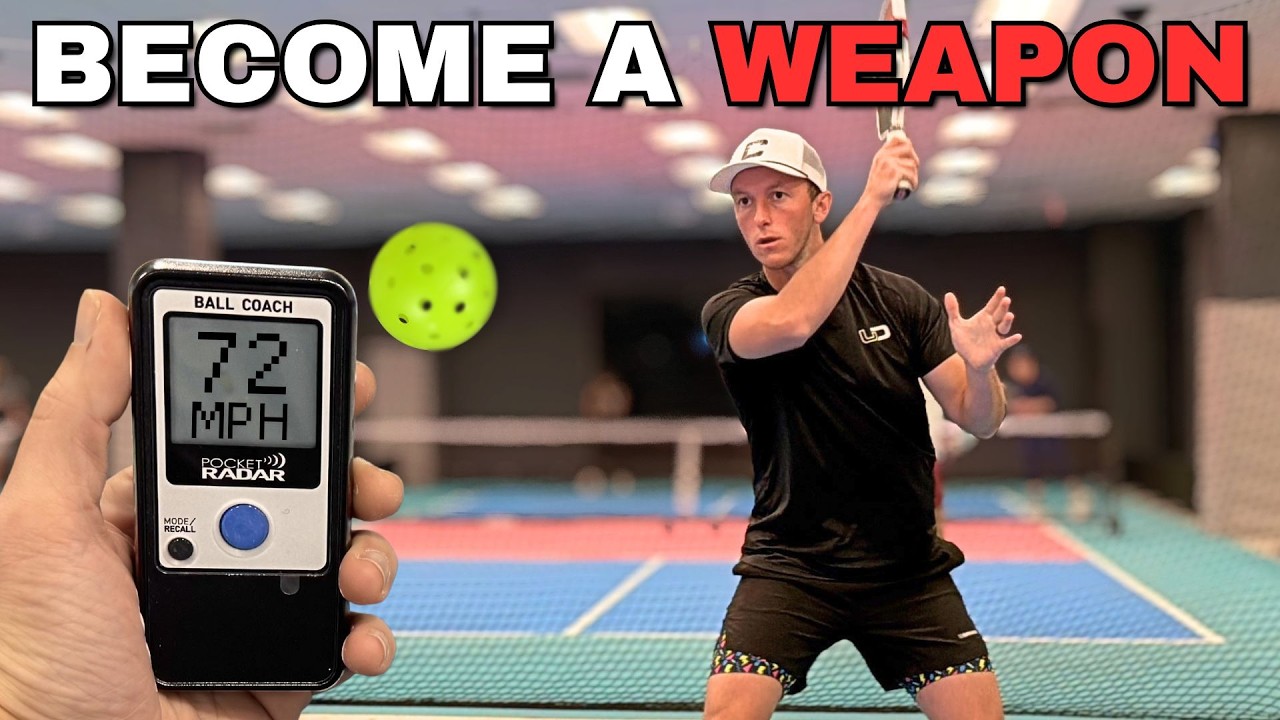
Ground Strokes Make Every Other Shot Better
Jardim made a clear point about why ground stroke training matters even if you never play singles.
The technique required for a quality ground stroke is the same technique that makes your third shot drop more controlled, your kitchen drives more consistent, and your transition balls more dangerous.
You won't get that from drilling dinks. You won't get it from playing casual doubles. You get it from high-repetition ground stroke work where you can't think and your body has to produce the chain automatically.Once the chain becomes automatic at full swing speed, scaling it back for a drop or a softer approach shot is much easier than building it from nothing.
If your third shot drop keeps popping up, there's a good chance the issue starts here, with a body that isn't loading before it brushes.
The technique also directly transfers to the question of whether you need a lesson or just more reps.
If your reps are reinforcing bad habits, more reps make the problem worse.
A session like this one shows exactly what quality coaching can identify in a short window of time.
The players who improve fastest are the ones who stop blaming results and start fixing mechanics.
Improving at pickleball in the right skill order matters, and ground strokes sit near the foundation of that order for a reason.
💡
Heads up: hundreds of thousands of pickleballers read our free newsletter.
Subscribe herefor cutting edge strategy, insider news, pro analysis, the latest product innovations and more.
Frequently Asked Questions
What is the kinetic chain in a pickleball ground stroke?
The kinetic chain is the sequence of body parts that must fire in order to produce power: legs first, then core, then upper body. Skipping the legs or core and going straight to the arm produces weak, arm-only shots. Simone Jardim uses the cue "tight, tight, loose" to describe legs and core engaging before the arms release.
Why does my backhand have so much less power than my forehand?
The most common reason is a missing shoulder turn on the backhand side. Without a full shoulder coil, your core has almost nothing to engage, which cuts the kinetic chain short. Point your paddle toward the back wall before swinging and you'll immediately feel how much more power the shoulder rotation creates.
What does "ready at the bounce" mean in pickleball?
It means your paddle should already be in the back position by the time the ball bounces, not going back. If you're starting your take-back after the ball bounces, your contact point ends up too close to your body and you lose power and extension. Prep as the ball is traveling toward you, so the swing forward starts right at the bounce.
Should I practice ground strokes even if I only play doubles?
Yes. Ground stroke mechanics are the foundation for third shot drops, drives, and transition zone shots. Jardim specifically made the point that the technique is the same, and that you will not develop a reliable chain from dinking alone.
High-repetition ground stroke drilling is how the chain becomes automatic across all your shots.
How do I add angle to my backhand passing shot?
Hit the outside of the ball rather than the back of it, and let your left shoulder (for right-handed players) direct toward the target as it opens through contact. Dropping the head of the paddle under the ball and brushing through creates the spin that keeps an angled shot in. Holding the shoulder turn longer before opening also hides your direction from the opponent.
Anuncie Aqui / Advertise Here
Sua marca para o mundo Pickleball! / Your brand for the Pickleball world!




 English (US) ·
  Portuguese (BR) ·