
 English
  Spanish
  Portuguese
  German
  Italian
  Japanese
  French
  Polish
  Russian
  Netherlands
  Hungarian
  Turkish
  Videos
  Thedink Pickleball

The pickleball counter is one of the hardest shots to master at the kitchen line. Here is exactly how to stop popping it up and start redirecting pace with control.
The pickleball counter is the shot that separates players who survive fast exchanges from players who get run off the kitchen line entirely.
Most players try to counter a hard shot and immediately send it straight back up into the air.That mistake turns defense into offense for your opponent, and the point ends fast.
This breakdown covers exactly how the counter works mechanically, why it goes wrong for most players, and what you need to fix right now.The slow-motion footage and technical breakdown here come from Ed Ju on YouTube, whose frame-by-frame analysis makes the mechanics impossible to ignore.
Love pickleball? Then you'll love our free newsletter. We send the latest news, tips, and highlights for free each week.
What Is a Pickleball Counter Shot, Really?
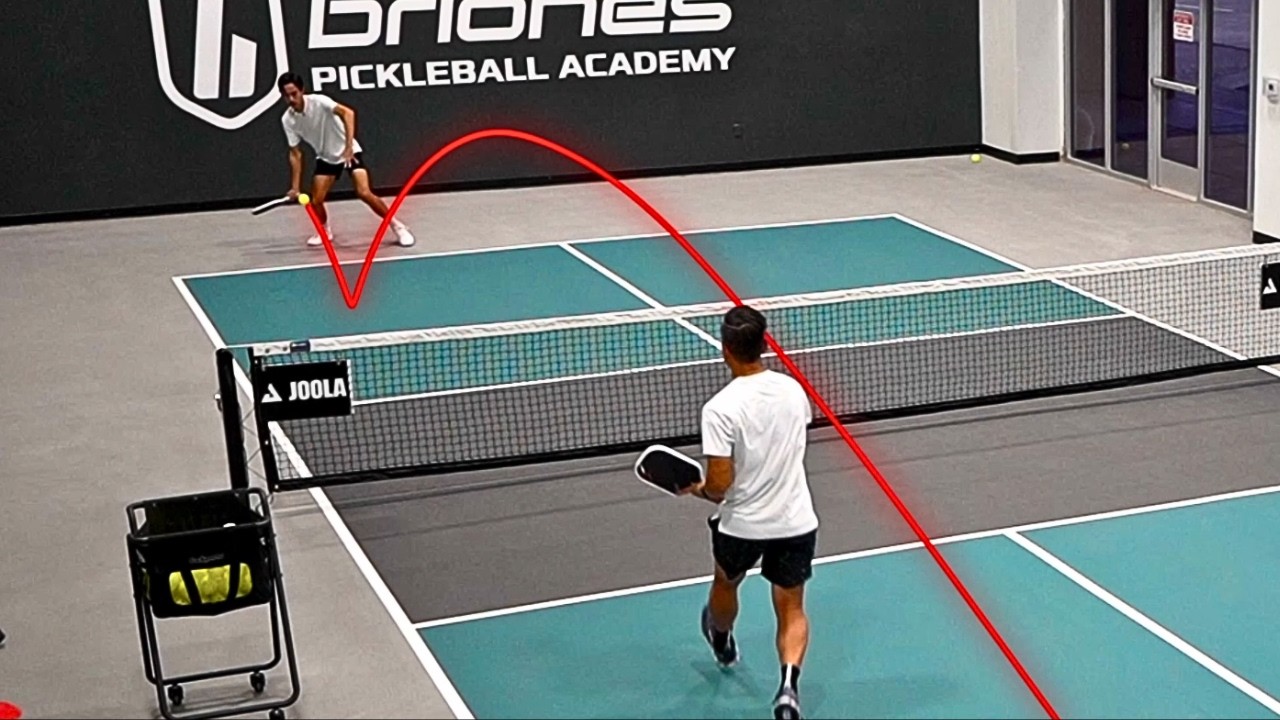
A pickleball counter shot is when you redirect a hard, incoming attack using the opponent's own pace rather than generating your own swing speed.
You are not blocking. You are not resetting.You are meeting pace with a controlled redirect that keeps the ball low and forces your opponent into a neutral or defensive position.
The Best Pickleball Players Aren’t Following the Rules Anymore
Modern pickleball isn’t won by coloring inside the lines. More and more, the most successful players are also the most creative.
 The Dink PickleballZoey Weil
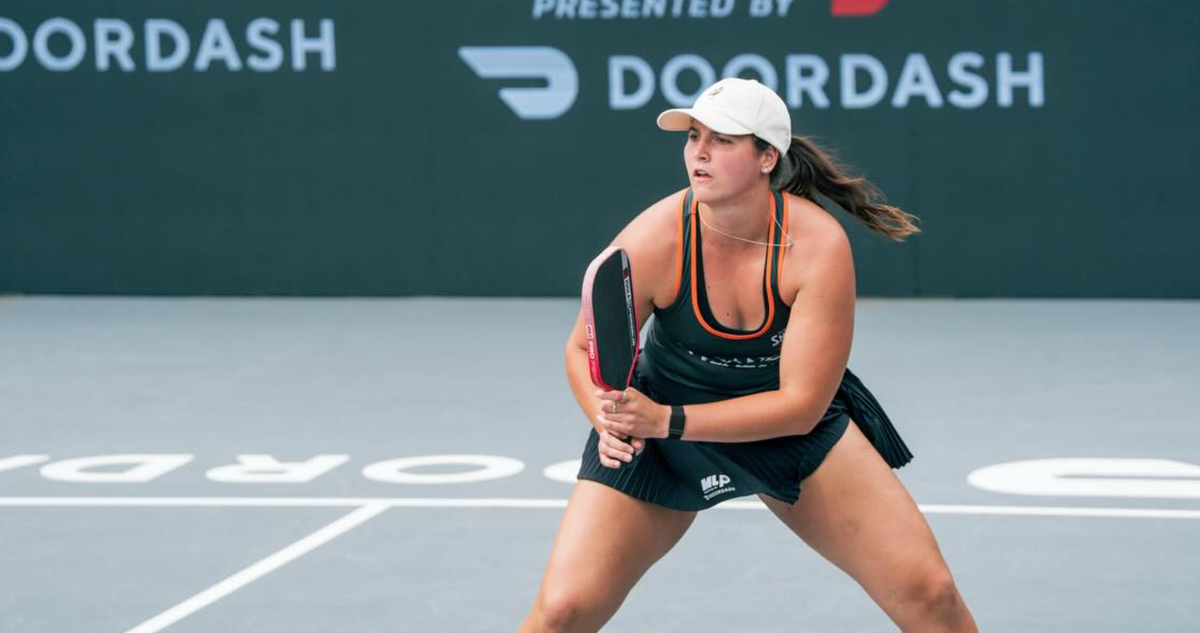
The difference between a block and a counter comes down to intent and contact angle. A block absorbs pace and softens the ball.
A counter uses that incoming pace and redirects it, often cross-court or at the opponent's hip, with direction and purpose.
Understanding that distinction changes how you set up for the shot entirely. If you keep treating counters like blocks, your mechanics will always be off.To understand more about the blocking side of this equation, see how to block hard shots in pickleball.
It sits alongside the 6 essential pickleball shots to master that every serious player should be drilling this season.
Why Does the Counter Keep Going High?
The single most common reason your pickleball counter pops up is a paddle face that is too open at contact.
When the ball is coming fast and you feel rushed, your natural instinct is to open the face and push through. That instinct is wrong.An open face sends pace upward, and a fast incoming ball amplifies that angle immediately.
The second reason is timing.Most players wait too long and contact the ball when it has already passed the ideal contact zone, usually behind their hip instead of in front of their body.
Late contact forces your elbow to pull back, your wrist to compensate, and your paddle face to open.
All three of those corrections happen automatically and all three send the ball up.
This issue connects directly to a broader pattern you can read about in why your speed-up keeps getting attacked.
It also explains why so many pros abandoned the slice shot in 2025 in favor of flatter, more repeatable contact.
💡
Need some new pickleball gear? Get 20% off select paddles, shoes, and more with code THEDINK at
Midwest Racquet SportsThe 5 Mechanical Keys to a Clean Counter
Fix these five things and your pickleball counter will immediately become a dangerous weapon instead of a liability.
- Paddle in front of your body. Your contact point should always be forward of your hip. If you can see your paddle in your peripheral vision, you are in a good position. If you cannot, the ball is already past you.
- Close the paddle face slightly at contact. You want the face angled maybe 5 to 10 degrees forward, not open and not flat. This naturally pushes pace downward and keeps the counter from floating.
- Firm wrist, not a swinging arm. The counter is driven by the incoming pace of the ball. You do not need a big arm swing. What you need is a firm, locked wrist that does not collapse on impact.
- Redirect cross-court first. When you are just building this shot, default to the cross-court counter. The net is lower in the middle and you have more court to work with. Down-the-line counters come later.
- Contact the ball early, not late. Train yourself to take the ball slightly in front of where you naturally want to. Early contact keeps your mechanics clean and your paddle face controlled.
Players who master these five keys stop being targets at the kitchen line and start forcing opponents into awkward reset positions instead.
That progression is the same one laid out in the 5 pickleball shots you must master before 2026.
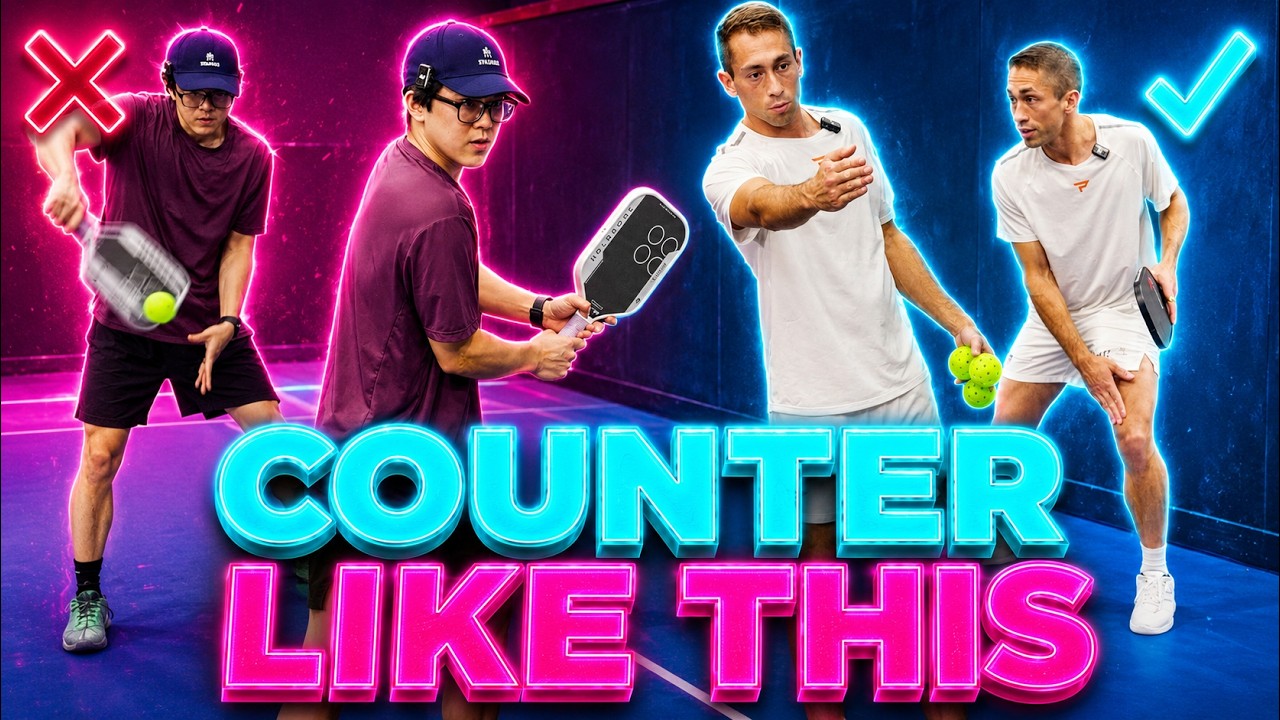
5 Pickleball Counter Fixes That Win More Hands Battles
Pickleball counter errors come from too much motion, not slow hands. Learn 5 pro fixes from Zane Navratil covering head stability, elbow position, ground-up power, footwork, and smart shot selection to win more hands battles at the kitchen line.
 The Dink PickleballThe Dink Media Team
What Does Your Body Need to Do?
The counter is not just a hand and paddle shot. Your body position creates the conditions for it to work.
You need your weight slightly forward, knees bent, and your feet positioned so you are not reaching in any direction.
Reaching for a fast ball is what collapses your wrist and opens your paddle face.Think about Ben Johns at the kitchen line. He rarely looks rushed because his footwork keeps him in a balanced, forward position before the ball even arrives.
His body does the work that lets his hand stay controlled.The ready position matters more for counters than for almost any other shot because you have the least amount of time to adjust.
Check your stance before any fast exchange happens, not after.
For more on what this looks like in practice, stop getting jammed by shots at your feet covers the positioning side of this problem in detail.
Balanced footwork also depends on your shoes, which is why the best men's pickleball shoes of 2025 are worth a look if you are sliding out of position.
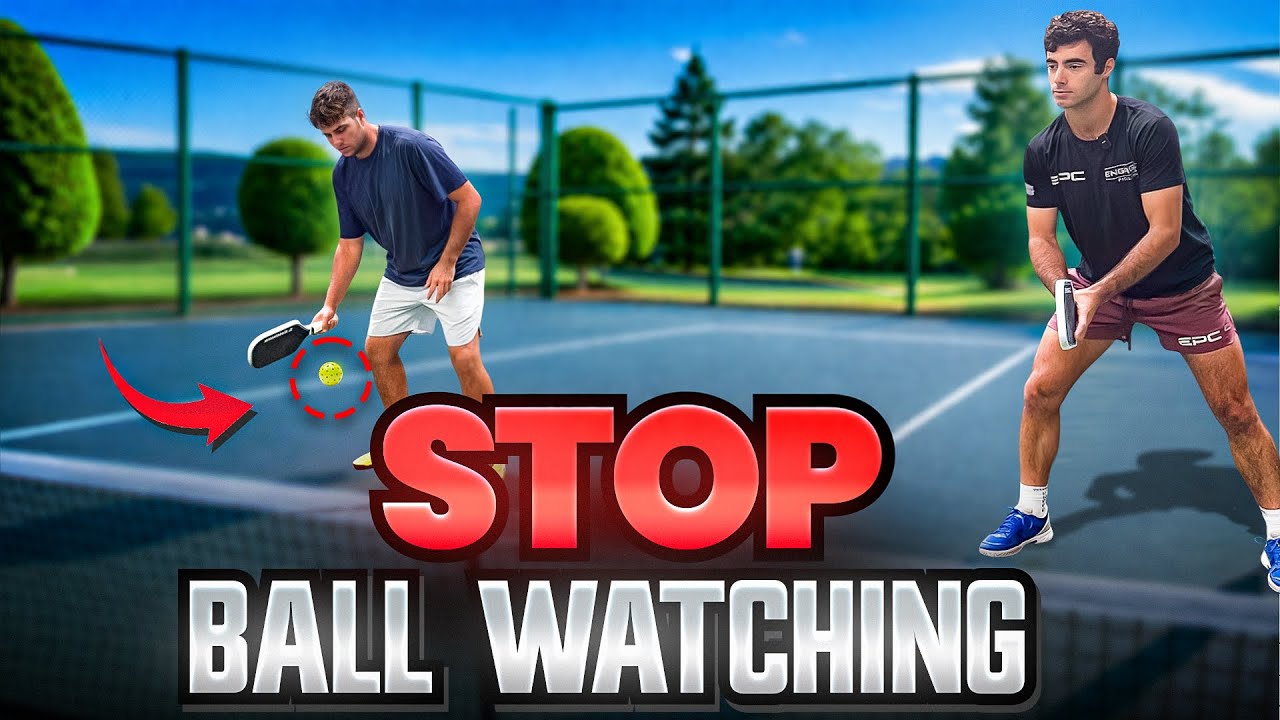
Off-Ball Positioning in Pickleball: Stop Ball Watching
Most pickleball players think the point is decided by whoever hits the ball, but at higher levels, off-ball positioning is what actually controls the court. Master this skill and you’ll transform how you play at the net.
 The Dink PickleballThe Dink Media Team
How Should You Practice Counters Without a Hitting Partner?
The honest answer is that counters are hard to practice alone, but there are ways to isolate the mechanics before you take them into live play.
Start with partner feeds at half speed. Have someone stand at the opposite kitchen line and feed firm, flat balls directly at your forehand and backhand.Your only job is to redirect them cross-court while keeping the ball below net height.
Once that feels controlled, speed up the feed. The mechanics should not change when the ball gets faster.
If they do, you are still compensating with your swing rather than trusting the redirect.
Here is a simple progression to follow:
- Half-speed feeds, forehand counter cross-court only, 20 reps
- Half-speed feeds, backhand counter cross-court only, 20 reps
- Full-speed feeds, alternate sides, focus only on contact point
- Live dinking rally with a trigger point: when partner speeds up, counter instead of reset
- Skinny singles focused on counter exchanges at the kitchen
This kind of deliberate repetition rewires the instinct that currently makes you pop the ball up.
Pickleball drills that build fitness while improving play can slot right alongside this kind of counter training.
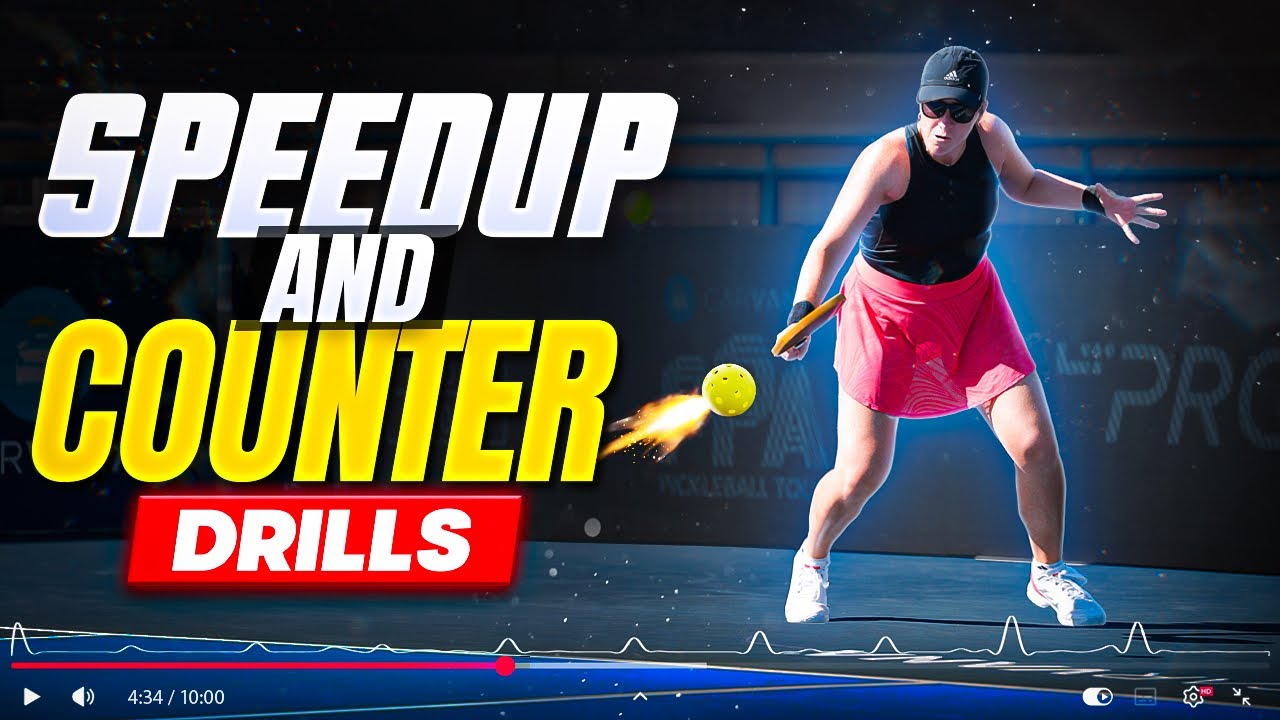
3 Pickleball Speed Up Drills to Win Kitchen Battles
Most players warm up their hands and call it drilling. This pickleball speed up progression isolates the attack, the counter, and the dink that sets them up, so the skills hold under game pressure.
 The Dink PickleballThe Dink Media Team
Forehand vs. Backhand Counter: Which Is Harder?
For most players, the backhand counter is harder to execute cleanly because the natural wrist position on the backhand side tends to open the face under pressure.
On the forehand, you can use your palm to guide direction more intuitively.
On the backhand, especially a one-handed backhand, the wrist has to work against its natural tendency to collapse toward the body.
A two-handed backhand counter solves a lot of this.
The second hand stabilizes the wrist, keeps the face angle consistent, and gives you more control at high pace.
For a full breakdown on how to execute the two-handed version correctly, read Parris Todd's five keys to the two-handed backhand counter.
If you are a one-handed backhand player, the fix is simple in concept and hard in practice: squeeze your grip slightly tighter at contact and keep the elbow from pulling away from your body.The Backhand Decision Tree: One Pro’s Real-Time Strategy for Cooking at the Kitchen
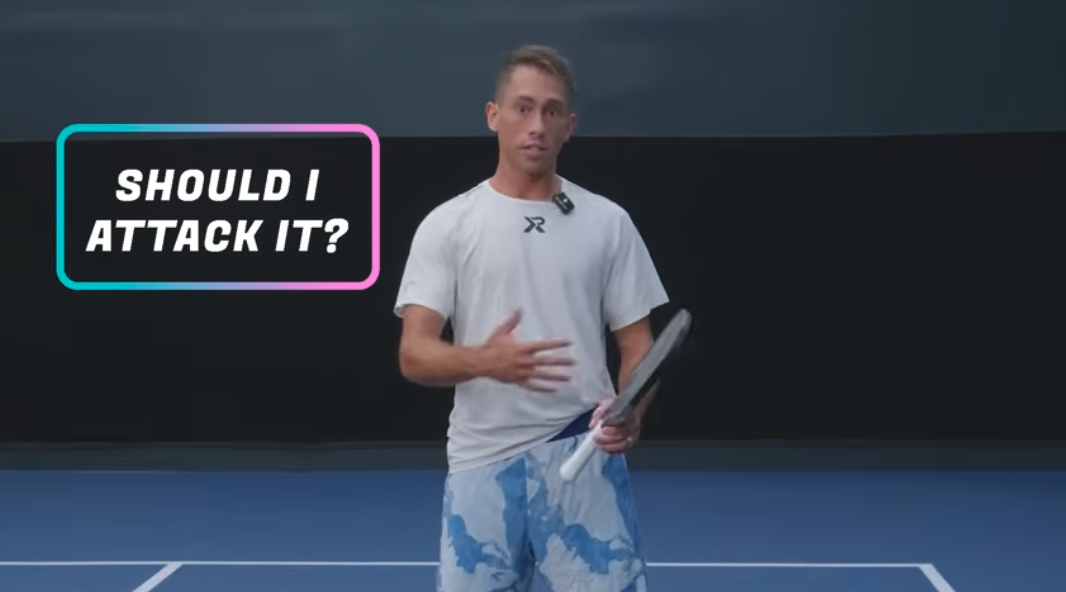
Zane Navratil has boiled the key steps for a successful backhand dink down to five critical questions he cycles through in real-time. Learn his framework and watch your shot selection – and winning percentage – improve dramatically.
 The Dink PickleballAlex E. Weaver
When Should You Counter Instead of Reset?
This is where shot selection separates intermediate players from advanced ones.
You should counter when the ball is above the net, coming at medium to high pace, and you have a clear redirect angle.
Countering a ball that is already below the net is a mistake that most advanced players never make.Reset when the ball is dropping fast, when you are off-balance, or when the ball is arriving at your feet.
Trying to counter from a compromised position turns what should be a defensive shot into a gift for your opponent.
Understanding the difference between a punch and a counter will help you make that decision faster in live play.
Shot selection under pressure is also one of the four key strategies to winning in 2026.
The rule is straightforward: if the ball is attackable, counter it; if it is not, reset it.The problem is that most players panic and try to counter everything that comes fast, regardless of height or position.
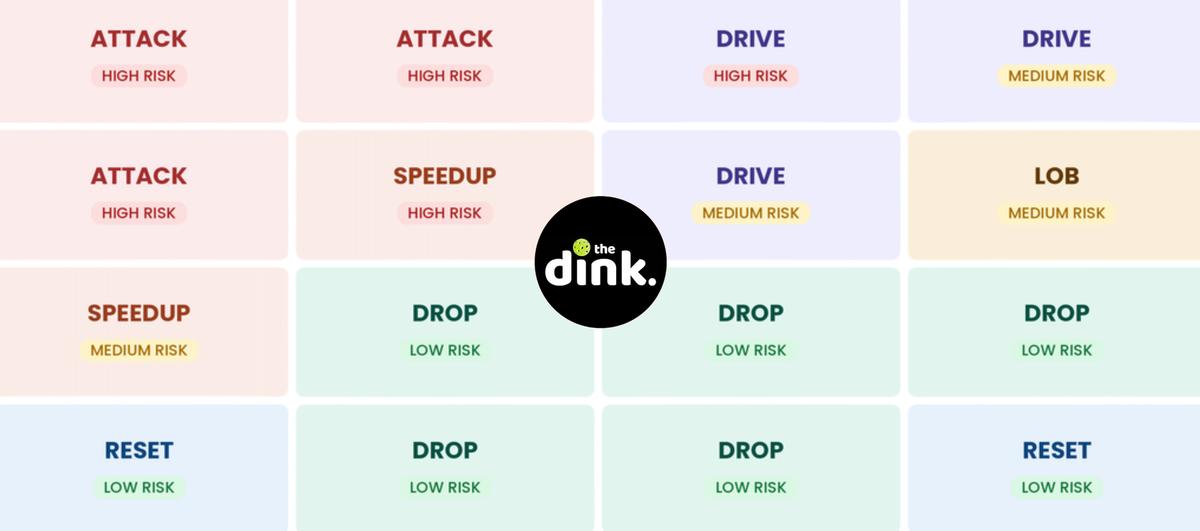
Decision Matrix: When to Attack or Reset in Pickleball
Pickleball is really all about two key factors: your court positioning and the height of the ball. This matrix decodes the game for you.
 The Dink PickleballThe Dink Media Team
Every mechanical error in the pickleball counter comes back to one root cause: late contact.
When you contact early, your paddle face is naturally forward, your wrist is in front of your body, and gravity helps push the redirect downward.
When you contact late, every single mechanic works against you.Train your eyes to pick up the ball earlier. Watch it off your opponent's paddle, not when it is already halfway to you.
That extra fraction of a second is what gives you time to set up with your paddle in front rather than scrambling to reach it behind your hip.
A simple 4-step system to win more games in 2026 builds that same preparation habit into your whole game.
You can also study how this applies to the kitchen attack specifically by reading about the roll vs. flick kitchen attack strategy, which gives you context for when your opponent is setting up the shot you will be countering.
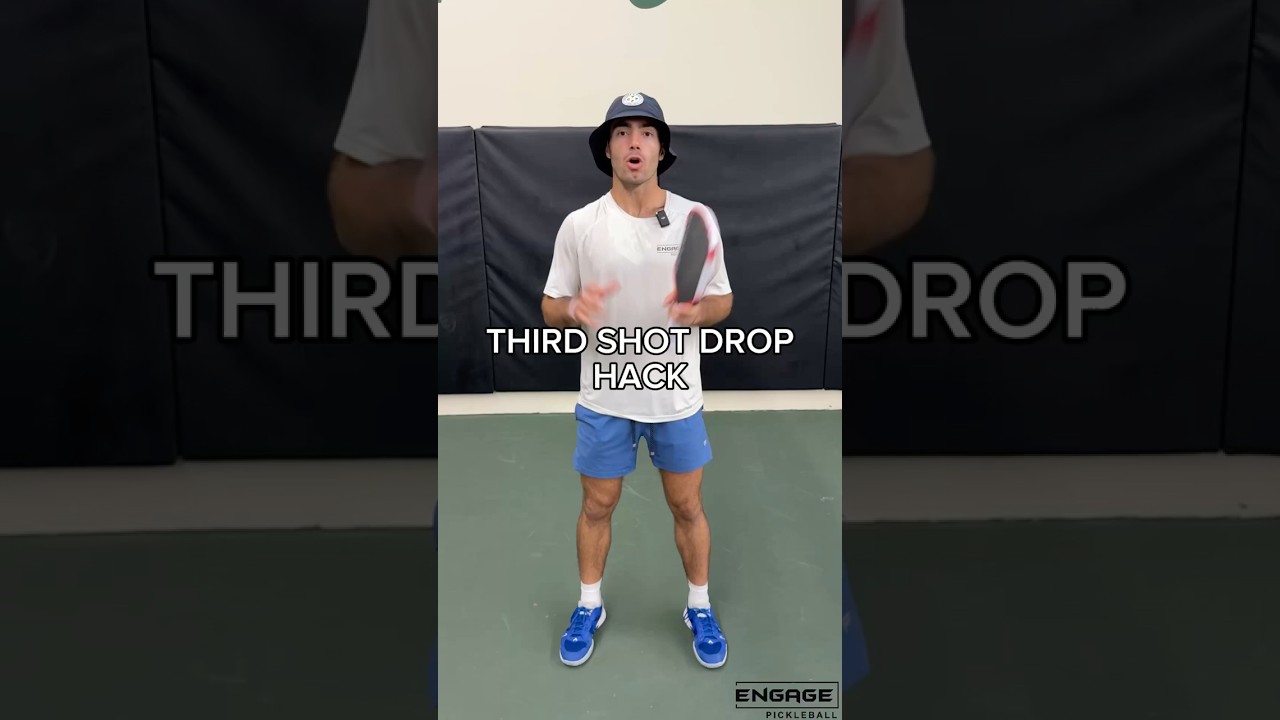
Master the Third Shot Drop in Pickleball
The third shot drop is one of pickleball’s most critical shots, and most players are making a fundamental mistake. Richard from Engage Pickleball reveals the contact point hack that will transform your consistency and get you to the kitchen line every time.
 The Dink PickleballThe Dink Media Team
Common Mistakes to Stop Making Right Now
Here is a direct list of what is killing your pickleball counter shot, with no fluff:
- Opening the paddle face because you feel rushed. Close it slightly instead.
- Swinging through the shot as if you are hitting a drive. The counter does not need your power, only your direction.
- Watching the ball instead of watching your contact point. Know where you want to make contact before the ball arrives.
- Countering low balls. A ball below the net requires a reset, not a counter. Trying to counter it almost always results in an unforced error.
- Reacting instead of preparing. The counter should be a decision you make before the attack arrives, not a scrambled reaction after it does.
Cut those five habits and your counter will improve within a single practice session.
Pair this work with six fixes that erase unforced errors to clean up the rest of your kitchen game at the same time.
The counter is one of the clearest skill gaps between a 4.0 and a 4.5 player.The shots every 4.0 player needs to reach 4.5 puts it in the right context alongside the other mechanics you should be building right now.
It also helps to know what your equipment is legally allowed to do, so skim the 7 new USAP rules for 2026 before your next tournament.
Get the contact point right, keep the paddle face slightly closed, and stop swinging. That is the whole formula.💡
Heads up: hundreds of thousands of pickleballers read our free newsletter.
Subscribe herefor cutting edge strategy, insider news, pro analysis, the latest product innovations and more.
Frequently Asked Questions
What is a pickleball counter shot?
A pickleball counter shot is a redirect of an incoming hard attack using the opponent's own pace rather than generating a new swing. The goal is to angle the ball back low and into a difficult position for the attacker. It is different from a block because it is offensive in intent, not just defensive.
Why does my counter keep going up?
Your counter pops up because your paddle face is too open at contact, usually caused by late contact behind your hip. Fix the contact point first: get the paddle in front of your body and close the face slightly. That one adjustment will fix the pop-up faster than anything else.
Should I counter or reset a hard shot at my feet?
Reset a hard shot at your feet. Countering a ball that is below the net or arriving at your ankles almost always produces an unforced error. Counter only when the ball is at a height that gives you a genuine redirect angle above the net.
Is a two-handed backhand better for counters?
For most players, yes. The two-handed backhand stabilizes the wrist and prevents the face from opening under pressure. One-handed backhand counters can work, but they require a tighter grip and a disciplined elbow position that takes longer to develop.
How long does it take to build a reliable counter shot?
With deliberate practice using the partner feed progression, most players see real improvement within two to three focused sessions. The mechanics are simple but they require repetition at speed before they feel automatic in a live game.
Anuncie Aqui / Advertise Here
Sua marca para o mundo Pickleball! / Your brand for the Pickleball world!



 English (US) ·
  Portuguese (BR) ·