
 English
  Spanish
  Portuguese
  German
  Italian
  Japanese
  French
  Polish
  Russian
  Netherlands
  Hungarian
  Turkish
  Videos
  Thedink Pickleball

Most players lose power on their pickleball serve because they swing with their arm instead of their body. These five steps fix that by building a consistent, powerful motion from the ground up.
Your pickleball serve should be one of the most reliable shots in your game.
But if you're relying on your arm to do all the work, you're going to keep getting inconsistent results, weak depth, and serves that practically invite your opponent to attack.
The fix isn't complicated.
It comes down to learning how to use your whole body, setting your wrist correctly, and building the motion in stages before you ever worry about pace.
This five-step progression comes from John Cincola Pickleball on YouTube, where PPA Tour pro and coach John Cincola breaks down exactly how to build a serve that has power, depth, and repeatability every single time.
Love pickleball? Then you'll love our free newsletter. We send the latest news, tips, and highlights for free each week.
The Three Things Every Good Serve Needs
Before getting into the steps, you need to understand what you're actually building toward.
A great serve needs three things: power, depth, and reliability.Most players sacrifice at least one of those because of how they generate their swing. Here's what's going wrong:
- They swing with the arm only, leaving all the body power on the table
- The paddle moves independently from the body, which creates timing errors
- They flip or roll the wrist through contact, which makes the shot impossible to repeat
The goal of this five-step system is to solve all three of those problems at once.
You build the motion in stages so that by the time you're hitting with full intent, everything is already working together.
Step 1: Shadow the Movement Without a Ball
Start without a ball. This sounds simple, but it's the most skipped step and it matters more than most people think.
Stand perpendicular to your target line, meaning you're starting sideways to the net.
Your chest should begin by facing away from your target, with your paddle straight back behind you.From there, the goal is to swing the paddle linearly down the target line, almost like you're reaching across your chest toward your opponent's kitchen.
The paddle will naturally bottom out and then begin to lift, which is what creates topspin.
At full extension, your chest should be facing your target. Then you continue rotating until your chest faces the other direction entirely.
A proper serving motion is a 180-degree chest rotation.
Practice this shadow swing repeatedly until it feels like one fluid motion. If it feels choppy or forced, slow it down. Don't move to step two until this feels natural.
💡
Need some new pickleball gear? Get 20% off select paddles, shoes, and more with code THEDINK at
Midwest Racquet SportsStep 2: Drop and Extend Toward the Target
Now you add a ball, but you're not trying to hit hard yet. This step is about setting your wrist and keeping it locked.
Get into that same sideways starting position. Set your wrist slightly laid back, just under 90 degrees. Not flat, not fully cocked, somewhere natural in between.
Here's the critical part: once you set that wrist, it does not change through the swing.Wrist flipping is one of the biggest causes of inconsistency on the serve, and this step is specifically designed to train it out of you.
Drop the ball, let it bounce, and swing linearly toward your target. Stop your finish and hold it.
You won't generate much power here because you're not using rotation yet, and that's intentional.What you should notice is clean topspin and a very consistent ball shape.
If the ball is going different places each time, something is changing in your wrist or swing path.
Fix that before moving on.
If you're also struggling with your serve getting attacked, this step will help you understand why the shape of your ball is giving opponents easy looks.
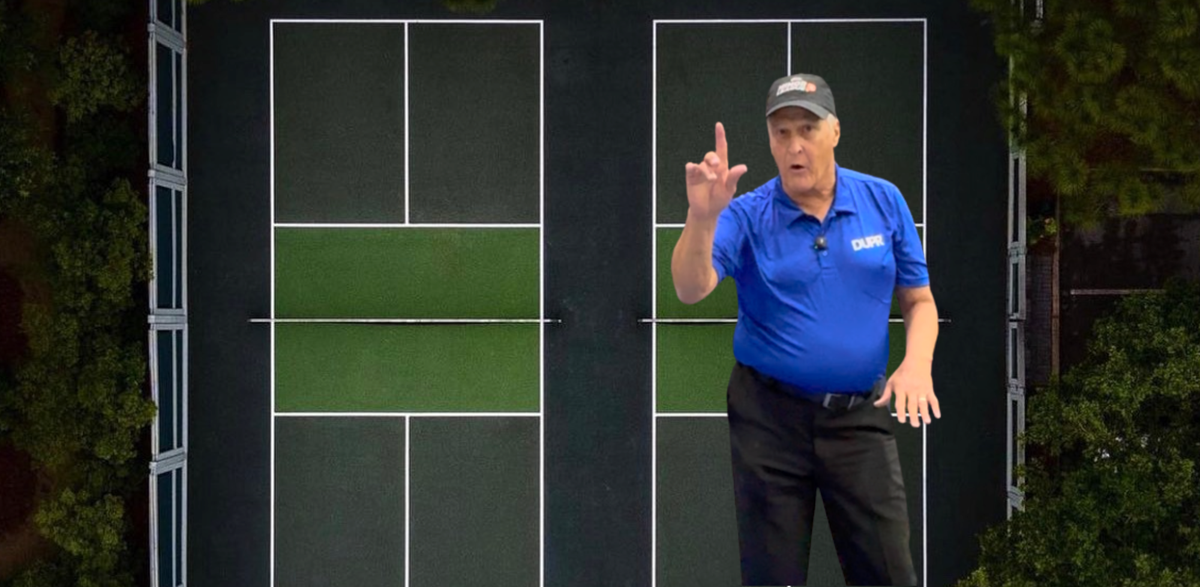
If You Use the Drop Serve in Pickleball, You Might Be Faulting Without Knowing It
“If your hand moves AT ALL on the release you have imparted force to the ball and that’s a fault.”
 The Dink PickleballAlex E. Weaver
Step 3: Add the Shoulder Rotation to Finish
This is where most players go wrong when they try to add power. They wrap the arm around the body and flip the paddle through contact.
Don't do that. Instead, think about turning your shoulders through the ball, not swinging your arm past it.Here's the sequence for step three:
- Start in the same position as step two
- Swing linearly down the target line as far as you can reach
- Once you hit full extension, rotate your shoulders through
- Let the hip follow naturally as the rotation pulls it through
- Your chest should finish pointing the opposite direction from where it started
The finish should feel like your body is completing a turn, not like your arm is doing something extra.
If your back foot wants to step through as you finish, let it. That's a sign your rotation is working correctly.You can start speeding things up once this feels smooth. But speed should come from better rotation, not from swinging harder with the arm.
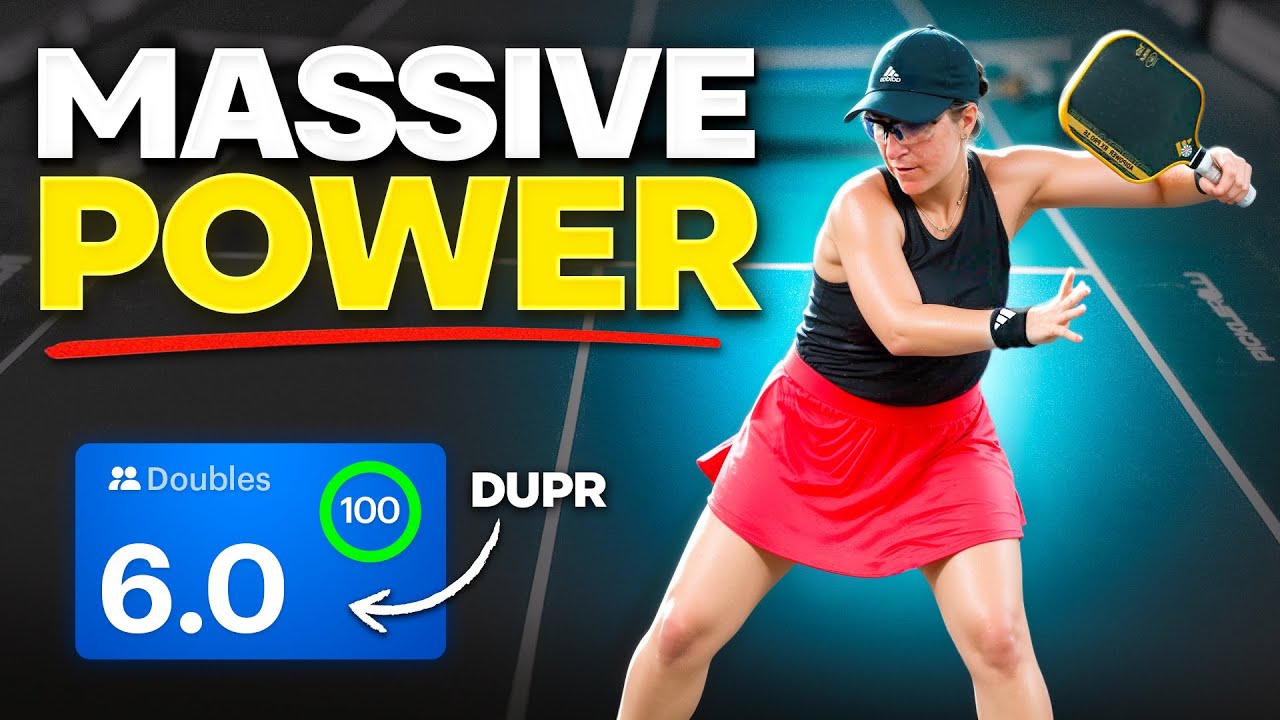
Generate Effortless Power in Pickleball Through Proper Body Rotation
The unit turn is simple in concept but transformative in practice – it means rotating your hips, shoulders, and non-dominant arm together as one unit, rather than isolating your arm for power
 The Dink PickleballThe Dink Media Team
Why Is the Weight Shift Such a Big Deal?
Step four is where the motion starts to feel like a real serve. You're adding a weight shift, and it's what ties the upper and lower body together.
Start with both your paddle and the ball held forward, weight on your front foot. As your paddle goes back, your weight transfers to your back foot.
As you start the forward swing, your weight shifts back to the front.It's a simple forward-back-forward transfer, but it does two things. First, it adds more power because now your whole body is moving toward the target.
Second, it forces everything to sync up in timing, which is exactly what you need for consistency.
If you're working on hitting with more depth, this weight shift is the most important piece.
Check out this breakdown on how to hit a low serve without faulting to see how weight transfer affects ball trajectory.
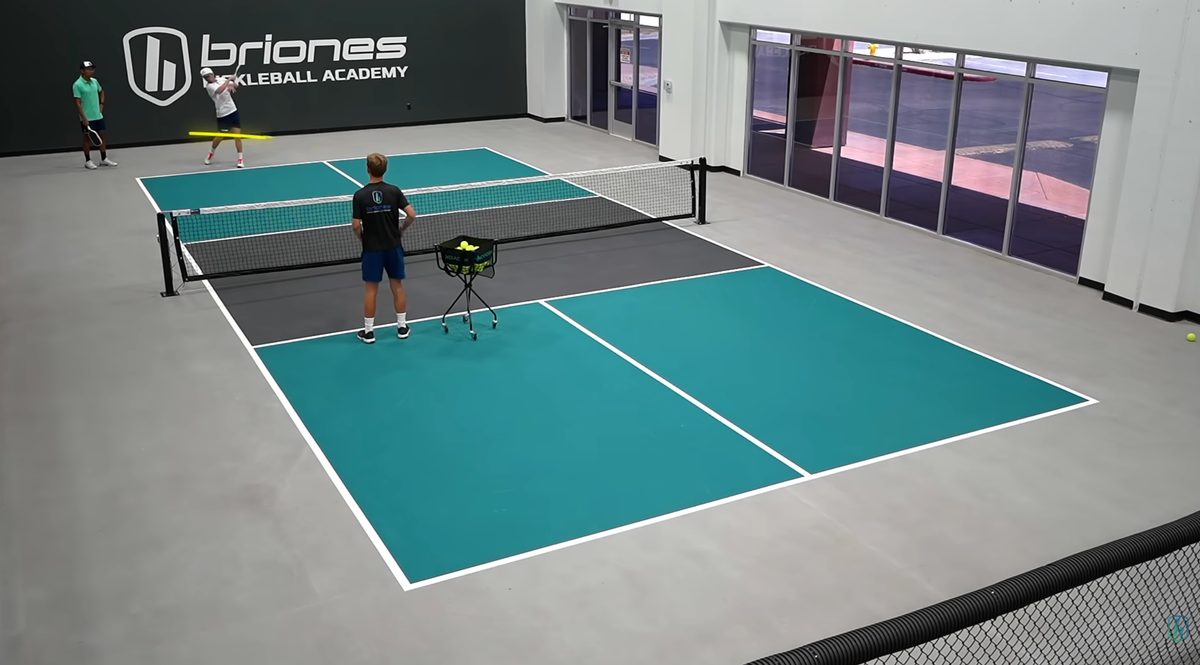
Hit a Devastating Forehand Drive With Hip Rotation
As the game evolves and players get more skilled at dinking and net play, the ability to put away a ball with pace and control separates the good players from the great ones.
 The Dink PickleballThe Dink Media Team
What Are Your Stance Options for the Full Serve?
Step five gives you two valid options depending on what feels natural and what you're trying to accomplish.
- Option 1: Open Stance Serve. You start facing the court more directly rather than fully sideways. You still rotate against your hips and work the same linear swing path, but you don't need to step through at the end. This is simpler mechanically and a good choice if you want less footwork to manage.
- Option 2: Closed Stance with a Step. You start slightly farther back and take a step that closes your body into the sideways position before you push off into the swing. This creates more forward momentum toward the target, which translates to more power. The tradeoff is more moving parts to coordinate.
Neither option is wrong.
Your job is to try both and figure out which one gives you the most power without sacrificing the consistency you built in steps one through four.If you want to combine a powerful serve with a strong overall offensive game, understanding serve techniques that force weak returns will show you how to make your serve the start of a real pattern.
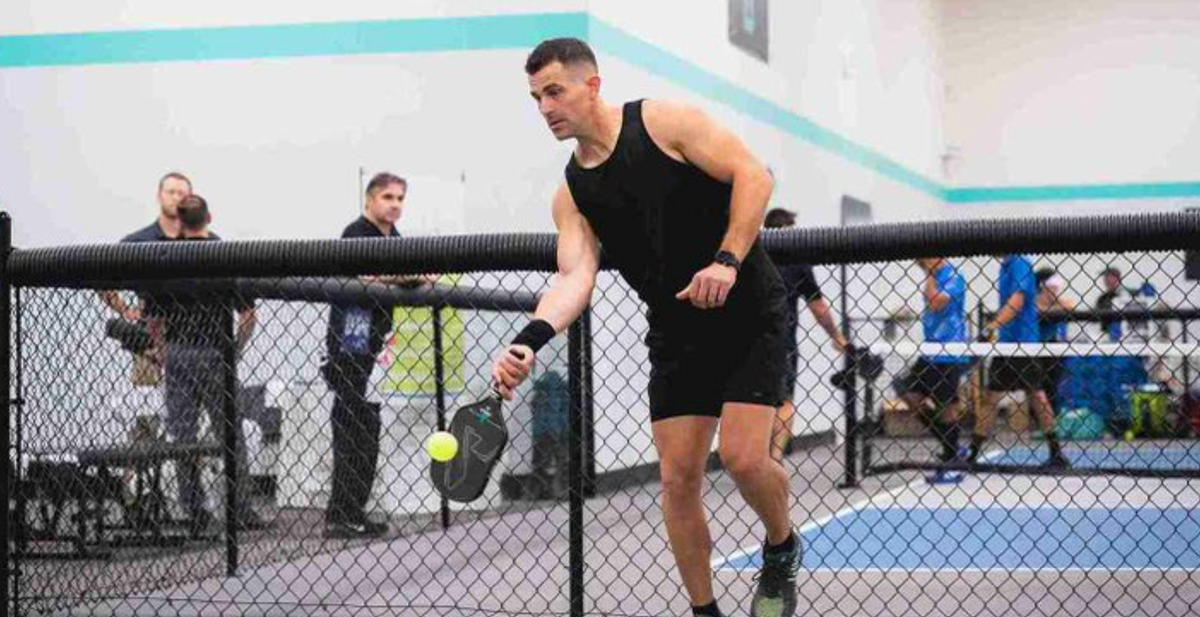
Pickleball Serve Footwork Stance: Load & Weight Transfer
Your pickleball serve footwork stance is the foundation of every point you start: get it wrong and no amount of arm swing will save you. This guide breaks down exactly how to set your feet, load your hips, and transfer weight for a serve that’s both powerful and repeatable.
 The Dink PickleballThe Dink Media Team
How to Practice This Without Wasting Court Time
The biggest mistake players make with this progression is rushing it. Each step exists to build a specific feeling before the next layer gets added.
Here's how to structure your practice sessions:
- Shadow swings first: Do 10 to 20 slow reps of step one before every session. Your body needs to feel the motion before it executes it under pressure.
- Hold your finish: Every serve in practice should end with a held finish position. If you can't hold it, your balance and swing path are off.
- Go back when things fall apart: If step four feels inconsistent, go back to step two. Mastering each stage is more important than moving forward quickly.
- Add pace last: Speed and power come naturally once the mechanics are clean. Chasing pace before you have the motion dialed in will just reinforce bad habits.
For players who struggle to find court time, there are smart ways to get reps in.
This guide on how to practice with limited court time has useful ideas for working through progressions like this one even when courts are hard to come by.
Attack the Right Spots: Win More Points in Pickleball
You can’t go to the same spot every single time you go on offense – eventually, your opponent will catch on. And make you pay for it.
 The Dink PickleballEric Roddy
What This Does for the Rest of Your Game
A better serve doesn't just win you easier points. It changes what your opponent can do on the return, which changes the entire third shot situation you face.
When your serve has depth and topspin, your opponent is pushed back. Their return becomes harder to control.You get a softer or shorter ball to work with, which makes your third shot drop much more manageable.
That's the real value of this five-step system. It's not just about one shot.
A reliable, deep serve with real shape on it creates a chain reaction that puts you in control of rallies from the very first ball.
Players who are working on overall consistency should also look at the three causes of unforced errors because many of the same mechanical issues that hurt the serve also show up in groundstrokes and volleys.
If you're trying to push your game to the next rating level, knowing what 5.0 players do differently will help you see how serve quality fits into a bigger picture of how elite players control points.
And if you want to understand what separates players who plateau from those who keep improving, take a look at the habits keeping 4.0 players stuck.The serve is almost always part of that conversation.
For anyone who wants to build a complete offensive game around a strong serve, the five keys to a return that creates offense will show you the other side of that equation from your opponent's perspective.
Finally, if your drives are giving you trouble alongside your serve, this resource on six drive fixes that create instant topspin covers the same rotation principles from a different angle.
💡
Heads up: hundreds of thousands of pickleballers read our free newsletter.
Subscribe herefor cutting edge strategy, insider news, pro analysis, the latest product innovations and more.
Frequently Asked Questions
Why does my pickleball serve keep going into the net?
A serve that goes into the net usually means your swing path is too flat or you're dropping your paddle head too early at contact. Focus on keeping the paddle moving linearly toward the target through the hit, and make sure your wrist is set before the swing begins, not during it.
How do I add topspin to my pickleball serve?
Topspin on the serve comes from allowing the natural lift in your swing arc as the paddle moves from low to high through contact. If you set your wrist in a slightly laid-back position and swing linearly down your target line, the paddle will naturally brush up through the ball and create topspin without any extra wrist action needed.
What does "laid back wrist" mean on a pickleball serve?
A laid-back wrist means the wrist is angled slightly backward from the forearm, just under 90 degrees, before the swing starts. It is not flat and not fully cocked. The key is that once you set this position, it stays locked throughout the entire swing so the paddle face stays consistent at contact.
Should I use an open or closed stance when serving in pickleball?
Both stances are valid, and the right choice depends on what you're trying to accomplish. An open stance is simpler with less footwork, making it easier to repeat. A closed stance with a step generates more forward momentum and power but requires more coordination to execute consistently.
How do I stop my pickleball serve from being attacked?
Serves get attacked when they lack depth and spin, giving your opponent a comfortable ball to rip. Using shoulder rotation and a proper weight shift to drive the ball deep toward the baseline, combined with topspin from a clean swing path, makes your serve much harder to attack and forces a defensive return instead.
Anuncie Aqui / Advertise Here
Sua marca para o mundo Pickleball! / Your brand for the Pickleball world!




 English (US) ·
  Portuguese (BR) ·