
 English
  Spanish
  Portuguese
  German
  Italian
  Japanese
  French
  Polish
  Russian
  Netherlands
  Hungarian
  Turkish
  Videos
  Thedink Pickleball

Most players aim their third shot drop apex over the net, and that single mistake hands the advantage right back to the receiving team. Fix that one detail and your rallies will start lasting longer immediately.
Your third shot drop keeps landing too high, and your opponents keep crushing it before it bounces.
Sound familiar? The problem almost certainly is not your paddle, your grip, or your footwork.It is where you are sending the ball's highest point. And most players have this completely wrong.
This breakdown covers the core technique, the exact placement strategy, and a fun practice game you can run with a partner to start building real consistency.
The instruction comes from Selkirk TV on YouTube, where coaches break down this shot with live on-court demonstrations.
Love pickleball? Then you'll love our free newsletter. We send the latest news, tips, and highlights for free each week.
Why the Third Shot Drop Is the Most Important Shot You're Getting Wrong
The third shot drop exists for one reason: to neutralize the positional advantage the receiving team has at the kitchen line.
As the serving team, you are stuck at the baseline because you have to let the return bounce.
Your opponents are already camped at the non-volley zone, able to attack anything that floats.
You need a shot that forces them to let the ball bounce too, buying you time to move forward.That is exactly what a well-executed drop does.
It removes their ability to volley, slows the point down, and gets you both to the kitchen where the real game happens.
If you want to understand why getting to that kitchen line matters so much, read about the kitchen line secrets that make pro Tyra Black so unstoppable.
Where Are You Actually Supposed to Aim the Apex?
Here is the piece of advice that most players have backwards: the apex of your drop should be over your own kitchen, not over the net.
Think about how a ball travels. If the highest point of your shot happens over the net, the ball is still rising or flat as it crosses.
Your opponent can reach out and volley it before it drops into the kitchen.
But if the ball peaks on your side of the court, right around your own non-volley zone line, it will be descending by the time it crosses the net.
A descending ball landing in the kitchen is a ball your opponent cannot volley. They have to let it bounce.
That one shift in your mental picture of the shot will extend your rallies faster than any other adjustment you can make.
💡
Need some new pickleball gear? Get 20% off select paddles, shoes, and more with code THEDINK at
Midwest Racquet SportsWhat Does the Correct Drop Technique Actually Look Like?
The mechanics are simpler than most players think. The key phrase to hold onto is lift and push.
You are not trying to flatten the ball out. You are not swinging hard.You are lifting the ball so it reaches that apex over your kitchen, then pushing it so it falls into your opponent's kitchen.
Here is what the full motion requires:
- Paddle head down at neutral. Start with your paddle below the ball, not hovering at chest height. This gives you room to generate the upward lift.
- Step into the ball. Forward momentum is everything on this shot. Any time your energy is moving backward or staying neutral, the ball goes higher or into the net. Step forward with your front foot as you make contact.
- Drive from the shoulder. The shoulder is your hinge. Keep your entire arm, wrist, and paddle as one connected unit. Do not get wristy. Everything from the shoulder down moves together.
- Follow through forward. Your follow-through should continue toward your target. Stopping the paddle early kills the shot. Extend and push through.
- Stay down through contact. Do not stand up as you hit. Stay low and into the ball so you maintain control of the arc.
For a deeper look at executing this specific shot on the forehand side, check out this guide on how to hit a forehand third shot drop in pickleball.
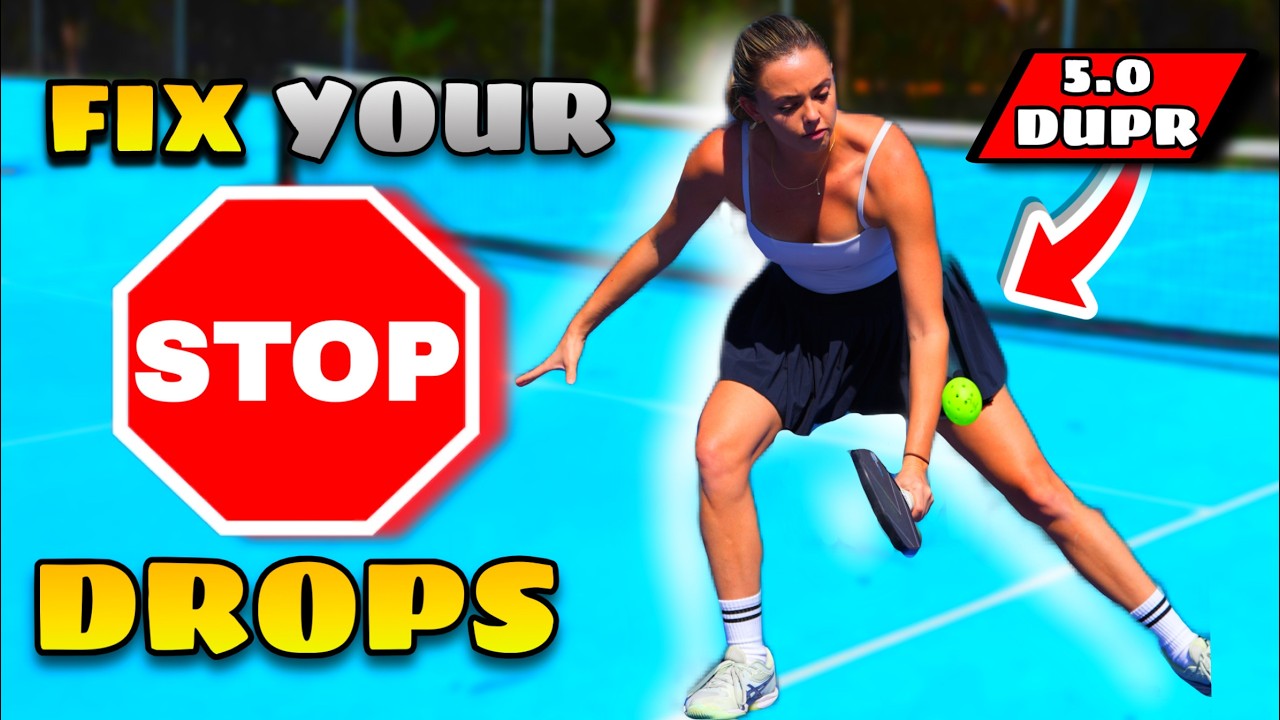
5 Drop Shot Techniques to Elevate Your Pickleball Game
The drop shot is one of pickleball’s most essential skills, yet it’s also one of the most misunderstood.
 The Dink PickleballThe Dink Media Team
Where Should the Ball Actually Land?
Technique gets you the right shape. Placement is what makes the shot a weapon.
The highest-percentage landing zone for a third shot drop is crosscourt, into the opponent's kitchen.Here is why crosscourt is almost always the right call:
- The net is at its lowest point in the middle, so a crosscourt ball travels over the least amount of net height.
- You have the most court to work with diagonally, giving you more margin for error.
- You get more time to read and evaluate your drop as it travels the longer crosscourt distance.
- Dropping same-side sends the ball over a higher section of the net, increasing your miss rate.
Within that crosscourt zone, the backhand side toe of your opponent is the premium target.
For a right-handed player on the even side, that means dropping to their backhand corner.
Most players handle a backhand drop from that position much less aggressively than a forehand volley.That said, dropping toward a forehand with a shallow ball into the middle can also be effective, especially when the opponent is positioned off-center.
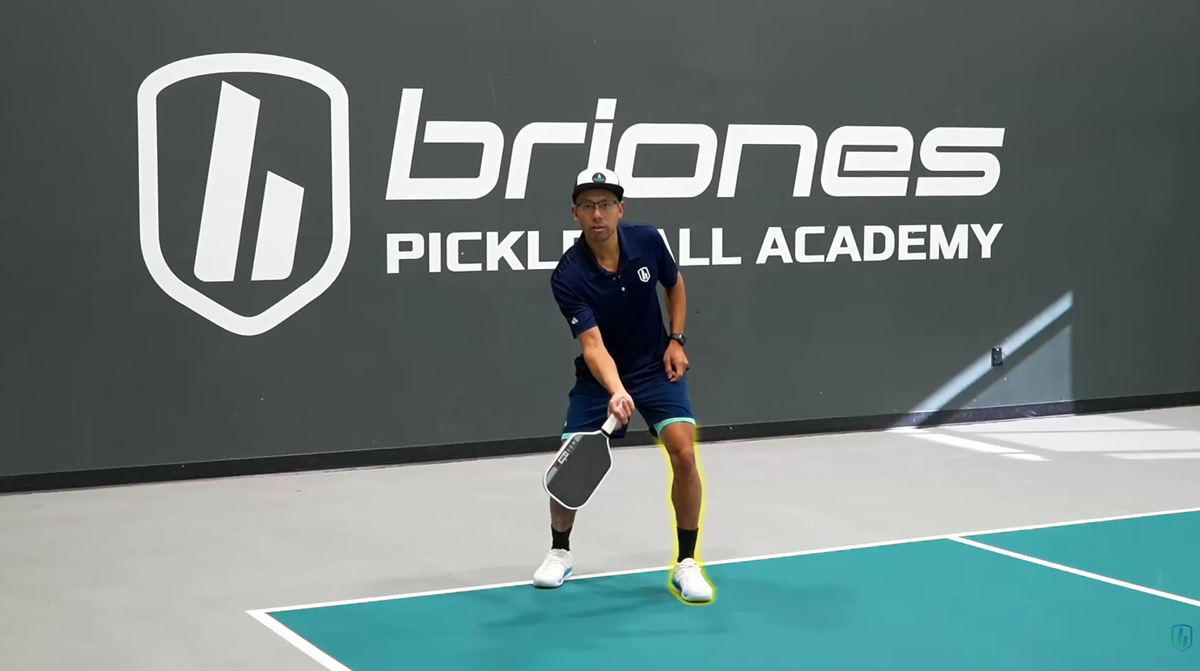
5 Modern 3rd Shot Drop Techniques Shaping the Future of Pickleball
Modern pickleball players are more athletic, more aggressive, and more skilled than ever before. Your third shot strategy needs to reflect that reality.
 The Dink PickleballThe Dink Media Team
What Happens When You Drop Down the Line Instead?
Dropping down the line is not automatically wrong, but it is a lower-percentage shot that you should choose deliberately, not by default.
The net is physically higher on the sideline sections. That means less margin.A crosscourt drop gives you more room to work with, and in a sport where the difference between a winning drop and a floater is a matter of a few inches, margin matters enormously.
If you are struggling with consistency on the drop and finding your shots keep sitting up for attackable balls, the third shot drop or drive three zone system can help you decide when to drop versus when to drive based on where you are on the court.
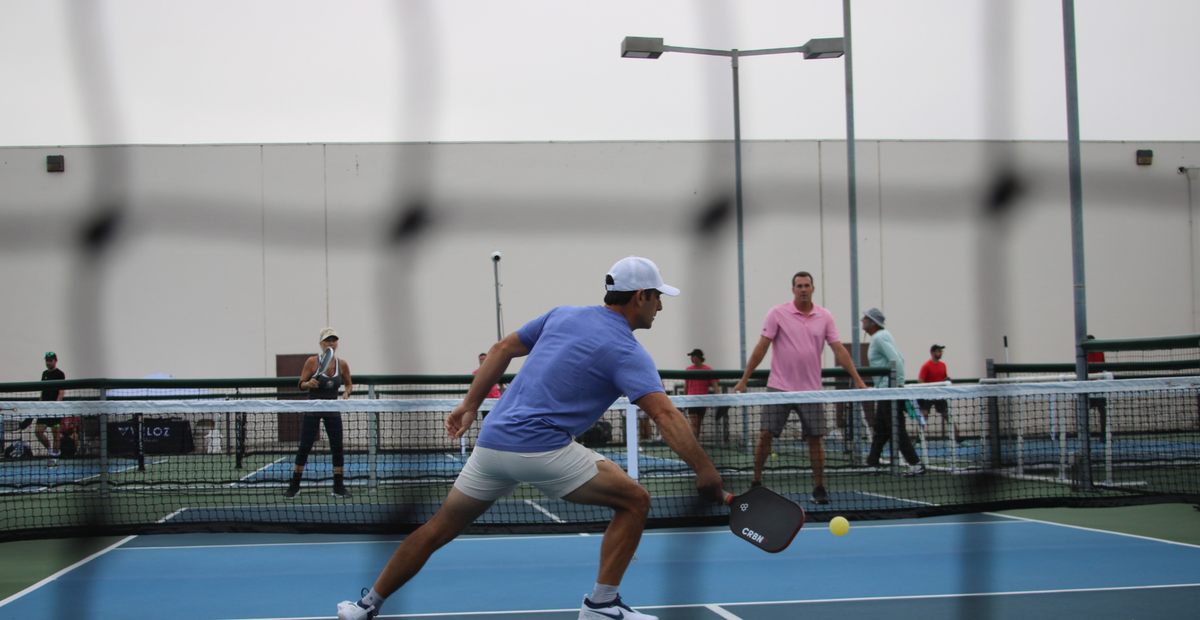
Pickleball Third Shot Drop by Skill Levels: 3.0 to 4.0 Guide
Third shot drop skill levels pickleball players need to master vary dramatically between 3.0 and 4.0 rated competitors. This guide breaks down exactly what to focus on, fix, and refine at each rating so you stop training the wrong things.
 The Dink PickleballThe Dink Media Team
Why Is Your Forward Momentum So Critical?
This is the part players underestimate most. Forward kinetic energy is what keeps the ball in the right trajectory.
When you step back or stay flat-footed as you hit a drop, your momentum is not going into the ball.The paddle has to do all the work, and it usually compensates by lifting the face too much or swinging too hard.
The result is a ball that either flies long or sits up like a gift.
Step forward. Always. Even a small measurable difference in weight transfer toward your target makes it in the consistency of your drops.
This same principle applies throughout the transition zone, and if you want to understand the full picture of why movement matters there, read about why most pickleball mistakes come from the transition zone.
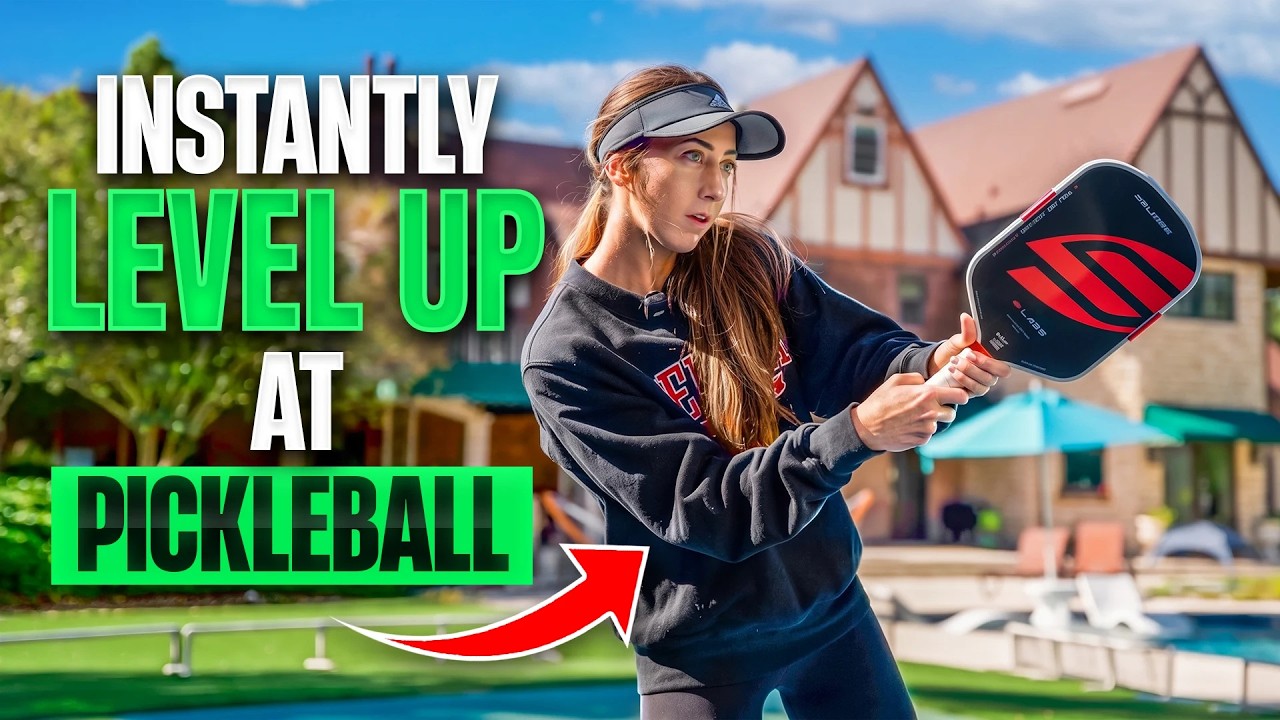
Master Pickleball Momentum: Control Every Point
The difference between 5.0 players and everyone else isn’t speed or strength—it’s understanding pickleball momentum. Master the three states of every rally and you’ll start beating players who are technically better than you.
 The Dink PickleballThe Dink Media Team
How Do You Practice the Drop Under Pressure?
Technique on a feed is one thing. Technique when there is something on the line is different. That is where a game called Seven on the Line comes in.
Here is how to run it:
- One player feeds and the other drops crosscourt, aiming for a target in the kitchen.
- Every ball that successfully clears the net adds one to a running count. The counter starts at zero and builds toward seven.
- Both players start with seven points.
- When a player hits into the net, they subtract however many balls were currently on the line from their seven points.
- If you hit a specific target zone (like the backhand corner), you earn back lost points.
- The player closest to seven at the end wins.
This game builds real pressure into the drop practice. Missing into the net with five balls on the line hurts. That is the point.
You want your nervous system to feel the cost of a bad drop so that in a match, that muscle memory kicks in.
You can use this same format to sharpen your placement and decision-making on other shots too.For more pressure-based drills, the 5 pickleball drills a PPA pro still uses every practice is worth your time.
Attack the Right Spots: Win More Points in Pickleball
You can’t go to the same spot every single time you go on offense – eventually, your opponent will catch on. And make you pay for it.
 The Dink PickleballEric Roddy
What Should You Fix First If Your Drop Is Inconsistent?
Go back to the apex before you change anything else.
If your drops are consistently popping up or landing short, the first question to ask yourself is where the ball is reaching its highest point.If the answer is anywhere over or past the net, you have found your problem.
Visualize the ball peaking over your own kitchen line. Make that your singular focus for the next practice session.
Everything else, the footwork, the shoulder hinge, the follow-through, will start to click once the arc is correct.The three simple pro tips for demystifying the third shot drop cover this mental picture in detail and pair well with everything covered here.
If you find that after fixing the apex you are still popping balls up, your reset mechanics may also need attention.
A lot of the same principles carry over, and the reasons your pickleball reset keeps popping up are worth reviewing alongside this work.
One more thing worth noting: once you have a reliable drop, you also need to know what to do with the next ball.The pickleball fourth shot playbook gives you six ways to stay on offense after a successful drop, which is exactly where you want to be.
The third shot drop is not about perfection on the first attempt.
It is about building a reliable shape, aiming for a high-percentage zone, and giving yourself time to move forward.
Do that consistently, and your opponents will run out of easy putaways fast.
💡
Heads up: hundreds of thousands of pickleballers read our free newsletter.
Subscribe herefor cutting edge strategy, insider news, pro analysis, the latest product innovations and more.
Frequently Asked Questions
Where should the apex of a third shot drop be?
The apex of your third shot drop should be over your own kitchen line, not over the net. A ball that peaks on your side of the court will be descending as it crosses the net, making it much harder for your opponent to volley.
Why should I drop crosscourt instead of down the line?
Crosscourt drops pass over the lowest part of the net, which is the middle, giving you more margin. You also have more court distance diagonally, which gives you more time to evaluate the shot as it travels.
What does "lift and push" mean for a third shot drop?
Lift and push is the mental cue for the correct motion: lift the ball upward so it reaches the right apex, then push it forward so it falls into the opponent's kitchen. It is not a flat drive, and it is not a flick. It is a controlled upward and forward motion driven from the shoulder.
Why does stepping into the ball matter so much on a third shot drop?
Forward momentum puts your energy into the ball and keeps the arc controlled. When you step back or stay flat-footed, the paddle has to compensate and usually produces a ball that sits up too high or goes into the net.
What is Seven on the Line and how does it help my drop?
Seven on the Line is a competitive practice game where you and a partner build a running count of consecutive balls over the net, and missing into the net costs you points equal to the current count. It simulates pressure so your drops become reliable when it matters in a real match.
Anuncie Aqui / Advertise Here
Sua marca para o mundo Pickleball! / Your brand for the Pickleball world!




 English (US) ·
  Portuguese (BR) ·