 English
  Spanish
  Portuguese
  German
  Italian
  Japanese
  French
  Polish
  Russian
  Netherlands
  Hungarian
  Turkish
  Videos
  Thedink Pickleball

A great pickleball drive is not a winner, it is a setup. Here is the technique, the targets, and the drills that turn your drive into instant offense.
Your pickleball drive is not supposed to win the point. It is supposed to make the next one easy.
Most players get this backwards. They wind up, swing as hard as they can, and either send the ball long or float a slow one that the other team crushes.
A great pickleball drive does something quieter. It rushes your opponent, forces a weak reply, and lets you move forward and take over the rally.
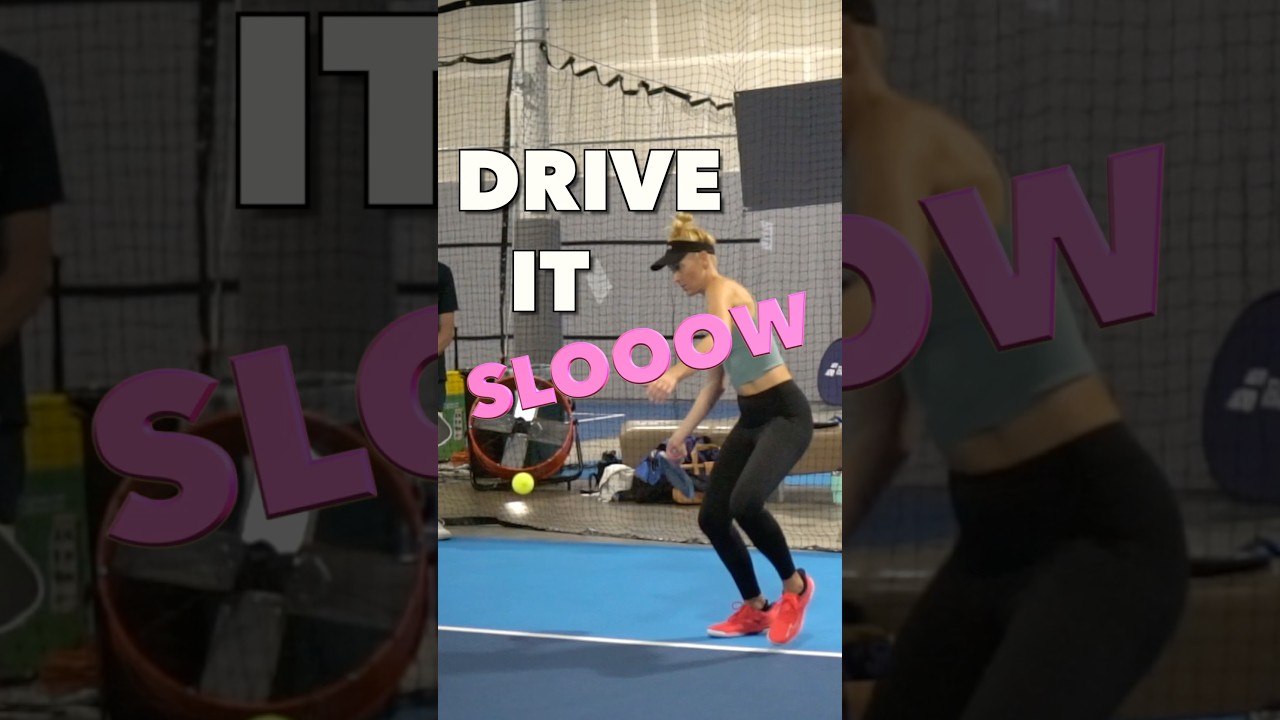
Coach Austin Hardy of Pickleball Playbook broke down the full pickleball drive in a recent video, from swing path to shot selection to the drills that make it automatic.
Here are the five techniques that matter most, plus where to aim and when to pull the trigger.
Love pickleball? Then you'll love our free newsletter. We send the latest news, tips, and highlights for free each week.
What Is a Pickleball Drive?
A pickleball drive is a groundstroke hit with pace and topspin, most often as a third shot drive, meant to force your opponent into a weak reply rather than end the point outright.
As one pickleball glossary puts it, the drive is hit with power hoping your opponent pops it up.
Its opposite is the soft third shot drop, which floats gently into the kitchen. Knowing which one to hit is half the battle, and we will get to that decision below.
What Actually Makes a Pickleball Drive Dangerous?
A dangerous drive comes down to three habits, and none of them is raw power.
- Accelerate through contact. Start slow and finish fast. Too many players decelerate right before they hit because they are not confident, and that sends the ball in random directions. Think slow to fast, every single time.
- Lean forward and use your legs. Real pace comes from hip rotation and leg drive into the court, not from muscling the ball with your arm.
- Treat the drive as a setup, not a putaway. You are not going for a winner. You are trying to make your move to the net easier.
Keep those three in mind and you already have a better pickleball drive.
If you want more on generating pace the smart way, we broke down how to hit your drive harder and smarter.
💡
Need some new pickleball gear? Get 20% off select paddles, shoes, and more with code THEDINK at
Midwest Racquet SportsThe 5 Techniques That Build a Reliable Drive
1. Paint a Nike Swish With Topspin
The topspin drive is the one you will hit most, so start here.
Load up with a unit turn until your opponents can see the back of your shoulder, with your paddle face pointed toward the side fence.
From there the whole motion traces a Nike swish: down, out, and up.
You finish high, around your shoulder, brushing up the back of the ball to pull it back down into the court.
That upward brush is what creates instant topspin, and topspin is what lets you swing hard without sailing the ball long.
2. Pet the Dog to Get Under the Ball
Hardy's cue for the drop and lift is "pet the dog." Picture a medium sized dog in front of you, and your paddle face, not the edge, reaches down to pet it.
From that low point your butt cap points at your target, then you pull through with a windshield wiper motion, tip down to tip up.
Getting under the ball first is what gives you room to drive up and through it.
The Pickleball Drive Crash Course: Pro Tips for Powerful Shots
The drive is one of pickleball’s most important shots: it’s your way to take the initiative, put pressure on your opponents, and finish points.
 The Dink PickleballThe Dink Media Team
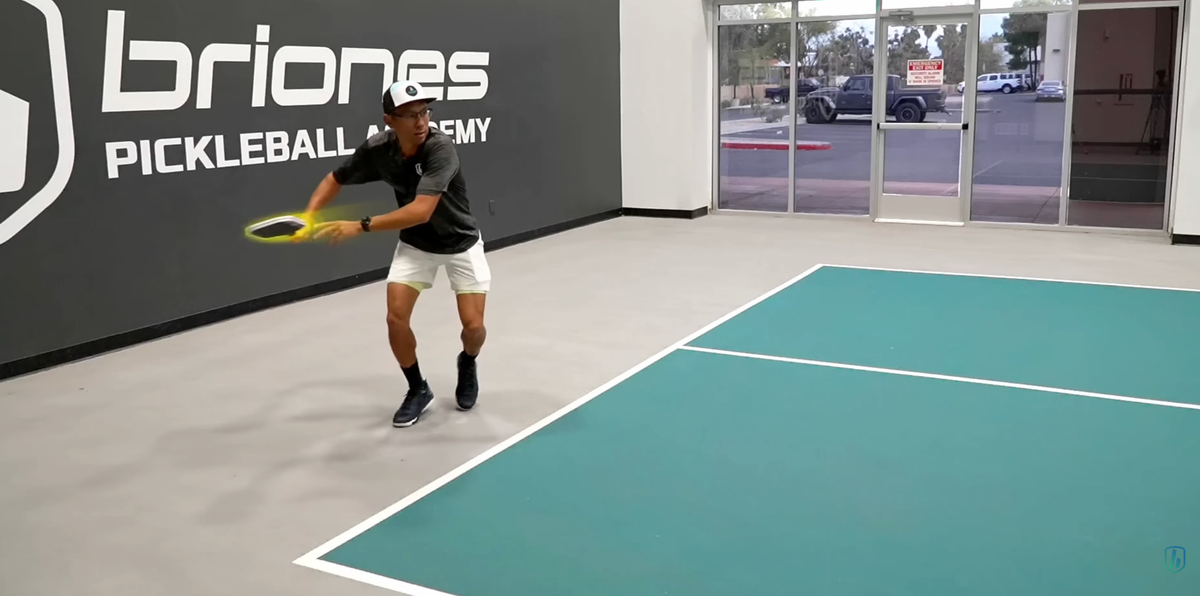
Footwork decides whether your drive repeats. Step in on a pivot angle instead of straight ahead, and aim your lead foot at the net post.
Point at the net post and you rotate cleanly through contact. Step straight in and your rotation gets cramped.
Drift too far forward and you over rotate into an inconsistent shot.
Keep the whole motion in front of you and on your side of your body. Reach behind yourself and you will get way too much on the ball.
Clean footwork is what makes the difference between a drive you trust and one you hope goes in.
4. Build Your Two-Handed Backhand Off Your Other Hand
The easiest way to think about a two-handed backhand drive is as a non-dominant forehand.
Take your dominant hand off for a minute, hit a few one handed, and the motion becomes obvious.
Add a trigger finger with your non-dominant hand along the paddle face. It tells you where your paddle is in space and makes you far more accurate.
Watch Anna Leigh Waters and you will see that trigger finger on nearly every backhand she hits.
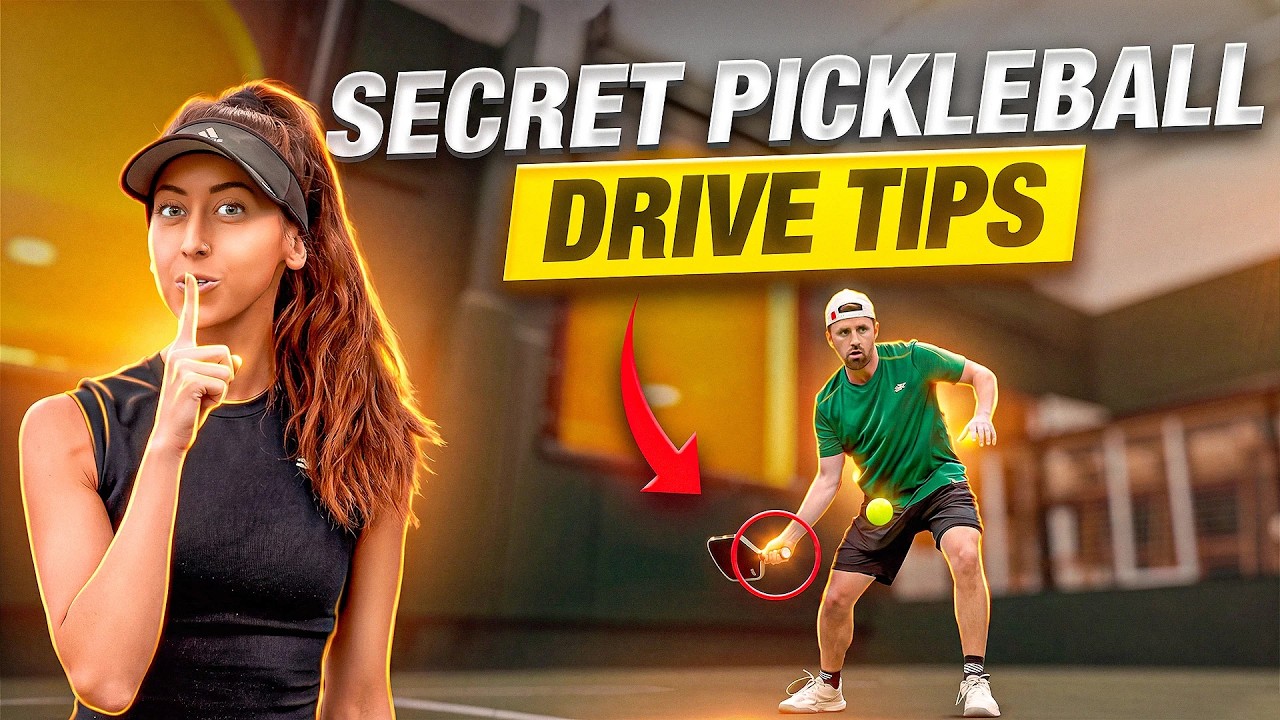
6 Pickleball Drive Fixes That Create Instant Top Spin
The best pickleball drive is not the hardest one, it is the one that dips. Here are six fixes that put heavy top spin on the ball and force your opponent to hit up.
 The Dink PickleballThe Dink Media Team
5. Add the Drip When You Need It Soft
The drip is a hybrid between a drive and a drop, and it lives much closer to the drive.
Same forehand motion, everything out in front, no backswing, out and up with the windshield wiper, and you finish by answering the phone up near your ear.
The difference is touch.
You brush the back of the ball like you are giving it a haircut, at 40 to 50 percent power or less, so it stays low and dips right as it reaches the net.
Your opponents have to hit up, and up means pop-ups. It pairs perfectly with the full drive and drop combo.
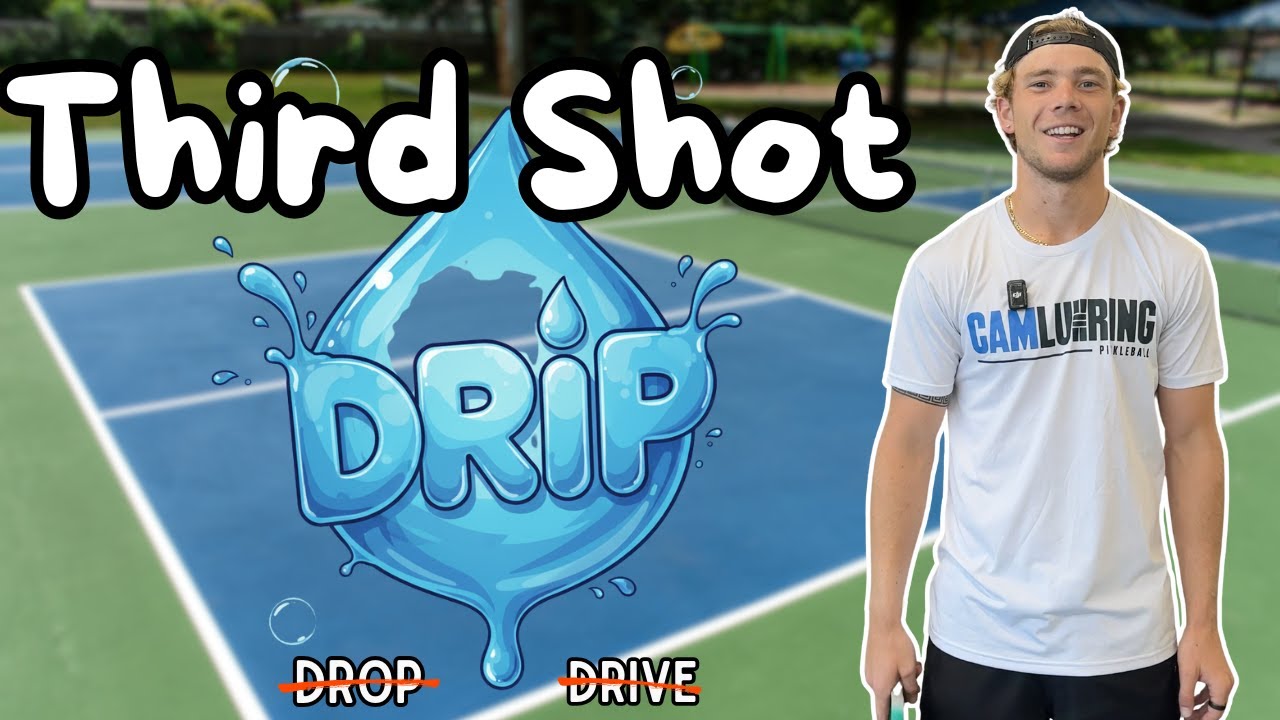
Master the Drip Shot in Pickleball: A Complete Guide
The drip shot is a hybrid between a drop and a drive that gives you the best of both worlds on the court. Master this versatile third shot with step-by-step mechanics and proven drills.
 The Dink PickleballThe Dink Media Team
Where Should You Aim Your Pickleball Drive?
There are three high value targets for your pickleball drive, and the right one depends on where your opponents are standing.
- Up the line. Usually the most valuable target. It takes time away from your opponent and sets up an easier next ball. Aim at their hips to jam them up and draw a pop-up.
- At the returner's feet. When a returner is late getting to the kitchen, drive crosscourt at their feet while they are still moving. It travels over the lowest part of the net, so your consistency climbs.
- Down the middle. Down the middle solves the riddle. A ball up the gut creates confusion about who takes it, crosses the lowest part of the net, and pushes toward the weaker backhand.
The better your own drive gets, the easier it is to read the ones coming back at you, which is exactly how you learn to attack drives and beat bangers.
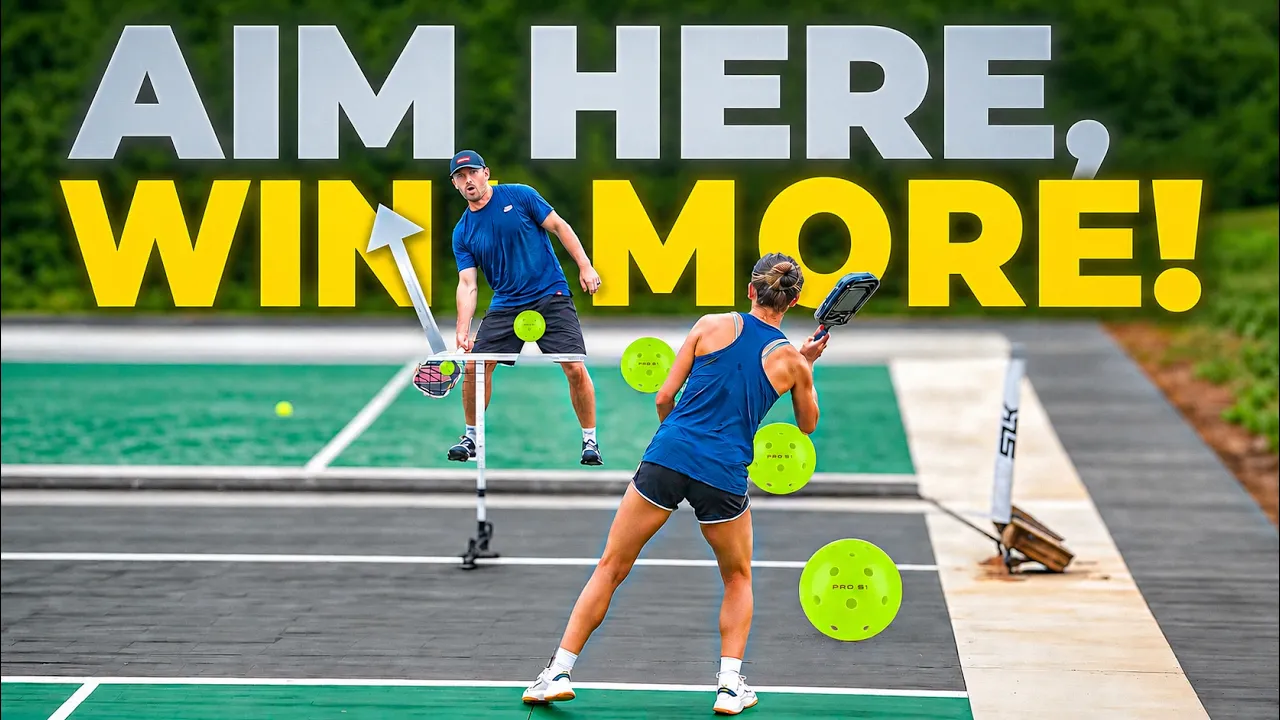
Pickleball Placement Strategy: Where to Aim Every Shot
Knowing where to aim in pickleball is the difference between winning and losing. Learn the exact placement strategy for every shot from serve to attack.
 The Dink PickleballThe Dink Media Team
When Should You Drive Instead of Drop?
The simple rule: if you are behind the baseline, you are usually in a defensive or neutral position, and that is when you should drive.
That decision between drive and drop shapes the entire point.
Read the ball too. Short and low, drop it.
Short and high, drive it and get it on your opponent fast. Deep, drive it.
Shot selection is really the whole game.
As Ben Johns told Tennis Magazine, the hardest thing for players to learn is knowing when to hit big groundstrokes and when not to.
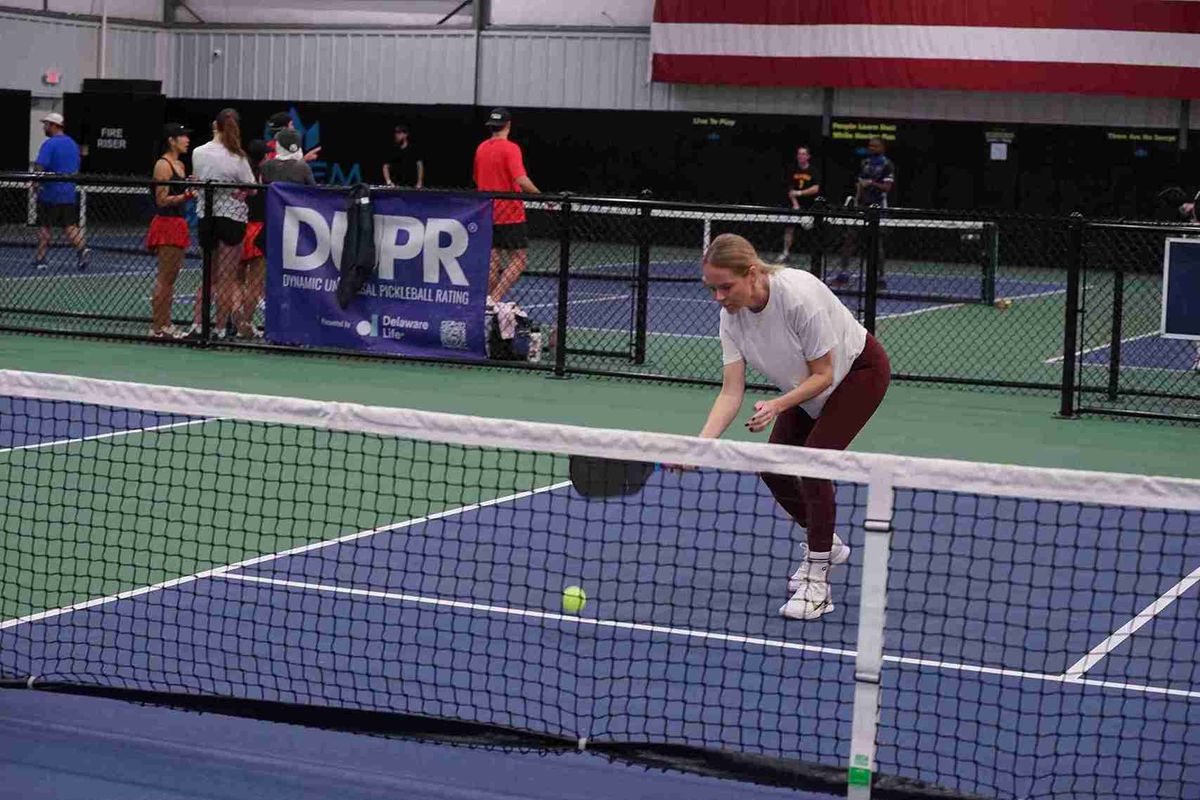
Third Shot Drop vs Drive in Pickleball: Make the Right Call
The third shot drop vs drive pickleball debate isn’t about picking a favorite, it’s about reading the rally and choosing the shot that actually works. This guide breaks down when to drop, when to drive, and how to stop guessing on ball three.
 The Dink PickleballThe Dink Media Team
3 Drills That Make Your Pickleball Drive Automatic
Reps are what turn a good drive into a reflex. These three drills build depth, then accuracy, then pressure.
- Cooperative depth drill. Drive back and forth with a partner, focused only on form and depth. Set cones at midcourt, or the back third of the court if you want a real challenge. Aim for that deep zone from every court position.
- Cooperative and competitive drill. Drive up the line at your partner's hips. If they hit a ball shorter than midcourt, you win the point. Anything deeper, keep rallying. Mark midcourt with a water bottle so the target is obvious.
- Competitive skinny singles. Play points on just your half of the court with a cone at midcourt. Any ball landing in front of the cone lets a player transition forward. Keep score so it feels like a real match.
Reps like these also clean up your transition zone, since a good drive is what earns the trip forward.
💡
Heads up: hundreds of thousands of pickleballers read our free newsletter.
Subscribe herefor cutting edge strategy, insider news, pro analysis, the latest product innovations and more.
Frequently Asked Questions
How hard should I hit a pickleball drive?
Hit your topspin drive at around 60 percent power, and your drip even softer at 40 to 50 percent. Acceleration through contact matters far more than swinging as hard as you can.
Should I hit a third shot drive or drop?
Drive when you are pushed behind the baseline or the ball is short and high, since a drive gets on your opponent fast. Drop when the ball is short and low and you have time to reset softly into the kitchen.
Why do my drives keep floating or going long?
The usual culprits are decelerating through contact, reaching behind your body, and swinging flat with no topspin. Start slow and finish fast, keep the motion in front of you, and brush up the back of the ball to bring it down into the court.
Where should I aim my pickleball drive?
Up the line is usually best because it takes away time and sets up an easy next ball. Down the middle creates confusion and clears the lowest part of the net.
What is the best drill to improve my pickleball drive?
Start with the cooperative depth drill: rally drives back and forth and aim for cones near the baseline. Depth is the foundation, so groove that first before adding the competitive drills that raise the pressure.
Anuncie Aqui / Advertise Here
Sua marca para o mundo Pickleball! / Your brand for the Pickleball world!



 English (US) ·
  Portuguese (BR) ·