
 English
  Spanish
  Portuguese
  German
  Italian
  Japanese
  French
  Polish
  Russian
  Netherlands
  Hungarian
  Turkish
  Videos
  Thedink Pickleball

Winning in pickleball isn't about following a rigid formula – it's about understanding your position, reading your opponent, and making intentional decisions that put them on their heels
Most pickleball players are taught to keep the ball in play and move forward to the kitchen. But what if that approach is actually holding you back?
Coach Austin Hardy from PickleballPlaybook breaks down a four-step system that flips the script on how you should think about winning in pickleball.
Instead of mindless consistency, he's talking about active consistency, intentional decisions, and strategic positioning that actually puts pressure on your opponents.
Love pickleball? Then you'll love our free newsletter. We send the latest news, tips, and highlights for free each week.
Stop Mindlessly Rushing the Kitchen
Just because a coach told you to get to the net doesn't mean you should drive there every single time. Coach Hardy emphasizes that the goal in pickleball isn't just to reach the kitchen line. The goal is to win, and you can do that from anywhere on the court.
The most common mistake he sees?
Players moving forward with zero purpose, popping the ball up to their opponents and getting stuck in transition.Instead, you need to move forward strategically using plays and patterns that give you a consistent outcome.
The MFWC System: Move Forward With Confidence
Coach Hardy introduces an acronym that changes everything: MFWC. Here's how it breaks down:
- Monitor: Watch what you or your partner is doing with the third shot. Are they hitting a drive, a drop, or crashing the net?
- Flow: Move forward, back, or side to side based on what just happened with your shot or your partner's shot.
- Watch: Observe your opponents. Are they loading up for an overhead? Backing up? Hitting a neutral ball at net height?
- Crash: Once you see a good offensive opportunity, get to the net as fast as you can.
The key mistake beginners and intermediate players make is thinking "crash" means hit every ball hard. It doesn't. You're still reading your opponents and making the right decision based on what they're doing.
The Do’s and Don’ts of Attacking in Pickleball
Timing, positioning, and reading your opponent matter way more than gripping and ripping
 The Dink PickleballThe Dink Media Team
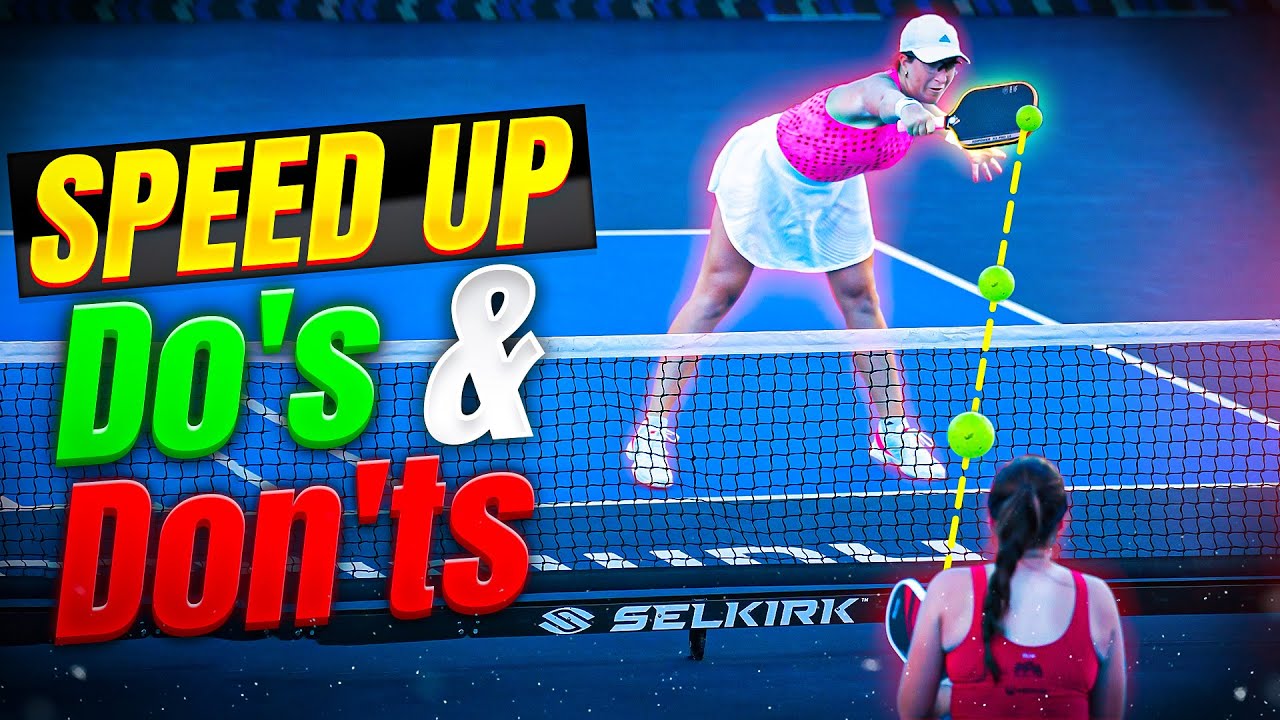
Choose the Right Shot for the Situation
Players often default to drops when defending and drives when attacking. But that's backwards thinking. Coach Hardy walks through when to hit each shot:
- Drives and lobs: Use these when you're scrambling on defense or facing a high ball. A lob especially buys you time to reset the point.
- Drops: Hit these when you're on offense with at least one foot inside the baseline. A short shot is your chance to drop it softly into the kitchen.
- Resets: When you don't have time or space, block the ball softly to bring the point back to neutral.
- Speed-ups: If the ball is above net level and you have space and time, attack it. Below net level? Dink it instead.
The pattern is simple: match your shot selection to your position and your opponent's position, not just to what feels natural.
💡
Need some new pickleball gear? Get 20% off select paddles, shoes, and more with code THEDINK at Midwest Racquet Sports
Hit the Right Shot, Not Just the Smart Shot
When you're on defense or scrambling, go for the high-percentage shot. But when you're neutral or on offense, go for the shot that applies the most pressure, even if it's less consistent.
Coach Hardy uses DJ Young as an example. One of the world's top pros is devastating because he's always creating offense with neutral and offensive balls. When you slightly pop up your dink against him, the point is almost instantly over because he sees the opportunity and has trained to execute it.
The catch? You have to get reps in before you try these shots in matches. Train with a ball machine, against a wall, or with a partner. Once you've built the muscle memory, you can start making the right decision instead of just the safe one.
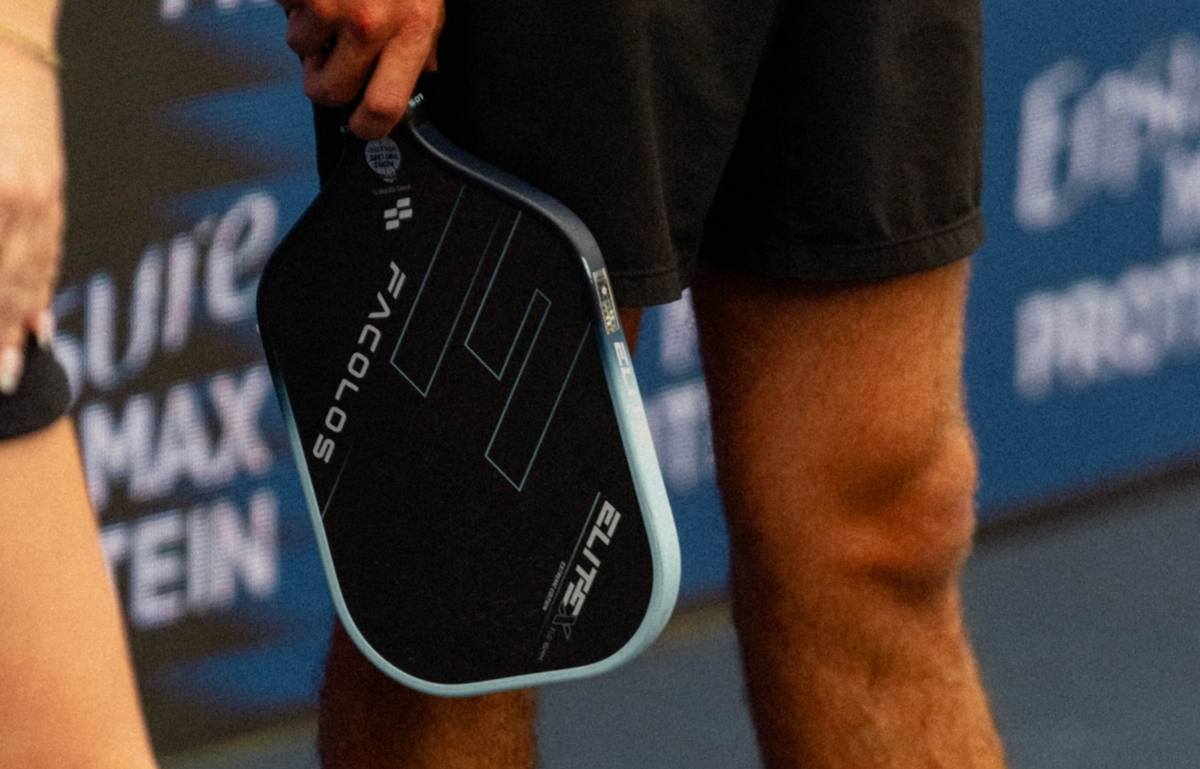
How Gabe Tardio’s Facolos Deal Could Reshape the Entire Pickleball Paddle Market
The paddle market is about to get a lot more competitive, says Zane Navratil, and American manufacturers will have to earn their place at the table to keep up
 The Dink PickleballAlex E. Weaver
Consistency Needs Intent Behind It
A passively consistent player just keeps the ball in and hopes their opponent misses. An actively consistent player trains beforehand, then constantly tries to create offense and apply pressure.
Every single shot should have intention behind it. Sometimes that intention is "keep the ball in because I'm scrambling." Most of the time it's "hit this ball so it makes things awkward for my opponent." Intent turns consistency into a weapon.
This doesn't mean banging every ball as hard as you can. It means making the correct decision for each situation with the goal of applying pressure. That's what separates the pros from everyone else.
Heads up: hundreds of thousands of pickleballers read our free newsletter. Subscribe here for cutting edge strategy, insider news, pro analysis, the latest product innovations and more.
The Takeaway
Winning in pickleball isn't about following a rigid formula. It's about understanding your position, reading your opponent, and making intentional decisions that put them on their heels.
Stop rushing the kitchen mindlessly. Start moving forward with confidence, choosing the right shots, and playing with purpose.
Anuncie Aqui / Advertise Here
Sua marca para o mundo Pickleball! / Your brand for the Pickleball world!



 English (US) ·
  Portuguese (BR) ·