
 English
  Spanish
  Portuguese
  German
  Italian
  Japanese
  French
  Polish
  Russian
  Netherlands
  Hungarian
  Turkish
  Videos
  Thedink Pickleball

The high ball putaway separates intermediate players from pros. Master the kinetic chain to generate real power on both your forehand and backhand.
If you've ever watched a pro pickleball match, you've noticed something: when the ball floats up, it doesn't come back down.
That's because elite players have mastered the high ball putaway, and they're not just flicking their wrists to do it.
The difference between a casual player and someone climbing the rankings often comes down to one thing: the ability to finish points when your opponent gives you a high ball.
Most players between 3.0 and 4.0 rating see these opportunities constantly but fail to capitalize.
According to APP pro Richard Livornese, the reason is simple.
Players aren't using their whole body to generate power.
Love pickleball? Then you'll love our free newsletter. We send the latest news, tips, and highlights for free each week.
What Is the Kinetic Chain, and Why Does It Matter?
The kinetic chain is the flow of power through your body, starting from the ground and moving upward through your legs, hips, core, shoulders, arm, and finally your wrist.
Think of it like a whip: the power doesn't come from the tip; it comes from the handle being snapped.
Most recreational players make the same mistake. They stand tall, barely bend their knees, and try to muscle the ball with their wrist and shoulder alone.
The result? Weak shots that either sail out or land softly in the net.
When you engage your full kinetic chain, you're tapping into the largest muscle groups in your body, not just the small muscles in your forearm and wrist.
Here's what happens when you skip the kinetic chain: you produce less than 50% of the power you're capable of generating. That's not a guess.
Richard Pickleball demonstrated this directly in his instruction, showing side-by-side comparisons of wrist-only shots versus full-body shots.
The difference is staggering.
Breaking Down the High Ball Putaway Forehand
The forehand high ball putaway is where most players start because it feels more natural. But natural doesn't mean correct.
Here's the sequence: First, get into an athletic stance. Your feet should be shoulder-width apart, maybe slightly wider.
Bend your knees. This isn't optional. If you're standing tall, you can't load your legs, and without loading your legs, you have no power source.
Next comes hip rotation. You're not twisting like a pretzel, but you are rotating your hips slightly to load them.
Then your shoulders load. Your arm loads. Your wrist stays tight. Now you're coiled like a spring.
💡
Need some new pickleball gear? Get 20% off select paddles, shoes, and more with code THEDINK at
Midwest Racquet SportsTo unleash all that stored energy, you start from the ground up.
- Push with your legs
- Turn your hips
- Throw your shoulder
- Throw your arm
- Snap your wrist
In full speed, it's one fluid motion. The best comparison? Throwing a baseball or a Frisbee.
You wouldn't throw a Frisbee with just your wrist, right? You'd use your whole body.
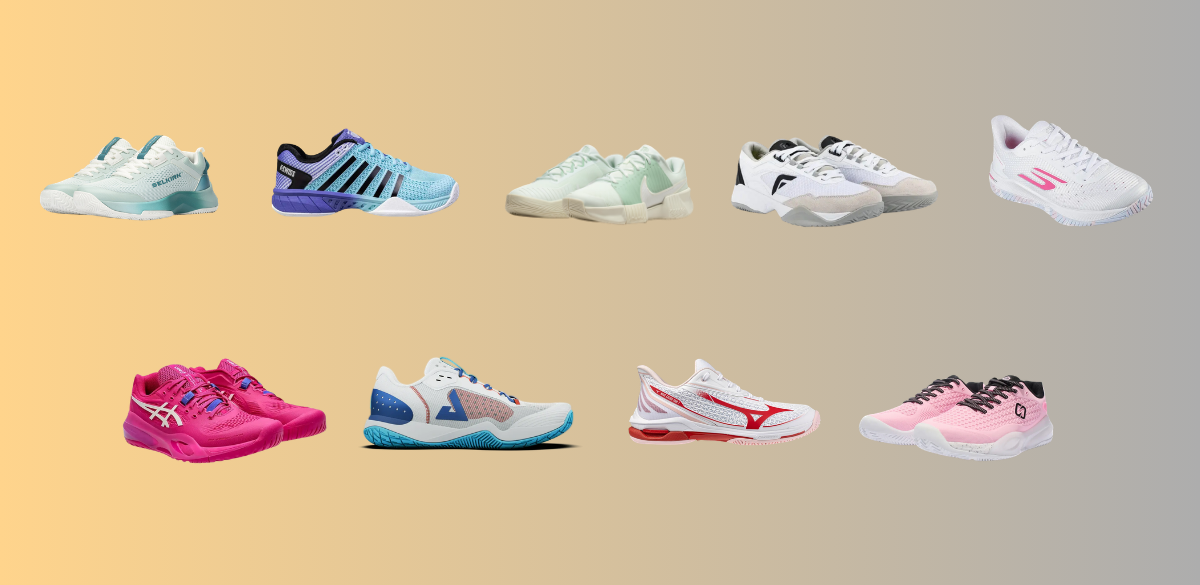
Best Women’s Pickleball Shoes of 2026: Top 9 Reviewed
I tried the 9 top women’s pickleball shoes from Nike, ASICS, Selkirk, JOOLA and more to reveal the best options for comfort, speed, and on-court performance.
 The Dink PickleballEmily Visnic
Why the Backhand High Ball Putaway Is the Real Separator
Here's where things get interesting.
The backhand high ball putaway is where the gap between 3.0 players and 4.5+ players becomes obvious.Most players default to a flick or a pop on the backhand. It feels easier. It's not.
What you're actually doing is limiting yourself to the weakest muscles in your upper body.
The backhand should feel like throwing a Frisbee with your non-dominant hand. You coil from the bottom up, engage your core and legs, and let it fly.
Instead of thinking "flick," think "throw."Your wrist should be loose and open, not tight. As you load and coil, your wrist stays relaxed.
When you unleash, it flies open naturally, like you're releasing a Frisbee into the distance.
Richard Pickleball emphasizes that this is the biggest jump from low-level to pro play.
There are plenty of 3.5 and 4.0 players who can crush a forehand, but very few can generate the same power on the backhand.
Master this, and you've just added a weapon your opponents won't expect.
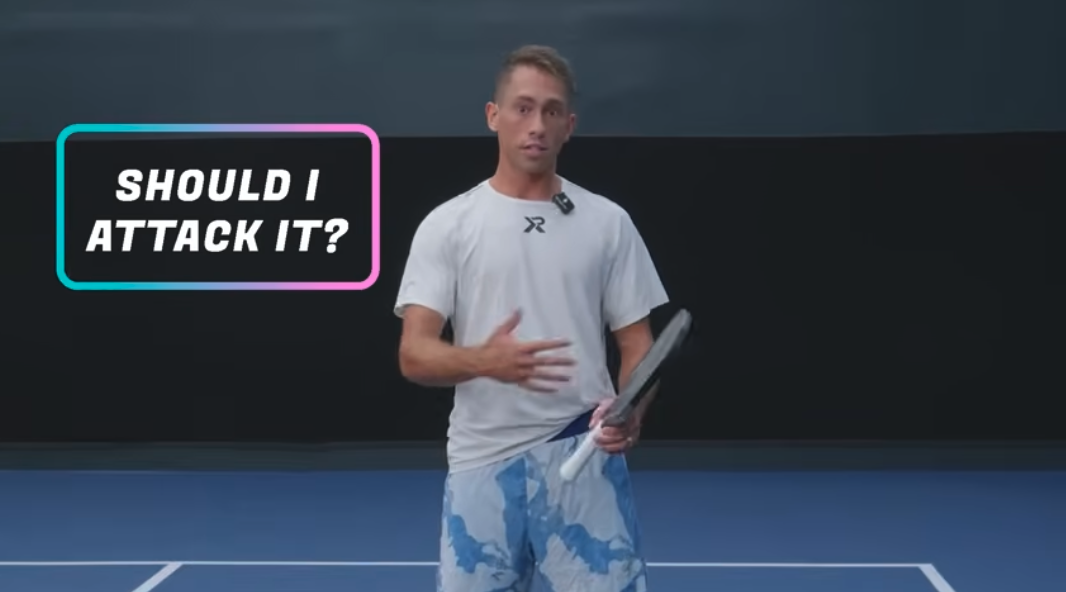
The Backhand Decision Tree: One Pro’s Real-Time Strategy for Cooking at the Kitchen
Zane Navratil has boiled the key steps for a successful backhand dink down to five critical questions he cycles through in real-time. Learn his framework and watch your shot selection – and winning percentage – improve dramatically.
The Dink PickleballAlex E. Weaver
The Paddle Face Down Rule: Why It Matters
Here's a common complaint: "When I hit it hard, it goes out."
The culprit is almost always an open paddle face.
If your paddle face is open when you make contact, the ball travels linearly, which means it's going up and out. That's a problem when you're trying to finish a point.
The fix is simple but requires awareness. As you take your racket back, turn the paddle face down. When you make contact, the ball goes down, not out.
Since the ball is already high, the net isn't a factor. You can hit it as hard as you physically can and still keep it in the court.
This is one of those technical details that separates sloppy power from controlled power. You're not just hitting harder; you're hitting smarter.
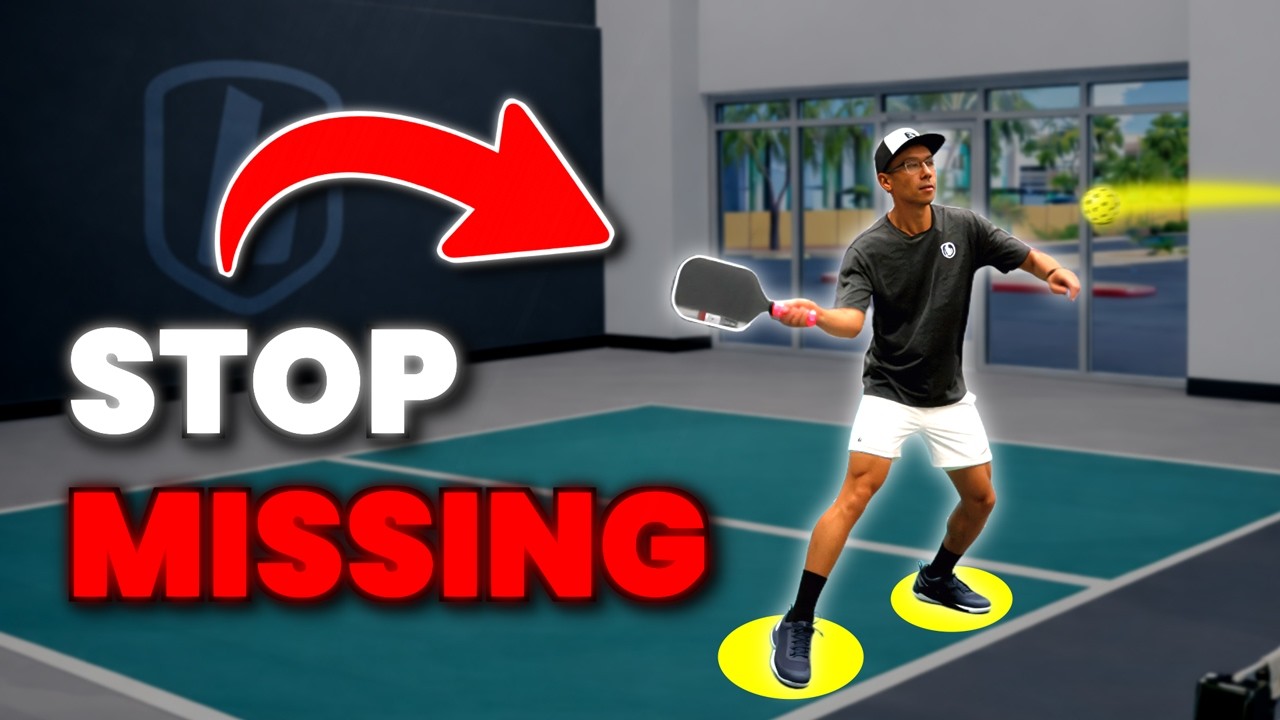
Never Miss Your Pickleball Overhead Smash Again
The overhead smash is one of pickleball’s most powerful finishing shots, but most players are making the same critical mistakes. Here’s how to master your overhead smash and turn it into a weapon that opponents can’t retrieve.
The Dink PickleballThe Dink Media Team

Putting It All Together: The Complete High Ball Putaway
Let's walk through the complete sequence for both sides.
- Forehand: Load your legs with a slight bend in your knees. Rotate your hips. Load your shoulders. Load your arm. Keep your wrist tight. Now push from the ground up: legs, hips, shoulders, arm, wrist snap. Paddle face down. Follow through like you're throwing the paddle.
- Backhand: Same loading sequence, but think "throw a Frisbee." Coil from the bottom up. Let your wrist stay loose and open. When you unleash, it flies naturally. Paddle face down. Follow through completely.
The key difference between these two isn't the mechanics; it's the mindset. The forehand feels more natural because you're used to throwing overhand.
The backhand requires you to trust the coil and let your body do the work instead of muscling it.
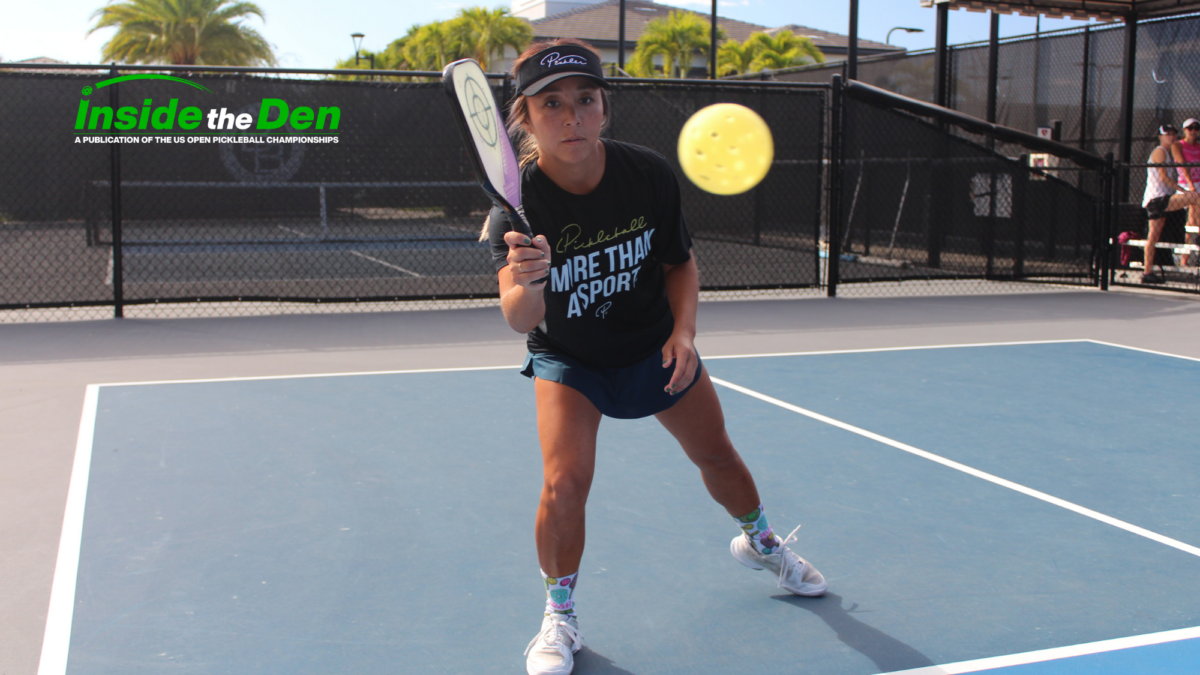
What Is a Putaway Shot in Pickleball: 3 Shots You Need
Whether you’re struggling with overheads, high forehands, or swinging volleys, understanding the mechanics behind each shot can transform how you attack the ball.
The Dink PickleballThe Dink Media Team
Why This Matters for Your Game
If you're stuck at a certain rating, the high ball putaway might be your ceiling.
You're seeing opportunities to finish points, but you're not converting them. Every match you play, your opponent is handing you chances to end rallies.
If you can't take them, you're leaving points on the table.
The good news? This isn't about athleticism or natural talent.
It's about understanding how your body generates power and then practicing the pattern until it becomes automatic.
The kinetic chain isn't complicated. It's just a sequence:
- Legs
- Hips
- Core
- Shoulders
- Arm
- Wrist
Start slow. Focus on the loading phase. Feel the coil. Then let it rip. Once you've got the pattern down, speed comes naturally.
💡
Heads up: hundreds of thousands of pickleballers read our free newsletter.
Subscribe herefor cutting edge strategy, insider news, pro analysis, the latest product innovations and more.
Frequently Asked Questions
What's the difference between a high ball putaway and an overhead?
A high ball putaway targets balls between your waist and your head. An overhead is for balls that are truly above your head. The putaway is more common in matches and is where most players struggle.
Can I use the same kinetic chain for other shots?
Absolutely. The kinetic chain is fundamental to any powerful shot in pickleball. You'll use it for drives, aggressive third shots, and more. Once you master it on the high ball putaway, you'll recognize the pattern everywhere.
How long does it take to develop a solid high ball putaway?
That depends on your starting point and practice frequency. If you're practicing regularly with focus on the kinetic chain, you should see noticeable improvement within 2 to 3 weeks. Mastery takes longer, but the basics come quickly.
Why do my high balls keep going out even when I hit them hard?
Your paddle face is likely open at contact. Make sure you're turning the paddle face down as you take your racket back. The ball should go down, not out.
Should I step into my high ball putaway?
On the forehand, a small step can help. On the backhand, you may not need to step, but you should still load your legs and coil your body. The movement comes from your core and hips, not necessarily your feet.
Anuncie Aqui / Advertise Here
Sua marca para o mundo Pickleball! / Your brand for the Pickleball world!




 English (US) ·
  Portuguese (BR) ·