
 English
  Spanish
  Portuguese
  German
  Italian
  Japanese
  French
  Polish
  Russian
  Netherlands
  Hungarian
  Turkish
  Videos
  Thedink Pickleball

The gap between 3.5 and 4.5 pickleball comes down to five specific shots most players never practice. Master these pickleball shots and your rating will follow.
If you have watched a 3.5 match and then a 4.5 match back to back, the difference is jarring. The 4.5 game is not just faster.
There is a set of specific pickleball shots that show up constantly at the higher level that most 3.5 players have never even practiced.These are not exotic trick shots.
They are functional weapons that solve real problems: getting to the kitchen, attacking pop-ups, and pressuring opponents at the line.
Once you add them to your game, the whole court opens up differently.
The breakdowns below come from PlayPickleball.com on YouTube, where their coaches walk through each shot in detail with live demonstration.Here is exactly what separates the two levels and how you can close the gap.
Love pickleball? Then you'll love our free newsletter. We send the latest news, tips, and highlights for free each week.
Shot 1: The Reset
The reset is the single most important shot for getting from the baseline to the kitchen line safely.
Most 3.5 players either camp at the baseline or sprint forward recklessly. Neither works at higher levels.
A reset is a soft, lofty shot hit from the transition zone that arcs the ball into an unattackable position.It gives you and your partner time to get up to the kitchen. Think of it as a shot that buys time, not wins points.
The mechanics matter a lot here. You need to master three things:
- Split step the moment your opponent is about to hit. Wherever you are in transition, stop and load. This lets you move efficiently to where the ball is going, and it starts with solid athletic posture.
- Get low. Bend your knees and drop your paddle below the ball. If you are standing straight up, the ball pops up and gets attacked.
- Light grip pressure. This is the key most players miss, and it starts with how you hold the paddle in the first place. If you squeeze when a hard ball comes at you, you will send it sailing.
Think of it less like a swing and more like a shoulder shrug. Small movement. Absorb the pace.
The phrase to remember is that loft stands for loss of bricking time. That arc you put on the ball is not a mistake. It is what gets you to the line.If the ball sits up and you can swing, swing. But if it is a fast ball coming at your body in transition, absorb it and reset.
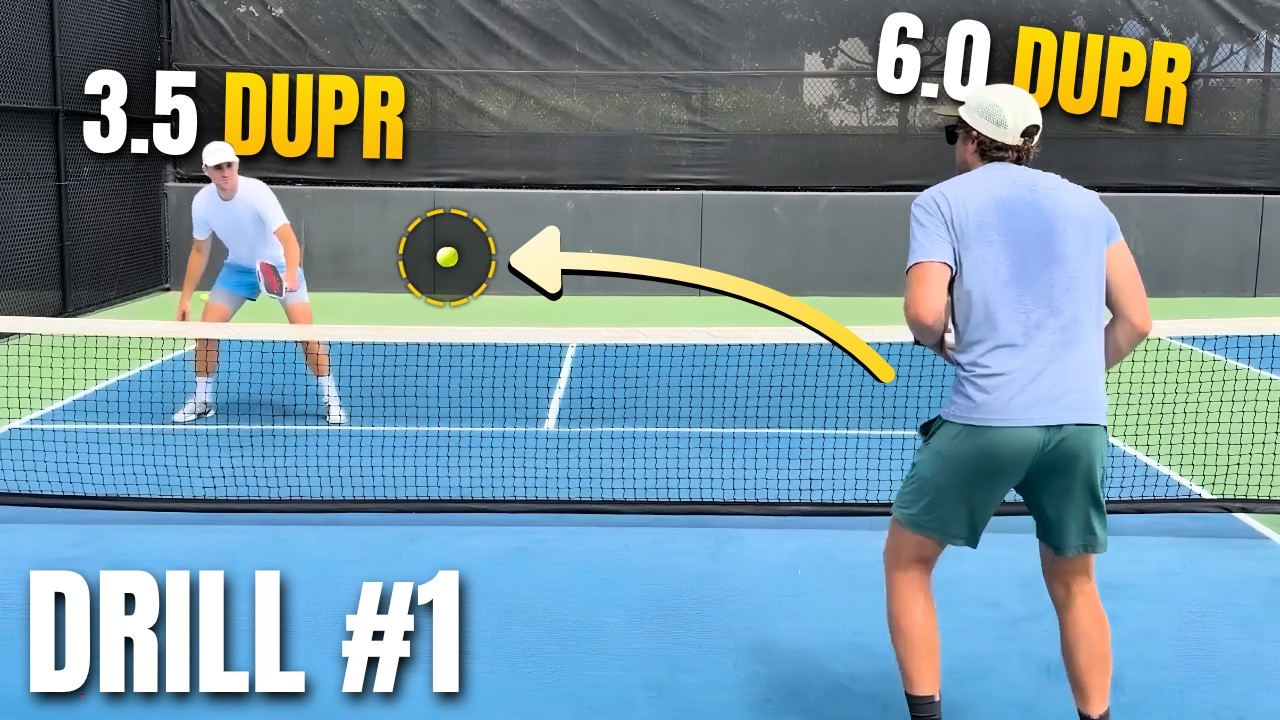
This reset drill will help you build that feel quickly.
Shot 2: The Swing Volley
The swing volley is the reset's offensive counterpart. You use it when a ball floats up in transition and you have an opportunity to attack rather than defend.
A lot of players reset everything, even balls that are sitting up at shoulder height begging to be punished.That is giving points away. When the ball floats, you need to swing through it.
Two common scenarios where the swing volley is the right call:
- You hit a drive and start moving forward. Your drive dips nicely and draws a pop-up. Instead of resetting that ball, swing through it and put it away.
- You hit a reset from the transition zone, but your opponent returns it a little high. There is no reason to reset a ball that is floating above net height. Swing and finish the point.
The footwork mistake here is getting too excited when you see the pop-up. Players rush their feet and mishit.
Instead, take a mini split step, build a solid base, and swing across your body.
Think about catching your paddle with your opposite hand at the end of the swing.
The two-handed backhand swing volley is especially effective on the backhand side. One-handed is very hard to control.For more on when to switch from defense to offense, the reads you need to make in transition are covered in depth.
💡
Need some new pickleball gear? Get 20% off select paddles, shoes, and more with code THEDINK at
Midwest Racquet SportsWhat Separates Players Who Can Actually Finish Points?
At 3.5, players often get to the kitchen but then lose the point because they do not know how to attack when the opportunity shows up.
At 4.5, players have specific weapons ready for those moments.The next two shots are exactly that: attacks you trigger from the kitchen line when you have the right setup.
Shot 3: The Backhand Flick
The backhand flick is a one-handed attack off a dink that travels around net height. You see it constantly at the 4.5 plus level. You almost never see it at 3.5.
What makes it dangerous is the reach.
Because it is one-handed, you can extend far into the kitchen zone and attack balls that would otherwise require a full backswing.It also applies topspin, which means you can attack balls that are not even sitting up very high.
Here is how to build the mechanics correctly:
- Start with your paddle tip facing down. This sets you up to brush upward through the ball.
- Hinge at the hips. This is not optional. Hip hinge is what creates the reach. Without it, you are just flicking your wrist with no leverage.
- Get your eye level down near the ball. This sounds small but it dramatically improves your angle on the shot.
- Keep the follow-through short. If your opponents are at the kitchen, the ball can come back fast. A compact finish keeps you ready.
Some players use a wristy motion. Others keep the wrist locked and push through. Try both and find what gives you consistency.
The important thing is that upward brushing motion that pulls the ball over the net with spin.If you want to clean up the mechanics further, fixing your paddle face on the backhand flick is the most common technical error at this skill level.
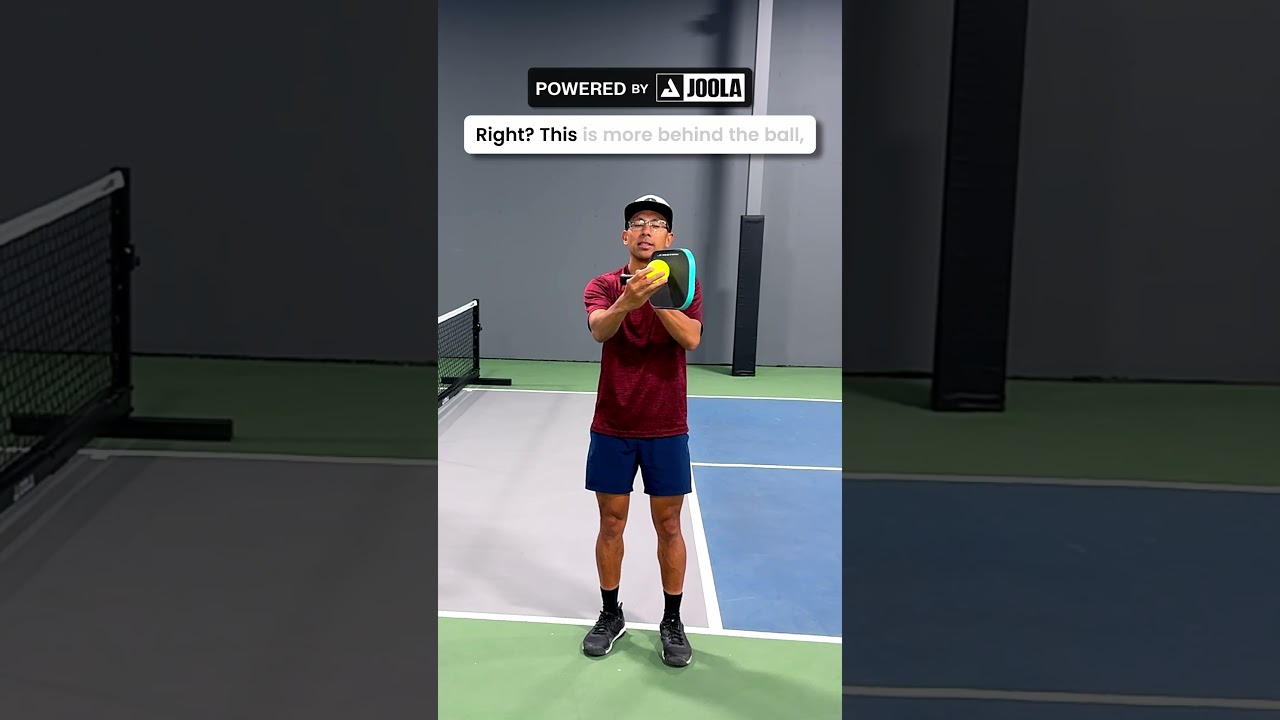
3 Steps to a Backhand Flick Opponents Can’t Return
The backhand flick is one of the most aggressive shots in pickleball, but most players never get it right. These 3 steps will make it nearly unreturnable.
 The Dink PickleballThe Dink Media Team
Shot 4: The Two-Handed Backhand Attack Off the Bounce
This is the kitchen line version of a topspin attack.
You are rolling cross court dinks with your two-handed backhand, then you pull out a speed-up your opponent does not see coming.
The setup is the whole point. You roll the ball consistently until your opponent gets comfortable with the pace. Then you change it. That is the trap.Location matters here more than most players realize.
A lot of players try to rip this shot down the line, and it fails because the ball does not dip enough before it reaches the opponent's forehand.
The cross-court angle is far more effective because it creates more net clearance and more court to work with.
The key mechanical cue is hold before you accelerate. Get into your athletic stance, get low, and pause briefly at the contact point.If you can hold that position comfortably, that is a ball you can speed up. If you cannot hold it, you have not set up properly and you should keep dinking.
When you do accelerate, it is the non-dominant hand doing most of the work. The acceleration is short and quick, almost a whipping motion.
Think wrist lag, like you are snapping a towel. This is what generates that heavy ball the pros produce.
For more on reading when to attack, the three keys pros use before every speed-up is essential reading.You can also study how dinking with intention earns your attacks so you are not just swinging randomly.
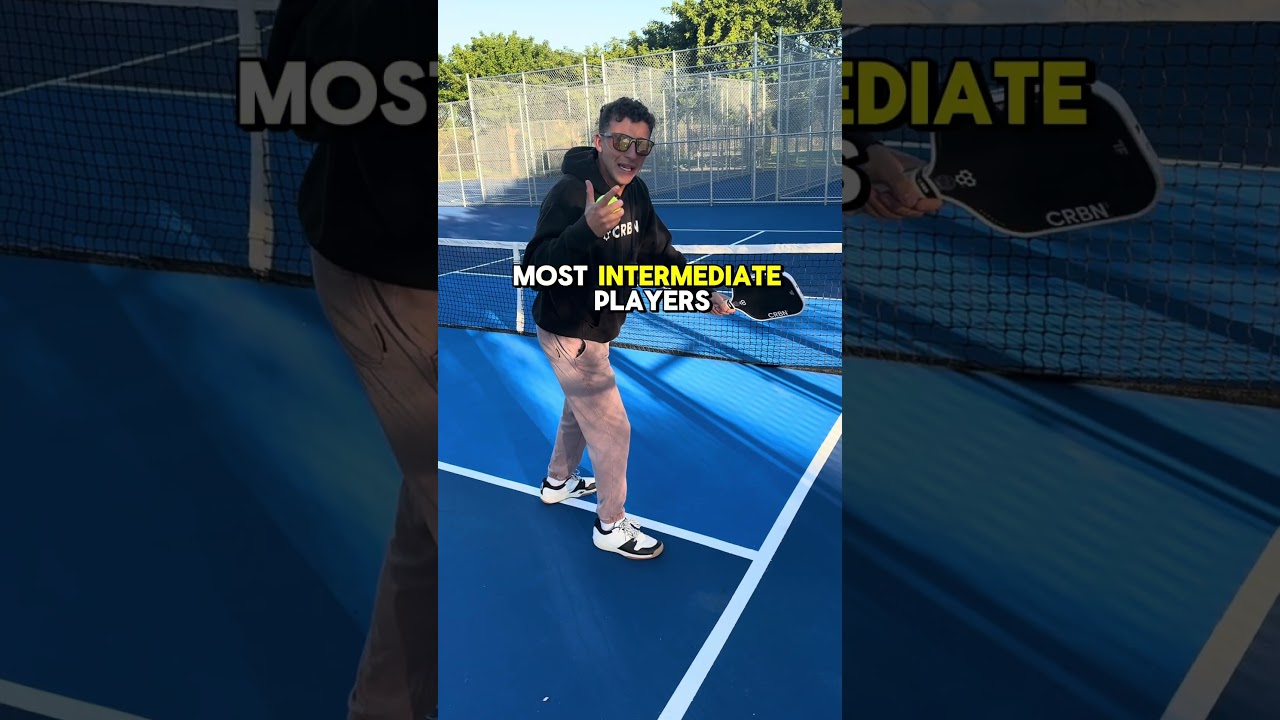
Two-Handed Backhand: The Shot That Changes Everything
If you’re stuck at the intermediate level, your two-handed backhand might be holding you back. This fundamental skill separates players who plateau from those who keep climbing.
 The Dink PickleballThe Dink Media Team
Shot 5: The Chariot Whip
The chariot whip is a fourth-shot response designed to keep opponents pinned at the baseline.
Tyson McGuffin popularized the name, and it is one of the most visually distinct shots in the advanced game.Here is the core concept: instead of following through across your body after hitting a topspin shot, you follow through on the same side as your paddle hand.
This same-side finish imparts an unusual amount of spin on the ball that opponents genuinely struggle to handle.
The technical keys:
- Open paddle face. You need to catch the bottom half of the ball, which means the face has to be open enough to get under it.
- Hit the bottom half of the ball. Visualize seeing the underside of the ball before contact. That is what allows you to brush through it with spin.
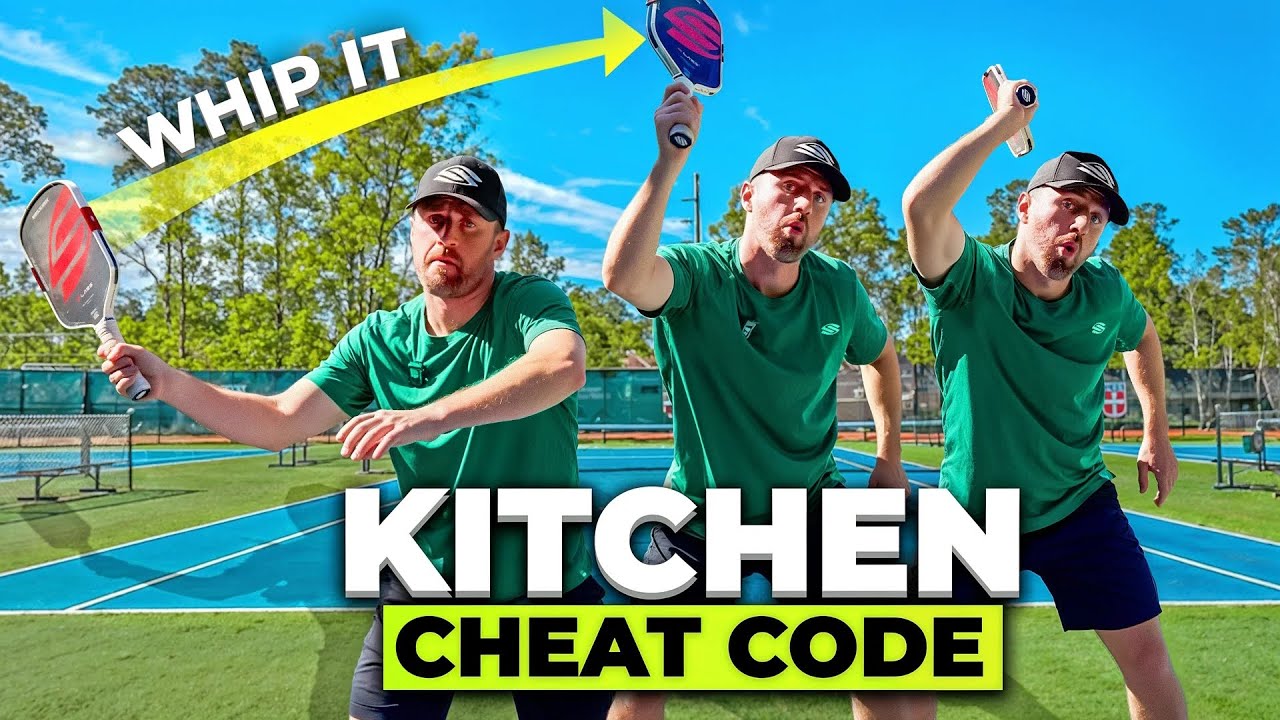
- Same-side follow-through. Think "answer the phone" on the same side. Your paddle ends up near your ear on the paddle side, not crossing your body.
- Only use this on a ball that is floating above net height. Do not try to whip a ball that is at your ankles. You need something you can brush through with pace.
Because of how much spin you put on the ball, it is actually difficult to hit this shot out if you are executing it correctly.
The spin pulls the ball down. That is what makes it such a low-risk, high-reward weapon from the baseline when your opponents are trying to approach.Pairing this shot with a strong transition zone strategy makes it even harder for opponents to move forward against you.
And if you want to understand how topspin variations compare at the kitchen, the topspin dink versus roll dink breakdown covers exactly what changes depending on ball height.
The Chariot Whip: The Pro Pickleball Technique Taking Over Courts
The Chariot Whip isn’t just about spin. It’s about disguise and efficiency. Your opponent can’t tell what you’re doing until the ball is already past them.
 The Dink PickleballThe Dink Media Team
Why Do These Shots Matter So Much at 4.5?
At 3.5, most points are decided by unforced errors. At 4.5, players make fewer mistakes, so you have to manufacture pressure.
The reset gets you to the kitchen safely.
The swing volley finishes what you earn in transition. The backhand flick, the two-handed attack, and the chariot-style topspin do the rest.None of these require elite athleticism. They require knowing when to use them and building muscle memory through repetition.
If you want to understand why you are stuck below 4.5, it almost always comes back to a missing pickleball shot or a wrong decision in a familiar situation.Start with the reset. Build from there.
💡
Heads up: hundreds of thousands of pickleballers read our free newsletter.
Subscribe herefor cutting edge strategy, insider news, pro analysis, the latest product innovations and more.
Frequently Asked Questions
What is a reset shot in pickleball?
A reset is a soft, arcing shot hit from the transition zone that gives your opponent an unattackable ball while you move up to the kitchen line. It is a defensive shot designed to buy time, not win the point outright. The arc and loft are intentional because they slow the rally down enough for you to get into position.
When should you use a swing volley instead of a reset?
Use a swing volley when the ball floats above net height and you have your feet set underneath you. If you are absorbing a fast ball below the net, reset it. If the ball is floating up at you and you can swing across your body with a solid base, that is a swing volley situation.
How do you hit a backhand flick in pickleball?
Start with your paddle tip down, hinge at the hips to create reach, and brush upward through the bottom half of the ball with a short follow-through. Getting your eye level down near the ball helps you find the angle. Three steps to a perfect backhand flick breaks the full mechanics down.
What is the chariot whip in pickleball?
The chariot whip is a topspin shot with a same-side follow-through, meaning your paddle ends up on the same side as your paddle hand instead of crossing your body. It imparts heavy spin on the ball and is used to keep opponents back when they are trying to advance to the kitchen. Tyson McGuffin popularized the name and the shot.
What is the biggest difference between a 3.5 and 4.5 pickleball player?
The biggest difference is shot selection and transition zone management. A 4.5 player knows how to reset safely in the transition zone, attack floating balls, and use deceptive attacks at the kitchen. A 3.5 player typically either camps at the baseline or rushes forward without a controlled plan for getting there. These four fixes for moving from 3.5 to 4.0 are the right starting point.
Anuncie Aqui / Advertise Here
Sua marca para o mundo Pickleball! / Your brand for the Pickleball world!




 English (US) ·
  Portuguese (BR) ·