
 English
  Spanish
  Portuguese
  German
  Italian
  Japanese
  French
  Polish
  Russian
  Netherlands
  Hungarian
  Turkish
  Videos
  Thedink Pickleball

Most players treat the right side as the passive, ball-making position. Pro Allyce Jones explains why that thinking is costing you points and what to do instead.
If you play right side pickleball and your only job is to keep the ball in play and let your partner do the work, you are leaving a huge amount of offense on the table.
The right side has evolved. It is no longer just the supportive role where you reset and stay out of the way.The best right side players are creating offense, controlling the middle, and making strategic positioning decisions that completely change how a point unfolds.
This breakdown comes from a conversation on Mari Humberg Pickleball featuring pro right side specialist Allyce Jones, one of the sharpest minds when it comes to understanding what the right side can and should do at the highest levels of the game.
Love pickleball? Then you'll love our free newsletter. We send the latest news, tips, and highlights for free each week.
Why Your Strengths Should Determine Your Side
The first thing Allyce makes clear is that there is no better side.
Choosing a side should be about matching your strengths to the demands of that position, not following some general rule about who is stronger or weaker.
For Allyce, the right side fits because her forehand is her weapon.
She has a reliable cross-court dink roll, strong forehand offense, and an effective lob from that side.Here is the simple filter she recommends when choosing a side:
- Strong cross-court forehand dink? Right side favors you.
- Strong backhand dink and backhand drive? Left side fits better.
- Good backhand and forehand? Test both and see where you create more opportunities.
- Struggling to cover court on the left? You might be better suited to the right, especially if you are on the shorter side.
Allyce is 5'2". She points out that smaller players covering the left side have to manage a massive amount of court.
On the left, you are responsible for wide balls on your backhand and balls through the middle.
That is a tough ask when you simply cannot get to the wide ball quickly enough from a tight kitchen position.If you are a shorter player struggling with court coverage with a partner of different height, this is exactly the kind of adjustment worth testing.
What Does Good Right Side Positioning Actually Look Like?
This is where most recreational players get it wrong. There is a persistent myth that you must stay glued to the kitchen line at all times.
Watch pro pickleball, especially in women's doubles, and you will immediately see that is not what is happening.Allyce lays out her positioning priorities clearly:
- Take balls in front of you, out of the air. Her preferred attack is a cross-body speed-up through the middle, because going down the line is riskier against the two-handed backhand coverage most players have.
- Shuffle to load your forehand. She actively moves laterally to put herself in a position to hit forehands rather than backhands whenever possible.
- Step back when you are off-ball. When her partner has the ball and is dinking cross-court, Allyce takes one step off the line. This gives her better reaction time if the ball gets elevated and needs to be countered.
- Reset your position after every exchange. She does not stay frozen at the line in a spot that makes sense for one shot. She is constantly adjusting based on where the ball is and who has it.
The step-back habit is something most right side players never develop.
If you are staying glued to the line even when you are off-ball, you are making it very easy for your opponents to attack you.
Stepping off the kitchen line in pickleball is not a defensive retreat.It is a smarter default position, and it keeps you legal under the non-volley zone rules while you reload.
💡
Need some new pickleball gear? Get 20% off select paddles, shoes, and more with code THEDINK at
Midwest Racquet SportsHow Should the Right Side Handle Middle Balls?
Middle ball confusion is one of the most common issues in doubles.
The old rule was simple: the ball goes to the forehand, which usually means the left side player in standard formation. But that rule is outdated.Allyce and Mari's actual system is more nuanced:
- Ball coming from the left corner into the middle: Mari wants it. She set up the pattern by pushing them there.
- Ball coming from the right corner into the middle: Allyce is the default.
- Ball landing in the true 50-50 middle zone: communication decides, but it usually goes to Mari.
The key insight is that the player who set up the pattern should generally get the ball.
If Mari pushed her opponent into the corner and they flick it back, she is already reading that shot.Taking it from her breaks her rhythm and gives you the ball on a worse timeline.
There is one situation Allyce warns about.
When your partner is dinking cross-court and has set up a ball into the middle, resist the urge to poach it just to prove you are a threat.Unless you can take it significantly earlier and redirect it, let your partner have what they created.
Middle ball confusion in pickleball almost always comes from assumptions, not skill gaps. Have the conversation with your partner before you play.
Right Side Speed-Up: 5 Techniques for Easy Offense
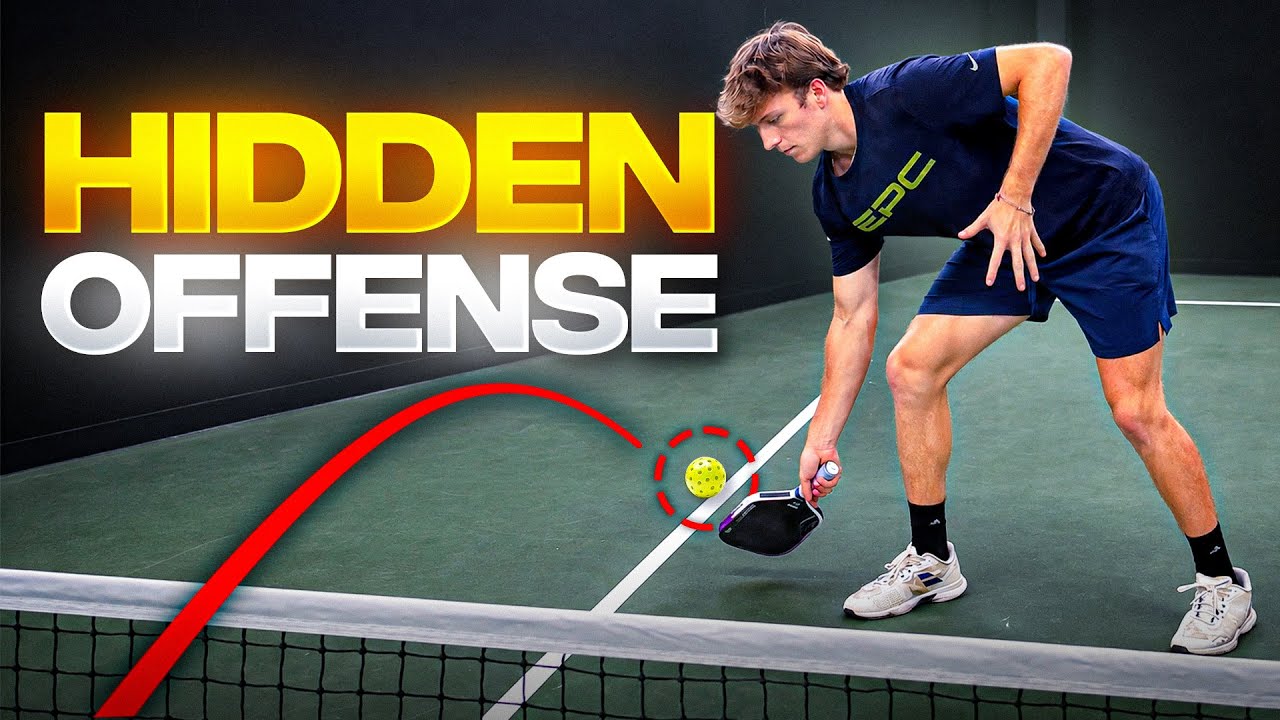
The right side speed up is one of the most dangerous weapons in doubles pickleball when you use deception correctly. These five techniques show you exactly how to do it.
 The Dink PickleballThe Dink Media Team
Two Types of Right Side Players: Which One Are You?
Allyce breaks right side players into two categories, and knowing which one you are changes your entire right side pickleball strategy.
- The Aggressive Right Side Player sits tighter to the middle, plays up on the line, and looks to attack. Think of how Gabe Tardio plays: he takes up space, creates angles, and pressures opponents from the right.
- The Ball Maker is the traditional version. They make a high percentage of balls, stay consistent, and let the left side player finish points.
Allyce argues you need to be both depending on the situation.
She describes a favorite pattern: she speeds up with her forehand in front of her opponent, and the ball comes back straight to Mari's forehand for the finish.That is not ball-making. That is point construction.
Dinking with intention and earning your attacks applies just as much on the right as it does on the left.
Right Side Pickleball: Why It’s Harder Than Left
Right side pickleball isn’t just a different position—it’s practically a different sport. The geometry, attack angles, and defensive responsibilities create challenges that left-side players simply don’t face.
 The Dink PickleballThe Dink Media Team
Does Your Side Change in Mixed Doubles?
Yes, significantly. Allyce plays about a foot further from the centerline in mixed than she does in women's doubles.
The reason is simple: her male partner is going to take more aggressive, wider swings at middle balls.
She gives him space to do that. If she is positioned too tight to the middle, he either runs into her or has to pass up on balls he could be putting away.Playing right side with an aggressive male partner requires this kind of positional adjustment or the partnership becomes a collision course.
In women's doubles, Allyce is more active on offense from the right side.
She attacks more, takes more middle balls, and is a co-creator of points rather than a support player.
In mixed, she shifts back toward the ball-making role and lets her partner be the aggressor.
This is not a weakness. It is reading the situation correctly.Mixed doubles strategy demands different positioning choices than women's or men's doubles, and the best players adjust automatically.
Mixed Doubles Strategy: Rachel Rohrabacher’s Guide
Rachel Rohrabacher breaks down the fundamentals of mixed doubles strategy in a masterclass with Kyle Koszuta. From understanding each player’s role to reading your opponent’s movement, this guide covers everything you need to elevate your mixed game.
 The Dink PickleballThe Dink Media Team

Stacking From the Right Side
Allyce and Mari always stack together. When Mari serves from the right side, Allyce is standing there. When Allyce serves from the left side, Mari stands there.
They prioritize getting into their preferred sides as fast as possible, which is fully legal under the official rulebook.On returns, they use on-court stacking more than off-court stacking.
The returner stays in position, the non-returner signals a switch, and after the return lands they switch sides.
This keeps the returner's visual clean for the ball coming at them.
Off-court stacking works better when the server is hitting a heavy, aggressive serve.
In that case, it is easier for the returner to see the ball and make a clean return if they do not have to worry about switching mid-point.
Allyce notes that women's doubles players tend to call "stay" more often than mixed players, which leads to less stacking overall.She thinks that is a mistake. Missing returns or fourth shots because you are mid-switch is giving away free points.
Learning to stack effectively removes those easy errors from your game entirely.
Pickleball Stacking: Complete Guide to Both Court Positions
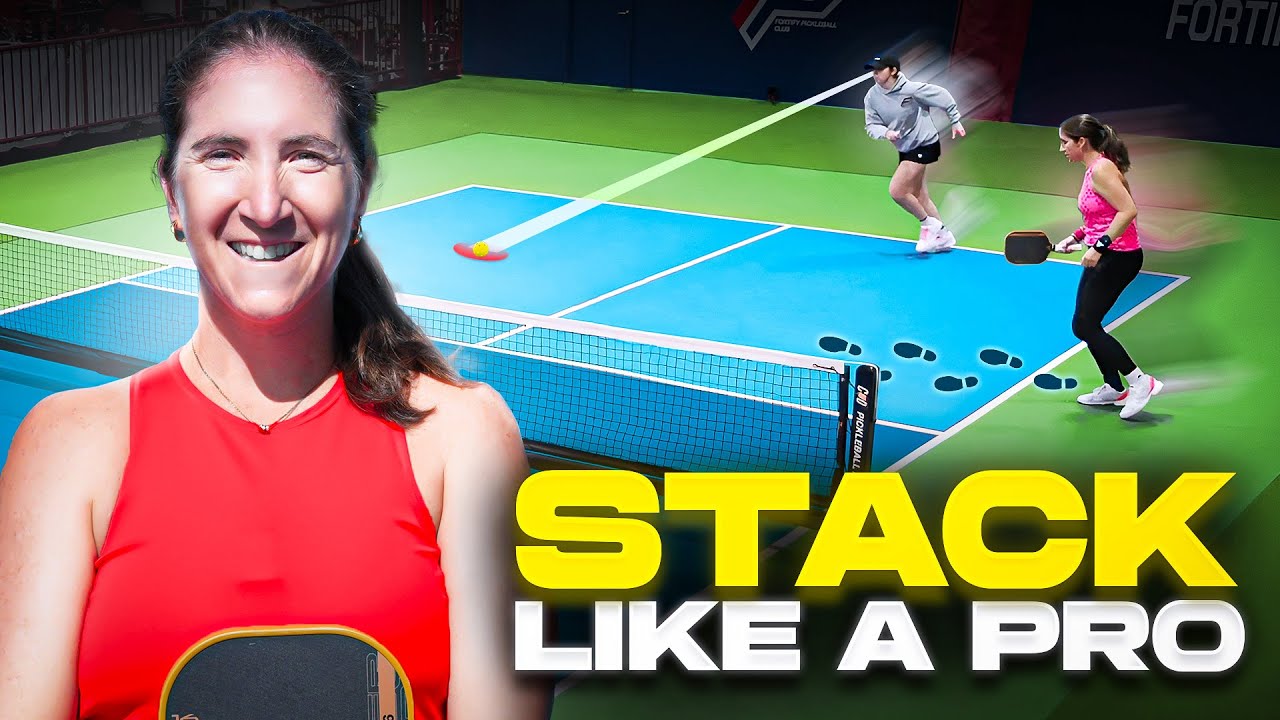
Pickleball stacking is a game-changing doubles strategy that lets you position your forehands in the middle of the court. Whether you’re playing mixed doubles or teaming with a lefty, understanding both off-court and on-court stacking methods will transform your competitive edge.
 The Dink PickleballThe Dink Media Team
The Roll Dink From the Right Side Corner
One of the most effective shots in any right side pickleball strategy is the cross-court forehand roll dink.
From the right corner, it creates a steep angle and forces your opponent to handle topspin at their feet.
The right side corner gives you the full diagonal of the court to work with. The angle you can create from there is sharper than almost any other position.If you want the mechanics, this breakdown of topspin vs roll dink technique shows exactly what Allyce is generating from that corner.
Master the Backhand Roll Dink: 3 Keys for Seniors
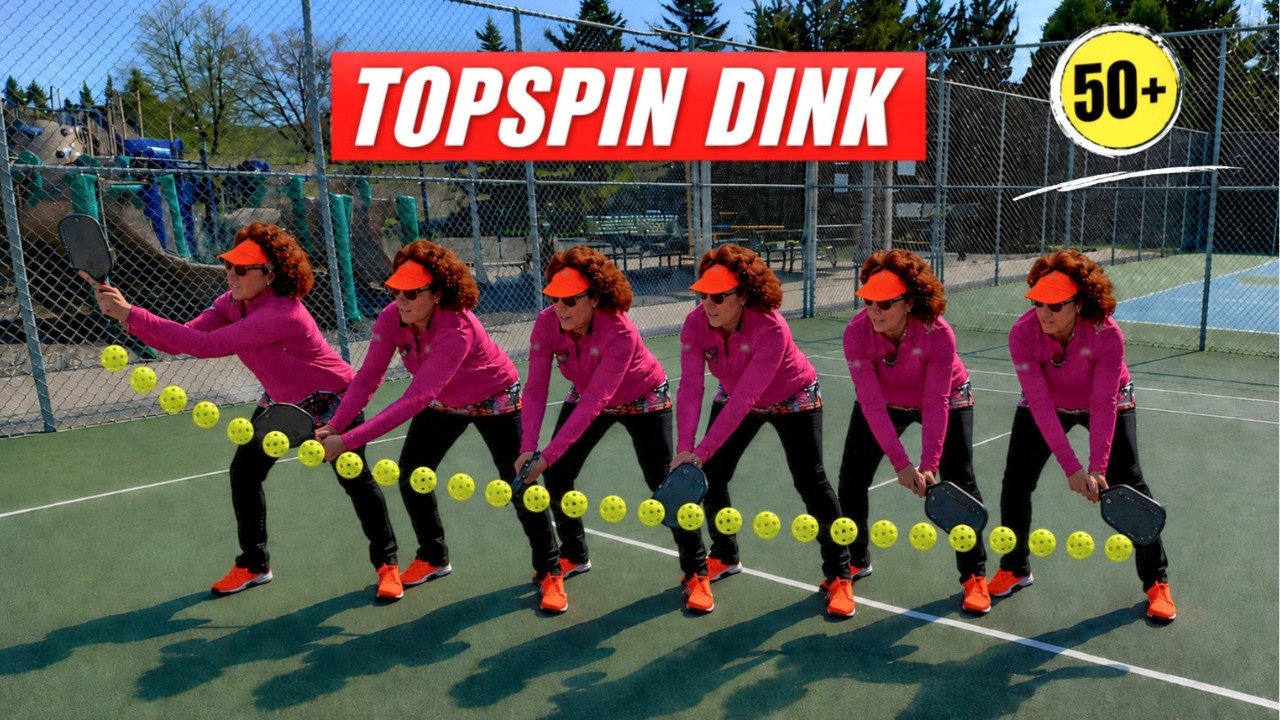
The backhand roll dink is one of pickleball’s trendiest shots, but it’s also one of the most misunderstood. Here are the three specific things you need to fix to make this shot reliable and consistent.
 The Dink PickleballThe Dink Media Team
Right or Left? Three Questions That Settle It
Stop guessing based on what your partner wants. Start with your own game.
- Where is your strongest cross-court dink? Forehand points right. Backhand points left.
- How well do you put balls away? Left side players get more finishing opportunities.
- How are your thirds from each corner? A strong forehand third from the right corner suits a right side pickleball strategy.
Test both sides in real games before committing. Getting very good at one side feels completely different from being mediocre at both.
The right side is not the easy side or the passive side. In the hands of someone who understands it, it is a weapon.
💡
Heads up: hundreds of thousands of pickleballers read our free newsletter.
Subscribe herefor cutting edge strategy, insider news, pro analysis, the latest product innovations and more.
Frequently Asked Questions
What is the right side player's main job in pickleball doubles?
The right side player's job is to maintain high-percentage ball-making while also creating offensive opportunities with their forehand. It is no longer just a support role. The best right side players, like Allyce Jones, actively construct points by setting up their partner with cross-body speed-ups and smart dink patterns.
Who takes the middle ball in doubles pickleball?
There is no single universal rule. The player who set up the point pattern generally has priority on the middle ball. Reading the middle dink situation and communicating with your partner before you play is the only reliable system.
Should right side players stay at the kitchen line the whole point?
No. When you are off-ball, step back one step from the kitchen line so you have more reaction time if the ball is attacked. Staying frozen at the line when your partner has the ball makes you an easy target. Court positioning adjustments like this make every shot you hit easier.
Does right side positioning change in mixed doubles?
Yes. In mixed doubles, the right side player typically stands about a foot further from the center of the court to give their male partner room to be aggressive. In women's doubles, the right side player can play tighter and create more offense themselves.
Adjust based on your partner's style and strengths.
How do you know if you should play right or left side in pickleball?
Start by identifying where your strongest dink is. A strong forehand cross-court dink points toward the right side. A strong backhand dink and backhand drive point toward the left.
Also consider your height and court coverage ability, since shorter players often find the right side easier to manage spatially.
Anuncie Aqui / Advertise Here
Sua marca para o mundo Pickleball! / Your brand for the Pickleball world!





 English (US) ·
  Portuguese (BR) ·