 English
  Spanish
  Portuguese
  German
  Italian
  Japanese
  French
  Polish
  Russian
  Netherlands
  Hungarian
  Turkish
  Videos
  Thedink Pickleball

Teaching a newer pickleball partner is less about handing out tips and more about running a system that keeps both of you in points. Here's how strong players coach, cover, and communicate without taking over the court.
Teaching a newer pickleball partner is the fastest way to find out whether you actually understand doubles or just hit a decent ball. You know the feeling.
You're up at the line, your partner is stranded at the baseline, and your brain is screaming four corrections at once.
You get to pick one. That's the whole challenge here: the coaching is easy, the restraint is hard, and the match is still going on while you figure it out.Good news. The strong players who are great at this aren't smarter than you. They just run a system, the same one behind every durable pairing in our pickleball partnership etiquette breakdown.
Love pickleball? Then you'll love our free newsletter. We send the latest news, tips, and highlights for free each week.
What Does Teaching a Newer Pickleball Partner Actually Mean?
It means guiding a less experienced partner during live play without turning yourself into a sideline instructor.
The rules give you more room than you think.
USA Pickleball defines coaching as information passed to a player from someone other than their partner, and in standard play that outside coaching is restricted except during time-outs and between games, per the 2026 USA Pickleball Official Rulebook.Your partner is the exception. You can talk to them all day, which is why lefty-righty pairs can sort out coverage on the fly.
Here's the catch, and it's the one most strong players ignore in open play. Legal is not the same as welcome.
USA Pickleball's Essential Sportsmanship Guide asks players to avoid criticism and negative body language and to give advice only when it's requested.
So the first move in any session is a question, not a tip: "Want me to call stuff out, or do you want to just play?"Ask it at the warm-up, not after the third unforced error.
If you need a template, our breakdown of the things to communicate with your partner before the first point covers the full pregame checklist.
Why Does Over-Coaching Backfire So Fast?
Because your partner can't process five fixes while a ball is coming at them at 40 mph.
Working memory taps out, confidence follows, and now they're late on everything.
The hardest part of teaching a newer pickleball partner is accepting that silence is a tactic.This is the exact behavior we've argued against in stop coaching during pickleball rec play, and it's the single most common mistake strong players make when playing with a weaker partner.
💪
Ready to level up? Get the best discounts from Pickleball Central, automatically applied to your cart.
The One Thing Rule for Teaching a Newer Pickleball Partner
Pick one fix per game. Not per point. Per game.
If their return keeps landing short, that's the fix. Say it once between points ("deeper return, aim three feet inside the baseline"), then let it live.Mention nothing else, even when they pop up a dink, even when they stand flat-footed at the kitchen.
One correction repeated five times beats five corrections said once, and there's a reason coaches emphasize what a player did right instead of narrating every error.
Then shut up and let them fail at it twice. The rep is the lesson, and it's the thing most players skip when they're dealing with a mismatched court.Quick definition: unforced error. A point you lose on your own, with no pressure from the opponent.
Beginners make a pile of them, and almost none are worth commenting on in the moment.
When Should You Say Something?
Between points, after a win, and only on the thing you already agreed to work on. That's the window.
Mid-rally talk should be tactical, not technical. "Mine," "yours," "switch," "bounce it," "back up."Those are calls, not coaching, and they keep both of you alive. Save the mechanics for the changeover.
Our guide to improving teamwork with your partner walks through the shorthand pairs use so nobody freezes in the middle.One more thing most players skip: praise the correct rep out loud.
When they finally hit the deep return, say so. It's the cheapest coaching tool you have and it costs you nothing.
Common Pickleball Mistakes Beginners Make & How to Fix Them
The most common pickleball mistakes beginners make can derail your progress before you ever find your groove. Here’s what’s going wrong and exactly how to fix it.
 The Dink PickleballThe Dink Media Team
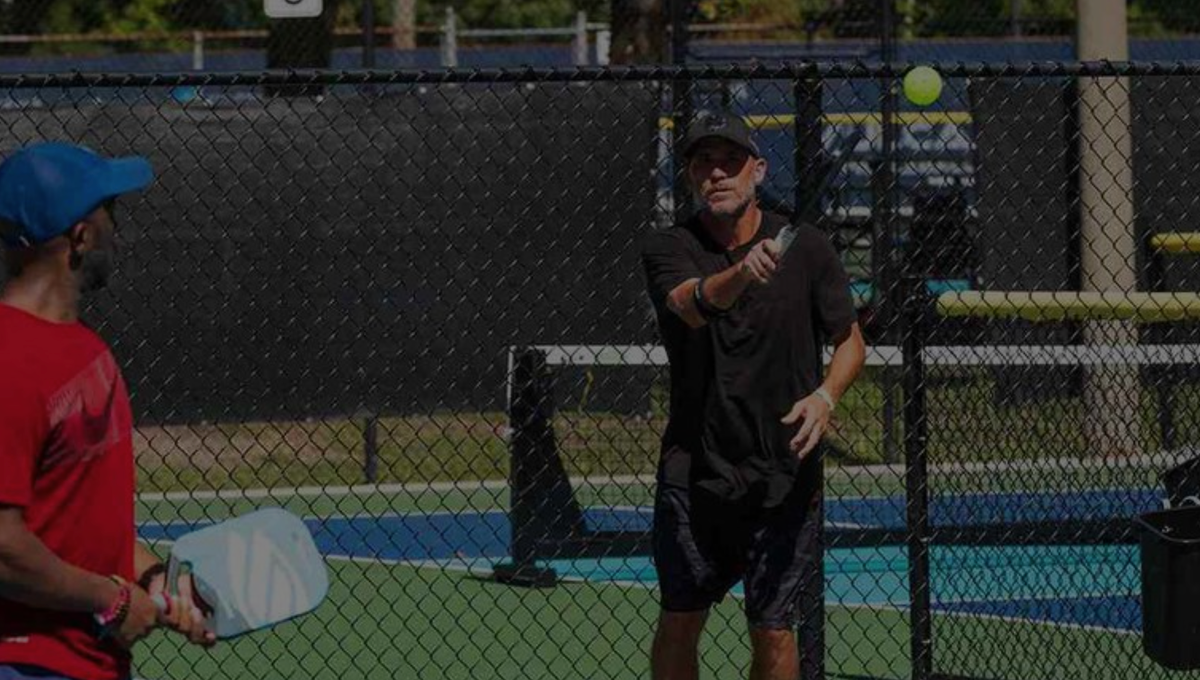
How Do You Cover the Court Without Taking It Over?
You take more court, not every court. Teaching a newer pickleball partner is a positioning problem before it's a talking problem.
There's a line between covering for a partner and stealing their reps, and the fastest way to crush someone's confidence is to run around them all afternoon, the same trap as playing down against weaker opponents.
Start with the middle.
Middle balls belong to the player with the forehand or the better position, and when you're the stronger side, that's usually you; our who covers the middle in doubles piece settles the argument.Take the middle, let them own their sideline, and teach them to recognize their court position before they swing.
That split is simple enough for a new player to remember under pressure.
Then move as a unit. If you're drifting while they're frozen, you've opened a gap the size of a kitchen.The habit to build is moving with your partner on every shot, shoulder to shoulder, like you're tied together with a rope.
Should You Poach When Teaching a Newer Pickleball Partner?
Sometimes, and far less than you want to. A poach that saves a point but embarrasses your partner is a bad trade in a teaching session.
Poach the ball that's clearly floating, and only after you've told them you might.
We've drawn that line before in when poaching is appropriate and when it's just selfish.
The better option most of the time is positional: shade toward them, cut the angle, and make the opponent hit a tougher ball, which is exactly the approach in protecting your partner without poaching.If they've got a glaring backhand problem, stacking hides it without a single word of instruction. Formation is coaching you don't have to say out loud.
How to Cover Your Pickleball Partner Without Leaving Gaps
Knowing how to cover for partner pickleball is what separates scrambling teams from ones who control the whole court. This guide breaks down positioning, stacking, switching, and the communication habits that close every gap.
 The Dink PickleballThe Dink Media Team
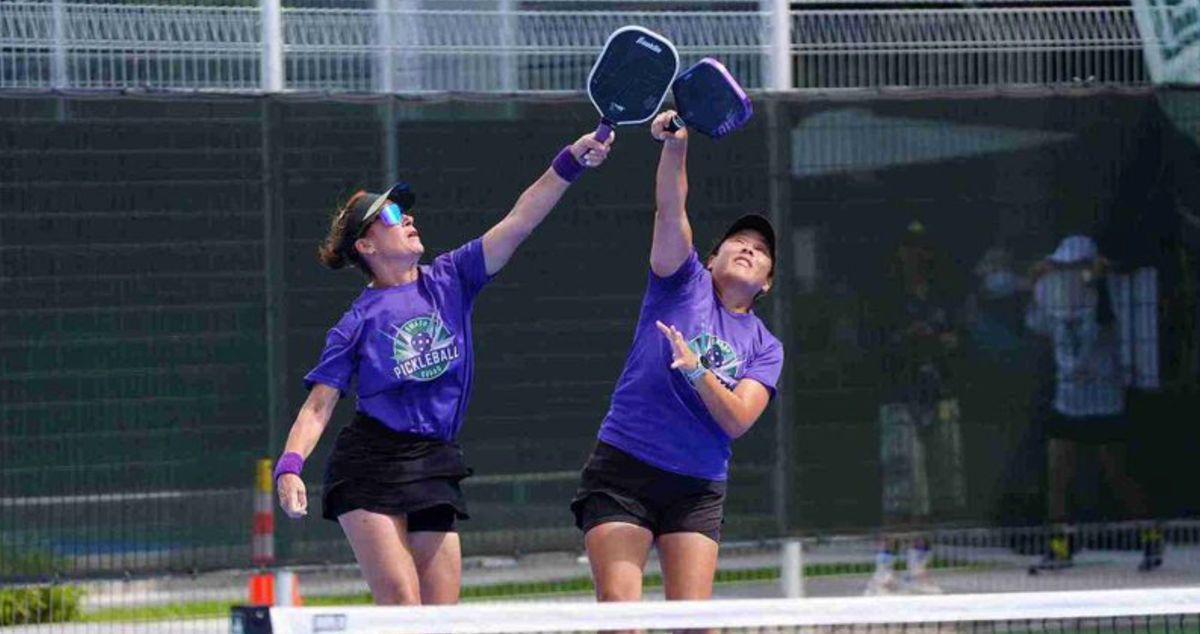
What Should You Teach First When Teaching a Newer Pickleball Partner?
Teach three things, in this order, and nothing else until they stick.
- Deep returns. It buys your team time and pushes the opponent back. Short returns are the number one reason beginner teams never reach the net, and three ways to improve the return of serve is the entire fix.
- Get to the kitchen line and stay. New players retreat on instinct. Teach them to hold, because the kitchen line is where points are won.
- Soft hands on the third. Not a perfect drop, just something that isn't a 60 mph gift. Our third shot drop guide and dinking technique for beginners handle the mechanics better than a shouted tip ever will.
Everything else can wait. Spin, ernes, around the post, the Chainsaw lore: not today.
If they want more after the session, hand them a beginner's guide to the fundamentals or our 3 tips every beginner needs to know and let them study on their own time.
How to Be a Good Pickleball Partner as the Weaker Player
Getting targeted every single point? Here’s how to be a good pickleball partner when you’re the weaker player on a doubles team. These are the return, reset, and positioning habits that keep your side in points without forcing you to hit winners you don’t have yet.
 The Dink PickleballThe Dink Media Team
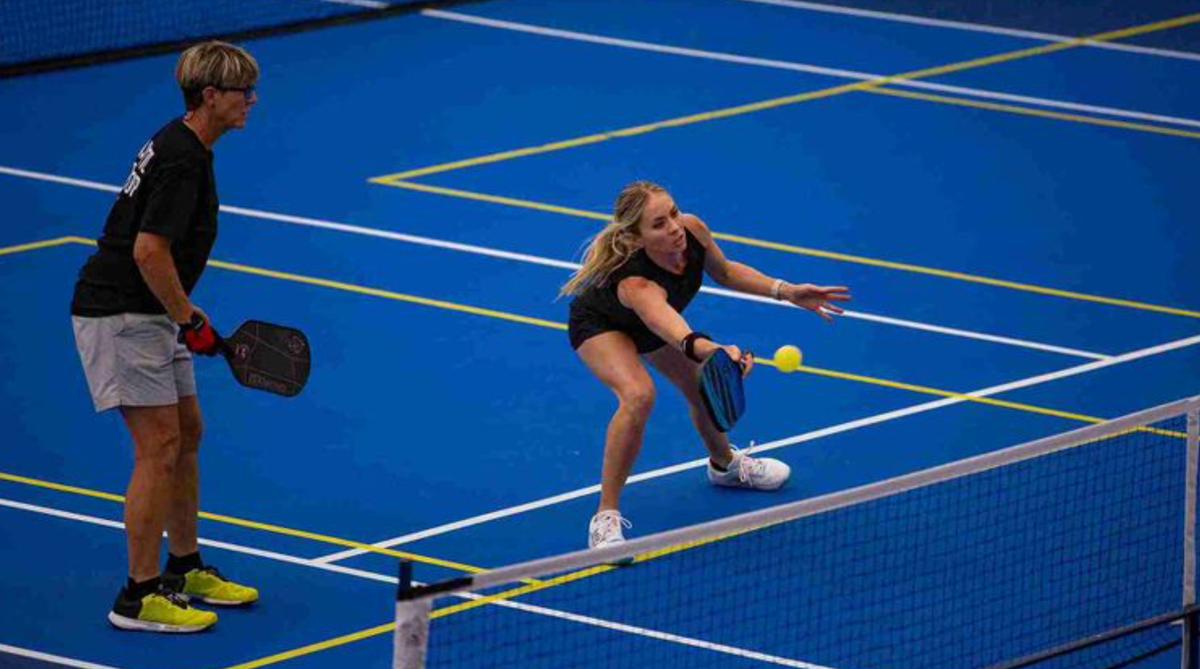
What's the Right Way to Handle Line Calls and Mistakes?
Model it, don't lecture it. In doubles, either partner can make a line call, and if the two of you disagree, the call is in.
That rule matters more than it sounds: your partner is watching how you handle a close one, and whatever you do becomes their default for the next decade.
Same with mistakes. If you sulk after a shanked overhead, they'll sulk after theirs. A six second mental reset and a paddle tap is the whole routine.Honestly, this is the part of teaching a newer pickleball partner that sticks longest, because habits are contagious and nobody announces them.
And if you're doing this in a drop-in session, remember you've got a third audience: everyone else on the court.
Our open play etiquette rules apply, and a quick warm-up before you step on keeps the teaching session from turning into a training-room visit.Pair them with the full doubles rules breakdown if the scoring is still tripping them up, because confusion about who serves where is not a skill problem.
Boiling Point: Pro Pickleball’s Line Call Problem Needs to be Addressed
There was another incident of poor line calls at the PPA Orange County Cup in a men’s doubles match between Etienne Blaszkewycz/Callan Dawson and Connor Garnet/Travis Rettenmaier. This article focuses on what the problem and what some possible solutions are.
 The Dink PickleballErik Tice
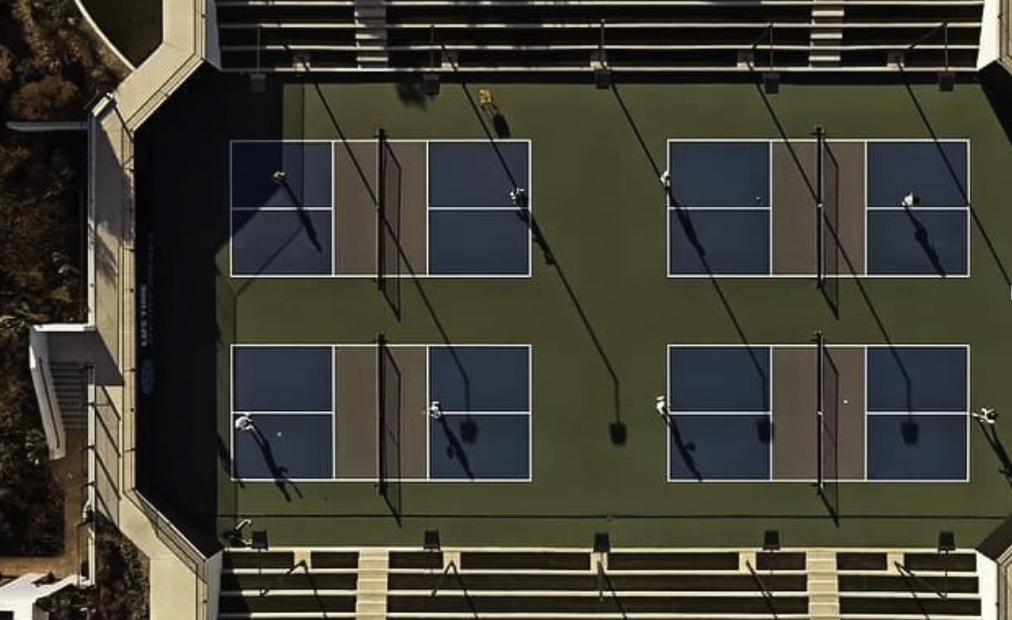
Key Takeaways
- Ask permission before coaching. USA Pickleball's sportsmanship guidance says advice should come only when requested.
- One fix per game. Repeat it, praise the correct rep, and ignore everything else.
- Mid-rally communication is calls ("mine," "switch"), not mechanics.
- Cover the middle, move as a unit, and poach rarely.
- Teach deep returns, kitchen line position, and a soft third shot. In that order.
- Your reaction to mistakes and close line calls teaches more than any tip. Chemistry builds from there, which is why first-time partnerships often outperform expectations.
💡
Heads up: hundreds of thousands of pickleballers read our free newsletter.
Subscribe herefor cutting edge strategy, insider news, pro analysis, the latest product innovations and more.
Frequently Asked Questions
Is it against the rules to coach your partner during a pickleball game?
No. USA Pickleball restricts coaching from people other than your partner, so partner-to-partner communication during play is allowed. Outside coaching is limited to time-outs and between games in standard play, which our dos and don'ts of pickleball etiquette covers in more detail. Sportsmanship guidance still suggests offering advice only when your partner asks for it.
How much should I talk during a point when teaching a newer pickleball partner?
Keep it to short calls that affect the next shot: "mine," "yours," "switch," "bounce it." Technical corrections belong between points or at the changeover. Anything longer than two words mid-rally usually makes your partner late on the ball.
Should I play harder or easier when my partner is new?
Play your normal shots, but choose smarter targets. Hitting everything at full speed teaches nothing, and USA Pickleball's sportsmanship guide specifically discourages slamming the ball directly at other players in social settings. Aim for placement and let the rally develop, the same logic behind not going all out against a weaker opponent.
What's the first skill a new doubles partner should learn?
A deep return of serve. It gives your team time to reach the kitchen line and keeps the opponent pinned at the baseline. Most beginner points are lost before the third shot ever happens, long before any move to the kitchen line matters.
How do I know if I'm over-coaching?
If your partner is apologizing more than they're playing, you're over-coaching. Another tell: they stop moving freely and start looking at you before hitting. Cut back to one fix per game, hand them our beginner quick tips, and let the rest go.
Anuncie Aqui / Advertise Here
Sua marca para o mundo Pickleball! / Your brand for the Pickleball world!



 English (US) ·
  Portuguese (BR) ·