
 English
  Spanish
  Portuguese
  German
  Italian
  Japanese
  French
  Polish
  Russian
  Netherlands
  Hungarian
  Turkish
  Videos
  Thedink Pickleball

There are only three ways to attack at the kitchen line in pickleball. From speed ups off the bounce to reaching in for air attacks, here's what separates the winners from the rest.
There are really only three ways to attack at the kitchen line in pickleball, and if you're not using them correctly, you're just giving points away.
Understanding the right pickleball attacking strategy separates casual players from competitive ones. By the end of this guide, you'll know exactly which attacking technique to deploy in any situation.
Love pickleball? Then you'll love our free newsletter. We send the latest news, tips, and highlights for free each week.
The Three Pillars of Pickleball Attacking Strategy
The Briones Pickleball Academy breaks down pickleball attacking strategy into three distinct approaches, each with its own timing, mechanics, and purpose. These aren't fancy tricks or advanced moves reserved for pros.
They're fundamental techniques that every player at every level should master.
- The first is the speed up off the bounce
- The second is reaching in to attack out of the air
- The third is using topspin dinks as an attacking tool
Each one requires different footwork, paddle positioning, and mental approach.
1. Speed Up Off the Bounce: The Foundation of Kitchen Line Offense
When you're in a dinking rally and the ball is just sitting there dead, that's your moment to speed up. This is the most common attacking opportunity you'll face, and it's where most players miss their chance to apply pressure.
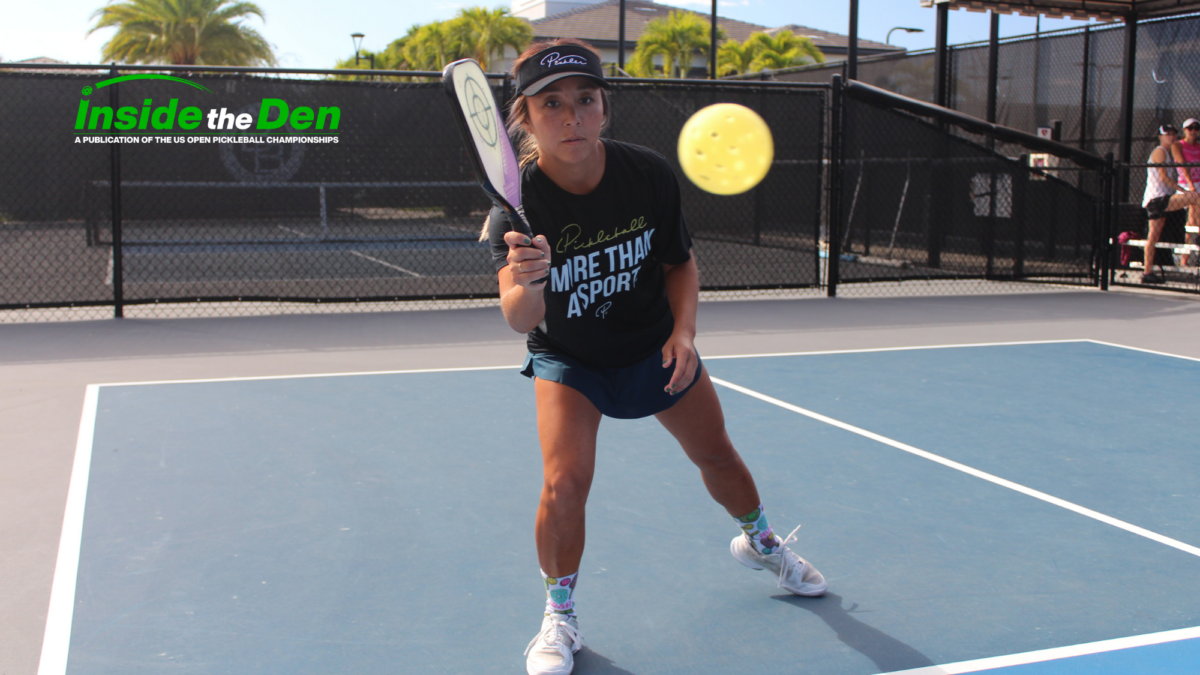
The mechanics are straightforward but require precision. Get your feet set early with proper paddle preparation. Your paddle should drop below the ball, with the paddle head near the ground.
From this position, you accelerate up the back of the ball, which generates the topspin needed to keep the ball in the court.
Here's where most players go wrong: they swing forward too fast. When you rush the swing, you get pace but lose control.
The ball sails long or pops up. Instead, start below the ball and finish at your opposite shoulder. This motion creates the topspin and consistency that separates a winning speed up from a mistake.
💡
Heads up: hundreds of thousands of pickleballers read our free newsletter. Subscribe here for cutting edge strategy, insider news, pro analysis, the latest product innovations and more.
Location matters more than power in pickleball attacking strategy. Don't just hit the ball hard with no intent. Target the spots your opponent hates:
- The dominant hip.
- The shoulder.
- The chicken wing area.
If they extend for the backhand, that extended position is vulnerable. Most players are comfortable in their ready position directly in front of them, so avoid hitting straight at them.
One tactical note: if your opponent has a two-handed backhand counter, stay away from the extended backhand position and jam them up at the chicken wing instead. Knowing your opponent's strengths and weaknesses shapes your attacking choices.
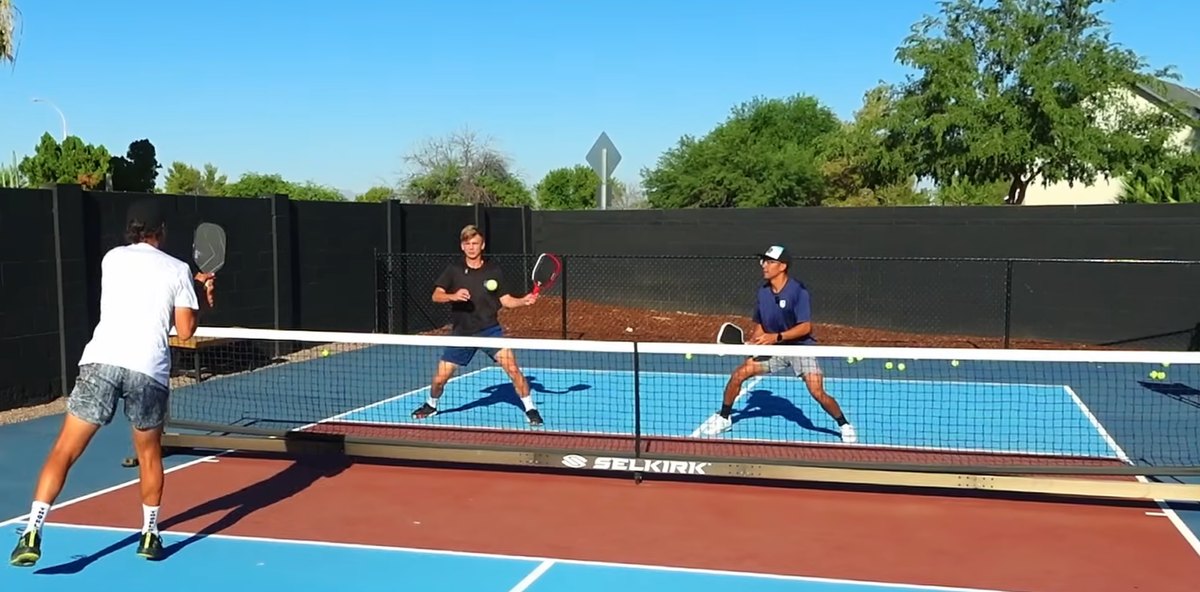
Pro Speed-Up Strategy: Master the Kitchen Line Attack Like a 5.0+ Player
Connor Garnett shows that winning kitchen battles isn’t about raw power, but about positioning, psychology, and reading opponents in real time
 The Dink PickleballThe Dink Media Team
2. Attacking Out of the Air: The Aggressive Approach
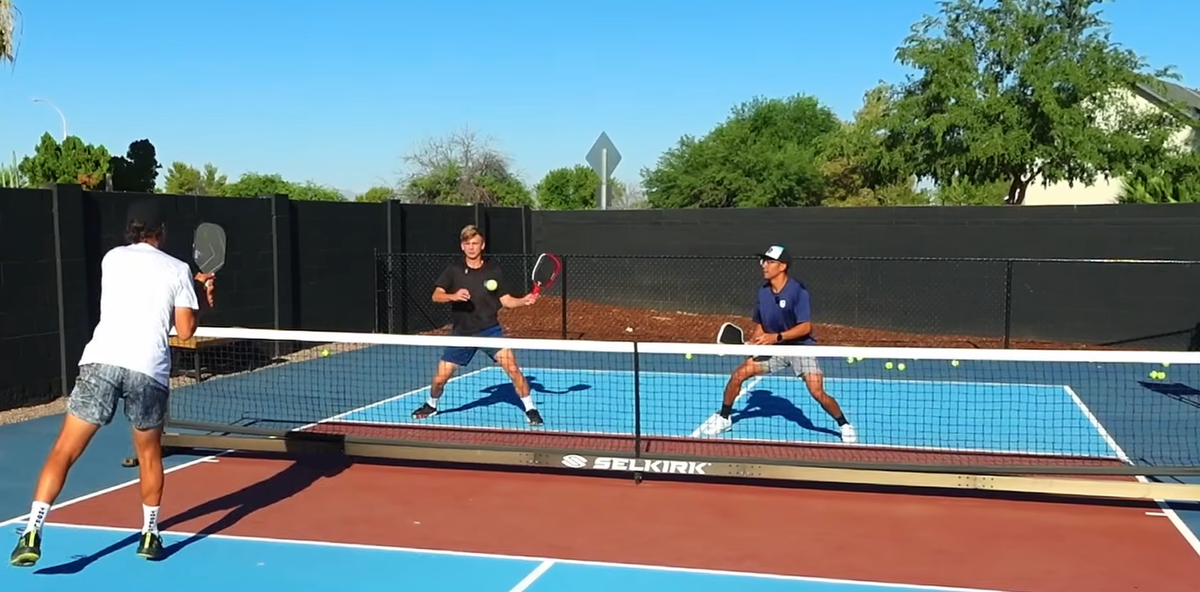
Reaching in to take the ball out of the air is the aggressive move. By limiting your opponent's reaction time, you catch them off guard and force them into a defensive position before they're ready.
When you reach in, maintain the same fundamental principle: start below the ball to generate topspin.
If the ball is already high, you can push it flat without needing spin. But when you're reaching in at net height, that topspin is crucial.Balance is non-negotiable here. Both feet must be established and positioned at the kitchen line.
If you're in an awkward stance with your feet staggered, don't attack. Wait for a better opportunity. An unbalanced attack is a gift to your opponent.
There are two ways to attack out of the air: the roll and the flick.
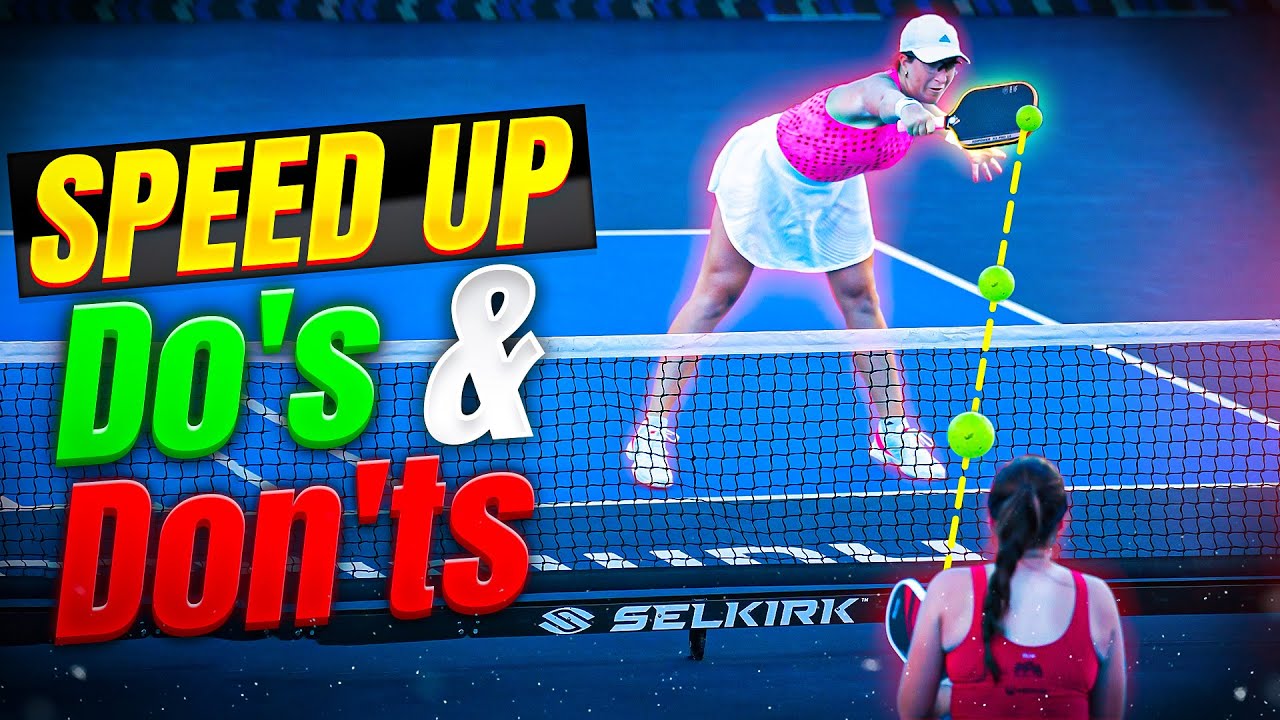
The Do’s and Don’ts of Attacking in Pickleball
Timing, positioning, and reading your opponent matter way more than gripping and ripping
 The Dink PickleballThe Dink Media Team
The Roll: Control and Precision
The roll is a slower, more controlled swinging shot. You're not accelerating aggressively.
Instead, start below the ball, get a flat paddle face, and brush up the back of it to jam your opponent at the chicken wing.
On the forehand side, lay your wrist back to position the paddle correctly. On the backhand, do the same.
Some players finish on the same side of their body; others finish across their body at the opposite shoulder. Either works fine. The key is starting below the ball.
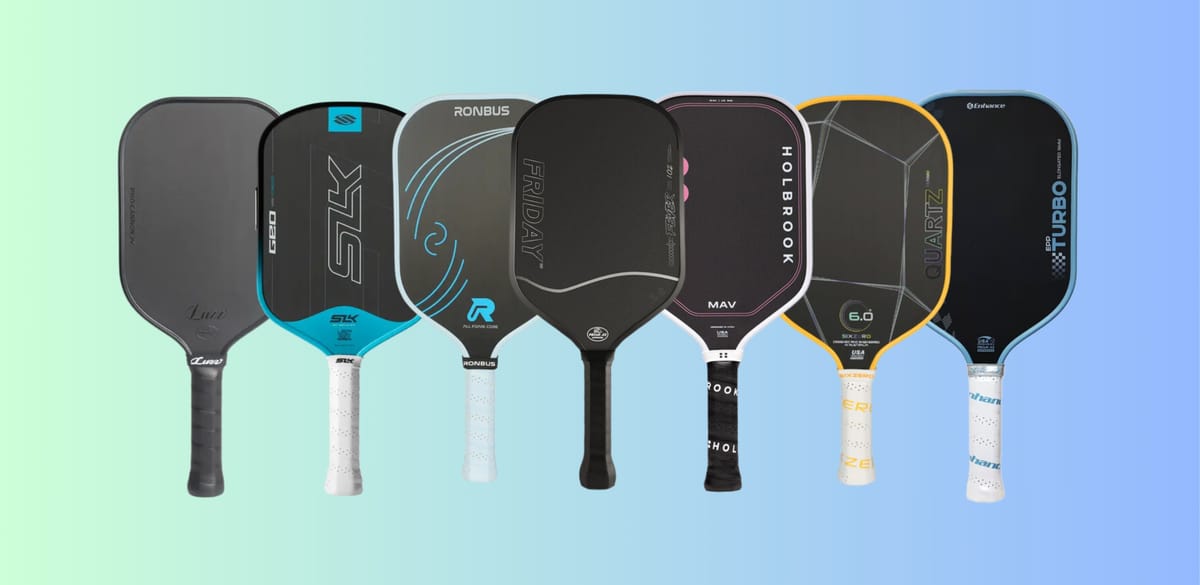
Cheap Pickleball Paddles: 7 Best Under $100
Reputable brands like Selkirk, Holbrook, Enhance, Six Zero, and more now offer high-tech paddles under the $100 mark.
 The Dink PickleballAlex E. Weaver
The Flick: Speed and Deception
The flick uses a motorcycle wrist position and more acceleration. Think about throwing a Frisbee. You're not intentionally breaking your wrist, but momentum carries it forward naturally.
Keep the paddle face closed, which allows you to get the ball down while accelerating through the shot.
On the forehand side, the flick isn't a Frisbee motion. Instead, set your paddle face flat or slightly closed and hit the top edge of the ball.
This generates topspin and pace while keeping the ball low at your opponent's feet.
The golden rule applies here: every ball comes back. After your roll or flick, stay balanced and ready for the next shot.
If you're falling over after your attack, you're not prepared for the response.
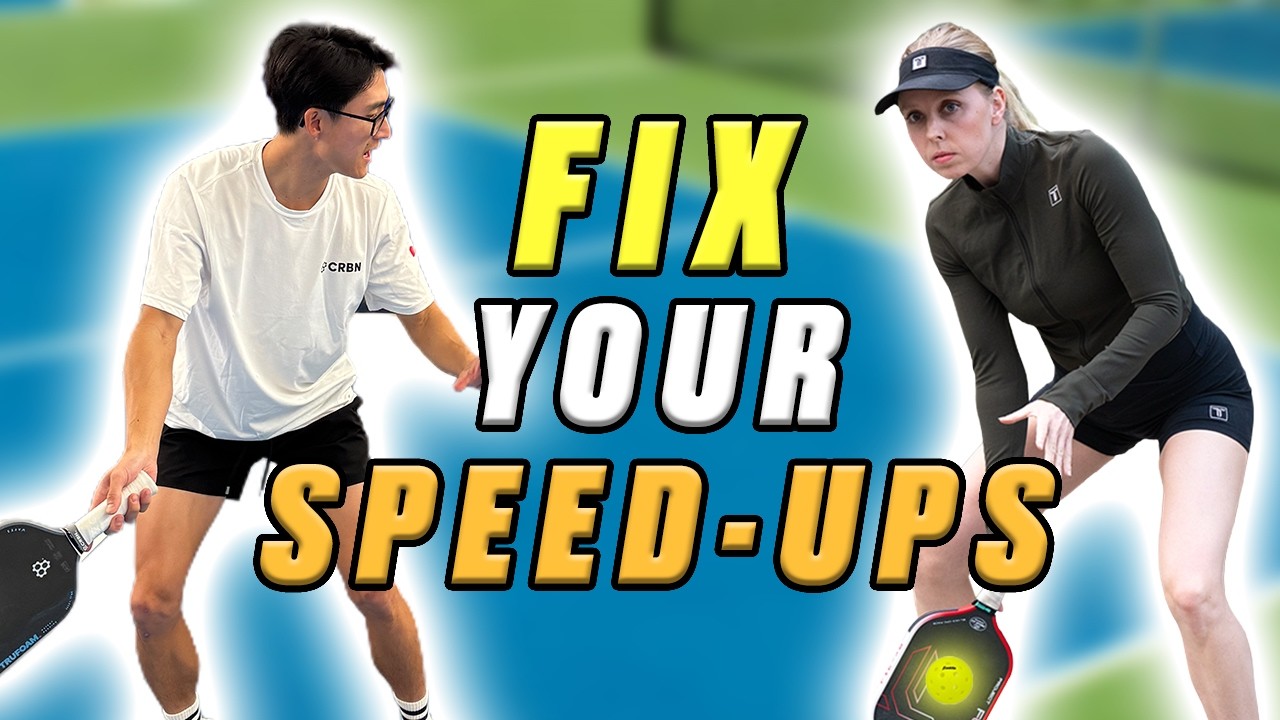
The Four-Part Fix for a Better Forehand Flick
The speed-up’s job is to accelerate the ball just enough to catch your opponent off-guard or finish a weak volley, not to blast a winner.
 The Dink PickleballThe Dink Media Team
3. Topspin Dinks as Attacks: The Mindset Shift
Here's something that surprises many players: dinks can be attacks. It's all about mindset.
When you're moving your opponents around and applying pressure, you're attacking, even if the ball is moving slowly.
Too many players hit dead dinks with no purpose. Every dink should have intention behind it.
If you have the opportunity, use topspin to move your opponents around and make them uncomfortable.
When you hit a topspin dink, make sure the ball bounces on the other side. Why? If your opponent takes it out of the air, they've neutralized the point and might do something aggressive back at you.
A bouncing ball with topspin will kick and push them off the court.
Location is everything in pickleball attacking strategy with dinks. Two of the best targets are the middle of the court and crosscourt.
Heads up: hundreds of thousands of pickleballers read our free newsletter. Subscribe here for cutting edge strategy, insider news, pro analysis, the latest product innovations and more.
But here's the critical part: mix them up frequently. Never go to the same dinking spot more than twice in a row.
Once you hit the same target three, four, or five times, it becomes a rhythm your opponent can anticipate. They'll know exactly where you're going and be ready for it.
Move the middle to pull them out wide. Keep them guessing. Always be looking for the next ball so you can set up your next attack.
💡
Need some new pickleball gear? Get 20% off select paddles, shoes, and more with code THEDINK at
Midwest Racquet SportsWhy Pickleball Attacking Strategy Matters Now
The game of pickleball has evolved significantly. What worked five years ago isn't enough anymore.
Players are faster, more athletic, and more skilled. The margin between winning and losing often comes down to who can execute their attacking strategy more consistently.
According to recent trends in competitive pickleball, net play dominance separates the top players from the middle tier. The ability to attack at the kitchen line isn't optional anymore. It's essential.
Pro Speed-Up Strategy: Master the Kitchen Line Attack Like a 5.0+ Player
Connor Garnett shows that winning kitchen battles isn’t about raw power, but about positioning, psychology, and reading opponents in real time
 The Dink PickleballThe Dink Media Team
Frequently Asked Questions
What's the most common mistake players make when speeding up off the bounce?
Players swing forward too fast without starting below the ball. This creates pace but no control. The ball either sails long or pops up. Always start below the ball and finish at your opposite shoulder to generate topspin and consistency.
When should I use the roll versus the flick?
Use the roll when you want maximum control and precision. Use the flick when you want more pace and deception. Both start below the ball, but the flick uses more wrist acceleration. Choose based on your opponent's position and your confidence level.
How do I know if I'm in a good position to attack out of the air?
Your feet should be established and positioned at the kitchen line with a wide, balanced stance. If you're staggered or off-balance, wait for a better opportunity. An unbalanced attack gives your opponent an easy put-away.
Why is location more important than power in pickleball attacking?
Power without placement is just a gift to your opponent. They can block it back or counter-attack. Location forces them into uncomfortable positions where they can't respond effectively. Target the chicken wing, dominant hip, or extended backhand.
How often should I mix up my dink targets?
Never go to the same spot more than twice in a row. After two shots to the same location, your opponent will anticipate the third. Mixing up the middle and crosscourt keeps them off-balance and unable to establish a rhythm.
Anuncie Aqui / Advertise Here
Sua marca para o mundo Pickleball! / Your brand for the Pickleball world!




 English (US) ·
  Portuguese (BR) ·