
 English
  Spanish
  Portuguese
  German
  Italian
  Japanese
  French
  Polish
  Russian
  Netherlands
  Hungarian
  Turkish
  Videos
  Thedink Pickleball

Court coverage is one of the most misunderstood aspects of pickleball doubles, but the Walker Sisters break down exactly how to fix your positioning at every level of the court. From the baseline to the kitchen line, here's what you need to know about court coverage to instantly level up your game.
If you've ever found yourself scrambling on the court, unsure whose ball to take, you're not alone. Court coverage is one of the most confusing aspects of doubles pickleball, but it doesn't have to be.
The Walker Sisters, Angie and Alex Walker of Walker Sisters Pickleball, recently broke down the exact positioning strategies that separate confused partners from synchronized teams.
The problem isn't that players don't care about positioning. It's that most people never learn the fundamental rules that govern court coverage at different zones of the court. Once you understand these principles, everything clicks into place.
Love pickleball? Then you'll love our free newsletter. We send the latest news, tips, and highlights for free each week.
The Baseline: Where Most Doubles Points Start
When you're both at the baseline, the rules are straightforward. Angie Walker explains that the person with the forehand in the middle should take the ball.
For most traditional doubles with two right-handed players, that's the player on the left side.
Here's the thing: this isn't an absolute rule. It's a starting point. If the ball is coming down the middle and you're the left-side player, you own it. But there's a limit. About a foot over the middle, you're still taking your forehand. Two feet over? You're overdoing it, especially in gender doubles.
The key is communication. If you want the backhand, call it early. Alex Walker points out that calling the ball gives your partner enough time to move forward and position herself aggressively. If your partner is feeling confident and the opponents look hesitant, you might even take the third shot yourself so your partner can attack.
The Transition Zone: Where Positioning Gets Tricky
The transition zone is where court coverage becomes situational. You're no longer at the baseline, but you haven't reached the kitchen line yet. Your forehand is still in the middle, but now it depends entirely on where you hit the third shot.
If you hit the third shot down the line from your side, you can't cheat too far toward the middle. Why? Because your opponent has your entire open court behind you. You need to stay centered and trust your partner to cover the middle from her position.
The opposite applies when the ball is in front of your partner or across from you. Now you're in charge of the middle, and your partner shifts over to protect her line. Angie Walker emphasizes that you're still looking to be aggressive in the middle with your forehand, but you're not coming all the way over like you would at the baseline.
Think of it this way:
- if the ball is in front of you, protect your line.
- If the ball is across from you, protect the middle.
This simple framework eliminates confusion and keeps both players on the same page.
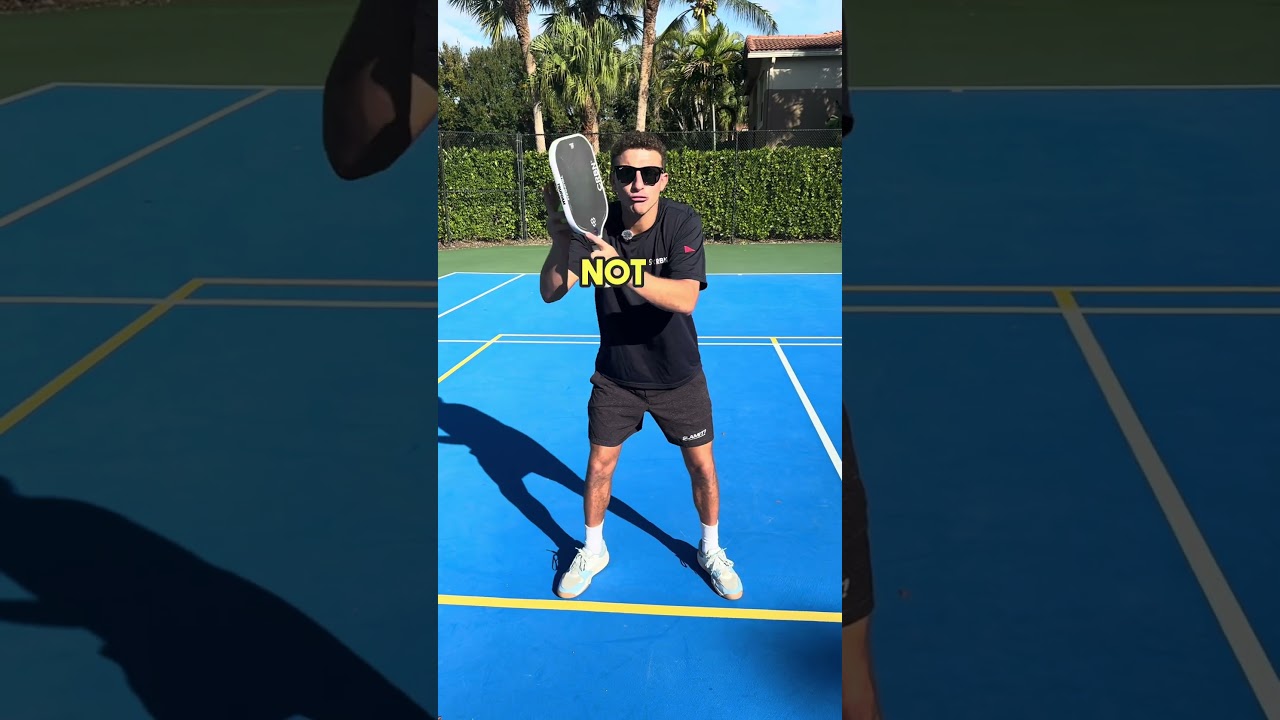
Master Middle Coverage: 3 Pro Tips for Pickleball
Tanner Tomassi explains why mastering footwork, paddle control, and anticipation are the keys to dominating the middle in pickleball
 The Dink PickleballThe Dink Media Team
The Kitchen Line: Moving as One Unit
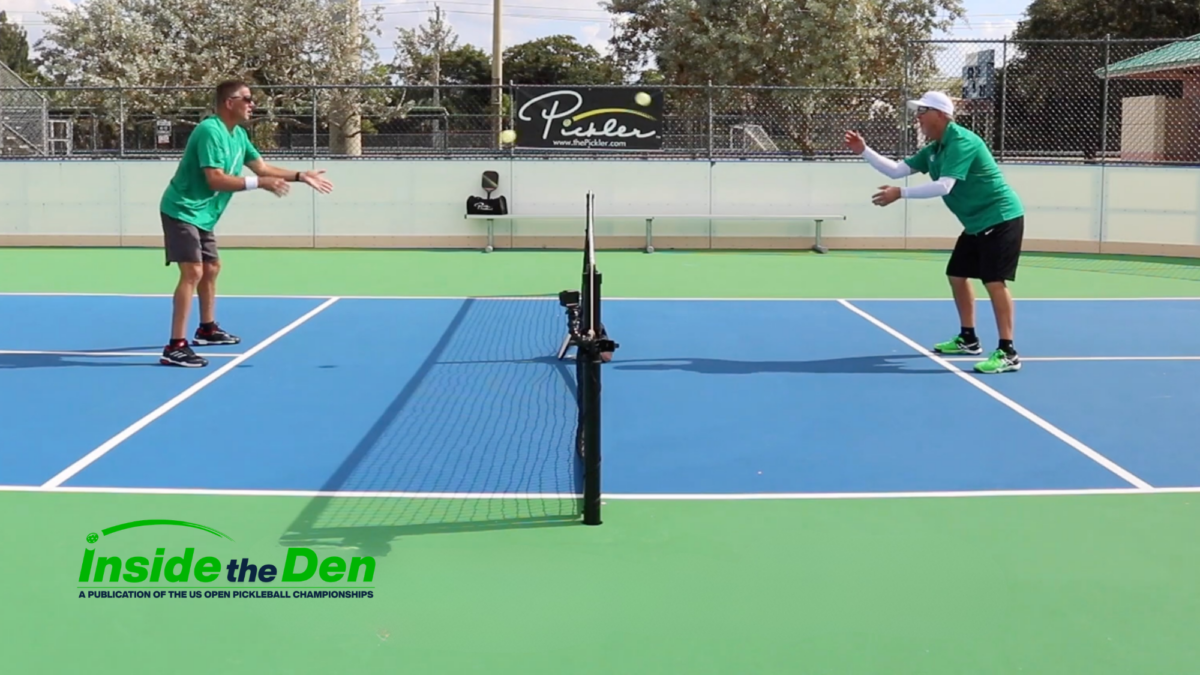
At the kitchen line, the most important principle is that you and your partner move together like you're tied to a string. The string is about two arm's lengths away from each other. If one player moves, the other moves with them.
This is where most recreational players fail. One partner shifts to cover a wide ball, and the other stays put. Suddenly, there's a massive gap in the middle, and the opponents attack right through it. Alex Walker has seen this mistake countless times in camps and clinics.
💡
Need some new pickleball gear? Get 20% off select paddles, shoes, and more with code THEDINK at Midwest Racquet Sports
When you receive a ball that's come out wide to your backhand, you step that direction and your partner moves with you. If you hit the ball down the line, you stay in that position because your partner is now in charge of the middle from the down-the-line side. You cover your line and your body up to a certain point. Anything beyond that is your partner's ball.
If you take the ball with your backhand and hit it crosscourt back to the baseline, you don't want to shift too much. But you do need to adjust so your partner can cover her line and you can cover the middle. This positioning also protects you if the opponents go back crosscourt to you.
The rule remains the same:
- If the ball is in front of you, cover your line.
- If the ball is across from you, shift to cover the middle.
The middle is the easiest spot on the court for opponents to attack, so leaving it open is a recipe for disaster.
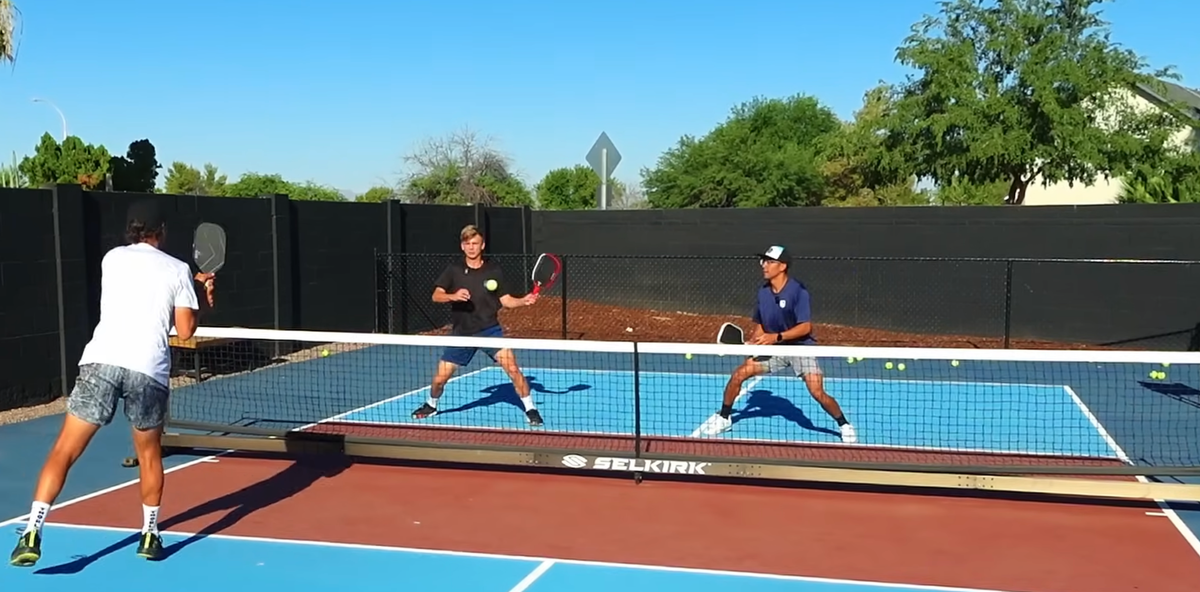
Pro Speed-Up Strategy: Master the Kitchen Line Attack Like a 5.0+ Player
Connor Garnett shows that winning kitchen battles isn’t about raw power, but about positioning, psychology, and reading opponents in real time
 The Dink PickleballThe Dink Media Team
Why Communication Matters More Than You Think
Here's something that might surprise you: court coverage confusion can be solved almost entirely through communication.
- If you want the backhand, call it.
- If you want the forehand, call it.
And here's the part most players miss: you can also say "you" to give your partner the green light.
When Angie Walker says "you," her partner knows she can confidently swing without worrying about a collision. This simple call removes hesitation and allows both players to attack aggressively.
Alex Walker makes an important point: "I'd rather you guys clash paddles and both of you go for it than nobody go for it." A collision is better than a ball going through untouched. Communication prevents that scenario entirely.
Heads up: hundreds of thousands of pickleballers read our free newsletter. Subscribe here for cutting edge strategy, insider news, pro analysis, the latest product innovations and more.
The Bigger Picture: Why Court Coverage Matters
Understanding court coverage isn't just about avoiding confusion. It's about creating a unified defensive wall that opponents can't penetrate. When both players know their responsibilities at every level of the court, they move with purpose and confidence.
This is what separates good doubles teams from great ones. The best teams don't just react to the ball; they anticipate where it's going and position themselves accordingly. They move as a unit, communicate constantly, and trust each other completely.
The Walker Sisters have built their reputation on breaking down these fundamentals in a way that makes sense. Their approach isn't complicated. It's logical, practical, and immediately applicable to your next match.
Pickleball Shot Selection: Ball Height & Court Positioning
Advanced pickleball means constantly analyzing the height of the ball and the court positioning off all four players in real time – and keeping this one rule sacred: just because you can hit a more aggressive shot doesn’t mean you should
 The Dink PickleballEric Roddy
Frequently Asked Questions
What's the basic rule for court coverage at the baseline?
The person with the forehand in the middle takes the ball. For two right-handed players, that's typically the left-side player. However, this rule has limits. About a foot over the middle, you're still taking your forehand. Two feet over, you're probably overdoing it.
How does court coverage change in the transition zone?
In the transition zone, court coverage depends on where you hit the third shot. If you hit down the line, stay centered and let your partner cover the middle. If the ball is across from you, you cover the middle while your partner protects her line.
Why is moving together important at the kitchen line?
Moving together prevents gaps in the middle, which is the easiest spot for opponents to attack. Think of yourselves as tied to a string about two arm's lengths apart. When one player moves, the other moves with them.
How can communication improve court coverage?
Calling the ball early gives your partner time to adjust and position aggressively. You can say "mine," "yours," or even just "you" to give your partner the green light to swing confidently without worrying about a collision.
What's the most common court coverage mistake?
The most common mistake is one player moving to cover a wide ball while the other stays put, creating a massive gap in the middle. This leaves the court vulnerable to attacks right through the center.
Anuncie Aqui / Advertise Here
Sua marca para o mundo Pickleball! / Your brand for the Pickleball world!





 English (US) ·
  Portuguese (BR) ·