
 English
  Spanish
  Portuguese
  German
  Italian
  Japanese
  French
  Polish
  Russian
  Netherlands
  Hungarian
  Turkish
  Videos
  Thedink Pickleball

A pickleball match delayed by weather tests your patience more than your paddle. Here's what the rulebook preserves, how to keep your body ready, and how to win the restart.
A pickleball match delayed by weather is the one opponent you can't scout, can't out-dink, and can't talk your way past.
You're up 8-5, you've finally solved their lefty stack, and then the horn blows for lightning.
Forty minutes later you're asked to pick it back up like nothing happened.
Here's the thing: most players lose that match in the parking lot, not on the court.What you do with the delay decides whether you come back sharp or come back cold and five points behind in your head.
Love pickleball? Then you'll love our free newsletter. We send the latest news, tips, and highlights for free each week.
What Happens to the Score in a Pickleball Match Delayed by Weather?
Nothing, and that's the part most players get wrong.
Under the USA Pickleball 2026 Official Rulebook, a game suspended for extenuating circumstances resumes with the same server, the same score, and the same remaining time-outs.Your 8-5 lead is still 8-5. The two time-outs you were hoarding are still yours.
That matters more than it sounds. Players who assume a stoppage wipes the slate clean come back careless.
Players who know it carries over come back with a plan. Skim this year's USAP rule changes before your next event, and how time-outs actually work while you're at it.One wrinkle: Tournament Directors have an inclement-weather option.
The 2026 rulebook's GPF edition lets a TD approve a shortened 7-point game with an end change at 4, used in single-game matches or the tie-breaker of a multi-game match.A long rain morning can turn your 11-point grind into a sprint.
Ask before you walk out, because a 7-point game rewards fast starters and punishes anyone still finding range at 2-2.
If you warm in slowly, a scoring refresher and a faster first-ball plan help.
When Does Play Actually Have to Stop?
At the first thunder. Not the first raindrop.
The National Weather Service advises stopping outdoor activity immediately at the first thunder or lightning and moving into a fully enclosed building or a hard-topped vehicle.
Play shouldn't resume until at least 30 minutes after the last thunder, and both the NFHS and the National Athletic Trainers' Association note the clock restarts with every new flash or rumble.That's how a "quick delay" becomes a two-hour delay, and why pro events lose whole days to it.
Heat is murkier, because there's no horn. Quick definition, since the term gets thrown around loosely:
Heat index is the NWS measure of how hot it actually feels once relative humidity is factored in with air temperature. It isn't the thermometer reading.
The NWS bands run from Caution at 80 to 90°F through Extreme Caution at 90 to 103°F, Danger at 103 to 124°F, and Extreme Danger at 125°F and up.Those are screening tools, not pickleball policy, but they're a useful gut check when a TD pushes draws into the afternoon.
The CDC notes that people exercising in heat are more likely to become dehydrated, and recommends pacing activity, drinking more water than usual, and watching teammates. Hydration stops being optional on those days.
💡
Need some new pickleball gear? Get 20% off select paddles, shoes, and more with code THEDINK at
Midwest Racquet SportsHow Do You Stay Ready During a Pickleball Match Delayed by Weather?
Treat it as a second pre-match, not a break. That reframe is worth more than any gear tip.
- The player who spends a pickleball match delayed by weather on a cooler scrolling his phone needs four points to find his legs.
- The player who treats the restart like a new start time already has those four points.
During any stoppage longer than 15 minutes:
- Change your shirt. A soaked shirt in a breezy pavilion drops your body temp fast, and cold shoulders serve short. This is where the indoor versus outdoor clothing question stops being fussy and starts being tactical.
- Move every 10 minutes. Thirty seconds of footwork or a quick stretching sequence so you never go fully cold.
- Eat something small and early. Decide at minute 10, not minute 70 when the horn's about to blow.
- Re-grip. Humidity after a rain delay turns a good grip into a bar of soap.
The Re-Warm-Up Nobody Does and Everybody Needs
Give yourself eight minutes, not two.
Courts clear fast when play resumes, so your re-warm-up has to happen before the all-clear, on whatever square of dry concrete you can find.
The sequence: ankles and hips, then shoulders, then hands.
Anna Bright's roll-lunge-jump method is built for this because it moves through joints in order instead of jumping straight to paddle swings.
Then do the thing nobody does: shadow-swing your first serve and your first return, ten each.Those are the two shots you'll hit cold, under pressure, with the score already lopsided.
A five-minute competition warm-up covers the rest, and warming the mind with the body is the half most players skip.
💡
Need some new pickleball gear? Get 20% off select paddles, shoes, and more with code THEDINK at
Midwest Racquet SportsWhat to Do When a Pickleball Match Delayed by Weather Drags On
Stop guarding the clock and start managing the day. Past an hour, the risk isn't your muscles, it's your attention.
Pros do what the rest of us should: they go genuinely off, somewhere quiet, then switch back on with a hard cue like a song or a drill.Honestly, the worst version of a pickleball match delayed by weather is the one where you stayed half-on for 90 minutes and had nothing left when it mattered.
Also, find out what else got pushed.
A long morning delay means your next match may start 20 minutes after this one ends, which changes how hard you chase a ball at 9-3.
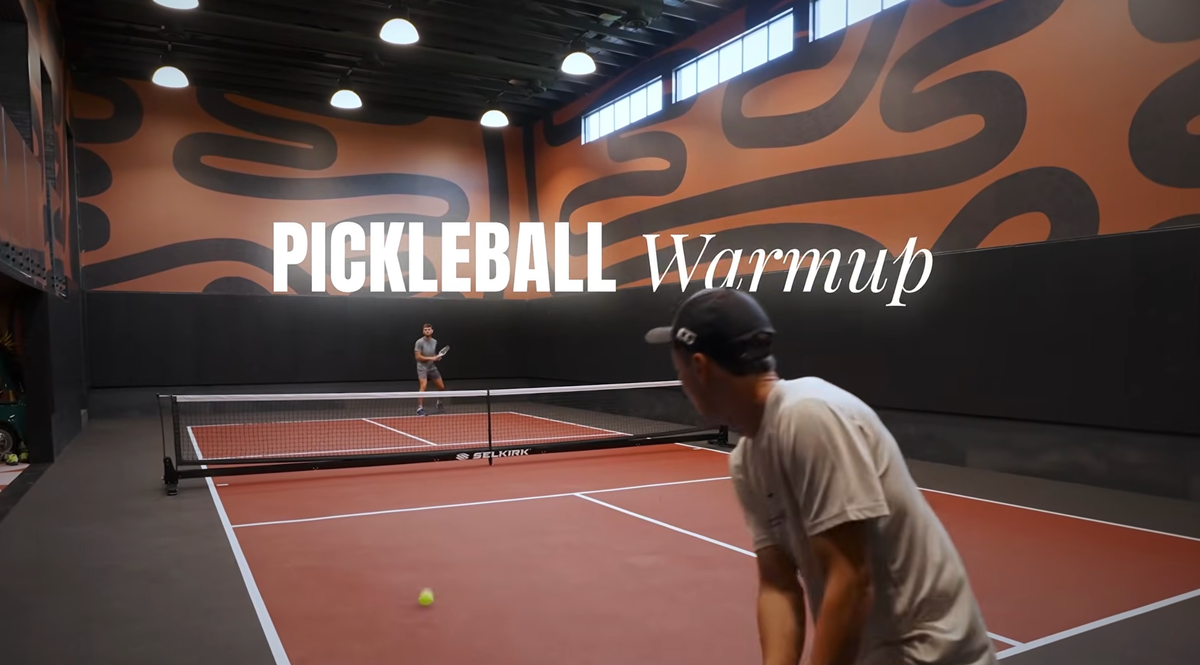
6-Step Pickleball Warm Up From a Top 10 Pro
Most players treat the warm up like a formality and then wonder why they start matches cold. This pickleball warm up routine from a top 10 pro fixes that in 15 minutes flat.
 The Dink PickleballThe Dink Media Team
Who Actually Wins the Restart?
The player who stopped replaying the last point.
Most restarts get decided in the first two or three rallies, and most of those rallies are lost by somebody still litigating the ball they shanked before the horn.
A six-second mental reset flushes it, and finding mental clarity before a match applies here too, because a restart is a match start.Build a plan for exactly four points, then re-evaluate.
Serve deep to the backhand, take the first drivable ball, and don't attempt anything off the bounce you haven't hit all day.
A pickleball match delayed by weather tempts people into hero shots, partly from impatience and partly because the rhythm's gone.
Resist it, and stay calm under pressure by shrinking the decision to one shot at a time.
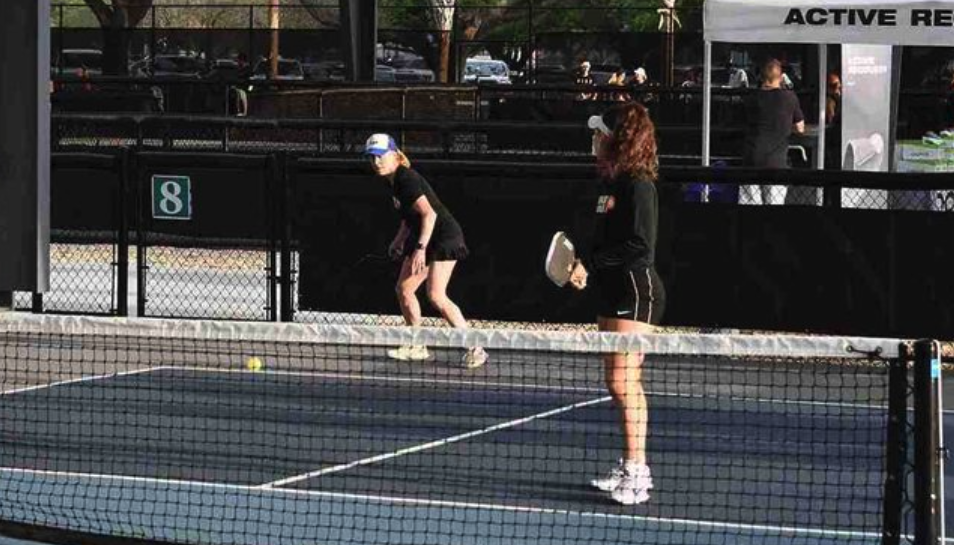
How to Beat a Higher-Rated Pickleball Player
Beating a higher-rated pickleball player is possible when you stop playing their game and start playing yours. This underdog game plan breaks down the exact tactics, mental frameworks, and shot patterns that close the rating gap on the court.
 The Dink PickleballThe Dink Media Team
The Court Changed While You Waited
Re-scout before the first serve, because the conditions you memorized are gone. Wind shifts after a front passes, almost always.
Surfaces stay slick near fence lines and in shade long after the middle dries.
And temperature changes the ball: a cool ball plays dead and sits up, while a hot ball gets livelier and flies longer.Spend 20 seconds on three things. Where's the wind coming from, where is the court still wet, and is the ball playing short or long?
Playing with or against the wind is a tactical question, not a complaint, and there are ways to use the wind to your advantage once you stop fighting it.Zane Navratil's breakdown of the elements is the best primer for outdoor competitors.
If the court's still damp, shorten your targets. Fewer sideline angles, more middle. Your opponent's first slip is your point.
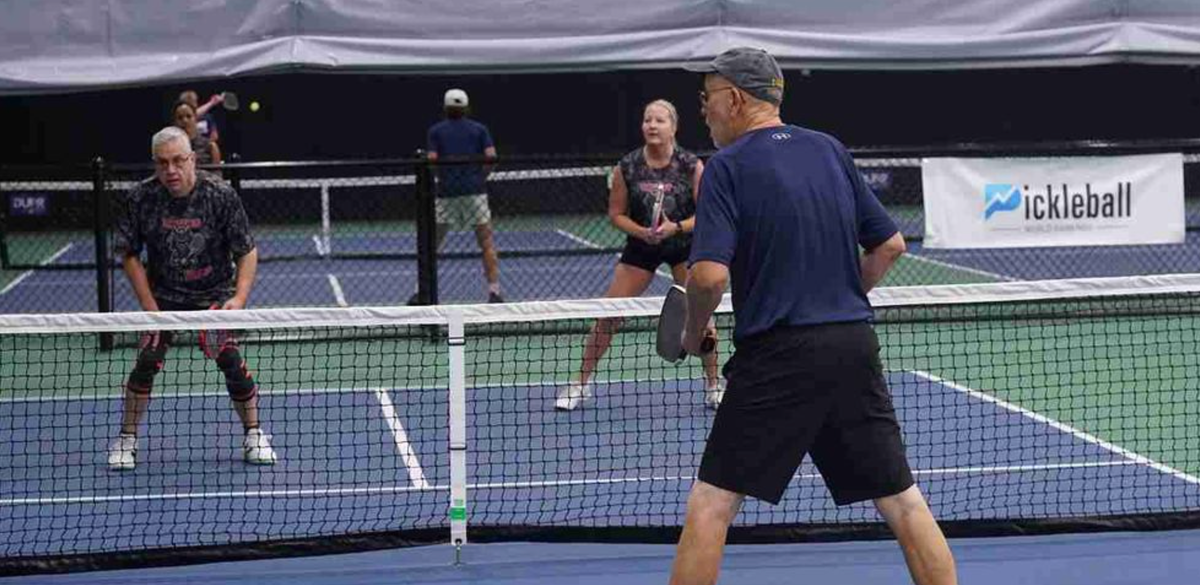
Pickleball Tips for Seniors: Master Court Positioning
These pickleball tips for seniors focus on one thing: where you stand before the ball arrives. Better court positioning beats faster feet every single time.
 The Dink PickleballThe Dink Media Team
Key Takeaways
- A pickleball match delayed by weather resumes with the same server, score, and remaining time-outs.
- Tournament Directors may approve a shortened 7-point game, changing ends at 4.
- Play should stop at the first thunder and resume no sooner than 30 minutes after the last one, with the clock restarting each time.
- Heat index factors humidity into air temperature; NWS bands run from Caution at 80 to 90°F up to Extreme Danger at 125°F.
- Treat the delay as a second pre-match: change your shirt, move every 10 minutes, and re-warm for eight minutes before the all-clear.
- Re-scout wind, wet patches, and ball liveliness before the first serve back, then build a plan for four points at a time.
💡
Heads up: hundreds of thousands of pickleballers read our free newsletter.
Subscribe herefor cutting edge strategy, insider news, pro analysis, the latest product innovations and more.
Frequently Asked Questions
Who serves first after a pickleball match delayed by weather resumes?
The same player who was serving when play stopped. USA Pickleball's rulebook preserves the server, the score, and each side's remaining time-outs through a suspension. Nothing resets, so confirm the score out loud with all four players, especially if anyone's shaky on the doubles serving sequence.
Can you play pickleball in the rain?
Light drizzle on a textured outdoor court is usually playable, though the ball gets heavy and bounces lower. Steady rain is a different story, because the surface turns slick and the risk of a slip climbs fast. Any thunder means stop immediately, no matter how light the rain looks.
How windy is too windy for pickleball?
Anything over roughly 15 to 20 mph turns the game into a coin flip, with serves sailing and dinks floating. There's no official cutoff, so it comes down to the event and court orientation. Gusts strong enough to move the ball mid-dink are the practical line.
What should I wear if play resumes in cold weather?
Layers you can shed in one motion, plus a dry shirt from your bag. Long sleeves and a light vest keep your shoulders and hips warm without restricting your swing, and a second towel matters more than people expect.
How long does a lightning delay usually last?
At minimum 30 minutes from the last thunder, and the clock restarts with every new rumble or flash. In practice a storm cell often costs 45 to 90 minutes, so plan your food and re-warm-up around the longer number. Long waits are their own test of getting past a mental wall.
💡
Need some new pickleball gear? Get 20% off select paddles, shoes, and more with code THEDINK at
Midwest Racquet SportsAnuncie Aqui / Advertise Here
Sua marca para o mundo Pickleball! / Your brand for the Pickleball world!



 English (US) ·
  Portuguese (BR) ·