
 English
  Spanish
  Portuguese
  German
  Italian
  Japanese
  French
  Polish
  Russian
  Netherlands
  Hungarian
  Turkish
  Videos
  Thedink Pickleball

Pickleball stacking is a game-changing doubles strategy that lets you position your forehands in the middle of the court. Whether you're playing mixed doubles or teaming with a lefty, understanding both off-court and on-court stacking methods will transform your competitive edge.
Pickleball stacking is one of those strategies that separates casual players from serious competitors.
If you've watched high-level doubles matches, you've probably seen it happen: two players suddenly shift positions mid-rally, creating an unexpected formation that catches opponents off guard.
But here's the thing: pickleball stacking isn't just a flashy move.
It's a legitimate tactical advantage when executed properly, and understanding how to use it (or defend against it) can fundamentally change your game.
Love pickleball? Then you'll love our free newsletter. We send the latest news, tips, and highlights for free each week.
Why Do Players Stack in Pickleball?
Before we break down the mechanics, let's talk about why pickleball stacking exists in the first place.
According to Mari Humberg, a professional pickleball instructor and content creator at Mari Humberg Pickleball, there are three primary reasons teams choose to stack.
- First, mixed doubles players often stack to get their male partner's forehand in the middle of the court. In mixed play, positioning matters enormously, and having your stronger player control the center is a huge advantage.
- Second, teams playing with a lefty and a righty want both forehands in the middle, which creates a more cohesive attacking formation.
- Third, some players simply feel more comfortable on one side of the court than the other, so they stack to maximize their strengths.
The beauty of pickleball stacking is that it's not cheating or illegal.
It's a strategic choice that requires communication, timing, and skill to pull off effectively.Off-Court Stacking: The Aggressive Approach
Off-court stacking is the less common of the two methods, but it's incredibly effective when you commit to it fully.
Here's how it works: one player starts positioned outside the court while their partner returns serve.
As soon as the return is hit, the off-court player slides into their designated position while the returner runs diagonally across the court.
The main advantage of off-court stacking is clear sightlines.The returning player has an unobstructed view of the incoming serve and can see exactly where they need to position themselves.
There's no partner in the way, which means you can move freely and aggressively toward your spot.
But there's a significant trade-off. Off-court stacking demands a high-quality return.
💡
Need some new pickleball gear? Get 20% off select paddles, shoes, and more with code THEDINK at
Midwest Racquet SportsIf you hit a weak or short return, your partner won't have time to establish themselves at the net, and you'll be vulnerable on the fourth shot.
This is why Mari Humberg emphasizes that the ideal return in an off-court stacking situation is a high, loopy return directed toward the middle of the court.
That extra height gives both players time to get into position.
Off-court stacking is most common in mixed doubles or when teams know with absolute certainty they're going to switch.
It's less practical in women's doubles because the serve is typically less aggressive, making it harder to commit to the switch every single time.
Best Women’s Pickleball Shoes of 2026: Top 9 Reviewed
I tried the 9 top women’s pickleball shoes from Nike, ASICS, Selkirk, JOOLA and more to reveal the best options for comfort, speed, and on-court performance.
 The Dink PickleballEmily Visnic

On-Court Stacking: The Flexible Option
On-court stacking is the more popular method, and for good reason.
Both players start on the court, and the non-returning player signals whether they're switching or staying put.
The most common signal is an open hand, which means "switch." If the returner agrees, they execute the switch immediately after hitting their return.
The flexibility here is crucial.
If the serve is particularly aggressive or the returner doesn't feel confident about their return quality, they can call off the switch by not responding to the signal.
This adaptability makes on-court stacking less risky than the off-court version.
The downside is that the non-returning player will briefly be in the way during the switch.
You might lose sight of the ball for a split second as your partner moves across your line of vision.
However, this minor inconvenience comes with a major benefit: if the return isn't perfect, your partner can delay their switch and help you out on the fourth shot instead of being stuck in a predetermined position.
Mari Humberg notes that on-court stacking is ideal for teams that want to maintain flexibility while still gaining the positional advantage of having both forehands in the middle.
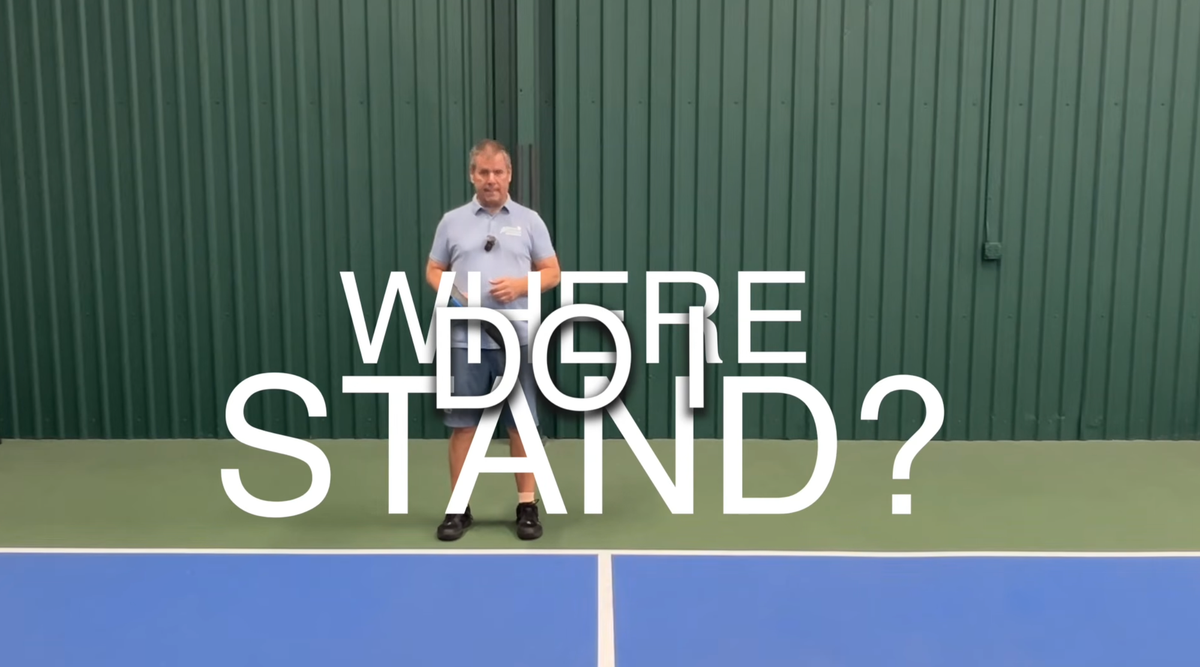
Doubles Stacking 101: The Fool-Proof Positioning Strategy That Wins Points
Stacking might be the single most underrated positional tool in doubles pickleball – and it’s way simpler than you think
The Dink PickleballThe Dink Media Team
How to Serve Against Stacking Teams
Now let's flip the script. What if you're facing opponents who stack?
Understanding how to attack a stacking formation is just as important as knowing how to execute one.
When your opponents are off-court stacking, you want to exploit the switch.
The returner is running diagonally while their partner is sliding into position, which creates a brief window of vulnerability.
Aggressive serving is your best weapon here.Go for a hard serve or a short serve that forces a weak return.
If the returner doesn't hit a quality return, you can attack the third shot and catch the switching player off guard.
Against on-court stacking, your strategy shifts slightly. You're trying to force them not to switch at all.
Hit angle serves or extremely hard serves that create chaos and disrupt their timing.If they do switch and you're hitting the third shot, look for openings behind the player who was already at the net or target the player on the run.
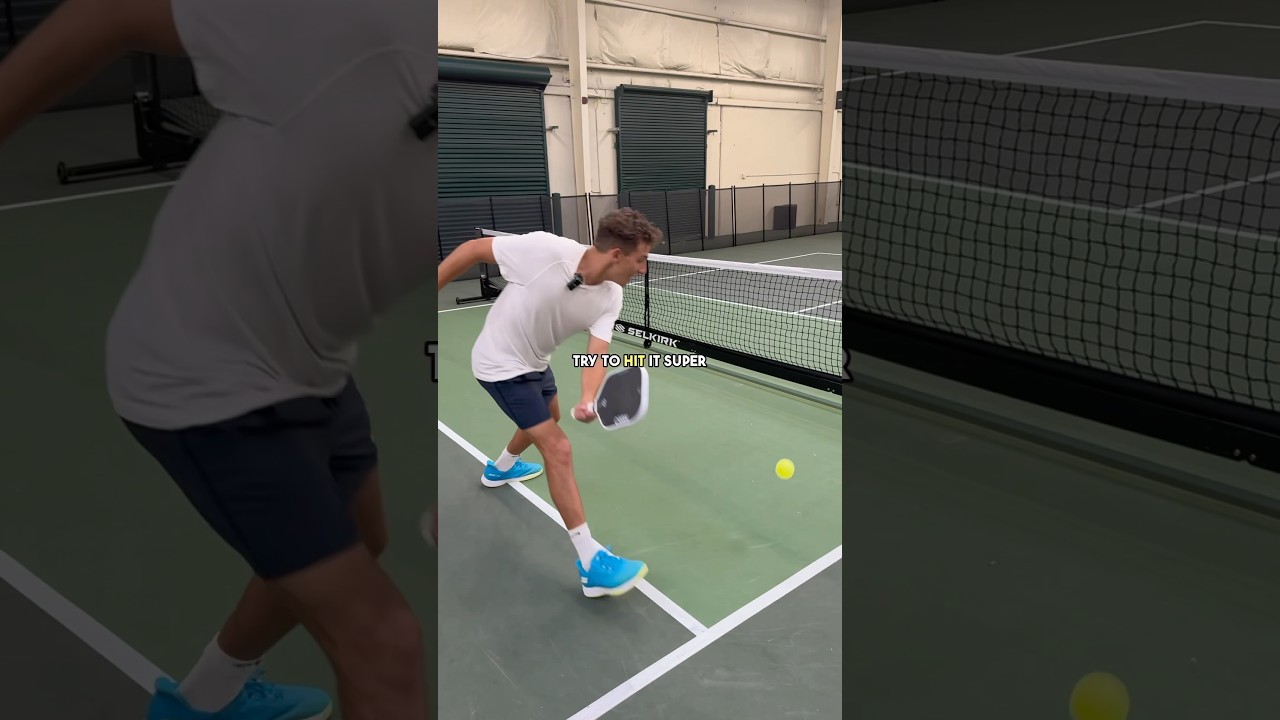
Pickleball Dink Strategy: Master the Neutral Game
This approach might not feel as satisfying as crushing a winner, but it’s far more effective. Over time, this mentality will show up in your win-loss record.
The Dink PickleballThe Dink Media Team
The Mental Game of Stacking
Here's something that doesn't get talked about enough: pickleball stacking is as much mental as it is physical.
Both players need to be on the same page about when and how they're going to stack.
A miscommunication can lead to both players running to the same spot or one player staying put while the other commits to the switch.
This is why teams that stack regularly develop a rhythm. They practice the timing, they develop signals, and they build trust.
Mari Humberg and her partner AB have traditionally stacked together, which means they've had countless reps to fine-tune their execution.
That repetition is what separates a smooth, effective stack from a clumsy one that leaves you vulnerable.
If you're thinking about incorporating pickleball stacking into your game, start with on-court stacking.
It's more forgiving, and you can build confidence before attempting the more demanding off-court version.
Mental Game in Competitive Pickleball: Stay Calm and Win
The mental game competitive pickleball demands is just as important as your backhand or your third shot drop. Learn how top players stay calm under pressure, reset after errors, and build the focus that wins matches.
The Dink PickleballThe Dink Media Team
Key Takeaways for Your Game
Pickleball stacking works best when you understand your partner's strengths and weaknesses.
If one of you has a significantly better forehand, stacking makes sense.
If you're playing mixed doubles, it's almost essential. But if you're evenly matched, the added complexity might not be worth it.
The return of serve is the most critical shot in any stacking scenario.Whether you're off-court or on-court, a quality return gives you time to execute the switch and get into position. A poor return puts you on the defensive immediately.
Finally, remember that stacking isn't a magic solution. It's a tool that works best when combined with solid fundamentals:
- Good communication.
- Smart shot selection.
- Consistent execution.
Master those basics first, then layer in the stacking strategy.
💡
Heads up: hundreds of thousands of pickleballers read our free newsletter.
Subscribe herefor cutting edge strategy, insider news, pro analysis, the latest product innovations and more.
Frequently Asked Questions
What is pickleball stacking?
Pickleball stacking is a doubles strategy where partners switch positions during a rally to optimize their court positioning. Typically, teams stack to get both forehands in the middle of the court, which is considered the strongest position in doubles play.
Is pickleball stacking legal?
Yes, pickleball stacking is completely legal. It's a recognized strategy used at all levels of competitive play, from recreational leagues to professional tournaments.
When should I use off-court stacking versus on-court stacking?
Use off-court stacking when you're 100% committed to switching every time, such as in mixed doubles where you always want your male partner in the middle. Use on-court stacking when you want flexibility to call off the switch if the serve is too aggressive or if you're not confident in your return.
How do I defend against stacking opponents?
Against off-court stacking, hit aggressive serves and look for short returns to attack the switching player. Against on-court stacking, use angle serves or hard serves to disrupt their timing and force them to stay put rather than switch.
What's the most important shot when stacking?
The return of serve is critical. A high, loopy return to the middle of the court gives both players time to get into position. A weak return puts you on the defensive and negates the advantages of stacking.
Anuncie Aqui / Advertise Here
Sua marca para o mundo Pickleball! / Your brand for the Pickleball world!






 English (US) ·
  Portuguese (BR) ·