
 English
  Spanish
  Portuguese
  German
  Italian
  Japanese
  French
  Polish
  Russian
  Netherlands
  Hungarian
  Turkish
  Videos
  Thedink Pickleball

If you keep asking why hitting pickleball out of bounds happens to you specifically, the answer usually lives in your paddle face, not your luck. Here's what's actually going wrong and how to stop it shot by shot.
Why hitting pickleball out of bounds happens to otherwise solid players more often than they'd like to admit comes down to three fixable habits: an open paddle face, a misread on depth, and a swing that gets bigger the second the pressure shows up.
It's not bad luck. It's not the wind. It's mechanics, and it might be the exact mistake you didn't know you were making.
This one hits close to home for anyone who has watched a clean-looking drive sail two feet past the baseline.
Here's the thing: the ball doesn't care how hard you hit it. It cares about the angle of the paddle face at contact and the swing path that got it there.
Half the time, the smarter play is knowing when to drop it instead of driving it. Get either one wrong under pressure and you'll keep flirting with the fence.
Love pickleball? Then you'll love our free newsletter. We send the latest news, tips, and highlights for free each week.
Why Hitting Pickleball Out of Bounds Happens More Than You'd Guess
The direct answer: most out of bounds errors trace back to an open paddle face at contact, not raw power.
A paddle face tilted even five degrees skyward turns a routine drive into a ball that clears the baseline by a foot or more, the same miss that shows up when a player never quite nails the routine shots.
- Grip pressure is the usual suspect. Squeeze the handle too hard and your wrist locks, which opens the face right when you need it flat. That's the same habit that shows up on a shaky serve grip. If your groundstrokes and your serve are both sailing long, check your grip pressure before you check anything else.
- Swing path matters just as much. A low-to-high swing adds lift you didn't ask for. Compare that to a flatter, more compact drive technique, and the difference in ball flight is obvious within a few reps.
Why Hitting Pickleball Out of Bounds Spikes on Your Drive
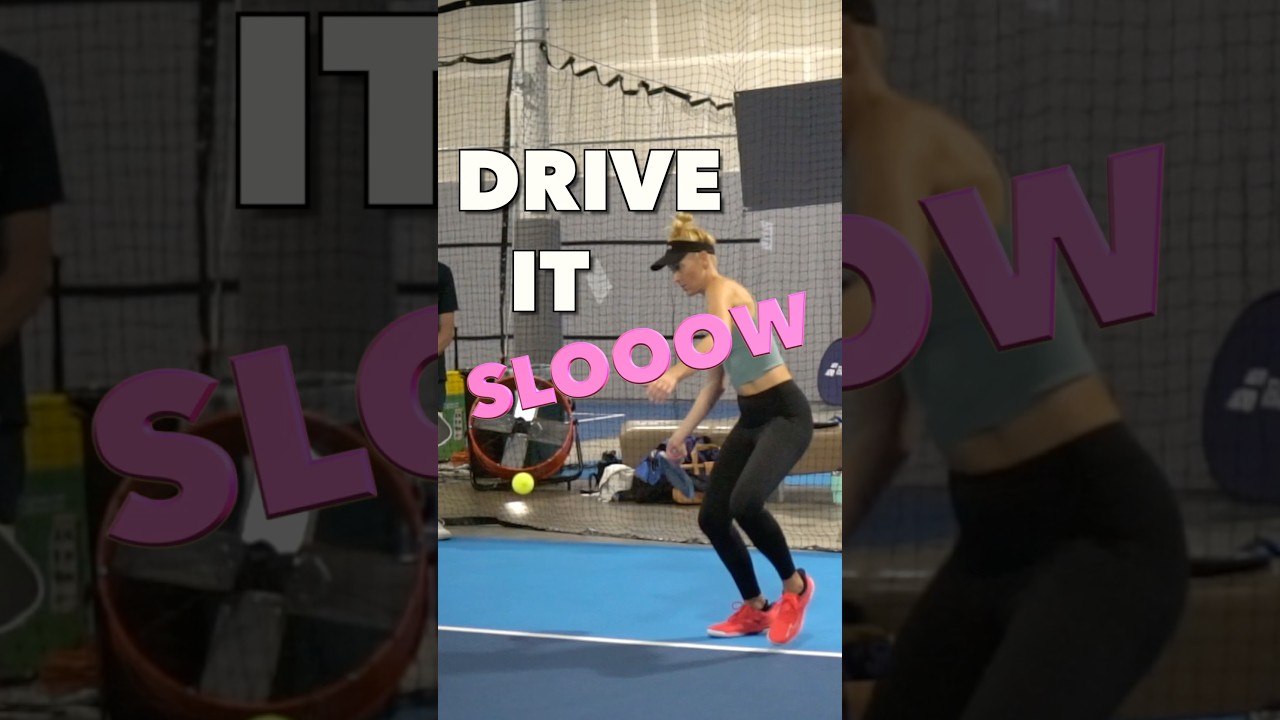
Drives are the riskiest shot in your bag for a reason. You're generating the most racquet head speed on the court, so any flaw in your paddle face gets magnified.
That's exactly why smart players treat the drive versus the drop as a real decision, not a reflex.
If your opponent is deep and your depth control is shaky, a drive is the wrong call, and the truth about looking at the ball matters more than most players realize.
A drop is the safer bet, and it keeps the ball in the building.
💡
Need some new pickleball gear? Get 20% off select paddles, shoes, and more with code THEDINK at
Midwest Racquet SportsThe Third Shot Drop Problem: Where Depth Perception Fails
Here's a direct answer before the detail: a huge share of out of bounds errors on the third shot happen because players misjudge how much net clearance they actually have.
They see the kitchen line, panic, and muscle the ball to make sure it clears the net, and it sails long instead.
The same panic shows up when you're pulled wide off the non-volley zone.
Quick definition for anyone newer to the term: a third shot drop is the shot the serving team hits after the return, meant to land softly in the opponent's kitchen so you can move forward safely.
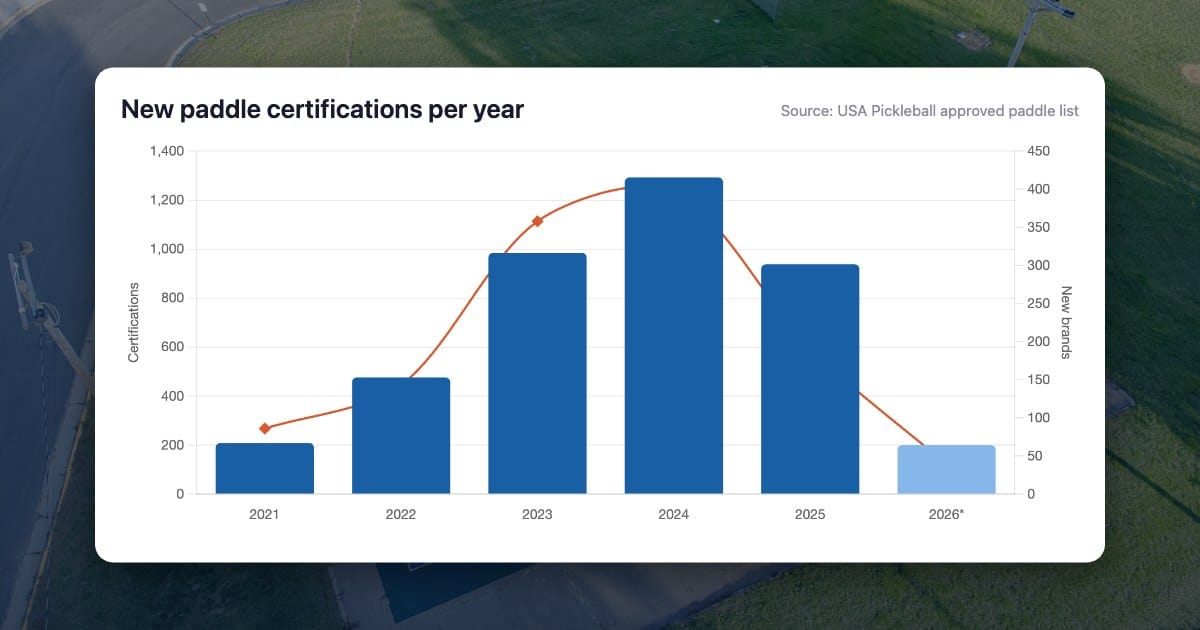
The Pickleball Paddle Boom Isn’t Over, but It Is Evolving
We analyzed more than 4,000 USAP-approved paddles over a five-year span. Here are five trends that point toward a maturing, more consumer-friendly market.
 The Dink PickleballAlex E. Weaver
Miss the depth, and you're either feeding a smash or hitting long.
Players who struggle here usually need reps, not theory. Working through how to respond to the perfect drop from both sides builds touch that drilling alone won't.
And when you're deciding between drive, drop, or reset from the baseline, three options from the baseline breaks down when each one makes sense.
According to USA Pickleball's official rulebook, the court runs 44 feet long with a 7-foot non-volley zone on each side, leaving less room for error on a hard-driven third shot than most players assume.
Less margin than you think, more consequence for guessing wrong.
Knowing exactly how to position yourself at the kitchen line makes that margin work for you.
Court and boundary specifications are laid out in the current USA Pickleball rulebook.
Why Hitting Pickleball Out of Bounds Gets Worse Under Pressure
Under pressure, your body does something predictable. Adrenaline shows up, grip pressure climbs, and fine motor control gets worse when you need it most.
That's why the exact same swing that looks smooth in warmups turns into a fence-finder at match point.
Calling a strategic timeout is a legal way to stop the bleeding.
The fix isn't more power. It's less. Dial back your effort on pressure points instead of muscling through them, and your out of bounds errors drop fast.
Compare power shot mechanics with the hardest shot in the sport: even full-speed shots rely on timing, not brute strength.
Simplifying the Third Shot Drop: Fix These 5 Common Mistakes
The third shot drop becomes consistent when players stop overthinking mechanics and focus on smart positioning and progression
 The Dink PickleballThe Dink Media Team
Is Your Serve Sending the Ball Long Too?
Yes, probably, for the same root cause. Serves that sail long usually come from an open paddle face and too much backswing.
Learning to back off on backspin instead of overspinning every serve keeps more serves in bounds.
USA Pickleball's serving rules require the ball to land within the opposite service court, so there's no cushion for a serve that drifts even a few inches past the line.
Related term worth knowing: an unforced error is any mistake that isn't caused by your opponent's shot quality, like a serve that misses long with no pressure applied.
Most out of bounds errors on serve fall into this category, which makes them the easiest mistakes to fix.
Start with weaponizing your serve the right way, then work on serving near the kitchen for placement instead of pace.
Depth and placement beat raw speed almost every time a rec player tries to blast one past an opponent.
Fix These Pickleball Serve Mistakes Now
Almost every recreational pickleball player makes the same serve mistakes without realizing it. Fix these common pickleball serve mistakes and start winning more free points immediately.
 The Dink PickleballThe Dink Media Team
Return of Serve and Dinks: The Other Out-of-Bounds Traps
The direct answer here: returns and dinks go long for the opposite reason drives do. Instead of too much power, it's usually too much lift or a paddle face that opens up trying to add safety margin near the net.
On the return, players often overcompensate for depth and end up floating the ball past the baseline.
Dialing in how to make the most of your return of serve and knowing exactly where to return serve fixes more long returns than any power adjustment ever will.
Dinks have their own version of this problem.
A dink that pops up and sails long usually means the paddle face opened on contact, the same flaw showing up in a slower shot.
Turning mediocre dinks into winners starts with flattening that contact point, and running through pickleball's hardest dinking drill builds the touch that stops the pop-up before it happens.
Pickleball Return of Serve: Why It Matters More
Most pickleball players obsess over their serve, but the truth is your pickleball return of serve might be even more important. Here’s why depth, placement, and consistency matter more than power.
 The Dink PickleballThe Dink Media Team
Here's a direct answer: bad footwork forces bad contact points, and bad contact points send the ball long.
If you're reaching or off balance, your paddle face is almost never square, no matter how many hours you've drilled your swing.
Players who consistently miss long are often standing in the wrong spot to begin with. That's a positioning problem before it's a mechanics problem.
Reading good shot or bad positioning alongside mid-court pickleball tips will show you how often the two get confused.
Doubles teams have an extra layer here.
Poor coverage after the third shot leads to rushed, off-balance contact, which is why T and sideline placement strategy and smart fourth shot court coverage matter as much as any stroke.
Rotating sides during a match? Understanding the advantages of playing both sides of the court keeps your positioning consistent.
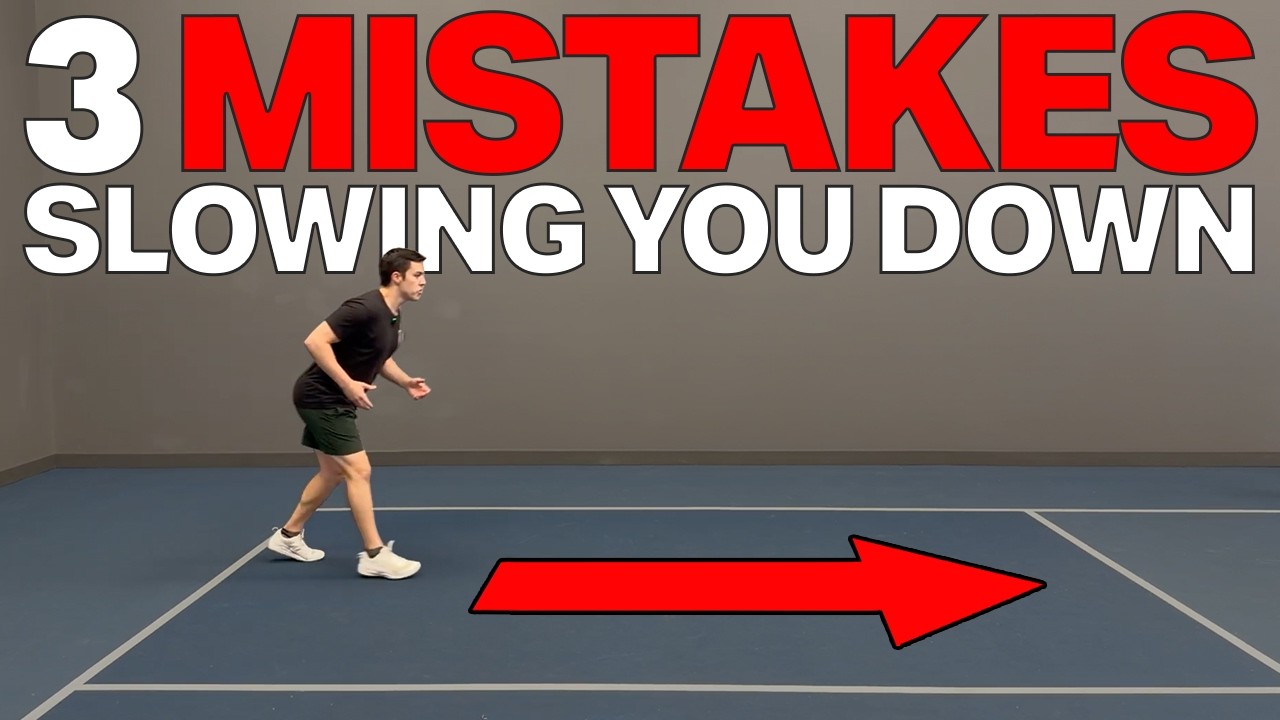
3 Pickleball Footwork Mistakes That Are Losing You Points
Most players lose points to their feet, not their paddle. Coach Ty Woody shares the pickleball footwork fixes that cover the court in two to three steps.
 The Dink PickleballThe Dink Media Team
Drills That Fix Why Hitting Pickleball Out of Bounds Keeps Happening
You don't fix why hitting pickleball out of bounds keeps happening by thinking about it harder. You fix it with reps that isolate the flaw.
A few worth adding to your practice routine:
- Figure-8 paddle drill. The figure-8 drill trains a compact, repeatable paddle path, which is the single biggest fix for a paddle face that opens under speed.
- Solo wall reps. Solo drills you can run by yourself let you groove contact point without worrying about a partner's inconsistent feed.
- The fridge and toaster drill. This one sounds silly and works anyway. The fridge and toaster drill trains touch and control in tight spaces where power has no business showing up.
- Shot selection drilling. Pair mechanics work with decision-making through advanced shot selection drills so you're not just hitting cleaner, you're choosing the right shot in the first place.
Beginners chasing consistency should also revisit the fundamentals in three tips every beginner needs to know and simply get the most out of every minute of court time instead of playing full games where the same flaw repeats unchecked.
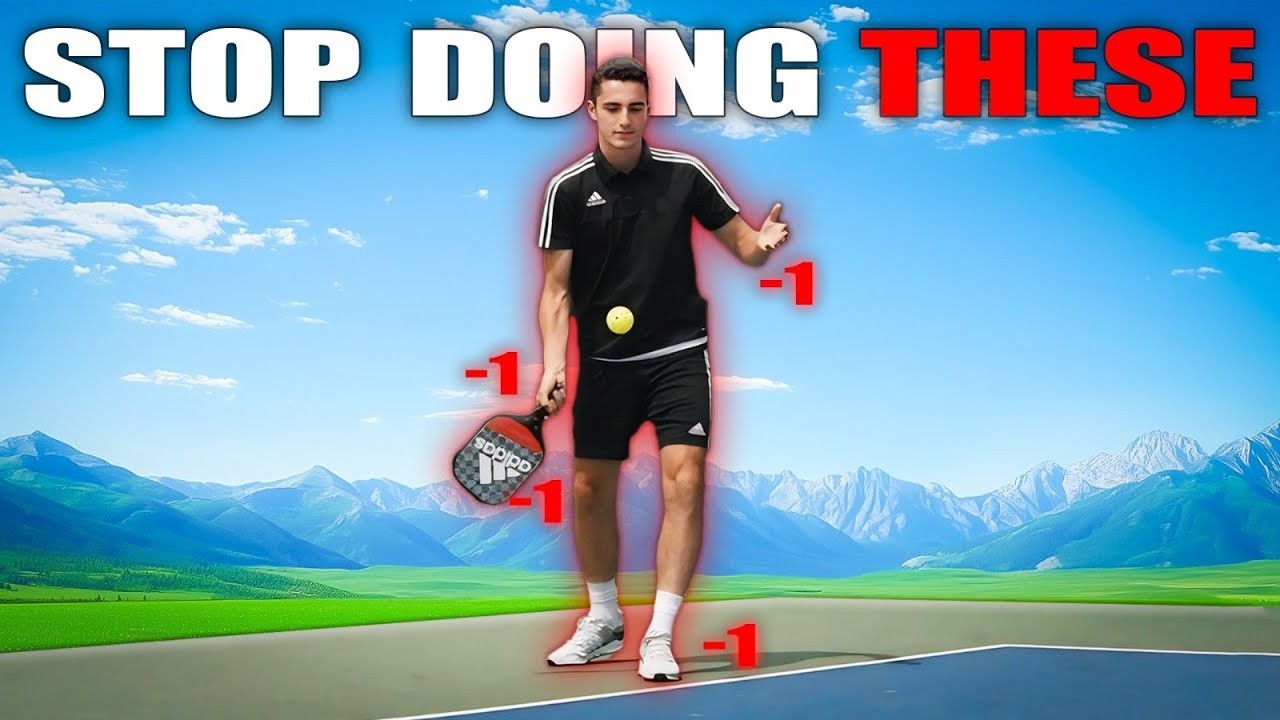
Fix These Pickleball Serve Mistakes Now
Almost every recreational pickleball player makes the same serve mistakes without realizing it. Fix these common pickleball serve mistakes and start winning more free points immediately.
 The Dink PickleballThe Dink Media Team
Key Takeaways
Fix the paddle face, fix the depth read, fix the pressure response, and why hitting pickleball out of bounds happens to you specifically stops being a mystery.
- Why hitting pickleball out of bounds happens usually traces back to an open paddle face, not lack of talent or bad luck. Adding topspin control work to your practice routine helps keep that face square under speed.
- Depth misjudgment on the third shot drop causes more long balls than any other single moment in a rally.
- Pressure tightens your grip and opens your paddle face, so dial back effort on big points instead of swinging harder. Working through a champion mindset helps more than any swing tweak on match point.
- Footwork and positioning determine your contact point, and a rushed contact point almost always sails long.
- Isolated drills fix out of bounds errors far faster than simply playing more matches.
💡
Heads up: hundreds of thousands of pickleballers read our free newsletter.
Subscribe herefor cutting edge strategy, insider news, pro analysis, the latest product innovations and more.
Frequently Asked Questions
Why do I keep hitting the pickleball long even when I'm not trying to hit hard?
An open paddle face at contact is the most common cause, even on soft shots. If your wrist breaks backward or your grip tightens, the face tilts upward and sends the ball past the baseline regardless of how much power you actually used. Staying in a pressure zone mindset instead of a panic mindset keeps that grip loose.
Why does my third shot drop keep going out of bounds?
Most players either overcompensate for net clearance or misjudge depth, muscling the ball long instead of letting it drop into the kitchen. Slowing your swing and focusing on a soft, flat contact point fixes this faster than adding more topspin.
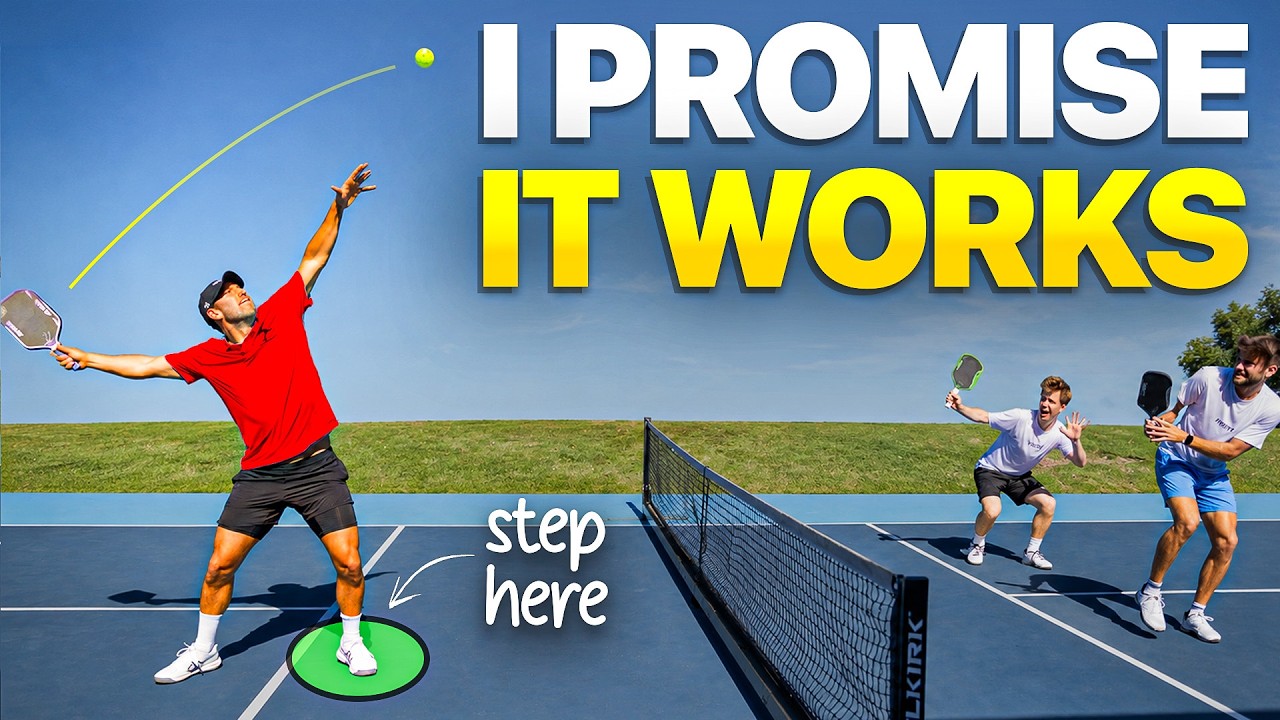
3 Pickleball Overhead Shots That Turn Lobs Into Easy Points
The pickleball overhead does not have to be a scramble. Learn the three-shot system that handles any lob safely and turns it into offense.
 The Dink PickleballThe Dink Media Team
Is hitting out of bounds more about power or technique?
Technique, almost every time. A flat, compact swing with a square paddle face at contact will consistently keep the ball in bounds, while raw power without that control just sends errors further past the line. That's why it pays to focus on your strengths instead of your weaknesses once your mechanics are solid.
Why do my serves and returns go long specifically?
Serves and returns go long for slightly different reasons. Serves usually suffer from an open paddle face and excess backswing, while returns typically go long from over-lifting the ball to add safety margin near the net.
Yes, and it's one of the most overlooked causes. Reaching for a ball or getting caught off balance forces an inconsistent contact point, which throws off your paddle face angle even if your swing mechanics are otherwise sound. Building part two of that champion mindset includes staying balanced when a rally speeds up.
Anuncie Aqui / Advertise Here
Sua marca para o mundo Pickleball! / Your brand for the Pickleball world!



 English (US) ·
  Portuguese (BR) ·