 English
  Spanish
  Portuguese
  German
  Italian
  Japanese
  French
  Polish
  Russian
  Netherlands
  Hungarian
  Turkish
  Videos
  Thedink Pickleball

Most forehand drive problems in pickleball aren't about power, they're about spacing and contact point. Here's the exact system to fix both.
Your forehand drive in pickleball has plenty of power. That's not the problem.
The problem is that half the time it sails long, and the other half it clips the net, and you're not sure why the results are so different from swing to swing.
That inconsistency almost always traces back to two things: where you're contacting the ball relative to your body, and how your footwork is setting you up before you even swing.
This breakdown comes from a full coaching session between Ed Ju and Dr. Michael Oksen, widely known as The Pickleball Chiropractor.
What follows is the exact system they worked through together, and it's the same system that will fix your drive.Love pickleball? Then you'll love our free newsletter. We send the latest news, tips, and highlights for free each week.
The Real Reason Your Drive Is Inconsistent
Most players think their drive problems come from grip, swing speed, or wrist action. Those things matter, but they're not the root cause of height variance.
According to Dr. Oksen, the biggest culprit is late contact.
You might be spaced perfectly in terms of distance from the ball, but if that ball has traveled past your ideal contact window, you're hitting it from behind your body.
That changes everything.
10 Ways to Beat a Lefty in Pickleball
Lefty pickleball players have real structural advantages, but they also have specific weaknesses most players never target. These 10 tips from Zane Navratil and Max Freeman show you exactly where to attack.
 The Dink PickleballThe Dink Media Team
Think about it this way: contacting the ball out in front of your lead knee is an aggressive, powerful position.
Contacting the ball even six inches behind that point produces a completely different angle and result.
This is why you can hit two drives that feel identical and get two completely different outcomes. The swing didn't change. The contact point did.
You Need to Think About Spacing in Two Axes
Here's where most forehand drive instruction gets incomplete.
Coaches talk about staying an arm's length from the ball, which is spacing on the side-to-side axis. That's real and important.
But forward and backward spacing, the axis running from your chest toward the net, matters just as much. Dr. Oksen calls this the second axis, and it's the one most players completely ignore.
You need to be asking two questions before every drive:
- Am I far enough away from the ball on the lateral axis so my arm has room to extend?
- Am I behind the ball on the forward axis so I can contact it out in front of my body?
If either axis is off, your drive suffers. It's not enough to nail one and ignore the other.
This is also the key to understanding when to drive versus when to drop. If your spacing is poor on either axis, the drop is the smarter call, regardless of ball height.
💡
Need some new pickleball gear? Get 20% off select paddles, shoes, and more with code THEDINK at
Midwest Racquet SportsBall Height Doesn't Decide the Shot. Spacing Does.
This is where Dr. Oksen pushes back on conventional advice, and he's right to do it.
You've probably heard "if the ball is high, drive it" and "if the ball is below your knee, drop it." That's an oversimplification that will hurt your game.Dr. Oksen puts it directly: some of your worst drives come off high balls when you're not spaced well.
Some of your best drives come off low balls when your spacing is exceptional.
The actual decision framework looks like this:
- Check your spacing first. Are you behind the ball on the forward axis? Is there room on the lateral axis to swing freely?
- Use your off hand as a gauge. If you can't get your non-paddle hand up to the level of the incoming ball, you shouldn't be driving. Drop it instead.
- Match your contact point to the shot. A drive is an aggressive shot. It demands an aggressive, out-in-front contact point. If the ball has gotten inside that point, you've already lost the drive.
This is one of the habits that keeps intermediate players stuck. They're making shot selection based on ball height alone, when spacing should be the first filter.
Pickleball Shot Selection: Ball Height & Court Positioning
Advanced pickleball means constantly analyzing the height of the ball and the court positioning off all four players in real time – and keeping this one rule sacred: just because you can hit a more aggressive shot doesn’t mean you should
 The Dink PickleballEric Roddy
Why Is Your Off Hand So Important on the Forehand Drive?
The off hand, meaning your non-paddle hand, is your built-in spacing tool. Most players treat it like dead weight.
Dr. Oksen uses a simple drill called the toss and catch. You toss the ball with your off hand, let it drop, and catch it again.
The point is to train your off hand to stay engaged and track the ball out in front of your body.
Ed Ju described the before-and-after clearly: before working with Dr. Oksen, his left hand just hung there. He had no spatial awareness of where it was or what it was doing.
After focusing on the catch, his contact point became automatic.
When your off hand is tracking the ball, your contact point follows. When it's not, the ball sneaks behind you and your drive falls apart.
If you want to see this same principle applied to the third shot, check out how to hit a forehand third shot drop, where off-hand engagement plays the same critical role.
Your Forehand Dink Needs Work: Here’s a 5-Minute Fix from a Pickleball Pro
Sometimes the biggest pickleball improvements come from small, focused adjustments rather than a complete overhaul
 The Dink PickleballThe Dink Media Team
The C-Shape Takeback and Why a Flat Swing Is Killing Your Drive
If you're playing with an eastern or western grip, meaning a more closed face, and you're also taking the paddle back flat, you're setting yourself up to miss flat every time.
Dr. Oksen calls it the C-shape takeback.
The paddle should loop back and down in a C shape, which loads the swing below the ball and creates the upward angle you need to drive with topspin and control.
A flat takeback with a closed grip produces a flat swing. A flat swing on a forehand drive means the ball goes straight at the net or sails long with no margin.
The fix is straightforward: sink below the ball on the takeback, let the paddle drop into a C, and swing up through contact.
This is how you create instant topspin on your drive without changing your grip.
How to Hit a Forehand in Pickleball: Grip & Swing
Knowing how to hit a forehand in pickleball is the foundation for every aggressive shot in your arsenal. Master the grip, swing path, and follow-through and you’ll own the baseline.
 The Dink PickleballThe Dink Media Team
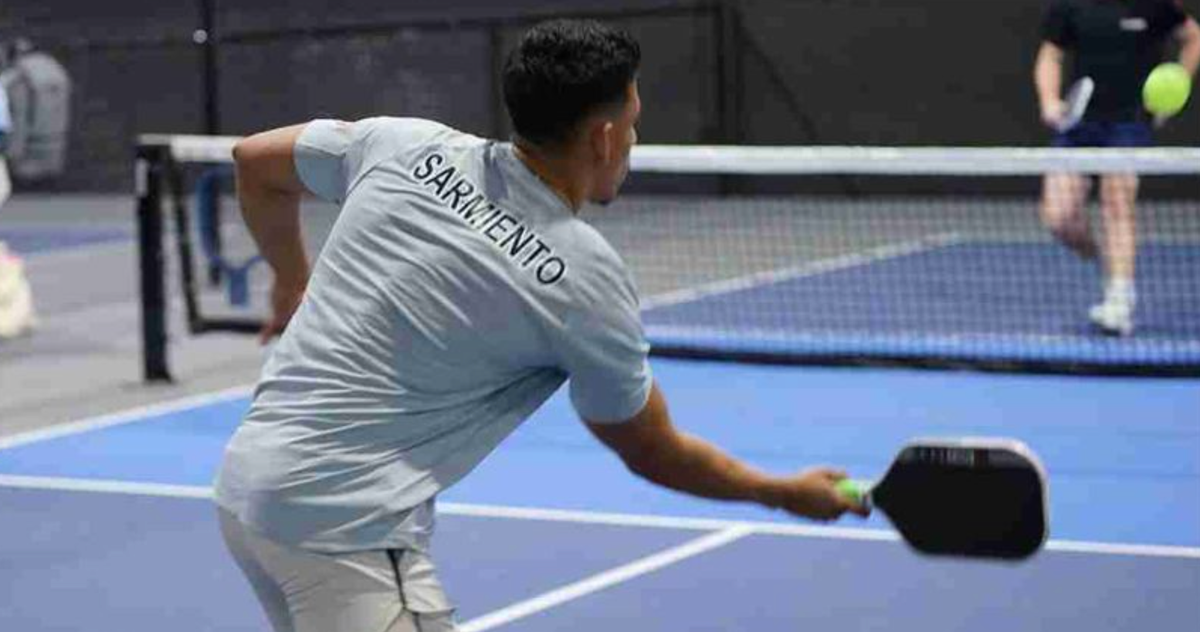
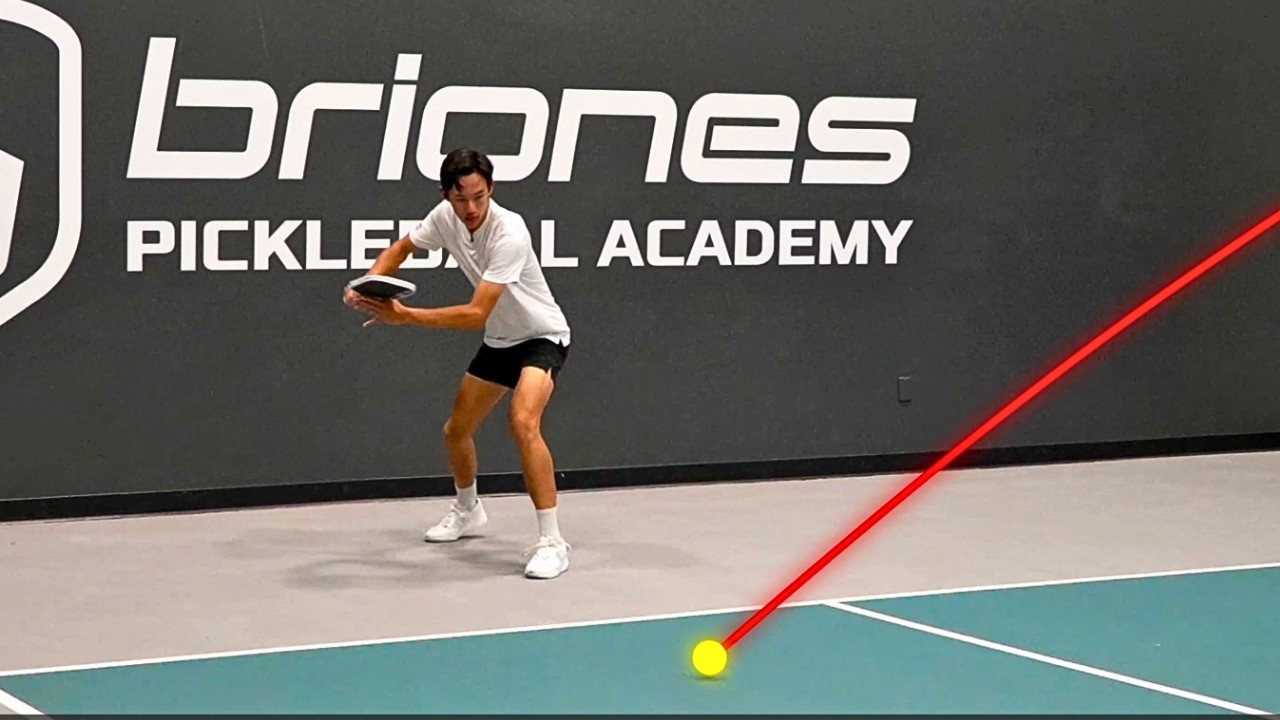
Most players, when they see a ball to drive, take a lateral step toward it first. That feels natural. It's also wrong.
When you step laterally toward the ball, you're closing the space you need to swing. You're moving to the ball instead of around it.
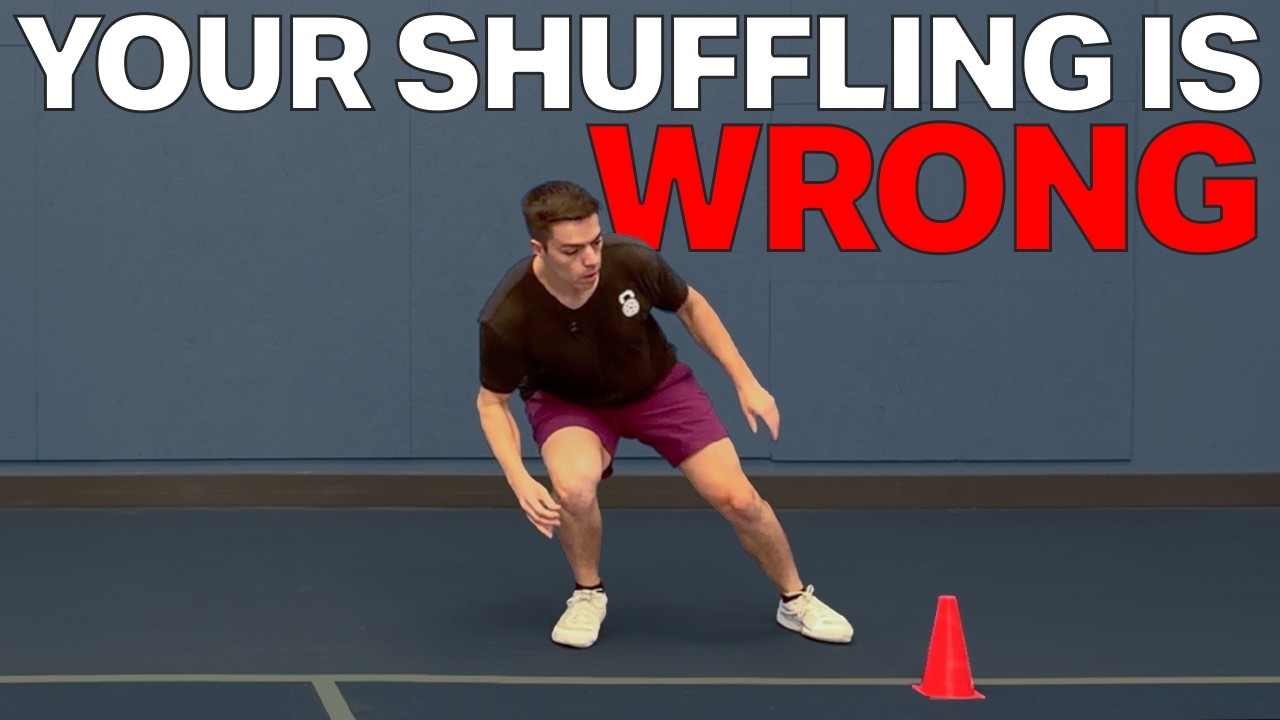
Dr. Oksen's footwork sequence is built around one principle: create space around the ball before you attack it. The four-step pattern looks like this:
- Depth step. Step back with your paddle-side foot, behind your off-side foot. This creates depth.
- Width step. Step out with your off-side foot at roughly a 45-degree angle. This creates width and closes your body slightly toward the ball.
- Collect. Bring your feet together so your weight is centered and loaded.
- Shuffle. Move into your hitting position with the ball now in front of you, not behind you.
This sequence keeps the ball in front of your body on both axes.
It's the opposite of what most players do instinctively, and that's exactly why their drives keep getting caught at the hip or behind the body.
For players who struggle with shuffling footwork mistakes, this depth-first approach is often the exact correction they've been missing.
Ed's natural athletic background in wrestling gave him strong lateral movement but limited backward movement.
His drives were consistently well-spaced side to side but regularly late on the forward axis. The footwork fix addressed both problems simultaneously.
3 Shuffling Mistakes Ruining Your Pickleball Footwork
Most players think their hands are the problem when it’s really their feet. These three shuffling mistakes quietly wreck your pickleball footwork, and each one has a simple fix.
 The Dink PickleballThe Dink Media Team
Go Meet the Ball Once Your Takeback Is Set
There's a subtle timing issue that even players with good spacing fall into. They load the takeback early, which is correct, and then they wait.
Waiting kills your drive. Once your takeback is loaded, go attack the ball. Don't stand there holding potential energy.
Convert it.
Dr. Oksen cued Ed directly on this: "Start your swing a second earlier than you're comfortable with."The result was immediately cleaner contact and more power, because the paddle was moving through the ball instead of waiting for it.
This connects to something mental as well. Dr. Oksen calls it predator mentality versus prey mentality.
Predators want the ball.
They're thinking "give me that, I want it." Prey mentality is "oh no, here it comes, don't mess up."Your footwork and your swing timing both reflect which mode you're operating in.
If you want to build this kind of aggressive, consistent shot-making approach, reading about drive techniques that force easy pop-ups will show you how to take that predator mindset all the way through your shot patterns.
Master the Forehand Dink: The Complete Technique Guide for Pickleball Players
Pro Ryan Fu walks through the mechanics, positioning, and strategic timing of one of pickleball’s most underrated weapons.
 The Dink PickleballThe Dink Media Team
How to Practice This Without a Coach
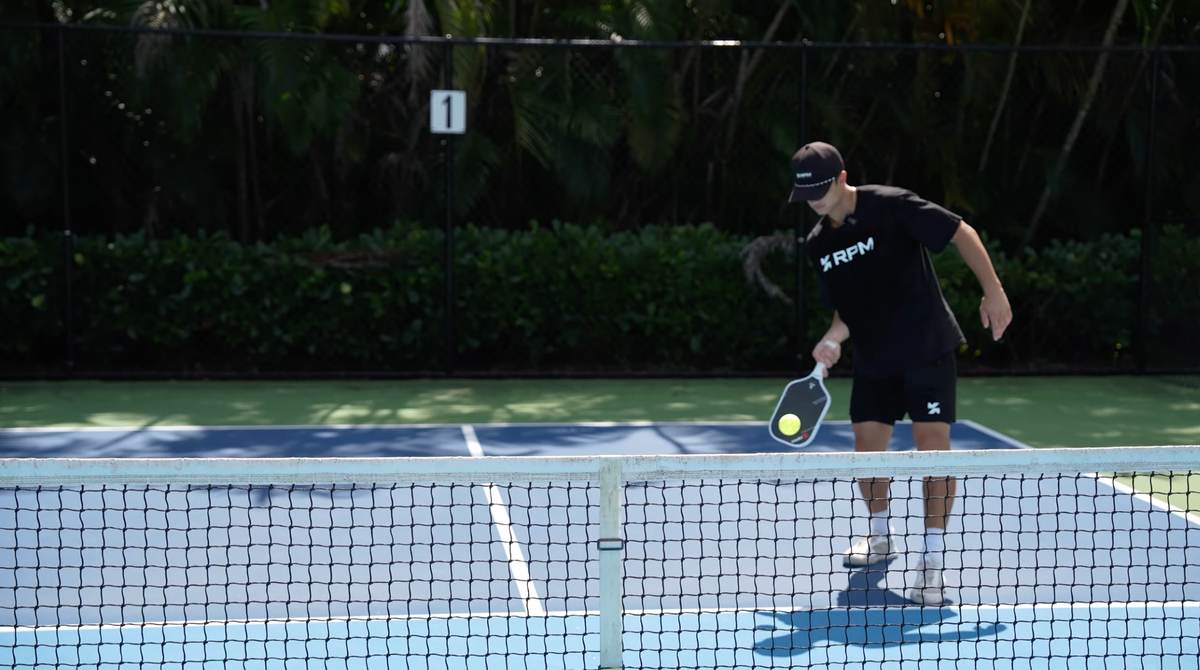
You don't need a hitting partner to work on these concepts. Start with the toss and catch drill Dr. Oksen uses.
Hold the ball with your off hand, extend it out in front of your lead knee, and drop it. Let it bounce. Catch it again with the same hand.
Repeat until catching the ball at that exact point in front of your body feels completely natural.
Once that's solid, add footwork. Practice the depth, width, collect, shuffle sequence with no ball at all.
Just reps of the movement until it stops feeling foreign and starts feeling automatic.
Then combine both: toss the ball, execute the footwork, and make contact with the ball at that same out-in-front point you've been training.
Even with limited court time, you can build these mechanics before you ever step onto a live court.
The mechanics covered here also make a real difference on the shots every 4.0 player needs to reach 4.5.
The forehand drive is one of the core weapons at that level, and spacing is what separates the players who use it effectively from the ones who keep making gifts to the other team.
For more on reducing the errors that show up even when your mechanics are solid, understanding the causes of unforced errors is a natural next step.
💡
Heads up: hundreds of thousands of pickleballers read our free newsletter.
Subscribe herefor cutting edge strategy, insider news, pro analysis, the latest product innovations and more.
Frequently Asked Questions
Why does my forehand drive in pickleball keep going long?
A forehand drive that goes long is almost always a contact point problem, not a power problem. You're likely contacting the ball too far behind your body, which changes the angle of your swing and sends the ball up and out. Focus on getting your off hand to the level of the ball and making contact well in front of your lead knee.
When should I drive versus drop in pickleball?
The decision should be based on your spacing, not the height of the ball. If you can get behind the ball on the forward axis and have room to swing on the lateral axis, driving is a good choice. If your spacing is compromised, drop the ball regardless of how high it is.
What is the C-shape takeback in pickleball?
The C-shape takeback is a looping, downward paddle path on the backswing that positions the paddle below the ball before contact. It's the opposite of a flat takeback. It allows you to swing upward through the ball and generate topspin, which is especially important if you play with a closed grip.
How does footwork affect my forehand drive consistency?
Your footwork determines whether the ball ends up in front of you or behind you at contact. A lateral first step closes space and often leads to late contact. A depth-first step, moving back before moving out, keeps the ball in front of your body so you can attack it aggressively at the right contact point.
What does the off hand actually do on a forehand drive?
Your off hand acts as a spatial reference point, tracking the ball and telling your body where to be at contact. When your off hand is extended toward the ball, your contact point stays out in front. When it hangs passive at your side, the ball tends to drift past your ideal contact window before you swing.
Anuncie Aqui / Advertise Here
Sua marca para o mundo Pickleball! / Your brand for the Pickleball world!




 English (US) ·
  Portuguese (BR) ·