
 English
  Spanish
  Portuguese
  German
  Italian
  Japanese
  French
  Polish
  Russian
  Netherlands
  Hungarian
  Turkish
  Videos
  Thedink Pickleball

Most players try to fix their backhand dink by trying harder. The real fix is simpler: four mechanics that eliminate unnecessary variables. Here's what to change.
If your backhand dink keeps breaking down under pressure, you're not alone. It pops up.
It floats wide. The more you think about it during a rally, the worse it gets.
The problem isn't effort. It's mechanics.
Four specific mechanics that most amateur players get wrong, and that have nothing to do with how hard you're trying.
Fix them, and your kitchen consistency jumps immediately.
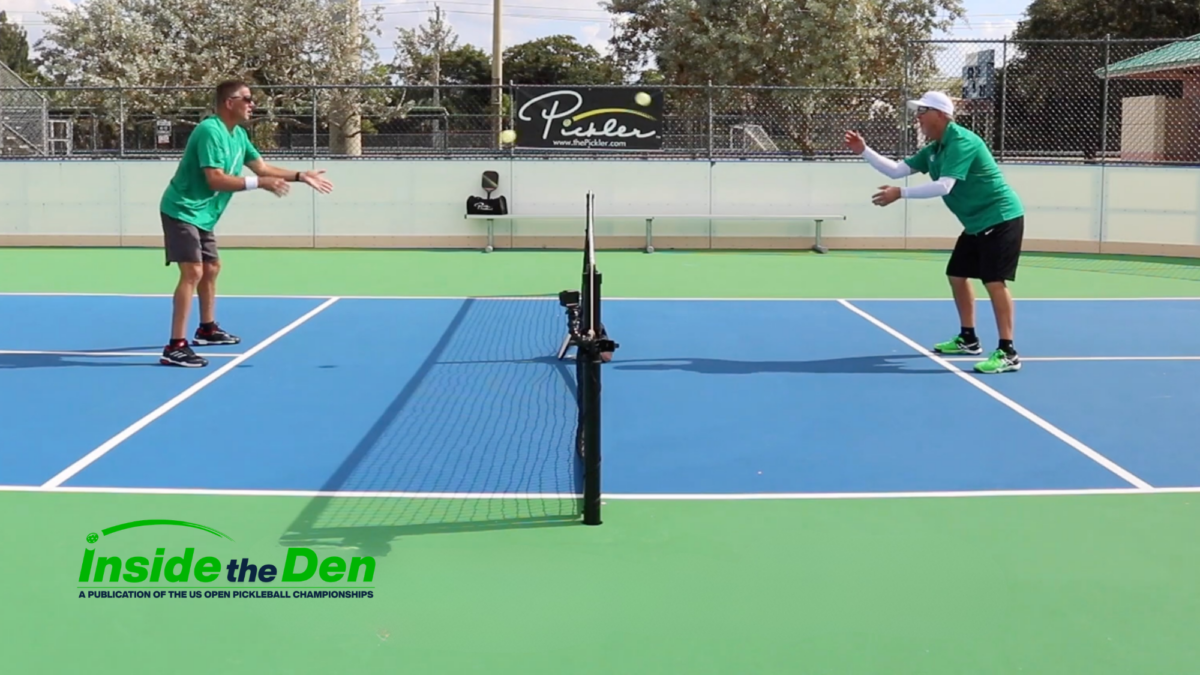
Pro pickleball player Jack Munro breaks down each one in detail in the video below, filmed with a drill partner at the kitchen line so you can see exactly what correct mechanics look like in real time.
Love pickleball? Then you'll love our free newsletter. We send the latest news, tips, and highlights for free each week.
Tip 1: Hinge Your Wrist for a Stronger Backhand Dink
What Wrist Position Does to Your Backhand Dink
This is the number one culprit behind inconsistent backhand dinks, and it's almost entirely invisible to the player making the error.
When you hold the paddle with a neutral, handshake wrist, the face becomes flimsier.
There's more flex in the structure, less stability on contact, and your effective sweet spot shrinks.
The fix: hinge your wrist upward, as if you're about to throw an axe.
That single adjustment locks the paddle face into a stable position and makes your sweet spot meaningfully larger.
Munro demonstrates this with his drill partner, Eli, showing the difference between a neutral wrist and a hinged one: the neutral wrist wobbles visibly under contact; the hinged wrist holds firm.
Here's something worth knowing: you don't need to chase spin on a backhand dink.
JOOLA and Proton Agree to Settle Paddle Core Patent Dispute
Proton will continue to sell the affected products through the summer, all of which now include a “Powered by JOOLA” sticker on the packaging.
 The Dink PickleballAlex E. Weaver
With an open paddle face and the wrist hinged up, the ball picks up natural backspin when you push it through.
"I'm not even trying to slice the ball. It's more of a push, yet the ball still has a lot of backspin," Munro explains.Your goal is to minimize variables, not maximize spin.
The wrist-drop technique does exist, but it's situational. Ben Johns uses it when a ball gets rolled wide and he needs to short-hop it back defensively.
Players also drop the wrist on aggressive roll dinks, which you'll see more often in women's doubles.
For standard kitchen exchanges, wrist up is the default.
If you want to understand the full range of what this shot can do, our breakdown of the backhand topspin dink covers the more advanced variations.
What actually moves when you execute a correct backhand dink? Your shoulder and your arm.
The wrist stays locked. Backhand mechanics coaches consistently teach the same principle: generate the shot from your body and shoulder, not from wrist action.
Wrist movement is where errors come from.
Understanding why professional pickleball players abandoned the slice shot in 2025 reinforces exactly why clean, low-variable mechanics win at the kitchen.Backhand Dink Placement: Follow Through Toward Your Target
The second fix is about direction.
This is what separates players who disguise their dinks from players who simply hope the ball ends up somewhere useful.
Wherever you want the ball to go, your paddle should follow through in that direction. Crosscourt shot: follow through crosscourt.
Down the line: follow through down the line. Middle: push through middle.
Munro demonstrates this with three distinct shots and three distinct follow-through paths, and the difference is immediately obvious.
The error most players make is introducing a second plane.
They want to go crosscourt, so they swing slightly that way, but their body is still rotating down the line.
"It's very difficult to get control when there's multiple planes in action," Munro says.You are effectively asking your body to solve two competing directions at once.
Think of your kitchen line angle strategy as a single vector: your target direction and your paddle's follow-through direction need to match.
Your shoulder, your arm, and your paddle face all pointing the same way at contact and through the shot.
This is one of the clearest breakdowns covered in the 4-step system to win more pickleball games in 2026.
This applies to your forehand dink too, not just your backhand dink. The principle is universal.
Once you've built the foundational habit, you can begin adding misdirection by faking body movement while redirecting the paddle.
But that's advanced territory. Get the basic pattern clean first, because faking someone out only works if your straight shot is already reliable.
💡
Need some new pickleball gear? Get 20% off select paddles, shoes, and more with code THEDINK at
Midwest Racquet SportsTip 3: Shorten Your Backswing for a More Reliable Backhand Dink
Why Your Backhand Dink Needs a Shorter Backswing
Munro has a simple test: can you see your paddle in your peripheral vision while you're watching the ball?
If your paddle disappears behind you, your backswing is too big.
"Every single shot in pickleball, you should see your paddle in your backswing, in your peripheral vision when you're also looking at the ball," Munro says. "This applies for serves, ground strokes, drops, dinks, speed ups."The kitchen is 7 feet away. There is no need for a large backswing.
A big backswing creates two distinct problems:
- You lose the visual relationship between ball and paddle, making timing unpredictable
- When your opponent speeds up or rolls an aggressive ball, you get mistimed and dump the shot into the net because the ball has already gotten behind you
The fix: set your paddle to the side of your body, not behind it. Ball and paddle both stay in your sight line.
From that position, you can handle pace, spin, and awkward bounces because you're always in front of the shot.
Keeping the backswing short also connects directly to pickleball footwork mistakes that compound the problem.
When you lean to reach a ball instead of stepping, your backswing naturally grows to compensate.
Active feet and a short backswing reinforce each other. One makes the other easier.
Master the Two-Handed Backhand Dink Like a Pro
Topspin is taking over pickleball. If you’re still relying solely on slice dinks, you’re playing too much defense. And nobody wins tournaments by playing defense.
 The Dink PickleballThe Dink Media Team
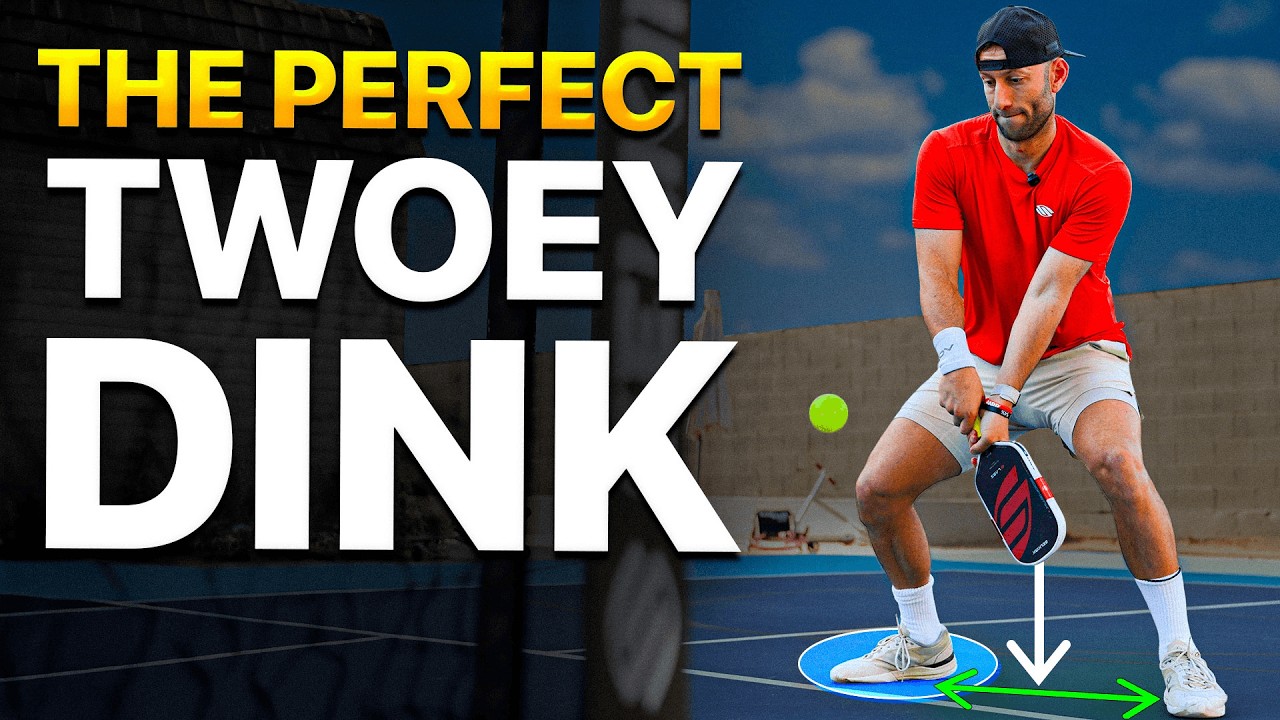
Munro says he covers this in every video because he still sees players ignoring it on amateur courts.
The principle is simple: when a ball comes to the left side of your body, pull your left foot back. Ball to the right side, pull your right foot back.
That one-foot adjustment keeps your chest facing the net. And the player whose chest is facing the net controls the rally.
Munro demonstrates this with Eli applying pressure: "My chest is facing towards the sideline, but his chest is always facing towards the net. This is why he's able to dictate and I'm getting cooked."The alternative you see constantly on recreational courts is leaning. Short hop, lean, short hop, lean. It saves energy, but it costs you position.
When you short-hop and lean, your head goes down, and the ball gets behind you. When your opponent hits a pace ball at that moment, you're stuck.
Good kitchen positioning means you never need to reach. One foot moves, chest stays open, paddle stays ready in front of you.
This is one of the clearest visible differences when you watch 4.0 versus 5.0 players in kitchen exchanges: higher-level players move their feet constantly but efficiently, with each step anchored and purposeful.
How to Create Pickleball Content: Advice from Chris Olson
Popular paddle reviewer Chris Olson gives some tips: Check your ego at the door, find your niche, stop striving for perfection, and just start doing it already.
 The Dink PickleballAlex E. Weaver
The modern pickleball strategies winning in 2026 make this footwork discipline a non-negotiable at any serious level.
The drill Munro recommends is a figure-eight pattern: your partner moves you side to side, and every ball that comes to your left gets your left foot back, every ball to your right gets your right foot back.
Move one foot only. The moment you move both, your chest turns to the sideline and you'll feel the loss of control immediately.
Run this drill until the anchor foot fires automatically, because in a real match you don't have time to think about it.
Building a complete kitchen game means combining these mechanical habits with deliberate strategy.
Dinking with a plan and moving your opponent is what creates real pressure at the net.
The anchor foot is what makes that possible: you can't dictate a rally while stumbling out of position.
See our guides on advanced dinking patterns and how to stop getting attacked at the kitchen for what to build on top of these foundations.
If you want to go deeper on the full skill set required to level up, the 5 shots you must master before 2026 is a natural companion read.💡
Heads up: hundreds of thousands of pickleballers read our free newsletter.
Subscribe herefor cutting edge strategy, insider news, pro analysis, the latest product innovations and more.
Frequently Asked Questions
What is the correct wrist position for a backhand dink?
The correct position is wrist hinged upward, not neutral or dropped. This locks the paddle face, creates more stability on contact, and enlarges your effective sweet spot. Most errors on the backhand dink trace back to a neutral or floppy wrist that introduces movement at the wrong moment. The wrist-down technique exists for specific defensive and aggressive shots, but it's not your default.
Why do I keep popping up my backhand dink?
Popping up almost always comes from too much wrist involvement or a follow-through that crosses the intended target line. If you're flicking through the shot, your wrist is moving when it shouldn't be. A short backswing and a push with the arm rather than a swipe with the wrist will fix most cases. For a complete breakdown, see our guide on why you pop up dinks and how to correct it.
How do I make my backhand dink more consistent under pressure?
Consistency under pressure comes from reducing variables, not adding them. Hinge the wrist, shorten the backswing, follow through toward the target, and use the anchor foot to keep your chest open to the net. When the mechanics are automatic, the shot holds up when the rally accelerates. Run the figure-eight footwork drill regularly so the anchor foot fires without thought.
The anchor foot is the same-side foot you pull back when a ball comes to that side of your body: ball to your left, left foot back; ball to your right, right foot back. The goal is to keep your chest facing the net throughout a dink exchange. Moving both feet, or leaning instead of stepping, turns your chest toward the sideline and takes you out of position for the next shot. Pro footwork drills can accelerate how quickly this becomes automatic.
Should I use topspin on my backhand dink?
Not as your default. A standard backhand dink is a push, not a roll. With the paddle face naturally open and the wrist hinged up, the ball picks up backspin on its own without you actively slicing. Aggressive roll dinks, where you drop the wrist and drive through the ball, are a separate and more advanced shot. Build the clean fundamentals first, then add the backhand topspin dink as a weapon once your baseline mechanics are reliable.
Anuncie Aqui / Advertise Here
Sua marca para o mundo Pickleball! / Your brand for the Pickleball world!



 English (US) ·
  Portuguese (BR) ·