
 English
  Spanish
  Portuguese
  German
  Italian
  Japanese
  French
  Polish
  Russian
  Netherlands
  Hungarian
  Turkish
  Videos
  Thedink Pickleball

Pro pickleball dinking is not about keeping the ball low and hoping for a mistake. These five habits show you how the best players actually think and compete at the kitchen line.
Most rec players treat pickleball dinking like a waiting game. Keep it low, stay patient, and hope the other team messes up first.
That mindset will cap your game fast.
At the higher levels, the kitchen line is an active battle where both teams are constantly creating pressure, fighting for position, and hunting for the right moment to attack.These five habits come from Roscoe Bellamy on YouTube, who breaks down the chess match happening at the net that most rec players never even notice.
Here is exactly what pros do differently and how you can start doing it too.
Love pickleball? Then you'll love our free newsletter. We send the latest news, tips, and highlights for free each week.
Habit 1: Getting Into Perfect Position Before Every Dink
This is the single biggest difference between a casual dink and an offensive pressure dink.
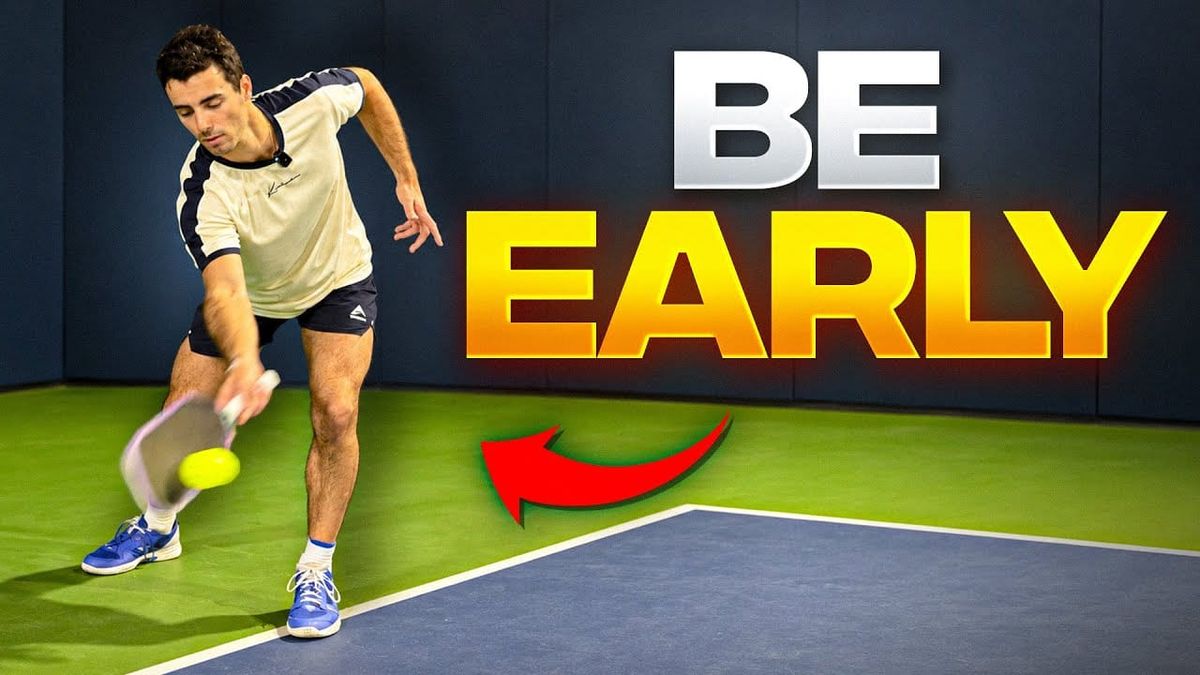
When you are in poor position, leaning and reaching for balls, you have almost no options. You are just trying to get the ball back.
When you move into perfect position before contact, everything changes.You can attack, you can redirect, you can hit a pressure dink that actually does something.
The fix is simple but requires real commitment.
Every time a ball comes your way, move your feet so your outside leg is behind the ball at contact, then reset back to center. Stop leaning.Stop reaching. Treat every single dink as an opportunity to create pressure, not just survive.
Most rec players never do this because they assume dinking is passive. It is not. Dinking with intention starts with your feet, not your paddle.
Habit 2: Using the Reset Dink When You're Out of Position
Here is a mistake that costs rec players points constantly. Your opponent hits a great pressure dink that pushes you off balance, and instead of neutralizing, you try to match their power and hit something offensive back. That ball goes up and they attack it.
The reset dink is the answer. It is a deliberately soft, dead ball aimed toward the middle of the court where your opponent has the least angle to work with.
The goal is not to win the point with that shot. The goal is to take away their next attack.
When you absorb the pressure and leave them a neutral ball, you flip the dynamic. Now you are back in position and they have nothing to work with.
Think of the reset dink as a shield, not a mistake. Here is how to execute it:
- Drop your paddle tip down to create a soft, open face
- Aim toward the middle of the court where angles are eliminated
- Take all pace off the ball and let it die inside the non-volley zone
- Recover immediately back to center position
This is closely related to what coaches call the reset drill approach, where the priority is neutralizing before creating.
You will stop giving away free attacks if you commit to this habit.
💡
Need some new pickleball gear? Get 20% off select paddles, shoes, and more with code THEDINK at
Midwest Racquet SportsAre You Creating Pressure With Your Body After the Dink?
Hitting a good pressure dink is only half the job. What you do with your body immediately after that dink is where most rec players completely miss it.
When you hit a quality dink that lands tight and low, close the gap.
Move forward toward the kitchen line to shrink the space your opponent has to work with. Your presence alone creates mental pressure.They are now looking at you creeping closer, which makes them rush. If they leave anything up, you are already in position to put it away.
Compare that to what most rec players do: they hit a nice pressure dink and then stand flat-footed in the middle of the court waiting.The ball does not create all the pressure. You do. Your positioning at the kitchen line is a weapon just as much as any shot you hit.
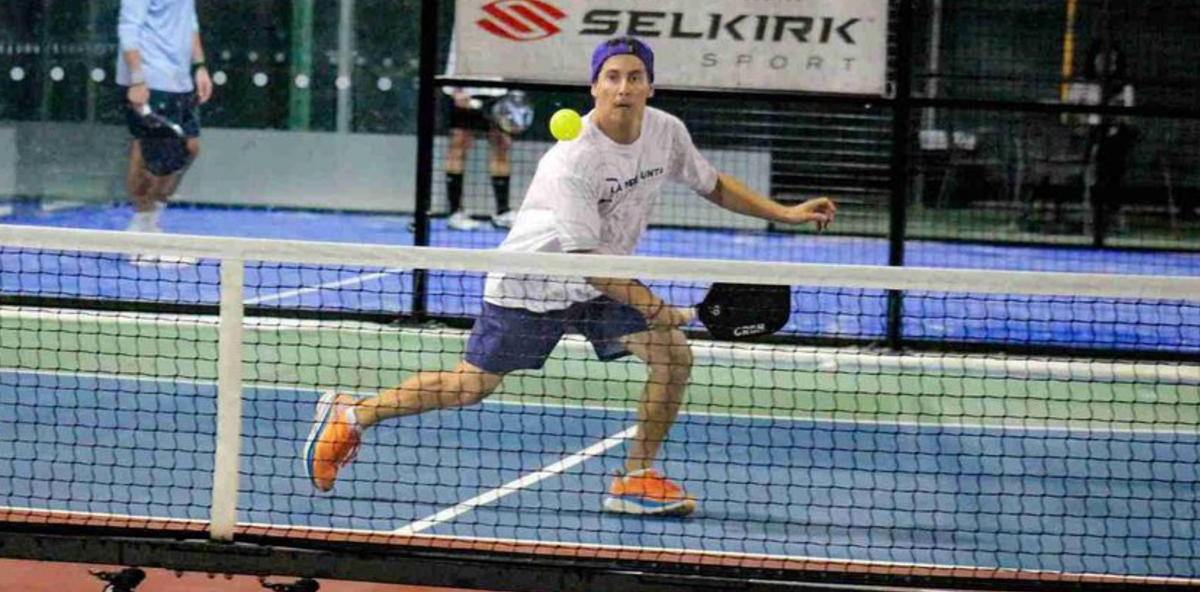
How to Step In on Dinks in Pickleball
Stepping in on dinks in pickleball is one of the fastest ways to shift from reactive to offensive at the kitchen line. Learn the footwork, timing, and positioning cues that let you create pressure and open angles your opponents can’t handle.
 The Dink PickleballThe Dink Media Team
Rec players dink to the wings almost exclusively.
Cross court, down the line, back cross court. It becomes predictable fast.Pros use the middle of the court as an active weapon, and there are three specific reasons why it works:
- Confusion between opponents. A ball hit to the middle forces two players to decide in a fraction of a second who is taking it. That hesitation causes errors.
- Reduced attacking angles. When your opponent is hitting from the middle, they can only attack your body or through the center. Hard shots to your wings will go wide. You can ignore those.
- It opens the wings. Pull your opponents together toward the middle first, then push them wide with a pressure dink. They cannot cover both effectively.
The sequence is simple: middle dink to create compression, then redirect wide to punish the gap.
This is exactly how owning the middle creates real offensive opportunities instead of just hoping someone pops one up.
Stop thinking of a middle dink as boring or passive. It is a setup shot with a specific purpose.The players who understand that are the ones dictating rallies while everyone else is just reacting.
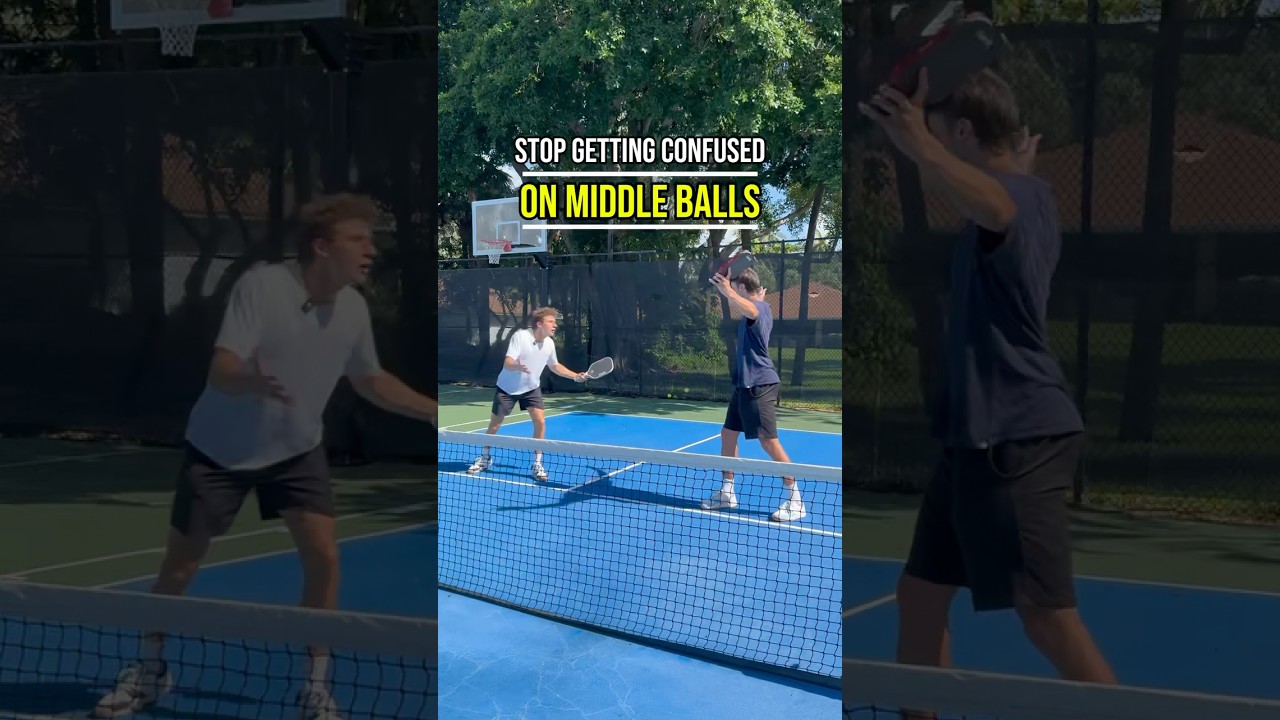
Middle Ball Pickleball: Stop the Confusion Fast
Middle ball pickleball confusion costs points at every level. Two simple rules tell you exactly who takes the ball and when.
 The Dink PickleballThe Dink Media Team
Does Playing Patient Actually Create Pressure?
Yes, and this might be the most counterintuitive thing on this entire list. Patience at the kitchen line is not passive. It is a form of pressure that builds over time.
When you consistently reset, stay neutral, and refuse to give your opponent anything easy, it forces them to take bigger risks.
They feel like they have to do more because nothing is working. That pressure compounds rally by rally.The wrong mindset is thinking you need to force something aggressive on every exchange. The chess match at the kitchen line has a rhythm.
You reset when you are in trouble, you apply pressure when you have an advantage, and you stay patient when the ball is neutral.Rec players break this rhythm constantly because they feel uncomfortable just dinking.
They force attacks from bad positions and hand their opponents free points.
Learning to stay patient during a long rally is a skill that takes practice, but it changes how you compete entirely.
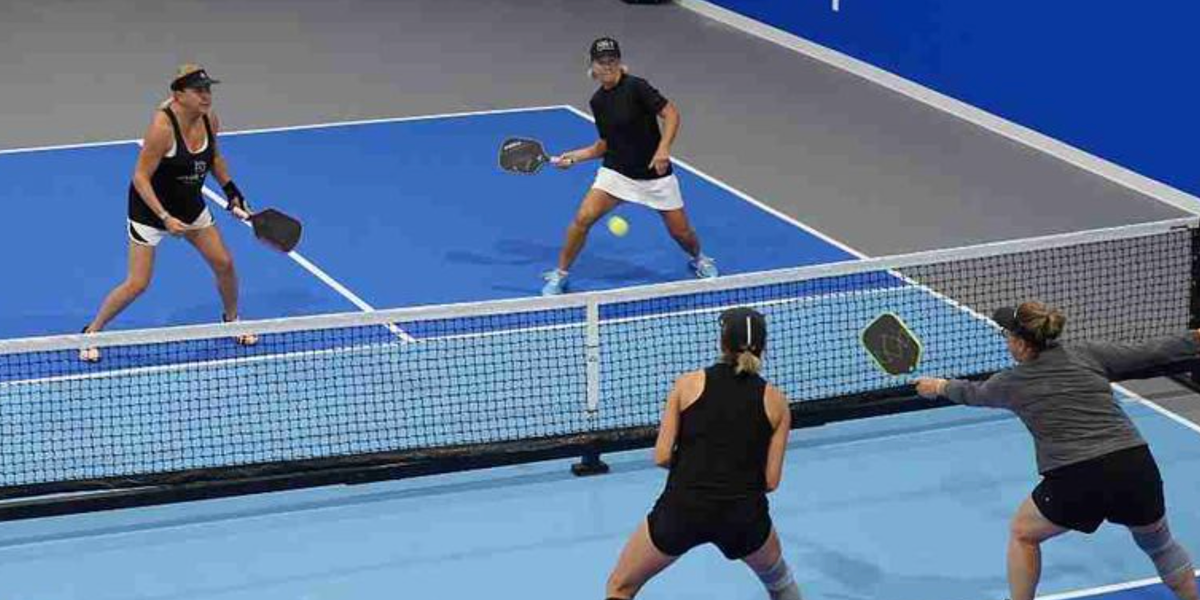
Staying Patient During a Long Rally: Pickleball Tips
Staying patient during a long rally is what separates 4.0 players from 3.5 players who hand away free points. This guide breaks down the shot selection, footwork, and mental triggers that let you outlast anyone at the kitchen line.
 The Dink PickleballThe Dink Media Team
Habit 4: Reading When You Have an Advantage vs. When You Need to Neutralize
This is the meta-skill that ties all five habits together.
The best players are constantly reading the situation and choosing the right response based on their position and the ball they are receiving.Here is a simple framework to start using immediately:
- You are in good position, ball is attackable: apply pressure, move forward, hunt the next ball
- You are in good position, ball is neutral: use the middle, build toward the wings, stay patient
- You are out of position or off balance: reset dink to the middle, recover, neutralize before anything else
This decision tree sounds simple but most rec players skip it entirely. They default to one mode: swing and hope.
The signs you are playing too passively and the signs you are playing too aggressively are both real problems, and the ability to shift between them mid-rally is what separates intermediate players from advanced ones.Watch how players like Anna Leigh Waters operate at the kitchen line. There is constant adjustment happening, not one locked-in approach.
They reset when they need to and attack when the ball invites it.
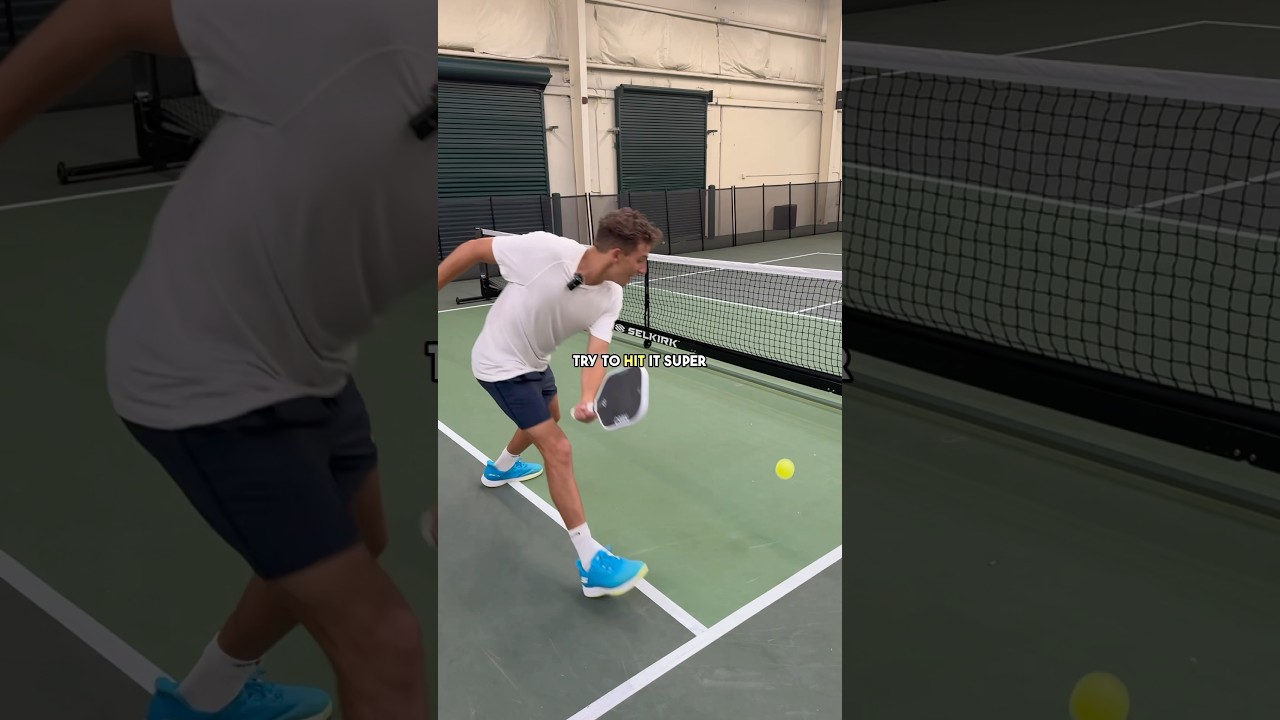
Pickleball Dink Strategy: Master the Neutral Game
This approach might not feel as satisfying as crushing a winner, but it’s far more effective. Over time, this mentality will show up in your win-loss record.
 The Dink PickleballThe Dink Media Team
Putting All Five Together: What It Actually Looks Like
These five habits are not isolated tricks. They are a connected system that creates a very specific type of pressure at the kitchen line.
You move into position so you always have options.
You reset when pushed out of position so you never hand over free attacks. You close the gap after good dinks to add visual pressure.You use the middle to create confusion and open the wings. And you stay patient long enough to let your opponent's mistakes compound.
That is the chess match pros are playing while rec players are just trying to keep the ball in.
Understanding how to win a dink battle comes down to making these reads consistently, not just hitting better shots.
If you want to see how drastically your game changes, pick one habit from this list and focus on it for your next three sessions.
Start with footwork and position because everything else flows from being in the right place. Once that clicks, the reset dink becomes obvious.Then the middle strategy starts to make sense on its own.
The footwork fixes that make your dinking position better are worth drilling separately.
Combine that with advanced dinking technique at the net and you will start looking like a very different player at the kitchen line.The gap between rec players and pros at the kitchen is not about how hard anyone is hitting.
It is about how clearly they see the battle happening in real time. Start seeing it clearly, and the results will follow.
Understanding how to be aggressive without taking bad risks is the final piece. Pressure dinking only works when you are selective.Pick your moments, stay disciplined, and trust the process at the kitchen line.
💡
Heads up: hundreds of thousands of pickleballers read our free newsletter.
Subscribe herefor cutting edge strategy, insider news, pro analysis, the latest product innovations and more.
Frequently Asked Questions
What is a reset dink in pickleball and when should I use it?
A reset dink is a soft, low-pace shot aimed toward the middle of the court that neutralizes an opponent's pressure. You should use it any time you are off balance, out of position, or receiving a ball that you cannot attack cleanly. The goal is to remove your opponent's angle and give yourself time to recover.
Why do pro pickleball players dink to the middle instead of the wings?
Dinking to the middle creates confusion between opponents about who should take the ball, limits the attacker's angle options, and compresses the opposing team so the wings open up. It is a setup move, not a passive one. Pros use the middle to draw opponents together and then punish the gap with a wide pressure dink.
Better footwork means you arrive at every dink in a balanced, ready position instead of leaning or reaching. When you are balanced, you have the option to attack, redirect, or reset. Getting your outside leg behind the ball before contact is the fastest way to improve your dinking position immediately.
Is it bad to play patiently during a pickleball dink rally?
No, patience is actually a form of pressure at the kitchen line. When you consistently neutralize and refuse to give your opponent anything to attack, they feel forced to take bigger risks over time. The key is knowing when to be patient and when to apply pressure, not defaulting to one or the other.
How do I know when to attack during a dink rally?
Attack when you are in good position, the ball is sitting up above the net, and you have a clear angle or target. If any one of those conditions is missing, it is usually smarter to reset or play neutral. Forcing an attack from a bad position is one of the most common ways rec players lose points at the kitchen line.
Anuncie Aqui / Advertise Here
Sua marca para o mundo Pickleball! / Your brand for the Pickleball world!





 English (US) ·
  Portuguese (BR) ·