
 English
  Spanish
  Portuguese
  German
  Italian
  Japanese
  French
  Polish
  Russian
  Netherlands
  Hungarian
  Turkish
  Videos
  Thedink Pickleball

Most players panic and change everything the moment when your pickleball game plan isn't working becomes obvious on the scoreboard. Here's the smarter fix: wait for a real pattern, then climb the adjustment ladder one rung at a time.
Every player has felt that sinking moment when your pickleball game plan isn't working and the scoreboard is already telling the story.
You drilled the third shot drop for weeks. You and your partner talked through the targets in the warmup.Then the first game ends 11-4 the wrong way and nothing you practiced looks anything like what's happening on court.
Here's the thing: most players respond by changing everything at once. New targets, new shots, new positioning, new attitude, all in the span of two points.That's not an adjustment. That's panic wearing an adjustment's clothes.
The players who actually climb out of a bad match do something much less dramatic, and much more useful.
Love pickleball? Then you'll love our free newsletter. We send the latest news, tips, and highlights for free each week.
How Do You Know When Your Pickleball Game Plan Isn't Working?
You know your plan has failed when the same mistake shows up five times in a row, not when it shows up twice.
Five is the number most coaches land on, and it's a useful filter because pickleball is a game of small samples.
Two popped-up dinks in a row feels like a trend. It isn't. It's two swings.
Pro player Zane Navratil put the principle better than anyone: "Just because a shot didn't work doesn't mean it was wrong. And just because it worked doesn't mean it was right."Outcome and decision are separate things.
A third shot drop that clips the net is still the correct shot if your position and the ball height called for it, and chasing the outcome instead of the decision is how solid pickleball strategy falls apart in a single game.
What Counts as a Pattern, Anyway?
A pattern is a repeated result from the same decision in the same situation. That's the definition worth memorizing.
- If you've driven the third ball five times from the same spot and lost the point every time, that's a pattern.
- If you drove once, dropped twice, and lobbed once, that's just a mess, and you can't adjust your way out of a mess because there's nothing consistent to change.
So before anything else, give yourself a sample. Repeat your intended shot with real commitment for a handful of points.
Vague execution of a good plan looks identical to a bad plan on the scoreboard, and those two problems have completely different fixes.
Three Questions to Ask When Your Pickleball Game Plan Isn't Working
Run through these in order. They take about four seconds between points.
- Is it the shot or the execution? Your reset might be the right answer and still be floating six inches too high.
- Is it the target or the timing? Hitting at the right player too late is a different problem than hitting the wrong player.
- Is it them or you? Sometimes the opponents are just playing better than you are, and the honest answer is to raise your execution, not scrap your approach.
Honestly, question one solves most matches.
Players throw out perfectly good tactics because of sloppy contact points, and then they're left playing a plan they don't trust with mechanics they never fixed.
💡
Need some new pickleball gear? Get 20% off select paddles, shoes, and more with code THEDINK at
Midwest Racquet SportsChange One Thing, Not Five
When your pickleball game plan isn't working, the most effective adjustment is the smallest one that could plausibly work.
Think of it as a ladder for advanced pickleball strategy: start at the bottom rung and only climb if the rung below didn't hold.
- Rung one is target. Same shot, different place. If your dinks keep getting attacked cross-court, move them to the middle and watch what happens to the communication between your opponents.
- Rung two is height and pace. Same shot, same target, softer or lower. A huge share of lost points trace back to balls sitting two inches too high, and fixing the pop-up often fixes the entire game without any tactical change at all.
- Rung three is position. Stagger, stack, or simply shade a step toward the ball you keep losing. This is where most pickleball adjustments for doubles actually live, and these adjustments cost you nothing technically.
- Rung four is shot selection. Drive instead of drop. Lob instead of dink. This is the big one, and it's the rung most players jump to first, which is exactly backwards.
Climb the ladder in order and you keep your identity as a team.
Jump straight to rung four and you're now playing a style you've never practiced against opponents who are already ahead.
Pickleball Shot Selection: The 1-to-10 Scale for Every Shot
Poor pickleball shot selection is one of the biggest reasons players lose matches they should win. Here is the 1-to-10 scale that tells you exactly which shots to take and which to leave alone.
 The Dink PickleballThe Dink Media Team
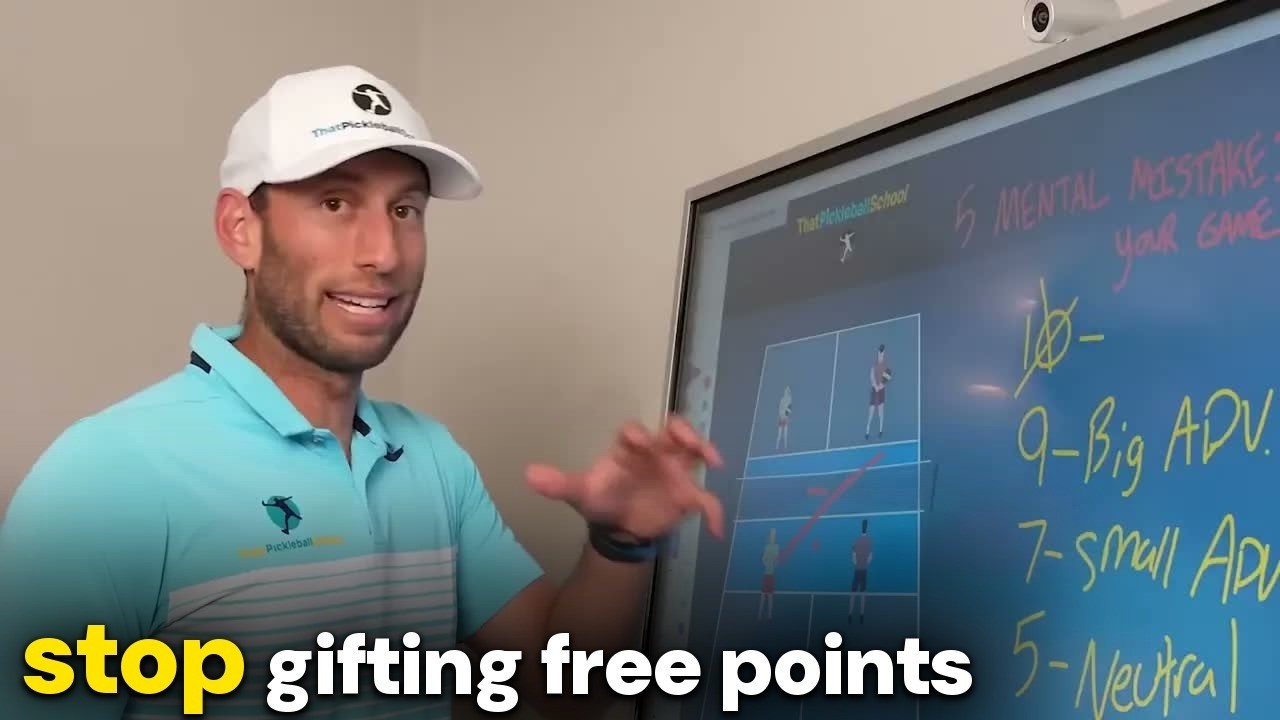
What to Do When Your Pickleball Game Plan Isn't Working Mid-Match
Make your changes at natural break points, not in the middle of a run. The best moments are the side change, the timeout, and the gap between games.
Those are the spots where you and your partner can actually talk instead of shouting a half-thought across the kitchen line while someone's serving.One pro has argued that the sweet spot for real modifications in a three-game match is roughly halfway through game two, and the logic holds up.
Game one is partly information gathering. If you overhaul everything after six points, you've burned your read on the opponents before it was fully developed.
That said, losing two points in a row is a fine early-warning signal to start paying closer attention. Not to change. To watch.Where is the ball going when the point ends? Who's hitting the shot that hurts you?
Players who read opponents well are usually just players who kept their eyes open for one extra game before deciding anything.
And when you do commit to a change, say it out loud. "I'm going at the right-side player's backhand on every third."Specific beats vague every time, because a shared target turns two individuals into one team with a counter strategy.
3 Signs Your Pickleball Partner Needs a Pep Talk
A pickleball partner pep talk is a ten-second reset between points, not a coaching session. Learn the three signs your teammate needs one and the exact script that works.
 The Dink PickleballThe Dink Media Team
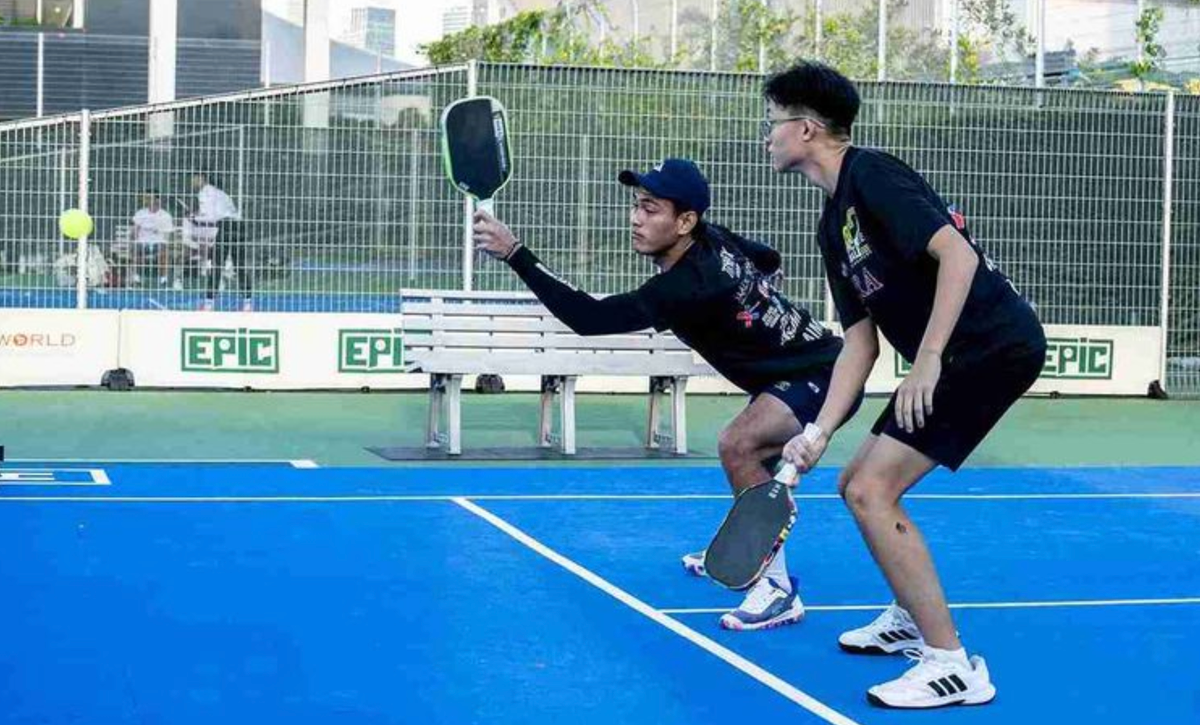
Why Your Head Matters When Your Pickleball Game Plan Isn't Working
A failing plan damages your confidence faster than it damages your score, and that's the part that actually loses matches.
Once you start expecting the error, your swing gets tentative, your feet stop moving, and the fix you chose never gets a fair test.
Sport psychology research backs the reframe.
A 2025 study in Frontiers in Psychology found that attribution training, which teaches athletes to assign their mistakes to changeable causes rather than personal failure, significantly reduced fear of failure and self-criticism in athletes who had struggled under pressure.
Translation for the court: "that drop was two inches high" is a usable thought. "I can't drop today" is not.The practical version of a strong pickleball mental game is a reset routine you repeat between every point. Paddle tap, breath, target.
Same sequence whether you just won or just got lobbed.
Your between-point habits reward boring consistency more than inspiration, and a repeatable routine is what keeps your momentum from swinging on one bad exchange.There's also the uncomfortable possibility that the plan is fine and you're rushing it.
Slowing the pace of your own preparation buys time for every shot that follows, and it's free.
5 Mental Game Habits That Beat Pickleball Pressure
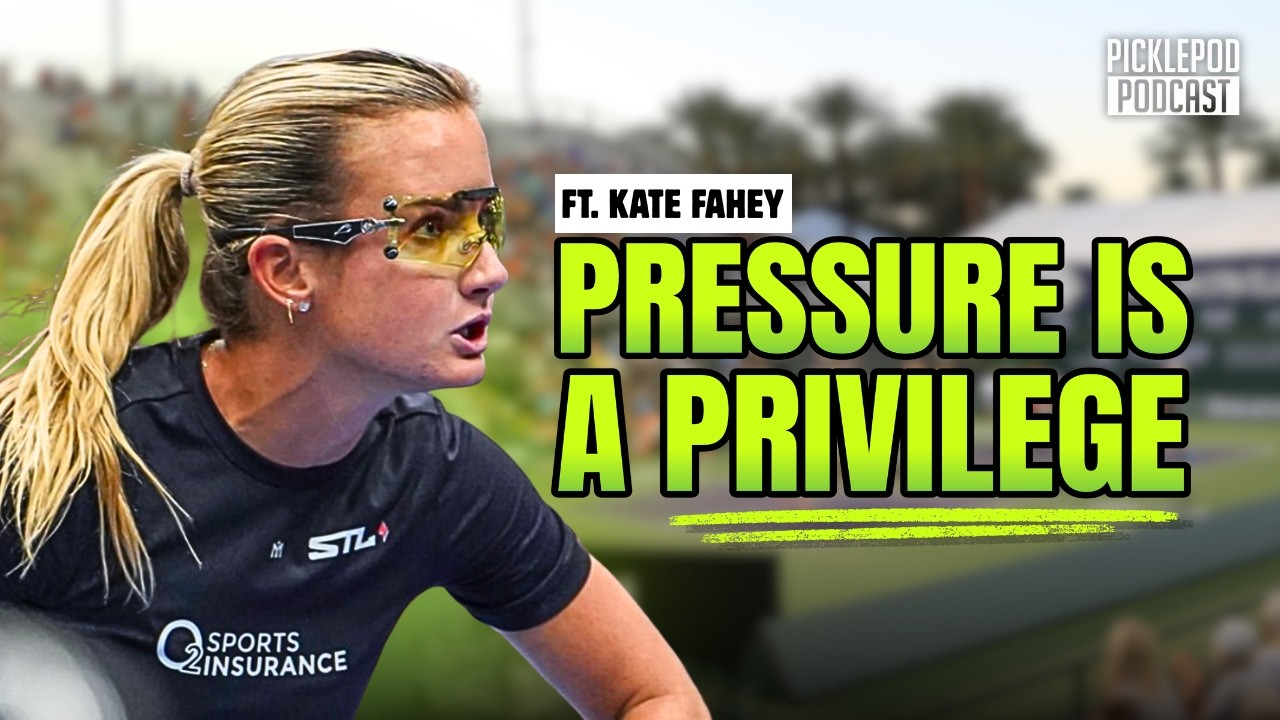
Kate Fahey of the St. Louis Shock breaks down the mental game habits that keep top pros loose when the pressure peaks. Here is how to copy them and stop plateauing.
 The Dink PickleballThe Dink Media Team
When Should You Not Change Anything?
Stay the course when your plan is producing good positions but unlucky finishes.
If you're winning the dink exchange, getting to the kitchen line, and losing on one ripped passing shot, your pickleball strategy is working fine.The opponent is simply hitting a low-percentage shot at a high rate, and that tends to correct itself.
Stay the course too when the change would require a skill you don't own.
Deciding mid-match to play a hybrid roll third you've hit nine times in practice isn't adaptation, it's gambling.The best in-match adjustments are always made from shots already in your bag, which is the real argument for boring, repeatable pickleball.
The Pickleball Drive Crash Course: Pro Tips for Powerful Shots
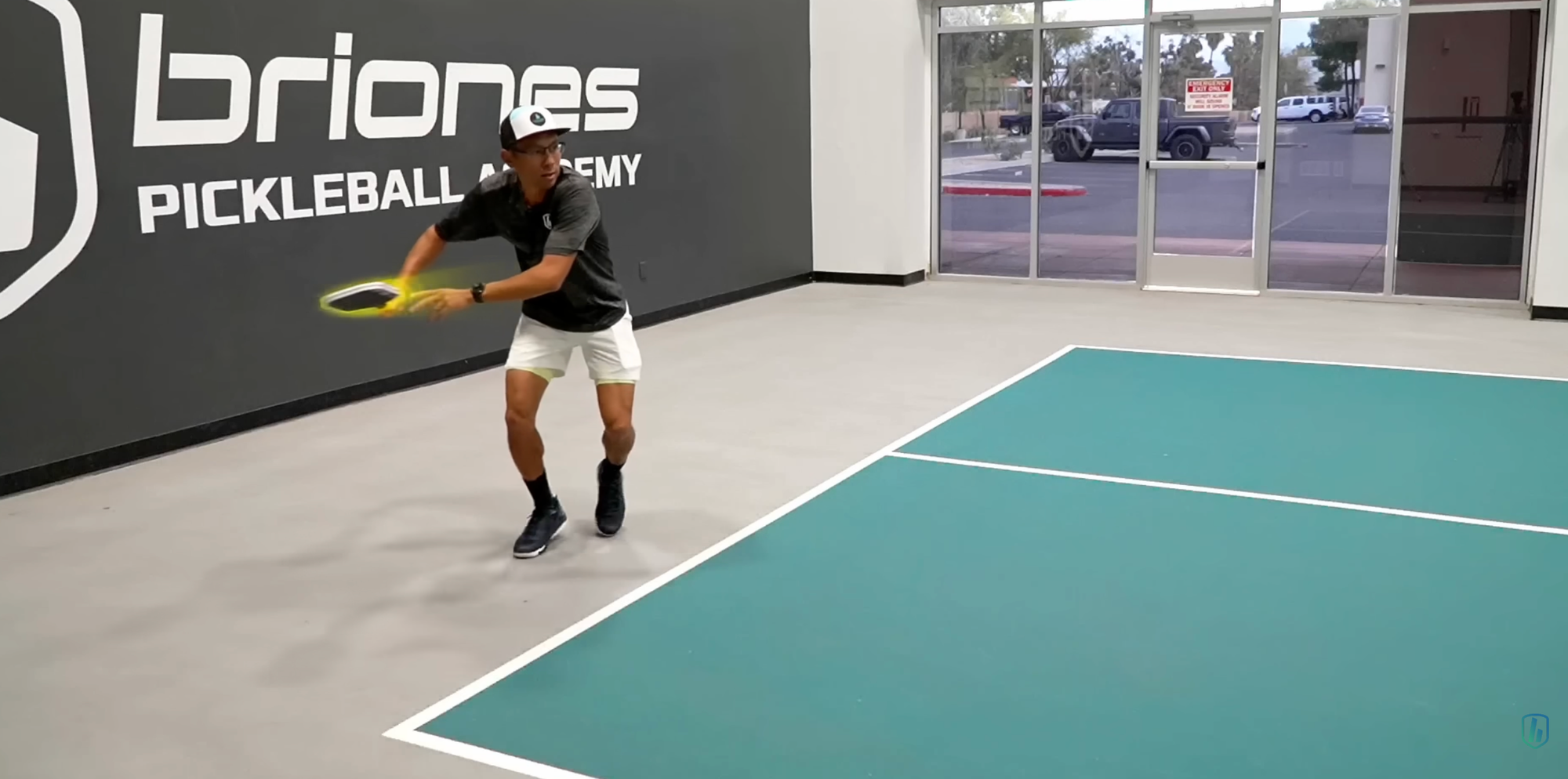
The drive is one of pickleball’s most important shots: it’s your way to take the initiative, put pressure on your opponents, and finish points.
 The Dink PickleballThe Dink Media Team
Key Takeaways
- Wait for roughly five repeated errors from the same decision before you call it a failed plan.
- Climb the ladder of pickleball adjustments: target, then height and pace, then position, then shot selection.
- Make changes at side changes, timeouts, and between games, not mid-run.
- Separate the decision from the outcome. A good shot can lose a point.
- When your pickleball game plan isn't working, fix execution before you fix tactics.
- Only adjust into shots you already own.
💡
Heads up: hundreds of thousands of pickleballers read our free newsletter.
Subscribe herefor cutting edge strategy, insider news, pro analysis, the latest product innovations and more.
Frequently Asked Questions
How soon should you adjust when your pickleball game plan isn't working?
Give your plan five repeated errors from the same situation before changing it. Two or three mistakes is normal variance in a sport with short points and small samples. If you're still losing the same exchange halfway through the second game, that's your signal to make a real change.
What's the first thing to change in a pickleball match?
Change your target before anything else. Keeping the same shot and moving it to a different spot, usually the middle or the weaker player's backhand, is the lowest-risk adjustment available. It costs you nothing technically and often solves the problem on its own.
Should you tell your partner when your pickleball game plan isn't working?
Yes, and be specific about it. Say the exact shot and the exact target instead of something general like "let's play smarter." Doubles adjustments only work when both players are committed to the same read, and vague instructions produce two different plans on one side of the net.
Can changing strategy make things worse?
Absolutely. Switching to shots you haven't practiced, or changing three things at once, usually adds errors instead of removing them. If the new plan produces worse positions rather than just unlucky results, go back to what you were doing and fix your execution instead.
How do you stay calm when you're losing badly?
Use a fixed reset routine between every point: paddle tap, one breath, pick your target. Repeating the same sequence regardless of the last point is the whole pickleball mental game in miniature, and it keeps frustration from stacking. Describe your mistakes in terms you can fix, like contact point or ball height, rather than labeling yourself as off that day.
Anuncie Aqui / Advertise Here
Sua marca para o mundo Pickleball! / Your brand for the Pickleball world!





 English (US) ·
  Portuguese (BR) ·