
 English
  Spanish
  Portuguese
  German
  Italian
  Japanese
  French
  Polish
  Russian
  Netherlands
  Hungarian
  Turkish
  Videos
  Thedink Pickleball

Zane Navratil publicly called out Hayden Patriquin's performance. Patriquin's response showed exactly what the pickleball mental game looks like at the pro level.
Being publicly called out by one of the loudest voices in pickleball is uncomfortable. Most players get defensive. Some disappear.
Hayden Patriquin texted back three sentences, put his phone down, and went 10-0.
What happened between Zane Navratil's public criticism and that perfect week in St. Louis is a case study in the pickleball mental game.
Not a vague "believe in yourself" story. A specific, measurable response, with stats to back it up.
Here is what happened, what the numbers show, and what you can take straight to your game.
Love pickleball? Then you'll love our free newsletter. We send the latest news, tips, and highlights for free each week.
What Zane Said (and Why It Landed)
After a difficult MLP Columbus event, Zane put out a YouTube video questioning whether Hayden was holding back the St. Louis Shock. It was pointed.
It named names. And it was the kind of public accountability most players never face.
Zane's standard is simple: he doesn't post anything he wouldn't say directly to the person. That distinction matters.
When he calls someone out publicly, it carries the same weight as a face-to-face conversation. Hayden knew exactly what he was reading.
When Zane asked if he could share the text exchange, Hayden said: "Yeah." His actual response to being called out? "Good post. I needed some fire. I will show you ball this week."No hedging. No excuses. Three sentences that translated to: you're right, and watch what I do with it.
The 10-0 Week and the Pickleball Mental Game Stat That Makes It Special
Hayden Patriquin went to St. Louis and posted a perfect 10-0 record.
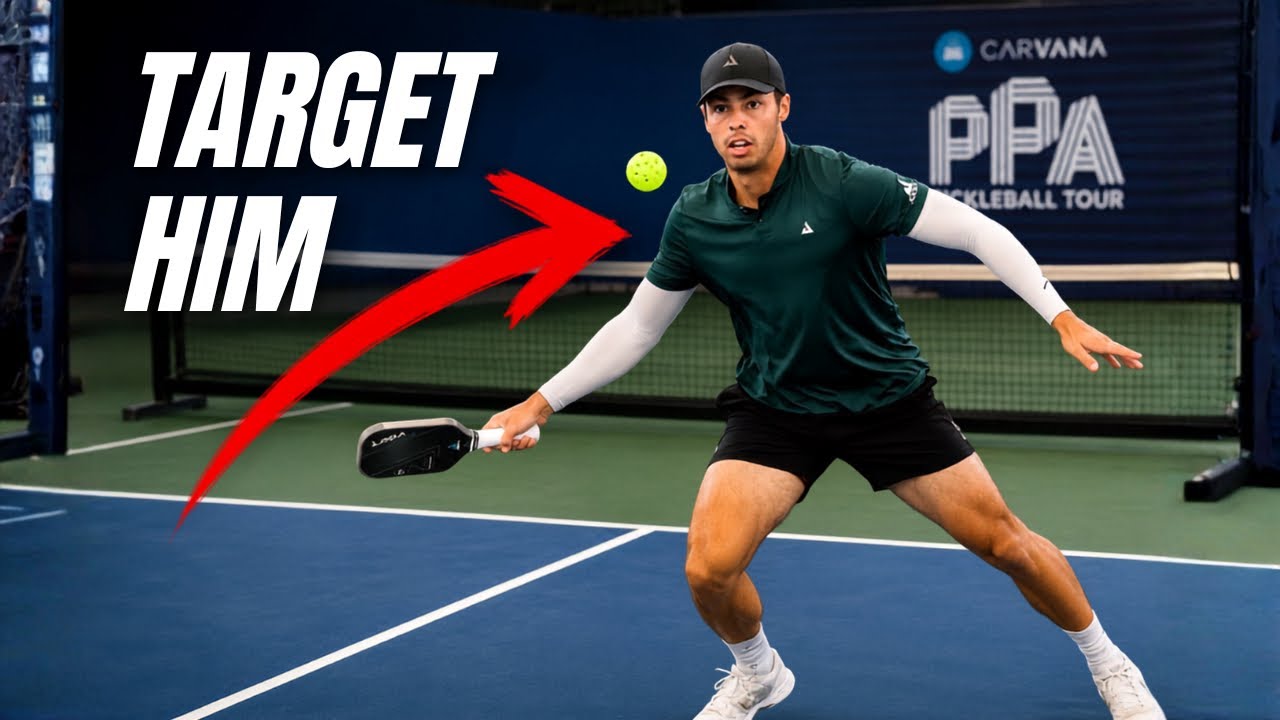
But the number that makes the week genuinely remarkable is what happened in men's doubles: the Shock targeted Ben Johns directly, sending 73% of shots his way.
That is not an accident. At the kitchen line, the number was closer to 90% of balls going at or to Ben.
The Shock weren't routing the ball away from the best player in the world. They were hunting him. They won 11-3.
Ben Johns holds the number one ranking in men's doubles on the PPA Tour. Choosing to target him rather than avoid him is a bold tournament strategy. It paid off completely.
After the match, Zane texted Hayden: "Dude, you showed up this week. This is exactly what you needed." Hayden's reply came back fast: "Yo, you actually lit a fire under my ass. I needed it."How to Beat Ben John: 5 Tactics That Actually Work
Most players try to hide the ball from Ben Johns, and it backfires every single time. Here is how to beat Ben Johns (or any elite player) by going straight at the best poacher in the game.
 The Dink PickleballThe Dink Media Team
Why the Pickleball Mental Game Matters More Than Technique at the Top
At the professional level, everyone has the shots.
What separates performers is whether they can access those shots under pressure, after a poor event, or when their reputation is on the line.
That is the pickleball mental game operating at full capacity.
What Hayden demonstrated wasn't supernatural resilience. It was a specific skill set that any player can develop. Breaking it down:Accurate Self-Assessment Drives the Pickleball Mental Game
Hayden didn't dispute the criticism. He agreed with it. That requires knowing the difference between a bad day and a real performance problem, without the ego distorting the read. Most players at every level avoid this step entirely.
This kind of honest self-assessment is the foundation of a strong pickleball mental game. Without it, every post-match review turns into a list of excuses rather than a roadmap for improvement.
No Defensive Crouch
The temptation after public criticism is to protect your reputation. Hayden moved toward the problem instead of away from it. That instinct, to close the distance on discomfort rather than retreat from it, is one of the rarest traits in competitive sports at any level.
It is also completely trainable. The reflex to defend is natural. The choice to override it is a skill.
Converting Pressure Into Fuel
The phrase "I needed some fire" tells you everything. External pressure became internal motivation rather than noise. Understanding how to harness competitive pressure, rather than fight it, is central to every elite pickleball mental game.
Most players experience external pressure as a distraction. The best pickleball pros of 2025 treat it as an accelerant.
What This Means for Your Pickleball Mental Game
You are not going to get called out by Zane Navratil on YouTube.
But you are going to play a match that goes badly, get feedback from a partner that stings, or have a drill session where someone better points out a real flaw.
The pickleball mental game you build in those moments determines how fast you develop.
Three habits that translate Hayden's approach to your level:
Habit 1: Do the Post-Match Inventory Honestly
After a loss, give yourself two minutes: what specifically went wrong? Not what bad luck occurred, but what did you actually do that cost points. The path from 3.5 to 4.0 isn't purely about practice hours. It's about what you do with the information you collect.
The players who improve fastest are the ones who want accurate feedback, even when it's uncomfortable.If you want a concrete system to back this up, this 4-step framework for winning more pickleball games is worth bookmarking.
Habit 2: Separate Feedback From Attack
Criticism from someone who actually watches your game is not the same as trash talk. Hayden knew the difference. Learning to make that distinction is one of the most underrated parts of developing a strong pickleball mental game.
When a drilling partner or teammate flags something real, that is a competitive asset, not a threat. Treat it accordingly.
Habit 3: Make the Response Physical
The most productive thing Hayden did after getting called out was go play. Use the next session after criticism as the testing ground, not a practice to avoid. The 12 drills you need to play your best pickleball can help you structure that response session with real purpose.
The most common practice mistakes often involve working on what feels comfortable rather than what the last match actually exposed.If you're serious about breaking through a rating ceiling, pairing this mental approach with these shots you must master before 2026 is the combination that moves the needle.
The harsh truth about competitive open play is that most players think they are performing better than they are. The players who improve fastest want accurate feedback, even when it's uncomfortable.
Hayden Patriquin competes for one of the top franchises in professional pickleball, the St. Louis Shock. But what he showed in the week between Columbus and St. Louis wasn't a professional skill. It was a human one. He took a hit to his reputation, agreed with the critique, and came back with a 10-0 record and a text that closed the loop.
That is the pickleball mental game at its most complete. And it is available to every player willing to put the ego down for a minute. If you want to see how the 2026 MLP season is shaping up for the Shock and teams like them, the new roster rules make the stakes even higher.
For additional context on how MLP's 2026 draft set the tone for this kind of pressure-driven competition, that piece is worth a read before the next event.
💡
Heads up: hundreds of thousands of pickleballers read our free newsletter.
Subscribe herefor cutting edge strategy, insider news, pro analysis, the latest product innovations and more.
Frequently Asked Questions
What is the pickleball mental game?
The pickleball mental game refers to the psychological skills that affect your performance on court: handling pressure, recovering from errors, responding to criticism, and staying focused during close matches. It operates separately from technique but directly affects how well you can access your shots under competitive conditions.
How did Hayden Patriquin respond to being called out by Zane Navratil?
Hayden Patriquin texted Zane directly: "Good post. I needed some fire. I will show you ball this week." He then went 10-0 at the St. Louis MLP event, with his team targeting Ben Johns in men's doubles and winning 11-3. Both text exchanges were shared on The Dink Pickleball's YouTube channel.
Why did the St. Louis Shock target Ben Johns in men's doubles?
The Shock directed 73% of shots at Ben Johns during their men's doubles match, with that number climbing near 90% at the kitchen line. Rather than avoiding the top-ranked player, they attacked him directly and won 11-3. The logic of targeting in doubles usually involves finding the most exploitable angles, and in this case the Shock found a winning pattern by going at Johns consistently and staying with it.
How can recreational players build mental toughness in pickleball?
The most practical path to mental toughness in pickleball is a consistent post-match review habit, learning to separate useful feedback from ego protection, and using criticism as a prompt for targeted practice rather than avoidance. Watching how top MLP players like Hayden Patriquin and the St. Louis Shock respond to adversity publicly offers useful real-world models for your own approach.
What should you do after a bad pickleball match?
After a poor performance, the most productive next step is an honest two-minute review: what specifically went wrong, not what luck went against you. Then schedule a session that directly addresses those areas. Hayden Patriquin's example shows that the fastest path from "I played badly" to "I played well" runs through agreeing with the diagnosis and using the frustration as fuel rather than letting it become defensiveness or excuses.
Anuncie Aqui / Advertise Here
Sua marca para o mundo Pickleball! / Your brand for the Pickleball world!



 English (US) ·
  Portuguese (BR) ·