
 English
  Spanish
  Portuguese
  German
  Italian
  Japanese
  French
  Polish
  Russian
  Netherlands
  Hungarian
  Turkish
  Videos
  Thedink Pickleball

Fast hands in pickleball are a skill, not a gift you are born with. Here is the exact 4-step counter drill and wall routine that took Elliot Schupp from a 2.5 beginner to the fastest hands on tour.
Fast hands in pickleball are not something you are born with.
They are a skill you build, one rep at a time, and the players with the quickest hands at the net got there through a specific kind of practice.
Nobody proves that better than Elliot Schupp.
He started as a 2.5 beginner and now sits at a 6.1 DUPR with an APP silver medal, and he has arguably the fastest hands on tour.
In a recent video with coach Cam Luhring, he walked through the exact progression he used to get there.
Below is that whole system: a four-step counter drill you can run today, plus the wall routine Schupp credits for his reaction speed.
None of it requires talent. All of it requires the right reps.
Love pickleball? Then you'll love our free newsletter. We send the latest news, tips, and highlights for free each week.
Why Fast Hands Come From a Short Swing, Not a Strong Arm
The single biggest key to faster hands is a shorter counter, because the smaller your swing, the faster your paddle gets back to ready.
Schupp is blunt about it: "The keys to a really fast counter is a very short counter. The smaller your swing is, the faster you'll be."Most amateurs try to hit harder. They wind up, the swing drifts behind the body, and by the time the paddle comes back around the next ball is already past them.
Schupp's fix is mechanical and easy to feel. Keep your elbow in front of your body at all times.
If the elbow stays in front, the swing physically cannot get long. That one cue does most of the work of a clean forehand counter.
Watch any elite player in a firefight and you see the same thing.
Ben Johns rarely takes a big cut in a hands battle; his counters are tight and repeatable, which is exactly why he resets so fast for the next ball.
The 4-Step Counter Drill that Builds Fast Hands
Schupp's core drill is a four-step progression that takes you from a controlled catch to a live point, and each step layers speed onto the step before it.
Run them in order. Do not skip ahead.
Here is the full progression:
- Catch the ball on your paddle. Start with the forehand. Do not swing. Punch out to the ball and stop, finishing in your ready position. Schupp compares it to catching with a baseball glove: soft, short, controlled.
- Add a little pace. Same compact motion, now with more punch behind it. You are still ending in ready position, just driving through the ball a touch more.
- Move to full swings. Now you counter at game speed with a complete, compact stroke. The swing is bigger than step one but never long, and the elbow stays in front.
- Play it out live and pick your locations. After the first counter, keep the ball alive and rally it out. Mix your targets so your partner cannot cheat to one side.
Step four is where the drill starts to feel like a real point.
If it gets overwhelming, Schupp says go for just the first counter and stop, then build back up to playing it out live.
💡
Need some new pickleball gear? Get 20% off select paddles, shoes, and more with code THEDINK at
Midwest Racquet SportsHow Do You Keep the Drill From Getting Too Easy?
You force yourself to stay neutral by feeding a mix instead of the same ball every time, so you have to read the shot instead of guessing.
In the video, Schupp and Luhring use a pattern of two backhands and eight forehands.
Because you never know which one is coming, you cannot sit on your forehand all day.
You have to anticipate, split your attention, and be ready either way. That is the whole point.
This is also the moment to build your backhand side, since a shaky backhand counter is where most players get exposed in a firefight.
If yours breaks down under pressure, work through these backhand counter fixes, and consider whether a two-handed backhand would give you more stability at speed.
Should You Practice Letting Balls Go Out?
Yes, and it might be the most underrated habit in the entire drill, because you play the way you practice.
Schupp and Luhring both hammer this point: if you practice hitting every ball, you will reflexively hit balls that were sailing out in a real game.
"If you practice hitting the ball, you're going to do it in a game anyway," Schupp says. "So you want to practice what you will do in a game."So during the drill, let the high ones fly. Train your eyes to judge depth under pace.
Learning to take the ball early when you should, and let it go when you should, is a core piece of building offense out of the air, and it separates players who win hands battle exchanges from players who just donate points.
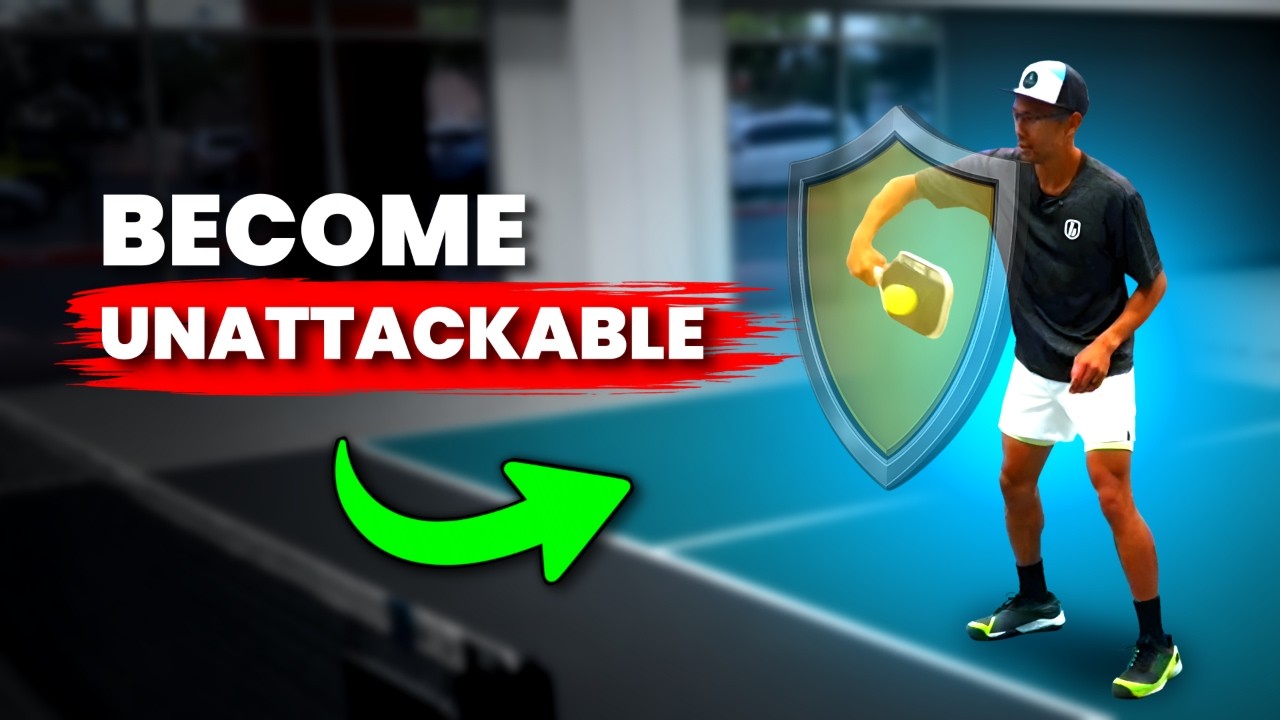
6 Backhand Counter Fixes to Make You Unattackable
Your backhand counter is the shot that decides hands battles at the kitchen line. Here is how to fix the common mistakes and turn it into instant offense.
 The Dink PickleballThe Dink Media Team
The Wall Drill Schupp Used to Get the Fastest Hands on Tour
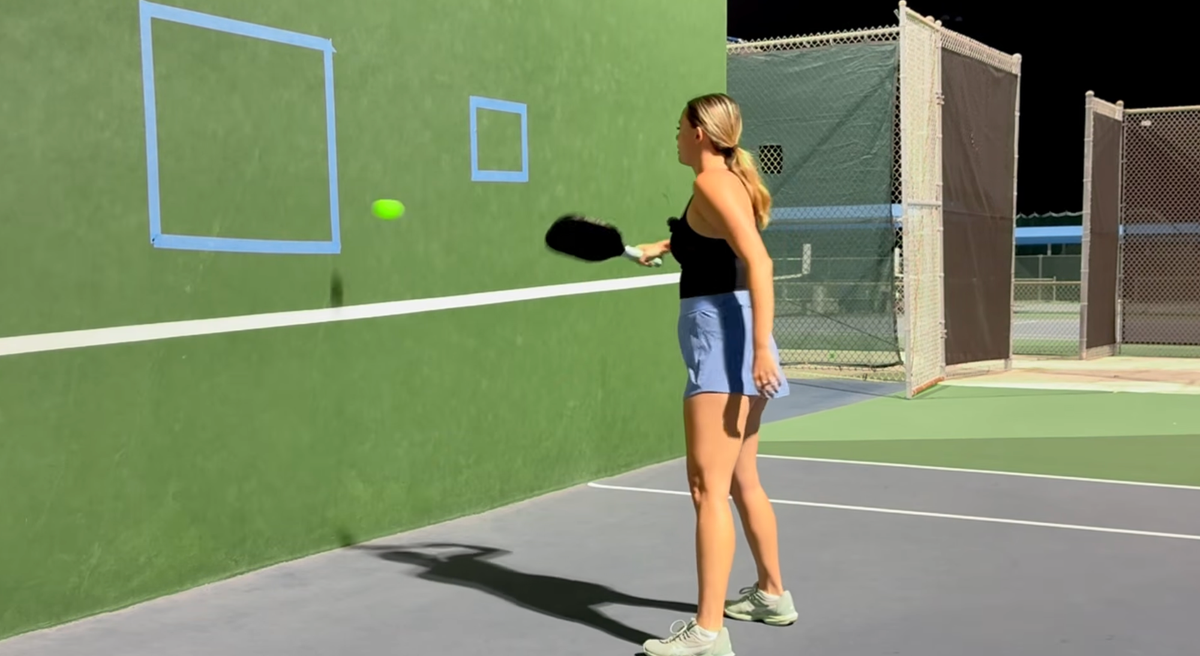
Schupp's real secret weapon was a wall, and for a stretch in Arkansas his main training partner was literally a refrigerator.
A wall gives you three things a partner cannot.
Here is why the wall works so well for fast hands:
- The ball always comes back. You have to be ready every single time, which trains the habit that a rally is never over until it is over.
- You control the difficulty instantly. Take one step closer to the wall and the ball comes back faster. The closer you get, the harder it is, right up until it is impossible.
- You need no partner and no court. A garage wall, a backboard, or yes, a fridge, all work.
Yahoo Sports made the same case in a recent tip on how wall drills build faster hands, right down to alternating forehand and backhand and keeping the elbow down.
It is the most accessible speed tool there is, and it costs nothing.
Why Being "Cooperative" on the Wall Makes You Slower
The biggest wall-drill mistake is staying comfortable, because if you never exceed your current speed, you never build a new one. Schupp learned this the hard way.
"For the first like six months of doing wall drills, I actually went cooperative and I got way slower," he admits.He kept a pace he could sustain forever, which felt productive and taught him nothing.
The fix is uncomfortable on purpose: go faster than you can keep up with. Push the pace until you are missing some, back off a hair, then push again.
That ragged edge is where reaction speed actually grows.
It is the same principle behind the best speed-up drills to win kitchen battles and a smart pro drilling routine.
Simple Pickleball Wall Drills to Reach 5.0
It’s just you, your paddle, and the opportunity to repeat the same movement hundreds of times until it becomes muscle memory.
 The Dink PickleballThe Dink Media Team
Set Your Feet Before You Ever Need Your Hands
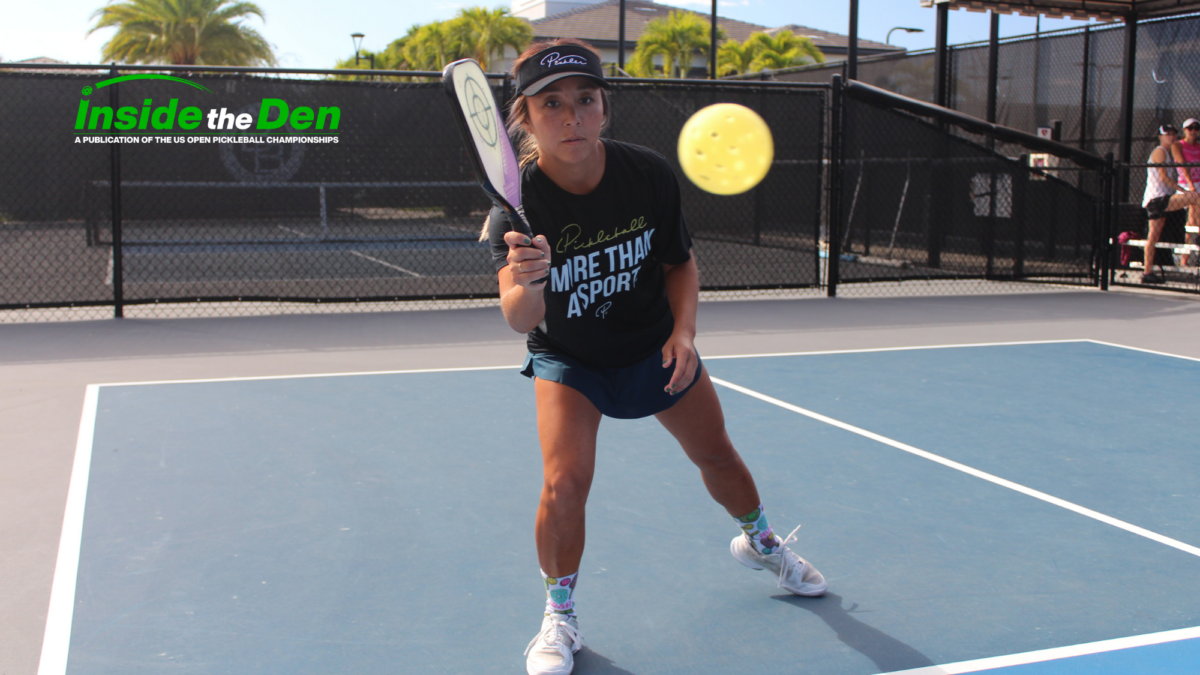
Fast hands start with early feet, because a paddle that is ready a split second sooner beats a hand that is a split second faster.
If your body is still moving when the ball arrives, no amount of hand speed saves you.
Get into your ready position early and set your base before the exchange starts.
Yahoo Sports covers the timing well in this tip on when to split step: set your feet as the ball crosses the net, not when your opponent contacts it.
From that stable base, a compact counter and a quiet paddle do the rest.
If you want a structured plan, this hand speed drill system and these counter fixes pair perfectly with everything above.
💡
Heads up: hundreds of thousands of pickleballers read our free newsletter.
Subscribe herefor cutting edge strategy, insider news, pro analysis, the latest product innovations and more.
Frequently Asked Questions
Can you actually train fast hands in pickleball, or are they natural?
You can absolutely train them. Reaction time has a genetic component, but hand speed at the net is mostly technique and reps — Elliot Schupp went from a 2.5 beginner to the fastest hands on tour using the compact-counter and wall drills in this article, which is proof the skill is built, not given.
What is the fastest way to get faster hands?
Shorten your swing. A compact counter with your elbow in front of your body resets faster than a big stroke, so you are ready for the next ball sooner. Combine that with wall drills where you push past a comfortable pace, and your hands speed up quickly.
How do wall drills improve pickleball hand speed?
The ball always comes back, so you build the habit of staying ready, and you can raise the difficulty just by stepping closer to the wall. You do not need a partner or a court. The key is to go faster than you can comfortably keep up with rather than rallying at an easy, steady pace.
Why do my counters keep sailing long?
Usually your swing is too big. If your paddle gets behind your body, you add pace you cannot control and the ball flies. Keep the motion short, almost like catching the ball on the paddle, and finish in your ready position. Also practice letting out balls go by, so you stop reflexively hitting shots that were headed out anyway.
How often should I do these hand speed drills?
A few focused sessions a week beats one long grind. Even ten minutes of wall work before you play, alternating forehand and backhand and pushing the pace, adds up fast. Consistency matters more than duration when you are training reaction speed.
Anuncie Aqui / Advertise Here
Sua marca para o mundo Pickleball! / Your brand for the Pickleball world!




 English (US) ·
  Portuguese (BR) ·