
 English
  Spanish
  Portuguese
  German
  Italian
  Japanese
  French
  Polish
  Russian
  Netherlands
  Hungarian
  Turkish
  Videos
  Thedink Pickleball

Being outmatched in skill but not effort is the most common gap in rec pickleball, and hustle alone will never close it. Here's how to pick better targets, shrink the skill gap, and make stronger opponents actually earn their points.
You walked off the court outmatched in skill but not effort, and honestly, that stings more than getting beaten by someone who simply wanted it more.
You chased every ball. You never stopped moving. You still lost 11-3. Here's the thing nobody tells you after that match: effort was never the variable.Hustle is the price of admission at every level above 3.0, and the players who just handled you brought the same hustle plus twenty shots you don't own yet.
The fix isn't more running. It's aiming the effort you already have at the three or four things that actually move a scoreline.This video comes from Roscoe Bellamy on YouTube.
Love pickleball? Then you'll love our free newsletter. We send the latest news, tips, and highlights for free each week.
What Does Being Outmatched in Skill but Not Effort Actually Mean?
Being outmatched in skill but not effort means your athleticism, focus, and desire are competitive with your opponent's, but your shot library, decision-making, and consistency aren't yet.
It's a gap in execution, not in want to.
You can see it in the score: you're losing long rallies, not short ones, and you lose them on the fifth or sixth ball every single time.
Definition check: a skill gap in pickleball is the difference between the shots you can hit under pressure and the shots the situation demands.It is not the same as a fitness gap or a motivation gap.
According to USA Pickleball, a player rating is an estimate of current playing ability based on match results, not a measurement of effort, potential, or how hard you're trying.A 4.0 beating you doesn't mean they care more. It means they've banked more reps on the shots that matter.
That distinction changes what you do next. If you think you lost because you weren't trying hard enough, you'll practice harder.
If you understand you lost on execution, you'll practice differently, which is the entire ballgame.
Why Does Effort Alone Fail Against a Better Player?
Effort alone fails because better players don't lose to energy. They lose to uncomfortable patterns.
A sports-specific meta-analysis on deliberate practice found that structured, feedback-driven practice explained roughly 18% of the variance in performance, which tells you two things: practice matters, and the type of practice matters more than the hours.Running yourself ragged in open play is not deliberate practice. It's cardio with a paddle.
Think of it this way. When you're outmatched in skill but not effort, your instinct is to speed up and win the point before your weakness shows.
That instinct is backwards, and it's the trap most rec players fall into.Rushing hands the better player the one thing they want: a fast, chaotic ball they've seen ten thousand times.
It's also why rushing mistakes quietly cost you points you'll never notice on the scoreboard.
Effort Without a Target Is Just Cardio
Here's the quick version: unfocused effort makes you tired, not better. The players who plateau for years aren't lazy.
They're busy. They play four days a week and never isolate a single weakness, so the same third shot leaks points in 2027 that leaked them in 2024.Give your effort a target instead. One shot, one pattern, one match. That's it.
💡
Need some new pickleball gear? Get 20% off select paddles, shoes, and more with code THEDINK at
Midwest Racquet SportsHow Do You Compete When You're Outmatched in Skill but Not Effort?
You compete by changing what you're trying to do, not how hard you're doing it.
When you're outmatched in skill but not effort, your job stops being "win the point" and becomes "extend the point until they make the mistake."Better players beat you with patience, so borrow the weapon. There's a reason we keep making the case for boring pickleball.
Three adjustments, in priority order:
- Slow the ball down. Take pace off instead of adding it. Early preparation buys you time and forces them to generate their own power, which is where errors live.
- Pick one target and live there. Not everywhere. Just one. Usually it's the weaker player's backhand or the middle seam between two opponents who haven't sorted out coverage.
- Remove your own gifts. Count your unforced errors next match. If you gave away six points on pop-ups, the skill gap wasn't the problem; the pop-ups were.
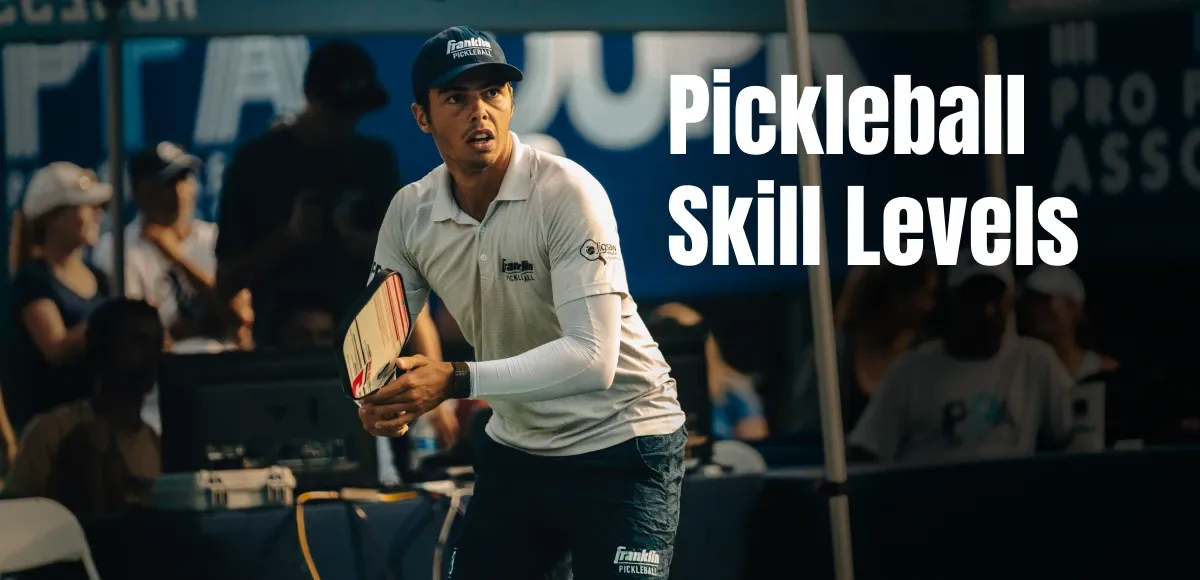
Curious What Your Pickleball Skill Level Is? The Dink Can Help You Evaluate Your Game
Whether you’re a pickleball newcomer or a seasoned player, understanding the nuances of pickleball ratings is crucial for rec players and tournament junkies alike.
 The Dink PickleballLuke Burton
Make Them Hit One More Ball
The single highest-return habit for an overmatched player is the reset.
Mastering the reset shot turns a losing exchange into a neutral one, and neutral is all you need.
You don't have to out-hit a 4.5. You have to make them hit five more balls than they want to.
Watch what strong players do when they're the ones under pressure. They don't counter-attack from their shoelaces.
They reset, absorb, and reload, then attack when the ball sits up. Steal that decision tree wholesale. It costs you nothing but patience, and patience is free.
Why Shot Selection Beats Shot Quality When You're Outmatched in Skill but Not Effort
Because the right ball hit at 70% beats the wrong ball hit perfectly.
Playing the percentages is how under-skilled players steal games from better ones, and it's the fastest available upgrade in the sport.
You can improve your shot selection tonight. You cannot improve your hands tonight.
Start with the third shot.
If you're dropping from deep behind the baseline, you're attempting the hardest shot in pickleball from the worst possible spot, then blaming your skill level when it floats.Drive instead, reset the fifth, and you've just converted a 20% shot into a 70% sequence. That's not talent. That's bookkeeping.
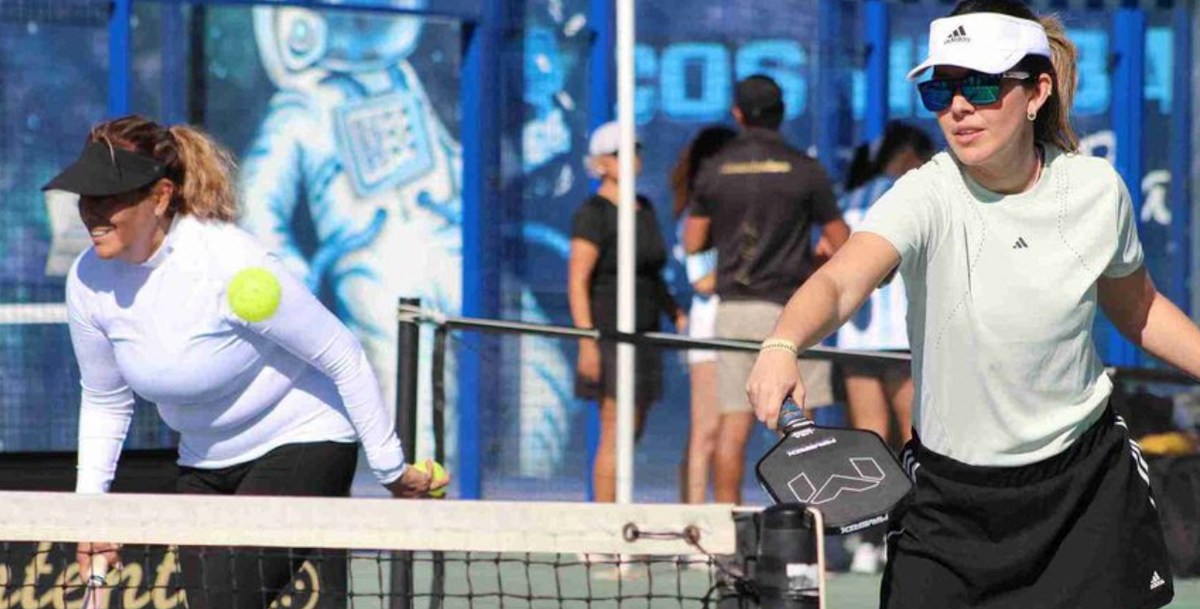
5 Pickleball Serves That Win More Points
Adding even one of these serves into your game can transform your effectiveness instantly.
 The Dink PickleballThe Dink Media Team

What Should You Change the Next Time You Play Up?
Change your definition of winning.
Playing up against better competition is worth it only if you leave with information, so pick one measurable goal before the first serve: fewer than four unforced errors, 80% of returns landing deep, or ten consecutive dinks without popping one up.Pros do this constantly, by the way. When you watch the pros play, notice how rarely they go for a winner that isn't there. Most of what looks like skill is restraint.
Then take the information home.
The gap between your practice reps and your match reps is why skills vanish under pressure, which is the whole argument behind the 70% rule for match-proof pickleball: if you can't execute a shot 7 times out of 10 in a drill, it does not exist in a game. Period.Building a Practice Plan When You're Outmatched in Skill but Not Effort
Keep it brutally simple. Pick the one shot that cost you the most points, then drill it with solo reps you can run by yourself before you ever step back into open play.
Twenty minutes of focused repetition beats two hours of social doubles for this specific problem.
If you want structure, a real training plan for competitive players will organize the week for you.
And if you're chasing a number, the jump from 3.5 to 4.5 almost always comes from subtraction, not addition.
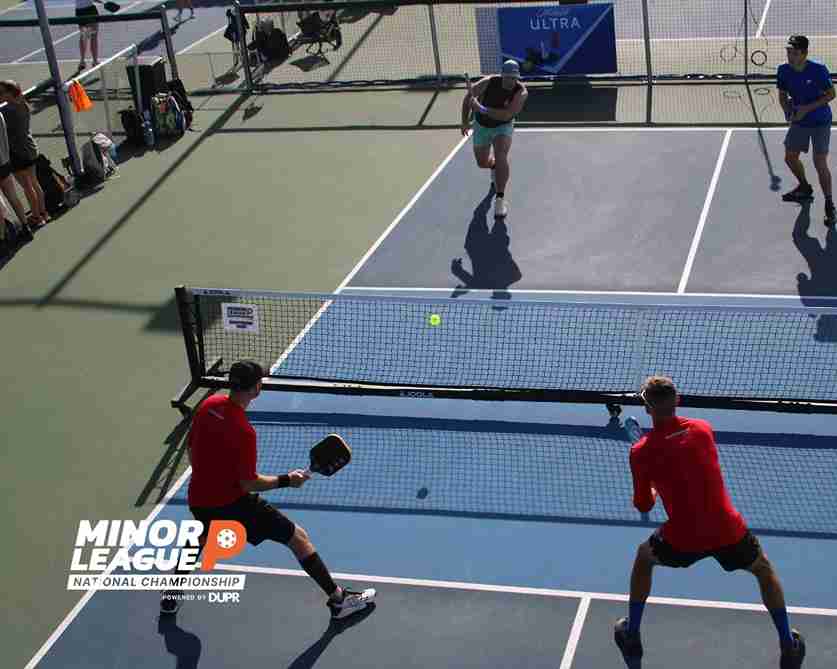
Fewer errors. Fewer low-percentage swings. Fewer moments where effort replaces thought.How to Win Recreational Pickleball Games Right now
Most players who struggle to win recreational pickleball games aren’t losing because of talent, they’re losing because of fixable tactical habits. These 7 adjustments target exactly what’s going wrong in rec play and give you a blueprint to start winning tonight.
 The Dink PickleballThe Dink Media Team
The Part Nobody Says Out Loud
Getting outmatched in skill but not effort is actually the best diagnostic you'll get all season.
A close loss teaches you nothing. A 11-3 beating shows you exactly which shot breaks first, and it shows you in high definition.
So stop treating those matches as evidence that you're not good enough. Treat them as a scouting report on yourself.The effort is already there, which is the hard part to coach.
Everything else is just fixing the habits that are sabotaging your game, one at a time, until the scoreline stops lying about how hard you work.
5 Pickleball Pro Secrets From the 2026 US Open Final
The 2026 US Open gold medal match is a masterclass in pickleball pro secrets most players never notice. Here are five things the best in the world do that you can start copying today.
 The Dink PickleballThe Dink Media Team
Key Takeaways
- Being outmatched in skill but not effort is an execution gap, not a motivation gap.
- Slow the ball down instead of speeding up; better players feed on pace.
- Pick one target per match (weak backhand, middle seam) rather than attacking everywhere.
- Resets, not winners, keep you in rallies against stronger opponents.
- Deliberate, feedback-driven practice beats volume. The 70% rule is the filter.
- Define winning by error count or shot percentage when you play up, not by the final score.
💡
Heads up: hundreds of thousands of pickleballers read our free newsletter.
Subscribe herefor cutting edge strategy, insider news, pro analysis, the latest product innovations and more.
Frequently Asked Questions
Can you beat a better pickleball player with effort alone?
Rarely, and not consistently. Effort keeps you in rallies, but points are won through shot selection, consistency, and positioning. The practical path is to combine your effort with lower-risk choices: deeper returns, more resets, fewer attempts at winners that aren't there.
How do I stop getting blown out when I play up a level?
Change the goal from winning to limiting damage. Track unforced errors instead of points, pick one pattern to run all match, and resist speeding up the ball. Most blowouts against stronger players come from self-inflicted errors, not from being out-hit.
Does playing with better players actually make you better?
Yes, if you're learning rather than just surviving. Playing up exposes your weakest shot faster than any drill will. The improvement happens afterward, when you take that weakness to a practice session and fix it with focused repetition.
What should I practice first if I keep losing to stronger opponents?
Start with the reset and the third shot. Those two shots decide the majority of rec-level rallies, and both are learnable without a partner. If you can neutralize pace and get to the kitchen line reliably, you've closed most of the gap that effort can't close.
How long does it take to close a skill gap in pickleball?
It depends on practice quality far more than practice quantity. Players who drill one specific weakness with feedback usually see change within a few weeks, while players who only play open games can stay at the same level for years. Ratings reflect match results over time, so expect the number to lag your actual improvement.
Anuncie Aqui / Advertise Here
Sua marca para o mundo Pickleball! / Your brand for the Pickleball world!




 English (US) ·
  Portuguese (BR) ·