
 English
  Spanish
  Portuguese
  German
  Italian
  Japanese
  French
  Polish
  Russian
  Netherlands
  Hungarian
  Turkish
  Videos
  Thedink Pickleball

Targeting the middle in pickleball is the highest-percentage pattern in doubles, and most rec players ignore it for the sideline. This guide breaks down why the middle works, which shots to aim there, and how to drill it.
Targeting the middle in pickleball is the most underrated pattern in doubles, and the reason is almost embarrassing: the middle is boring.
There's no highlight clip in a ball that lands between two people. No one films it.But watch any PPA men's doubles final and count how many rallies end because somebody hit a ball straight down the seam and two very good players stared at each other.
This one comes from Mari Humberg Pickleball, on YouTube.
It happens constantly. The middle doesn't beat your opponents with a better shot. It beats them with a worse decision.Love pickleball? Then you'll love our free newsletter. We send the latest news, tips, and highlights for free each week.
What Does Targeting the Middle in Pickleball Actually Mean?
Targeting the middle in pickleball means aiming at the seam between your two opponents rather than at the open sideline.
It's a placement choice, not a shot type. Drops, drives, returns, dinks, and speed-ups can all go middle.
Quick definition, since the term gets used loosely: the middle here isn't the centerline painted on the court.It's the moving gap between two defenders, and it shifts every time they shift.
If both opponents slide left, the real middle is now left of the centerline. That's why controlling the middle court is a reading skill before it's an aiming skill.
The flip side matters too. If you've ever argued with a partner about who covers the middle in doubles, you already know how ugly that gap gets.
Now go create it on the other side of the net.
Why Is Targeting the Middle in Pickleball So Hard to Defend?
Three reasons, and only one of them is physical. The middle gives you a lower net, more margin, and a defender who has to decide before they swing.
💡
Need some new pickleball gear? Get 20% off select paddles, shoes, and more with code THEDINK at
Midwest Racquet SportsThe Net Is Lower, and the Court Is Longer
Here's the free lunch. Per the USA Pickleball Official Rulebook, the net is 34 inches high in the center and 36 inches at the sidelines.
Two inches doesn't sound like much until you remember how many of your drops clip tape by an inch.
You also get a longer runway. Aim at a sideline and you have a narrow landing zone before the ball sails wide. Aim at the middle and your miss is still in play.That extra margin is why the third shot drop gets noticeably more forgiving the second you stop aiming at corners.
Angles Die in the Middle
A ball at the sideline hands your opponent the whole diagonal. They can rip crosscourt, go behind you, or drop short angle.
A ball in the middle takes most of that away, because geometry stops cooperating.
USA Pickleball's own doubles strategy guidance calls middle shots high-percentage plays for exactly this reason: fewer angles back, more rally control for you.This is the part rec players miss. You're not trying to hit a winner. You're trying to make their best available response worse than yours.
The same logic drives smart return targets and picking the right spots to attack.
Two Brains, One Ball
The best part is free. A middle ball forces a conversation between two people who are not talking.
Most teams never settled their X-rule for middle coverage, and even teams who did lose track mid-rally when someone's stacking scrambles the usual sides.Hesitation is the point. You don't need a mishit. You need a half-second of "yours?"
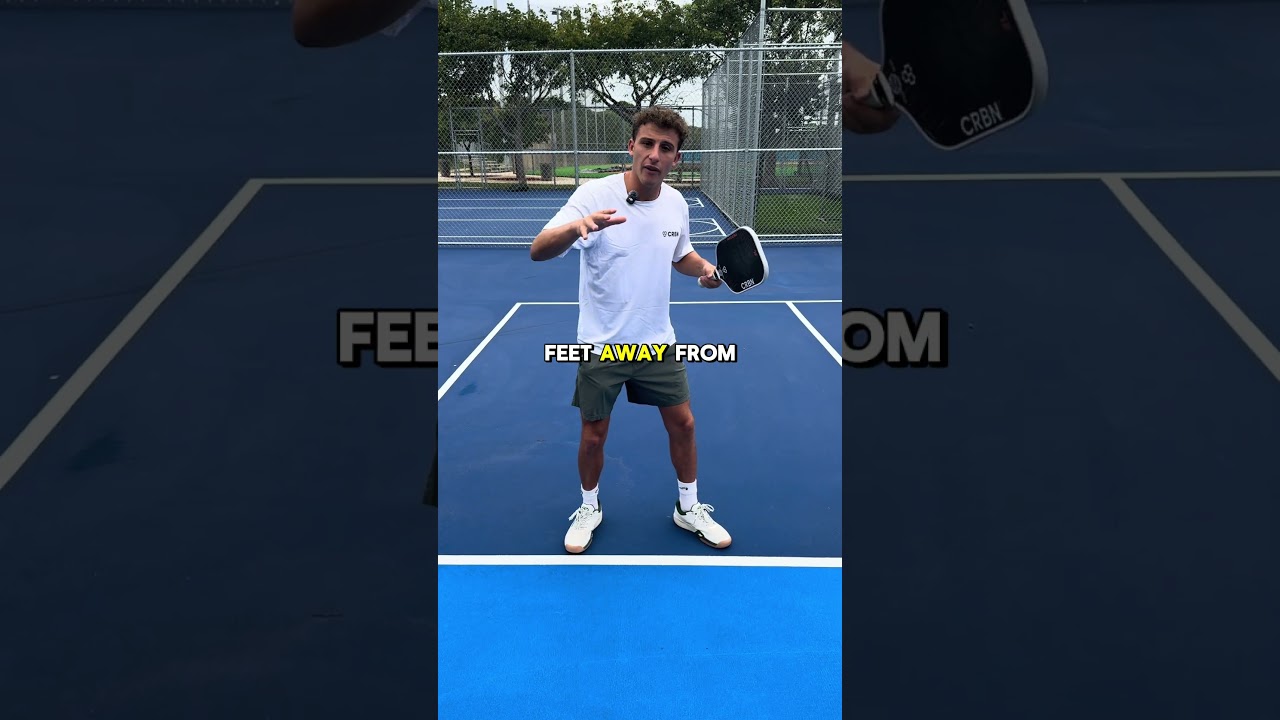
Covering the Middle in Pickleball: 4 Rules to End Confusion
Most players think the forehand always takes the middle, but that is costing them points. Here is the real system for covering the middle in pickleball.
 The Dink PickleballThe Dink Media Team
Which Shots Should You Actually Send There?
Not all of them. The middle pays off on four specific balls, and forcing it everywhere else makes you predictable.
Targeting the Middle in Pickleball off the Third Shot
Start here.
USA Pickleball's guidance on drop placement says that when you aren't sure where to put a third shot drop, the middle gives you the lowest net, the longest landing area, and the chance your opponents hesitate.That's three advantages on the shot you miss most.
Same for the drive.
A drive at someone's hip near the middle jams them in a way a wide drive never will, which is also why an aggressive third shot drop down the seam is so hard to counter cleanly.
Returns, Dinks, and the Speed-Up
Deep middle returns cut off the receiving team's angles and, if the serving team is stacking, can strand them on the wrong side.
Middle dinks pull both opponents toward center and open both sidelines for your next ball.
There's a reason we've made the case for the middle dink and written about when to dink in the middle more than once.Then the payoff. Pull them in with two or three middle dinks, watch their paddles drift together, and speed up at the kitchen line through the seam you just created.
That's the 1-2 trap for through-the-middle winners in one sentence.
One refinement that separates 3.5s from 4.5s: aim at the backhand side of the middle, not dead center.In a standard righty-righty setup, that's the left player's backhand.
Most players have a weaker backhand and a slower reaction on that wing, so you're attacking a seam and a weakness at the same time.
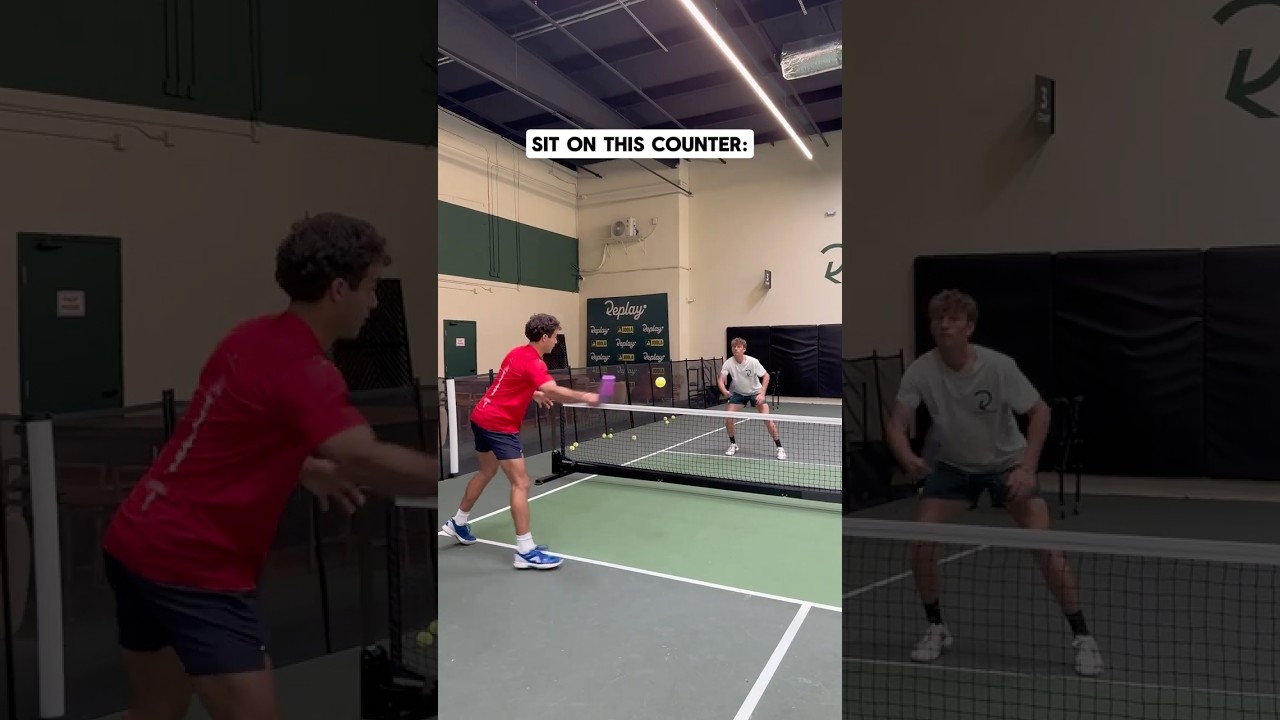
Pickleball Shot Selection: Low Forehand, High Backhand Rule
Pickleball shot selection doesn’t have to be complicated. One rule covers most situations: slide forehand when the ball is low, sit backhand when the ball is high.
 The Dink PickleballThe Dink Media Team
How Do You Drill Targeting the Middle in Pickleball?
You drill it with targets on the floor, not with vibes. Three sessions and it stops feeling like a sacrifice.
- Cone the seam. Put a cone two feet left of the centerline at the kitchen line. Hit 30 third shot drops at it. Count makes, not feel.
- Middle-only dink games. Play to 11, everything crosscourt is a dead ball. You'll learn fast which middle dinks are actually attackable or safe.
- Two-and-go. Two middle dinks, then speed up middle. Partner tracks whether their opponents' paddles drifted inward.
- Return targets. Ten deep returns to the middle third of the court, then ten to the sideline. Compare how many weak thirds each one produced.
Pair that with proper kitchen line spacing and a quick talk before the first point, because what you settle with your partner early decides whether your own middle leaks points right back.
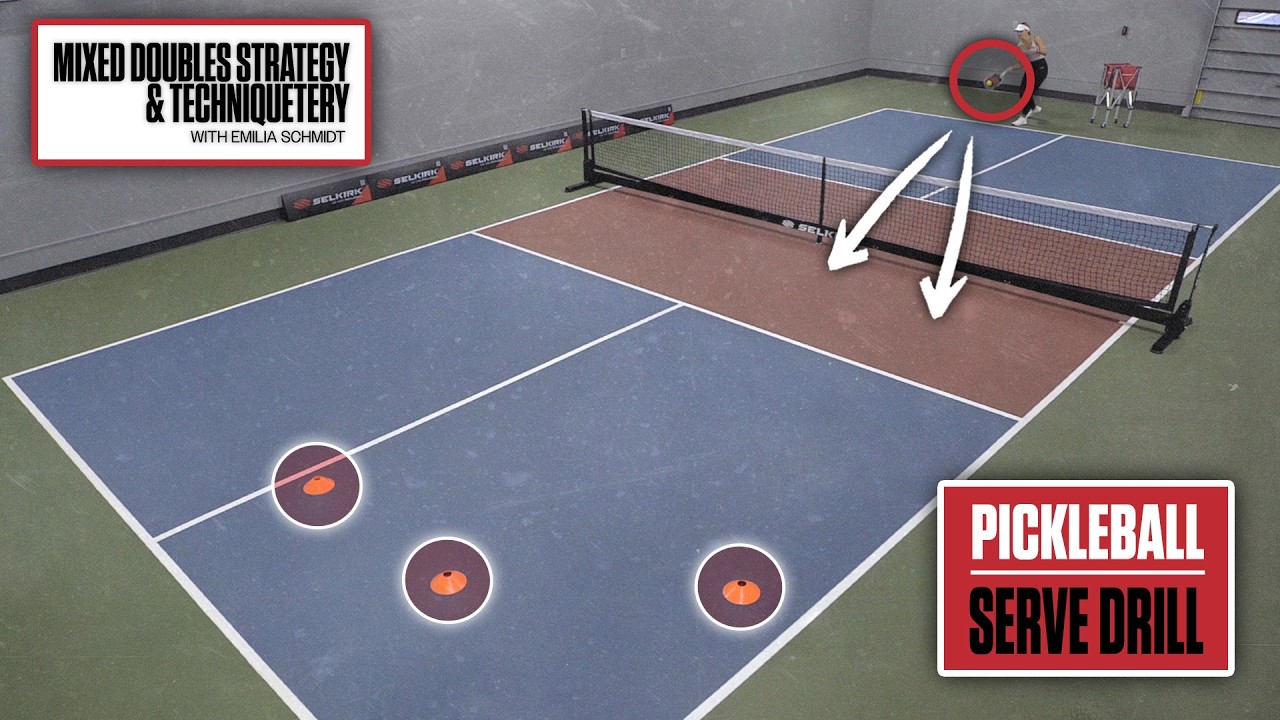
The 3-Target Pickleball Serve Drill for Consistency and Deception
Great servers look identical on every serve and still hit three different targets. This pickleball serve drill from Selkirk TV builds both habits at once.
 The Dink PickleballThe Dink Media Team
When Is the Middle the Wrong Target?
Three situations, and ignoring them is how targeting the middle in pickleball turns into free points for the other team.
- Against a team with a dominant forehand in the center, you're feeding their best shot every ball.
- Against a lefty-righty pairing, the middle is often two forehands instead of two backhands, which flips the whole premise.
- And against anyone sitting at the kitchen line with hands, a floaty middle ball at chest height is just a gift; that's when you go wide, or behind them instead.
Honestly, the tell is simple. If their paddles are already touching in the center, stop.
Go wide twice, make them separate, then come back. Good doubles strategy is a pattern, not a rule.
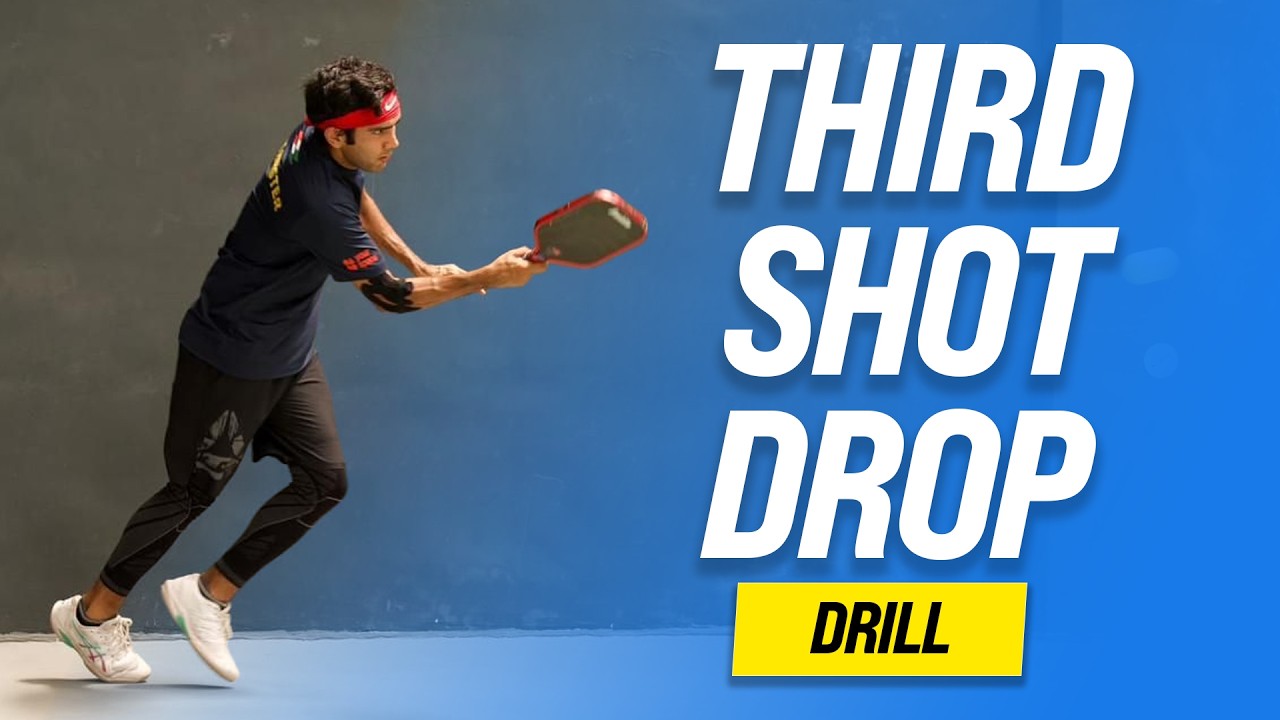
Third Shot Drop Target Drill That Fixes Accuracy Fast
If your third shot drop keeps landing too high or sailing long, the problem is almost always a lack of targeted practice. This target drill builds the touch and accuracy you need to make it automatic.
 The Dink PickleballThe Dink Media Team
Key Takeaways
- Targeting the middle in pickleball means aiming at the seam between two opponents, not at the painted centerline.
- The net is 34 inches in the center versus 36 at the sidelines, so middle shots clear lower and land with more margin.
- Middle balls reduce the angles your opponents can hit back and force them to decide who takes the ball.
- The highest-value middle targets are third shot drops, deep returns, kitchen dinks, and speed-ups.
- Aim at the backhand side of the seam, and abandon the middle against lefty-righty teams or a strong center forehand.
💡
Heads up: hundreds of thousands of pickleballers read our free newsletter.
Subscribe herefor cutting edge strategy, insider news, pro analysis, the latest product innovations and more.
Frequently Asked Questions
Is targeting the middle in pickleball a beginner strategy or an advanced one?
Both, for different reasons. Beginners use the middle because it's the safest place to miss, with a lower net and a bigger landing area. Advanced players use it because it manipulates where two opponents stand and sets up the speed-up they actually want.
Who is supposed to take a ball hit down the middle?
The most common convention is that the player with the forehand in the middle takes it, and the other player covers the line. Teams using the X-rule or a dedicated coverage system may flip that. The key is deciding before the match, not during the rally.
Does the middle really have a lower net?
Yes. The USA Pickleball rulebook sets the net at 34 inches in the center and 36 inches at the sidelines. That two-inch gap is small, but on drops and dinks played near the tape, it's the difference between a clean shot and a let-free net cord.
Should I hit my third shot drop to the middle every time?
No. Use it as your default when you're under pressure or unsure, since it gives you the most margin. Mix in wide drops once opponents start cheating toward center, otherwise you become easy to read. Shot selection should still follow your court position.
How do I stop the middle from being a weakness on my own team?
Set the rule before the first point and repeat it between games, the same way you'd agree on when poaching is fair game. Decide who takes the middle, keep spacing tight at the kitchen line, and call "mine" early and loud. Most middle errors are communication failures, not technique failures.
Anuncie Aqui / Advertise Here
Sua marca para o mundo Pickleball! / Your brand for the Pickleball world!




 English (US) ·
  Portuguese (BR) ·