
 English
  Spanish
  Portuguese
  German
  Italian
  Japanese
  French
  Polish
  Russian
  Netherlands
  Hungarian
  Turkish
  Videos
  Thedink Pickleball

The Erne is one of the most effective shots in pickleball, but most players foot fault because they set up their footwork wrong. This 2-step fix will clean up your movement and help you attack with confidence.
The Erne in pickleball is one of the most aggressive and satisfying shots you can hit at the kitchen line.
But if you keep getting called for foot faults, or if you keep missing the shot entirely, your footwork is almost certainly the problem.Most players set up the Erne the wrong way.
They turn their body and step with the wrong foot, which puts them in an awkward position that almost guarantees they clip the line.
This breakdown comes from Richard Livornese on YouTube, who lays out a simple two-step approach that fixes the Erne at its foundation.Here is exactly how it works.
Love pickleball? Then you'll love our free newsletter. We send the latest news, tips, and highlights for free each week.
What Is the Erne in Pickleball?
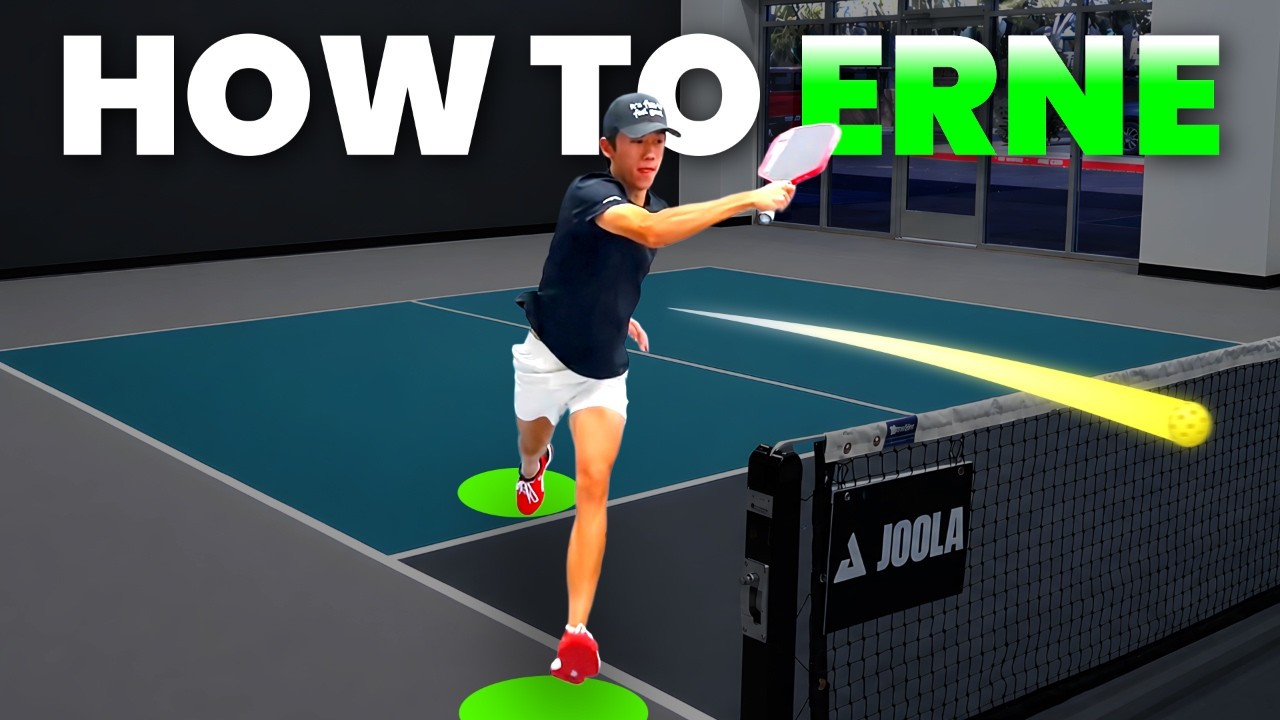
The erne in pickleball is a shot where you move around the outside of the kitchen post and contact the ball in the air, either by jumping or stepping around the non-volley zone.
When you hit it correctly, you are standing beside the net with an extreme angle that is nearly impossible for your opponent to handle.
Because you are moving outside the non-volley zone rather than through it, the erne in pickleball is a legal shot.The problem is getting your feet there cleanly, without touching the kitchen line or the zone itself.
It is not just about speed. It is about stepping in the right direction so your body stays balanced and your feet land where they are supposed to.The most common reason players foot fault on the erne in pickleball is that they step with the wrong foot first.
Specifically, players turn their body and lead with the opposite leg, the one farther from the post.
When you do that, your hips rotate and your body faces sideways.
You feel like you are generating more reach or power, but what is actually happening is your trail foot drifts toward the kitchen line without you realizing it.
That is where the fault comes from. Your body is twisted, your balance is off, and your back foot clips the line right as you make contact or land.Footwork failures like this are sneaky because they feel natural in the moment even when they are costing you the point.
💡
Need some new pickleball gear? Get 20% off select paddles, shoes, and more with code THEDINK at
Midwest Racquet SportsThe 2-Step Fix That Works
Here is the correct approach, broken down simply.
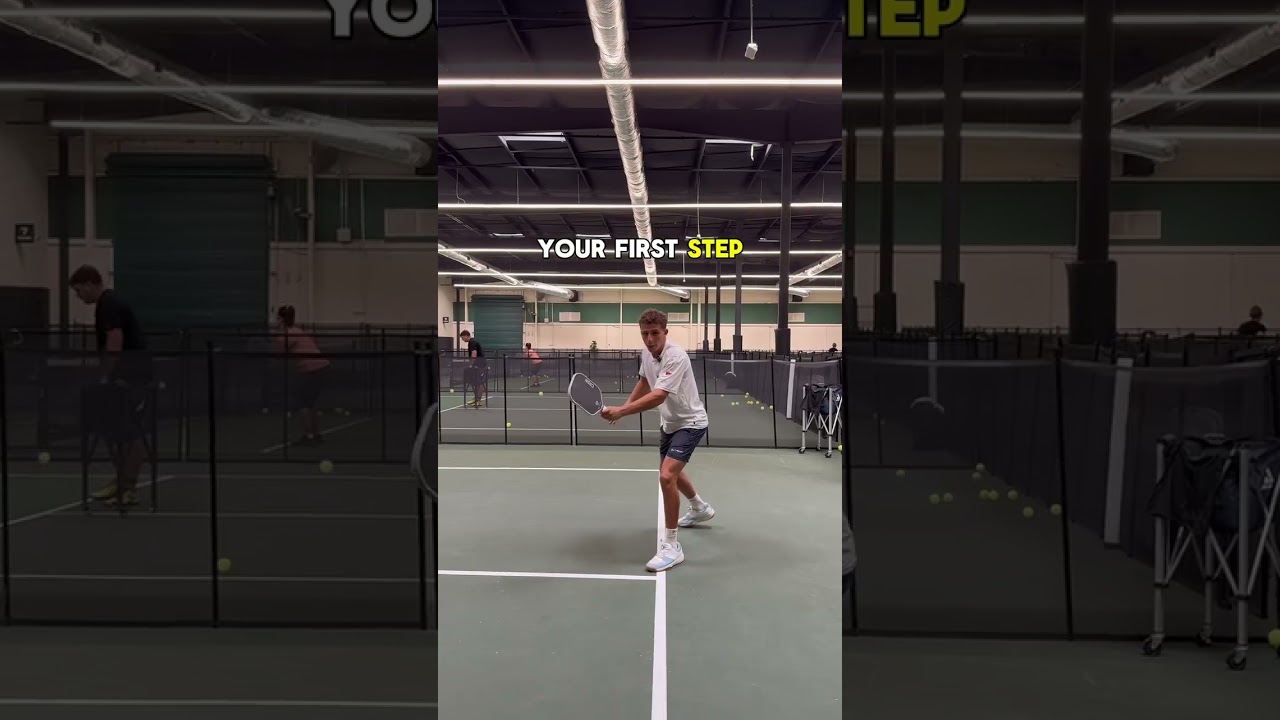
Step 1: Lead with your close leg. Instead of turning and stepping with your far leg, you lead with the leg that is already closest to the post. This keeps your hips square and your body moving in a straight line toward the outside of the court.
Step 2: Turn your foot and push. As you plant that close leg, turn your foot outward slightly. That foot angle acts like a launch point. From there you push, move around the post, and arrive in position to hit the ball.
That is the whole sequence. Two steps, done in the right order, and you land in the right spot every time without your feet wandering into the kitchen.
2 Pickleball Drilling Fixes That Transfer to Match Play
Hitting the same ball a thousand times feels productive, but it rarely shows up when the game speeds up. Here are the two pickleball drilling changes that turn practice reps into real match improvement.
 The Dink PickleballThe Dink Media Team
How Should You Hit the Ball Once You Get There?
Once you are in position beside the net, you have two shot options depending on where the ball is.
- Backhand Erne: This is the preferred shot for most players. If the ball is close to the sideline, your backhand gives you a cleaner angle and more control over direction. Most players find it easier to keep the ball low and cross-court from the backhand side.
- Forehand Erne: If the ball is sitting more toward the middle of the court, you can swing with your forehand instead. The forehand Erne tends to have more raw power behind it, but it requires better timing since the ball is not as far out wide.
The key with either option is not to swing big. You are already in a dominant position because of your angle.
Contact and placement win the point, not how hard you swing.
Think about what most players get wrong with finishing shots: they try to muscle the ball when the position has already done the work for them.The Erne is the same idea.
Pickleball Shot Selection: 3 Ball Height Rules That Work
Most players lose points not because they hit bad shots, but because they hit the wrong shot at the wrong height. These three pickleball shot selection rules fix that instantly.
 The Dink PickleballThe Dink Media Team
Is the Erne Safe for Your Body?
This is a real concern, especially if you are playing regularly or are an older player. Jumping and sliding around a post puts stress on your ankles, knees, and hips.
Pickleball injuries can be serious, and the Erne is one of those moments where things can go wrong fast if your landing is off.The two-step approach actually helps here too.
Because you are stepping with the close leg first and pushing from a planted position, you have more control over how you land.
You are not flinging your body sideways and hoping for the best.
Good footwear and insoles matter a lot for this shot.If your shoes are not providing enough lateral support, you will feel it on the erne in pickleball before you feel it anywhere else on the court.
The Safe and Simple 3-Part Strategy to Score Pickleball Points for Senior Players
This approach doesn’t assume you can outrun younger opponents or hit harder than them. Instead, it assumes you’re smarter and more strategic.
 The Dink PickleballThe Dink Media Team
When Should You Attempt the Erne?
The Erne works best when your opponent is locked into a cross-court dinking pattern toward the sideline.
That ball trajectory puts the ball near the post, which is exactly where you need it.Here is when the shot makes the most sense to try:
- Your opponent is dinking predictably to one side. If they are hitting the same cross-court dink two or three times in a row, start moving early on the third one.
- The ball is traveling low and close to the sideline. A high ball near the middle is not an Erne ball. A low ball near the outside line is.
- You have practiced the footwork enough that it is automatic. Do not try this in a match for the first time. Drilling your movement patterns first makes all the difference.
- You are comfortable with both the backhand and forehand finish. If you only know one option, your opponent can eliminate it by changing their dink direction.
The Erne is also a psychological weapon. Once you hit one, your opponent starts worrying about it.
That opens up other shots and makes your entire dinking game more effective.
Pickleball Pull Attack: 5 Factors to Master
A pickleball pull attack can be a game-changer, but only when you understand the five factors that determine success. Coach Tony Roig breaks down exactly when you should initiate an aggressive attack and when patience pays off.
 The Dink PickleballThe Dink Media Team
What Common Mistakes Should You Avoid?
Beyond the foot fault issue, there are a few other things that kill the Erne before it gets started.
- Moving too late. If you wait until the ball has already left your opponent's paddle, you will never get there in time. You need to read the pattern and commit early. If you want to get better at reading your opponent's tendencies before they happen, these dink reads will sharpen your court awareness fast.
- Telegraphing the move. If you start drifting toward the post too early, your opponent will just redirect the dink down the middle and you will be out of position. Stay balanced and neutral until the last possible moment, then commit.
- Going for the Erne on the wrong ball. Not every ball near the sideline is an Erne ball. Shot selection is everything, and swinging at a ball that is too high or too central will result in an error, not a winner.
- Landing inside the kitchen after the shot. Your momentum can carry you forward, and if you land in the non-volley zone after hitting the ball in the air, that is a fault. Plan your jump or step so you land outside or behind the zone.
How to Hit the Erne in Pickleball the Right Way
The Erne in pickleball is one of the most aggressive shots at the kitchen line, but most players either never go for it or botch the timing. Here is exactly how to fix that.
 The Dink PickleballThe Dink Media Team
How to Practice the Erne So It Sticks
You cannot drill the Erne alone. You need a partner feeding balls near the sideline while you work on the footwork pattern. Start without hitting at all.
Just focus on executing the two steps correctly and landing in position.
Once the movement feels natural, start adding the finish. Use the backhand first since it is the simpler option. Then build to the forehand.After that, practice reading the pattern from a live dink rally so you are not just responding to a toss.
If you want to pair this with other aggressive kitchen skills, these three dink battle strategies from pros will give you more context for when to go aggressive and when to be patient.And if your overall footwork at the kitchen needs work, this lateral movement drill is one of the best places to start.
The Erne is not a gimmick shot. It is a legitimate weapon that forces your opponent to play differently. But you have to earn it with the right footwork first.
💡
Heads up: hundreds of thousands of pickleballers read our free newsletter.
Subscribe herefor cutting edge strategy, insider news, pro analysis, the latest product innovations and more.
Frequently Asked Questions
What is the Erne shot in pickleball?
The Erne is a shot where you move around the outside of the kitchen post and hit the ball in the air before it bounces, while standing outside the non-volley zone. It creates an extreme angle that is very difficult for opponents to defend. It is legal as long as you do not touch the kitchen line or zone during the shot.
The most common cause is stepping with your far leg first, which turns your body sideways and lets your trail foot drift into the kitchen. Fix this by leading with your close leg and turning your foot outward to push around the post. That two-step sequence keeps your body square and your feet clean.
Should I use a backhand or forehand on the Erne?
Use the backhand when the ball is near the sideline, and use the forehand when the ball is more toward the middle. The backhand Erne gives you better angle control on wide balls. Most players find the backhand easier to execute consistently.
How do I avoid landing in the kitchen after the Erne?
Plan your jump or step so your momentum carries you to the outside of the court rather than forward into the kitchen. Practice the landing separately before combining it with the swing. If you land in the non-volley zone after volleying the ball, it is a fault regardless of where you were when you hit it.
When is the Erne not a good idea?
Avoid the Erne when the ball is high, when it is sitting in the middle of the court, or when your opponent is already changing their dink direction unpredictably. The shot works best against predictable cross-court dinking patterns near the sideline. Going for it on the wrong ball leaves you completely out of position.
Anuncie Aqui / Advertise Here
Sua marca para o mundo Pickleball! / Your brand for the Pickleball world!




 English (US) ·
  Portuguese (BR) ·