
 English
  Spanish
  Portuguese
  German
  Italian
  Japanese
  French
  Polish
  Russian
  Netherlands
  Hungarian
  Turkish
  Videos
  Thedink Pickleball

Most players fail their resets because they push or chop instead of lifting. This pickleball reset drill fixes that with four progressions you can use today.
Your pickleball reset keeps failing for one reason: you are doing too much.
You push, you chop, you swing with way more force than the shot needs, and the ball floats up right into your opponent's wheelhouse.The fix is not complicated, but it does require slowing way down and rebuilding from scratch.
That means starting closer to the net than you are comfortable with and working your way back through specific progressions.
This drill breakdown comes from More Briones Pickleball on YouTube, where the focus is on building real court skills through structured repetition, not just random hitting.Here is exactly how the progression works and why it solves the problem most players ignore.
Love pickleball? Then you'll love our free newsletter. We send the latest news, tips, and highlights for free each week.
Why Most Players Reset the Wrong Way
The reset is one of the most misunderstood shots in pickleball. Players treat it like a soft drive or a block when it is really neither of those things.
A proper reset means getting the ball to land in the non-volley zone so your opponent has to hit up on it, giving you time to close in.If the ball stays in the air, you are handing them an attack.
The two most common errors are pushing through the ball with forward momentum and chopping down on it. Both kill the shot before it even gets started.
The third and sneakiest error is an unstable wrist, which sends the ball flying even when your footwork looks fine.If you want to understand why this shot is so connected to your third shot game, this breakdown on why your third shot drop pops up covers the exact same mechanics from a slightly different angle.
What Does an Open Paddle Face Actually Mean?
Before you start the drill, you need to understand the single most important technical concept: open paddle face.
An open paddle face means the hitting surface is angled upward toward your target rather than perpendicular to the ground.
Think of it like a ramp, not a wall. The ball rides up and over the net instead of being driven flat through it.
Most players have their paddle face too closed, especially on the forehand side where the tendency is to roll the wrist forward.That closed face sends the ball down or causes you to compensate by swinging upward too hard.
Keep that image of a ramp in your head through every progression below.
💡
Need some new pickleball gear? Get 20% off select paddles, shoes, and more with code THEDINK at
Midwest Racquet SportsThe 4-Step Progression That Fixes Your Reset
Step 1: Start Inside the Non-Volley Zone
Yes, inside the kitchen.
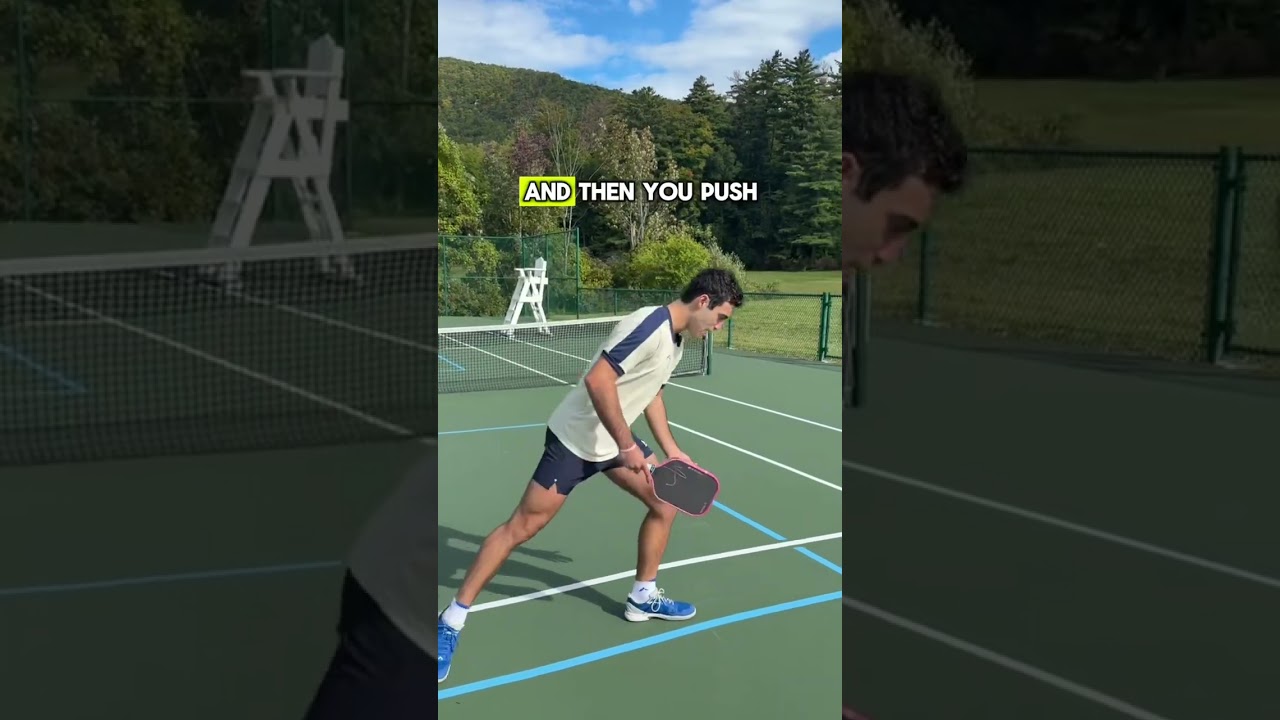
This is not a shot you would use in a real game, but it teaches you something you cannot learn any other way: what a clean contact actually feels like when you are forced to be gentle.From inside the NVZ, have a partner feed slow balls to your backhand. Your only job is to open that paddle face and let the ball come off it. No pushing.
No swinging. Just contact.
Here is what you are training:
- Ball tracking so your eyes stay on the ball through contact
- Wrist stability so the paddle face does not wobble at the moment of impact
- Grip pressure at about a four out of ten, loose enough to absorb pace
After a few reps on the backhand, switch to the forehand. Most players immediately want to push on the forehand side. Notice that urge and resist it.
Step 2: Move to the Non-Volley Zone Line
Now step back to the kitchen line. The feed can come in slightly faster. Your lower body should stay calm and still, just like in step one.
The key adjustment here is that you are now turning the paddle face toward your target rather than just holding it up.You are not lifting wildly. You are more or less blocking with intention, directing the ball where you want it to go.
The forehand is harder at this distance because the instinct to push becomes stronger.
If you feel your wrist rolling forward or your elbow driving through, stop and reset your setup position.This is also a good time to review why your pickleball reset fails in general so you can self-diagnose when things go sideways during the drill.
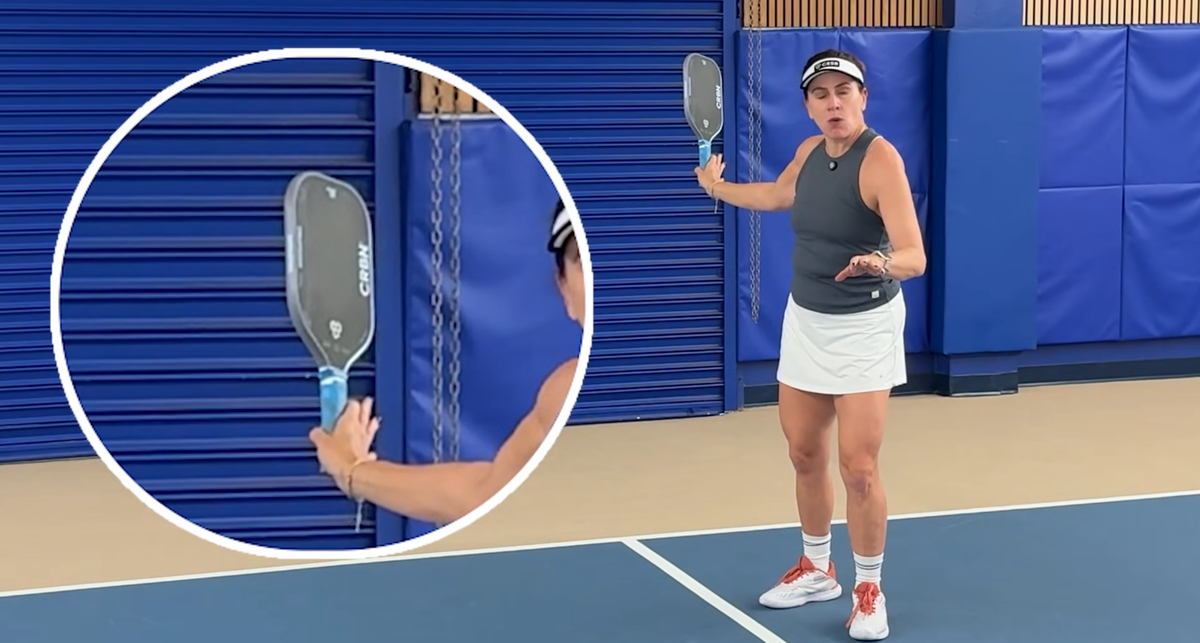
Topspin in Pickleball: The Complete 3-Step Progression Guide
It’s one of those shots that looks effortless when done right, but feels impossible when you’re the one holding the paddle
 The Dink PickleballThe Dink Media Team
Step 3: Move to Mid Court
This is where the drill starts feeling like real pickleball. Mid court is the hardest place to reset from because you are furthest from your target and most vulnerable to fast balls.
From here, the mechanics expand slightly.
You are still using a compact swing, still keeping the lower body calm, but now you need to lift with your shoulder to generate enough arc to get the ball over the net and down into the kitchen.Focus on these checkpoints:
- Stay balanced before the ball arrives, not scrambling as it gets to you
- Get the paddle out in front early, not back behind your hip
- Lift upward with the shoulder, not outward with the elbow
- Keep grip pressure loose through the entire motion
- Watch the ball land in the NVZ before you celebrate or criticize the shot
Do sets of three on the backhand, then three on the forehand. Take your time between reps. The goal is quality contacts, not volume.
For players who want to understand how this feeds into the full transition zone strategy, the three drop strategy for the transition zone is worth reading alongside this drill.
Step 4: Add Movement With a Drop and Split Step
Now you are playing pickleball. Start at the baseline, hit your third shot drop, and move toward the kitchen.
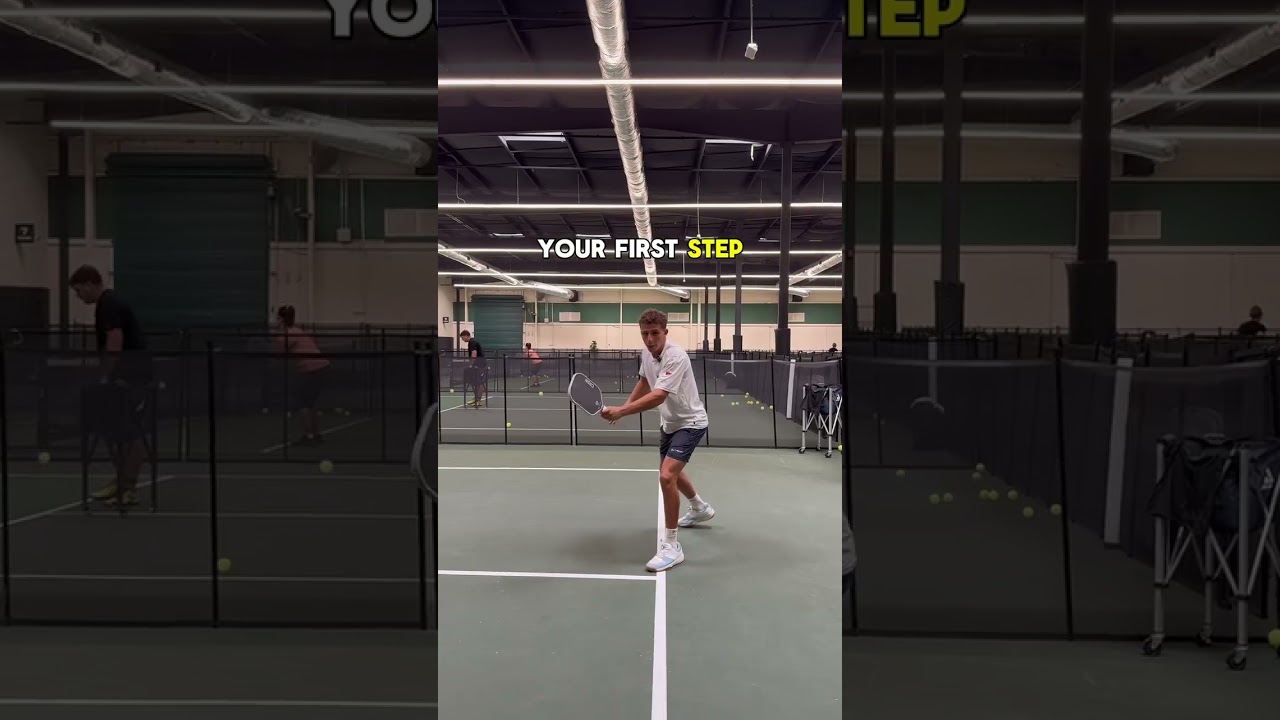
Before your opponent makes contact, get into your split step.
The split step is what allows you to be balanced when the reset opportunity arrives. Without it, you are moving while the ball is coming and your contact suffers for it.Your partner should feed a tougher ball than before, something closer to what you would see in a real point.
Your job is to apply all the fundamentals from steps one through three under that added pressure.
This step is also where you start building the habit of getting set early. Most rec players are still moving when they make contact on their reset.That forward momentum is what causes the ball to pop up even when the paddle face and grip pressure feel right.
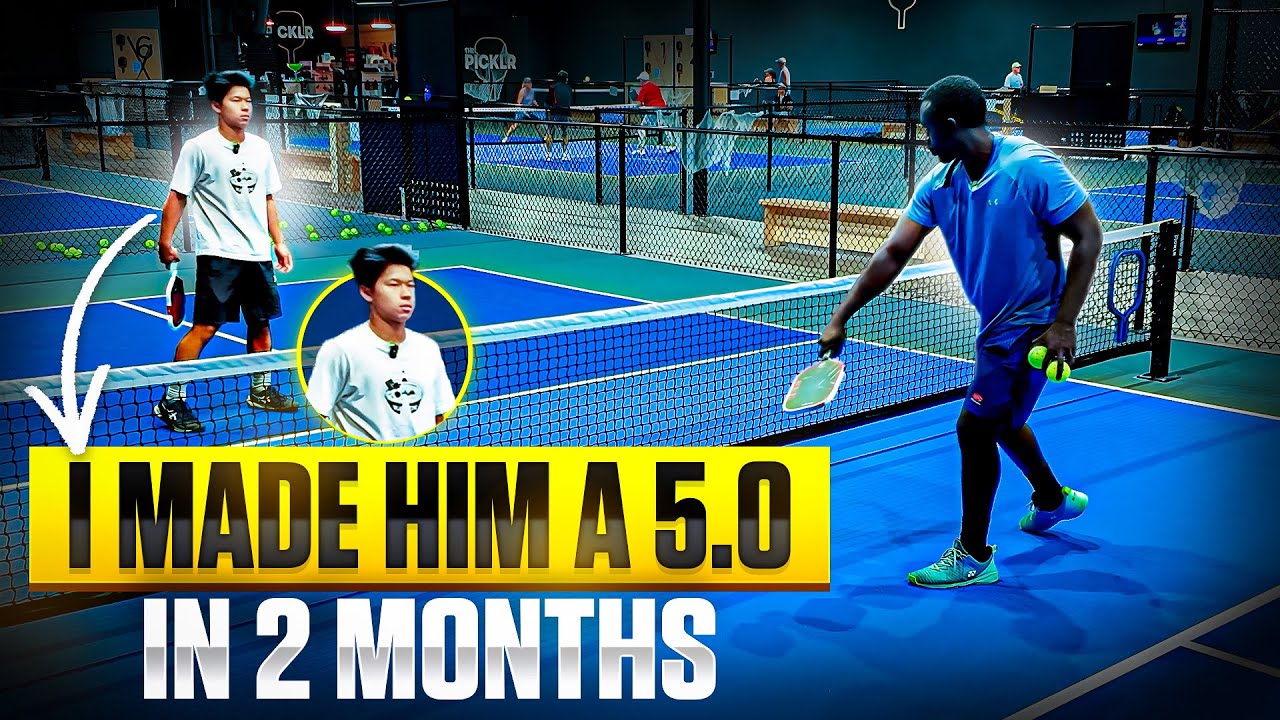
The Skills Progression That Transformed This Tennis Player into a Pickleball 5.0
Some skills definitely translate, but a tennis background can be a liability without proper training and techniques
 The Dink PickleballThe Dink Media Team
Is There a Drill to Stay in the Transition Zone Longer?
There is, and it is one of the most effective ways to build real reset confidence. Instead of moving all the way to the kitchen, stay in the transition zone and keep resetting ball after ball.
Your partner tries to attack from the kitchen or steps back to create space and feeds challenging balls.
Your only goal is to stay alive, getting each reset to bounce in the NVZ before your opponent can attack it.
This drill teaches you something important: if you are hitting a good reset, your opponent has to hit up on the ball.A ball hit upward can only be attacked so hard. You are not as exposed as you feel in that zone when your technique is sound.
Players who do this drill regularly stop panicking in the transition zone.
The panic is almost always caused by not trusting the motion. Repetition in this specific spot builds that trust faster than anything else.
If you want to stop rushing out of this zone too early, this piece on stopping the rush to the kitchen pairs directly with this drill.
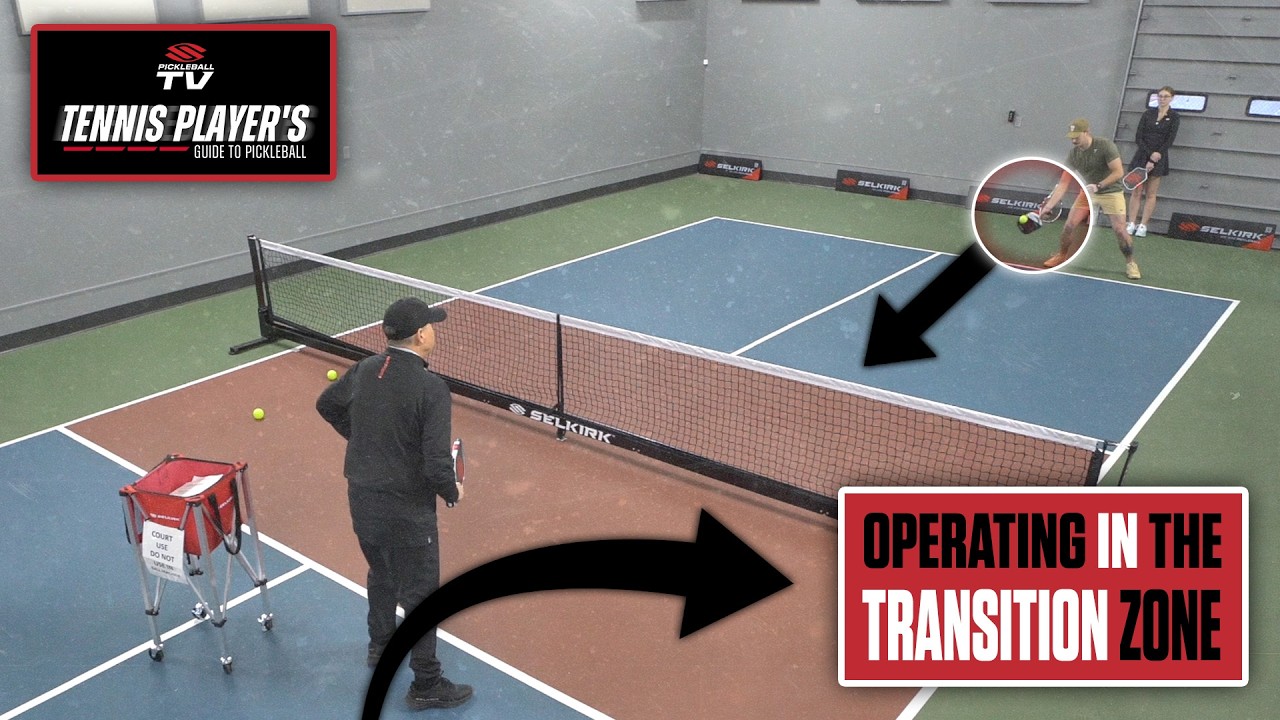
Master the Pickleball Transition Zone With This Ladder Drill
The pickleball transition zone is where most tennis players lose matches before they even know what hit them. This ladder drill fixes the mindset and the movement in one progressive exercise.
 The Dink PickleballThe Dink Media Team
Why Your Forehand Reset Is Harder Than Your Backhand
The forehand reset trips up most players because the forehand naturally wants to generate power.
You have more range of motion, more muscle involvement, and years of tennis habits telling you to swing through the ball.
On the backhand reset, the body position naturally limits how much you can push.
The paddle face opens more easily. The motion stays compact almost by default.
On the forehand, you have to actively fight the urge to extend and drive. Get the paddle out in front early. Do not take it back.Think about a simple lift, not a swing.
Watching how players like Anna Leigh Waters handle pace at the kitchen line is instructive here.The paddle stays in front, the face stays open, and the motion is barely visible from the outside. That is what you are building toward.
3 Pickleball Reset Fixes That Stop the Pop-Up
A clean pickleball reset takes pace off the ball and drops it back into the kitchen so nobody can attack it. Here are three habits and three drills that make it repeatable under pressure.
 The Dink PickleballThe Dink Media Team

Common Mistakes to Eliminate Right Now
Here are the errors that will undo all your drill work if you carry them into open play:
- Gripping too tight under pressure, which tightens the wrist and kills feel
- Taking the paddle back too far, especially on the forehand
- Chopping downward instead of lifting upward toward the target
- Moving forward through contact, letting momentum push the ball up
- Looking at the opponent instead of tracking the ball through the paddle
One underrated fix is focusing on where the ball is going to land, not where it is right now.
Your target is the NVZ. Keep that picture in your head during the swing, not the net in front of you.For players who keep getting attacked in the transition zone specifically, understanding why your fourth shot keeps popping up will help you trace the root cause.
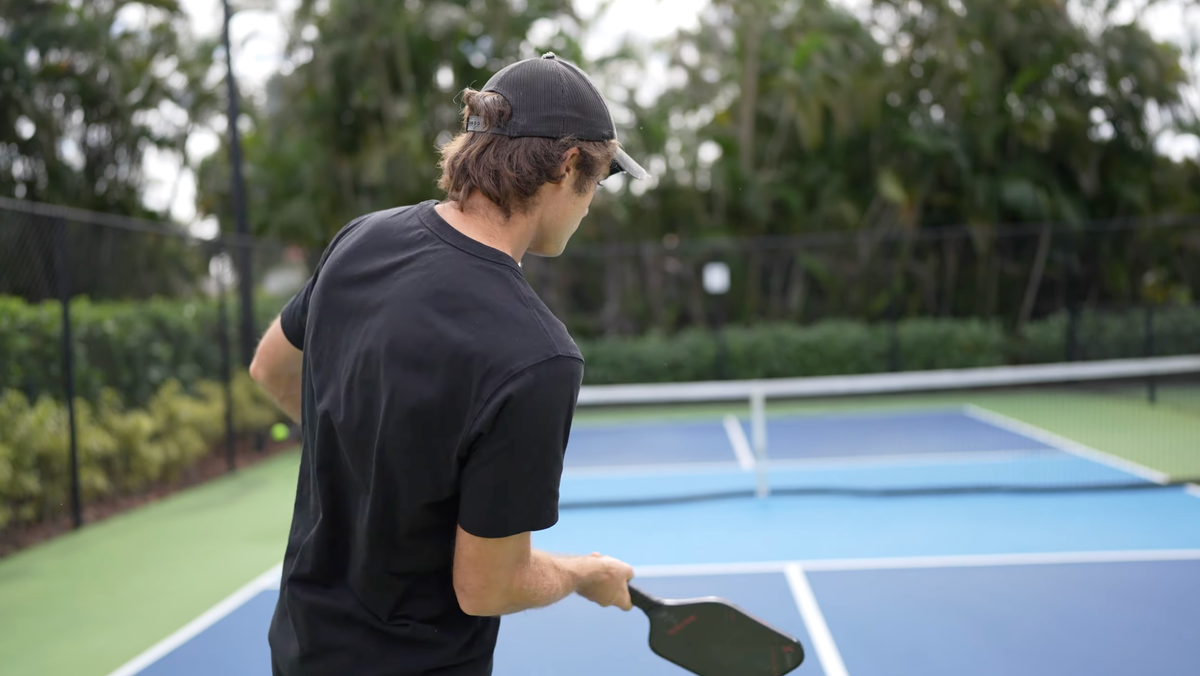
2 Pro Serve Tips to Eliminate Common Mistakes
The beauty of these two fixes is that they work together – a palm-down toss gives you the space to swing, weight transfer gives you the power to swing hard
 The Dink PickleballThe Dink Media Team
How to Know If Your Reset Is Actually Working
The test is simple: does the ball bounce before your opponent can attack it? If yes, your reset worked.
If it stays in the air and gets crushed, something in the chain broke down.
Start tracking this in your next session. Count how many resets actually land in the kitchen versus how many get picked off in the air.
You want that number moving in the right direction over time.
Players who feel stuck at the same rating for months are often missing this shot specifically. It is not that they lack athleticism or hustle.
It is that they have been prioritizing the wrong things. If you feel stuck below 4.5, the reset is almost always part of the problem.Improving the reset also changes how your opponents play you. When they cannot attack from the kitchen reliably, they start making their own errors.
The four problems holding back most rec players include this exact dynamic and it is worth understanding how they all connect.Use these progressions consistently and your reset will stop being your liability. It will become the shot that gets you to the kitchen when everyone else is stuck in no man's land. That shift changes your entire game.
For players who want to train without a partner, these five wall drills can help you maintain your feel and wrist stability between sessions.And if you want to go deeper on the overall skill order that leads to real improvement, this guide on the right skill order lays it out clearly.
💡
Heads up: hundreds of thousands of pickleballers read our free newsletter.
Subscribe herefor cutting edge strategy, insider news, pro analysis, the latest product innovations and more.
Frequently Asked Questions
What is a pickleball reset and when should I use it?
A pickleball reset is a soft, controlled shot that gets the ball to bounce in the non-volley zone when you are under pressure in the transition zone or mid court. You use it when you cannot attack and need to neutralize a fast or difficult ball. The goal is to force your opponent to hit upward, which limits how aggressively they can play the next shot.
Why does my reset keep popping up?
Your reset pops up because of forward momentum through contact, a closed paddle face, or too much grip pressure. Any one of these causes the ball to lift off the paddle with too much energy. The fix is a loose grip, an open paddle face, and stopping your body before you make contact.
How do I practice resets without a partner?
Wall drills are the best solo option for building the feel of a stable wrist and open paddle face. You can also self-feed and practice the motion in your kitchen or driveway using a controlled drop and lift. The repetition of the motion itself builds muscle memory even without a live ball coming at you hard.
What grip pressure should I use on a reset?
Keep your grip at about a four out of ten, which is firm enough to control the paddle but loose enough to absorb pace. A tight grip locks the wrist and removes the soft feel you need for this shot. Practice relaxing your hand deliberately before each reset rep during your drill sessions.
How long does it take to develop a reliable pickleball reset?
Most players see noticeable improvement within two to three dedicated practice sessions when using structured progressions like the one above. Consistency matters more than volume, so fifteen focused minutes beats an hour of random hitting. The real test is when you can reset under pressure in a real point without thinking about the mechanics.
Anuncie Aqui / Advertise Here
Sua marca para o mundo Pickleball! / Your brand for the Pickleball world!




 English (US) ·
  Portuguese (BR) ·