
 English
  Spanish
  Portuguese
  German
  Italian
  Japanese
  French
  Polish
  Russian
  Netherlands
  Hungarian
  Turkish
  Videos
  Thedink Pickleball

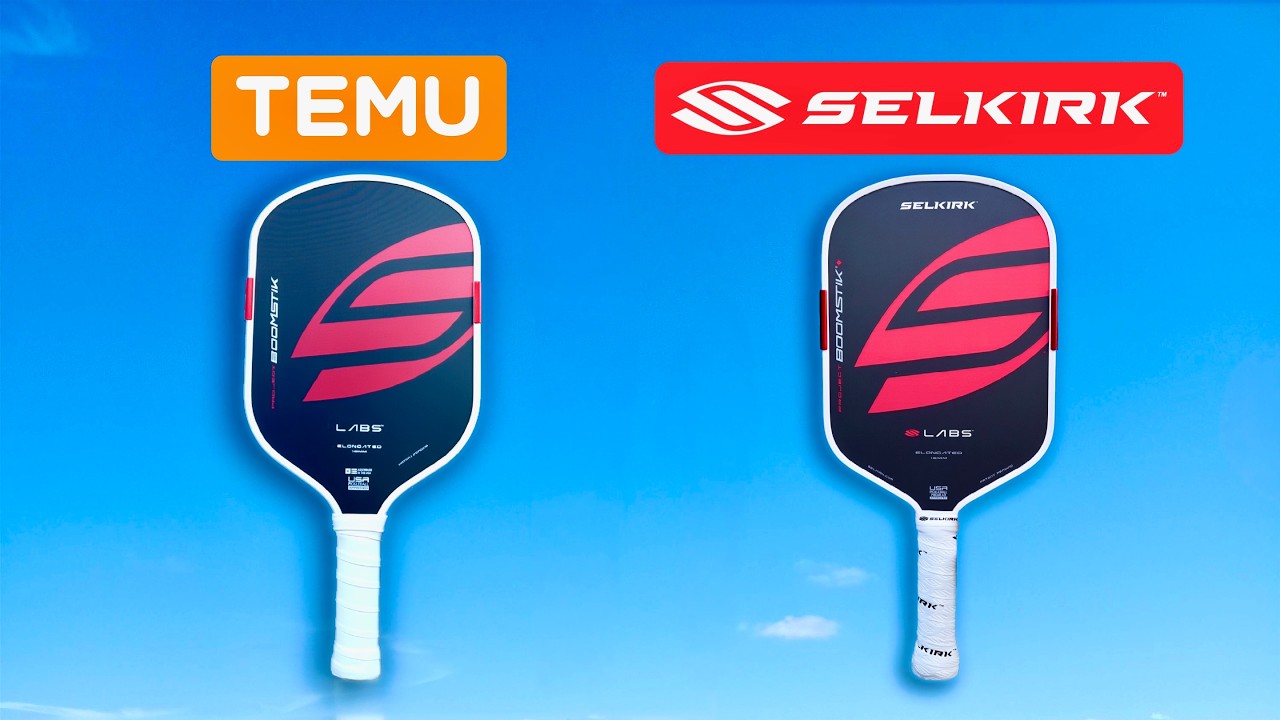
Fake pickleball paddles come from real factories that also make legitimate brands, and most buyers never find out. Here's what a pro paddle founder revealed about how the counterfeit market actually works.
If you've ever bought a pickleball paddle from a third-party seller and wondered whether you got what you paid for, your instincts are probably right to question it.
The fake pickleball paddle market is bigger and more organized than most players realize. It isn't just some guy in a garage slapping a logo on a cheap paddle.This breakdown pulls from a detailed conversation on The Drop podcast, where former top-five pro and RPM Pickleball founder James Ignatowich explained exactly how counterfeit paddles get made, which factories are involved, and what it means for your game.
Love pickleball? Then you'll love our free newsletter. We send the latest news, tips, and highlights for free each week.
The Pickleball Paddle Industry Is More Fragmented Than You Think
Most players assume paddle brands build paddles from scratch in their own facilities. That's almost never the case.
Every major paddle you've swung comes from one of a small number of factories in China.
Ignatowich put it plainly: there are roughly six to eight factories that produce quality paddles, and about three or four that are genuinely excellent.The barrier to starting a brand is surprisingly low.
Ignatowich estimated the startup cost at under $100,000, which is almost nothing given the upside in a sport growing this fast.That low barrier cuts both ways. More legitimate brands can enter the market, but counterfeit operations can spin up with almost no friction.
Where Do Fake Paddles Actually Come From?
A fake pickleball paddle gets made at a real factory.
Not a sketchy back-alley shop. An actual manufacturing facility that also produces paddles for brands you trust.
Ignatowich described walking through a factory near his home in China and seeing thousands of legitimate-looking paddles from a specific brand, sitting right next to fake Selkirks, fake Yolas, and fakes of other top brands.
That's not a coincidence.
Some factories run counterfeits as just another production line, which is why the UPA-A is now open-sourcing a counter-attack on counterfeit paddle brands.Here's where it gets worse. Some legitimate brands are unknowingly working through middlemen who source production from those same factories.
The brand thinks their paddle is being made at a reputable facility. It isn't.
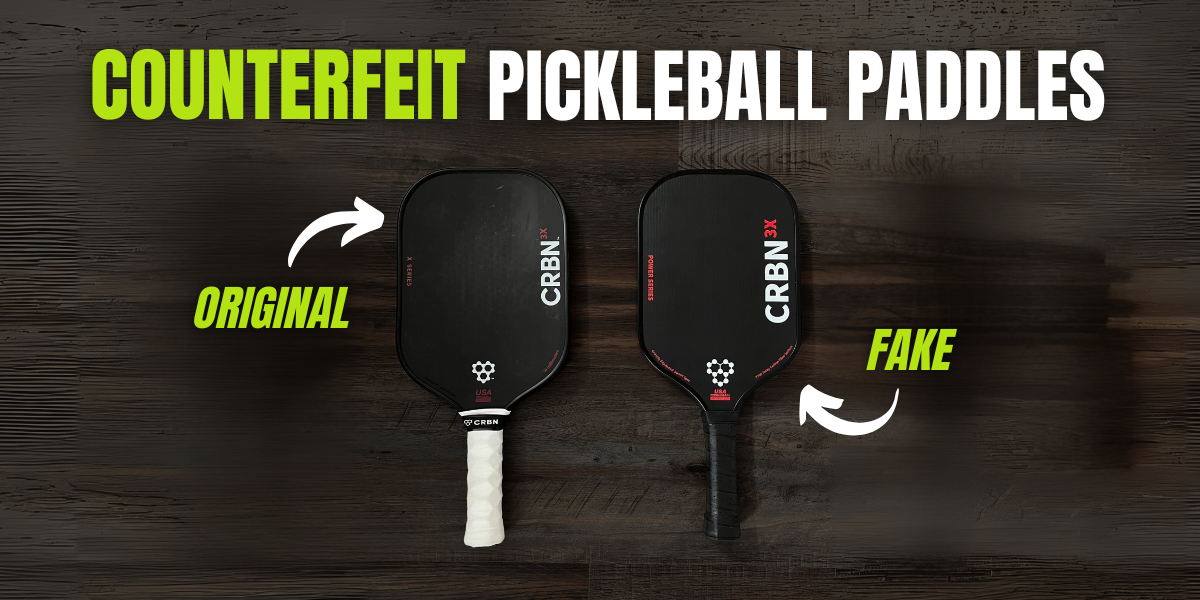
The Counterfeit Pickleball Paddle Black Market Explained
Inside the pickleball paddle black market that’s confusing consumers, costing brands, and undermining the sport’s ability to innovate
 The Dink PickleballAlex E. Weaver
What Makes a Factory "Good" vs. "Bad"?
Not all factories are equal, and the differences show up in ways that hit your paddle's performance and durability. According to Ignatowich, here's the split:
- Handle consistency: Top factories produce handles with uniform shape, grip feel, and structural integrity. Lower-tier factories cut corners here and you'll feel it after a few weeks of play.
- Edge guard adhesion: Cheap factories have edge guards that start peeling after moderate use. Good factories have this dialed in.
- Foam disbonding: Full foam paddles are prone to internal separation if the process is off. The best factories have essentially solved it.
- Surface grit consistency: This is the big one. Grit determines spin, and the variation between a factory-spec paddle and what a pro actually plays with can be massive.
- Quality control repeatability: Good factories produce the same paddle every time. The tier below produces something different every run, which is exactly what Selkirk's $1 million testing lab was built to catch.
That last point matters more than people realize.
A paddle from a factory with poor QC might feel great one week and noticeably different the next, even if it's supposed to be the same model.If you're curious how grip, weight, and lead tape interact with your paddle choice, those variables are worth understanding alongside factory quality.
💡
Need some new pickleball gear? Get 20% off select paddles, shoes, and more with code THEDINK at
Midwest Racquet SportsDo Pros Actually Get Grittier Paddles Than You?
Yes. And it's been an open secret in the paddle world for years.
Ignatowich was brutally honest about his own experience.
While playing under a Selkirk contract at a top-five ranking, he watched opponents use paddles with noticeably more surface grit than his, including extremely gritty Yola Pro 4s while he was still playing the same Power Air you could buy off the shelf.At the top level, grit is a performance variable brands control by player, not by model.
That gap is a big part of why your favorite paddle probably won't be played by a pro anytime soon.This is why he founded RPM Pickleball. He wanted to build what he actually wanted to play with, not what a sponsor was willing to hand him.
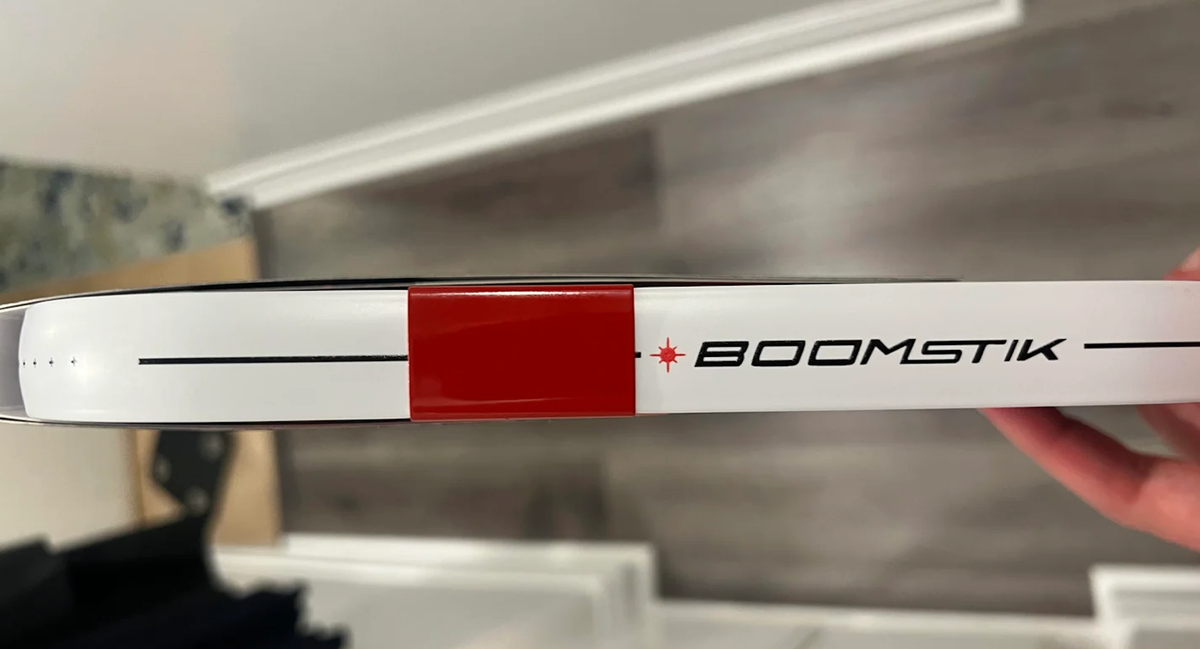
Beware of This Clever Fake Paddle Scam at Big Box Stores
Opportunistic scammers are returning fake pickleball paddles to retailers like Dick’s. You could be the one who buys it next.
 The Dink PickleballAlex E. Weaver
How Did Paddle Grit Change the Game?
Carbon paddles with raw grit surfaces changed pickleball permanently when they first appeared, and Ignatowich traces his own development directly to that moment.
He started on a Diadem with basically no surface texture. The game felt flat, hard to control, and not particularly fun.
Then he picked up a first-generation CRBN carbon paddle out of JW Johnson's bag and felt the difference immediately.Within a month of switching, he went from a 5.0 to competing in his first PPA pro tournament, reaching the quarters in singles.
That's not a coincidence. The ability to shape shots and generate spin changed everything about how he could play.If you've been struggling with spin consistency, understanding why your topspin fails might point back to your paddle surface as much as your technique.
The same goes for wrist lag and how it drives spin.
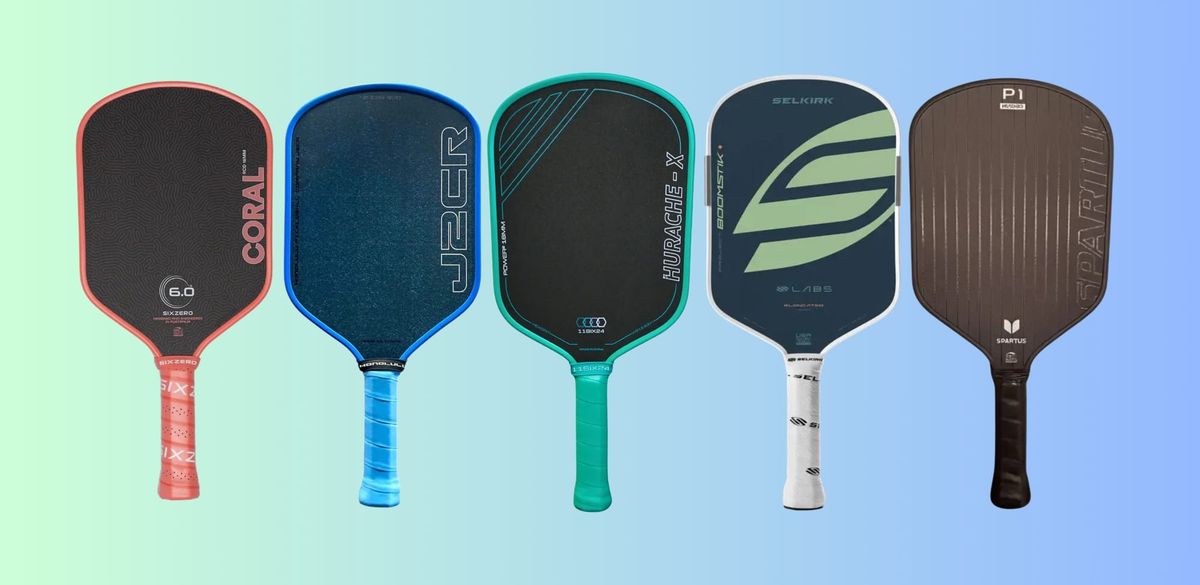
Pickleball Paddle Grit: 5 Durable Paddle Picks
Traditionally, a paddle’s surface grit is the first thing to wear out. Until now. A slew of top brands have entered the market with longer-lasting grit technology. Here are 5 of the best.
 The Dink PickleballAlex E. Weaver
Is There Such a Thing as Too Many Paddle Brands?
Ignatowich doesn't think so. He compares the paddle market to sneakers, not tennis rackets.
In tennis, Wilson and Babolat dominate because the sport is established.
In pickleball, the market is still wide open, and deals like Gabe Tardio's Facolos move show how fast a newcomer can reshape it.The concern isn't too many brands. The concern is too many brands sourcing from bad factories without knowing it.
If you're evaluating a newer paddle from a brand you don't recognize, checking out what's actually worth buying is a smart starting point, and so is seeing what top reviewers predict for 2026.
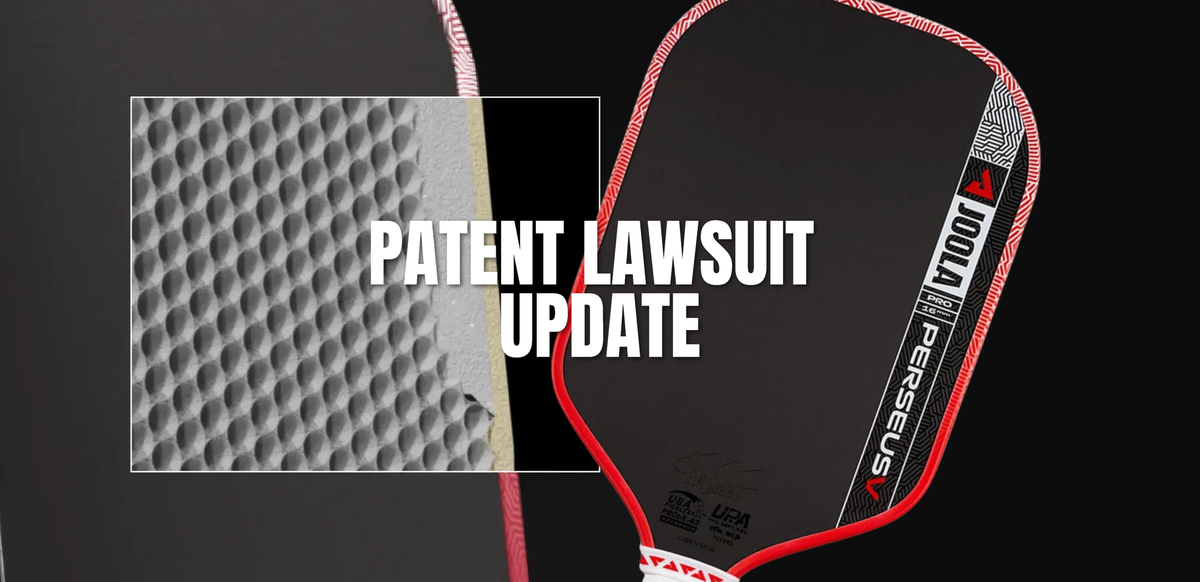
7 Paddle Brands Settle JOOLA Patent Case, Holdouts Remain
“Diadem has failed to respond to the litigation altogether. JOOLA is now asking the court to enter a default judgment against the company.”
 The Dink PickleballAlex E. Weaver
How to Protect Yourself from Buying a Fake
Here's a practical checklist before you hand over money for any paddle:
- Buy direct from the brand or an authorized retailer. Third-party marketplaces are where counterfeits thrive, and Amazon paddle sales climbing 55% in 2025 gave them a much bigger pond to swim in. If the deal looks too good, it probably is.
- Feel the surface before you play. A legitimate paddle from a reputable factory should have consistent grit across the entire face. Patches of smoothness or uneven texture are red flags.
- Check the edge guard immediately. Press along the edge guard perimeter. Any lifting or softness in the adhesion suggests a lower-tier manufacturing process.
- Verify the handle feel. Quality handles feel solid and uniform. Cheap ones feel hollow, slightly off-center, or have grip tape that slides under pressure.
- Watch for DM offers. If a brand you've never heard of slides into your messages promising "high quality" paddles at great prices, that's almost always a counterfeit factory hunting for distribution, which is the exact behavior the "Don't Trust a Fake" campaign was built to call out.
Ignatowich has received those DMs and knows what they mean.
If you want a cleaner starting point, the pickleball paddle buying guide walks through legitimate options by budget.
Testing Counterfeit Pickleball Paddles: Real vs Fake
Counterfeit pickleball paddles flood the market, but they’re not just illegal—they often perform terribly. We break down exactly how fake paddles differ from the real thing.
 The Dink PickleballThe Dink Media Team
Why the Paddle You Play Actually Matters
Some players shrug at this and say a paddle is a paddle. That's wrong, and Ignatowich's career illustrates exactly why.
He played his entire prime ranked in the top five while using a Power Air, a paddle he openly describes as one of the worst he ever held.
He lost ground at the kitchen line not because of technique but because his paddle couldn't deliver what he needed to get there consistently.
If you're serious about playing off the kitchen line and controlling soft exchanges, the surface and responsiveness of your paddle directly affects your ceiling.The good news is that the overall quality floor in pickleball paddles is dramatically higher than it was even two or three years ago.
Even a mid-tier paddle today is better than what was considered excellent in 2022.
That's a factory-level improvement, not brand-level. The factories got better, and they pulled the whole market up with them.But a rising floor also means a fake pickleball paddle can now look and feel close enough to fool most buyers.
USA Pickleball's onsite testing rollout and equipment certification standards exist for exactly that reason.
Understanding whether an elongated paddle shape fits your game is another part of choosing equipment that actually matches how you play, not just what a brand tells you to buy.For a deeper look at how paddle innovation is shaping the sport's future, the UPA's case for better paddles and clearer limits is worth reading.
And if you want to understand how the pro game itself shapes paddle development, tracking the JOOLA patent case and which brands settled tells you a lot about where manufacturing accountability is heading.
The paddle market is moving fast.
The players who understand it are the ones who end up with equipment that actually fits their game, instead of a convincing fake that costs them points they'll never get back.
💡
Heads up: hundreds of thousands of pickleballers read our free newsletter.
Subscribe herefor cutting edge strategy, insider news, pro analysis, the latest product innovations and more.
Frequently Asked Questions
How can I tell if my pickleball paddle is fake?
Check the surface grit for consistency, press along the edge guard for any lifting, and verify the handle feels solid and uniform. Fakes often have subtle inconsistencies in finish quality and logo placement that legitimate paddles from top factories don't have.
Are fake pickleball paddles actually worse to play with?
Yes, in most cases. Counterfeit paddles come from lower-tier factories with weaker quality control, which means inconsistent grit, poor edge guard adhesion, and handles that wear down faster. The performance gap is real, especially at the kitchen line where touch and spin control matter most.
What brands are most commonly counterfeited in pickleball?
According to pro founder James Ignatowich, Selkirk and Yola are among the most commonly faked brands he has personally seen in factories. Any high-profile brand with premium retail pricing is a target for counterfeiters.
Where do fake pickleball paddles get sold?
Most counterfeits move through third-party marketplace listings, discount sellers, and direct DM offers from unknown brands on social media. Buying directly from a brand's official website or an authorized retailer is the safest way to avoid fakes.
Do professional pickleball players get different paddles than what's sold in stores?
Yes. Ignatowich confirmed that pros often receive paddles with significantly more surface grit than the shelf version of the same model. This was a direct factor in him founding his own paddle company, RPM Pickleball, so he could control exactly what he played with.
Anuncie Aqui / Advertise Here
Sua marca para o mundo Pickleball! / Your brand for the Pickleball world!




 English (US) ·
  Portuguese (BR) ·