
 English
  Spanish
  Portuguese
  German
  Italian
  Japanese
  French
  Polish
  Russian
  Netherlands
  Hungarian
  Turkish
  Videos
  Thedink Pickleball

Winning mixed doubles is not about hitting harder. A smart mixed doubles strategy means targeting smart, protecting your partner's backhand, and serving with the depth that sets up easy attacks.
A winning mixed doubles strategy starts with one uncomfortable truth: if you are the woman on the team, good opponents are going to hit at you on purpose.
That is not an insult. It is the game.
Strong teams attack the target they think is weaker, force the error, and try to keep the ball away from the stronger partner for as long as possible.
Top 15 PPA Tour pro Mari Humberg and top 30 pro Ryan Fu broke down how to flip that pressure into points.
Here are seven things they do that you can take straight to your next match.
Love pickleball? Then you'll love our free newsletter. We send the latest news, tips, and highlights for free each week.
1. Treat Mixed Doubles Strategy Like It Is Its Own Game
The first rule of mixed doubles strategy is simple: expect to be targeted, and refuse to panic when it happens.
"Mixed doubles needs to be treated as mixed doubles," Humberg says.When she plays with a male partner, she knows she will be the one getting peppered, so she stops being surprised by it. The ball is coming. Be ready for it.
Her job in that moment is not just to survive the rally.
It is to set up her partner with heavy, intentional dinks that move her opponents around and pull them out of position.
The mistake most players make is going passive under fire.
Humberg does the opposite. "Notice how I was not passive at all with my footwork, with my intention behind my dinks," she explains after a point.She works her feet, she pressures the dink, and eventually the opponent has to send one back to her partner.
That is when the team takes over.
Understanding modern pickleball's four key strategies to winning in 2026 helps you see exactly where this pressure-based approach fits into the bigger picture.
If you want the bigger picture on why this pressure exists, read up on targeting the weaker player and how women's doubles strategy shifts the same ideas in a different format.
2. Who Should Take the Ball Down the Middle?
In mixed doubles, the player whose forehand sits in the middle takes the ball so their partner never has to hit a defensive backhand.
This is where most teams fall apart. A dink floats up the middle, both players hesitate, and the ball drops between them for a giveaway point.
Fu solves it with a rule. "Since my forehand is in the middle, I'm going to be looking to take that ball so Mari doesn't have to hit a backhand," he says.The backhand is most players' least favorite shot, so he protects it. He moves with his partner, covers the middle, and resets the ball safely.
Then comes the handoff. When the ball drifts back to her forehand side, it is hers to take. Decide this before the point, not during it.
Sorting out who takes the middle ball and tightening your kitchen positioning removes the hesitation that costs you free points.
The 6 essential pickleball shots to master for 2026 covers the exact reset mechanics that make this handoff work cleanly.
💡
Need some new pickleball gear? Get 20% off select paddles, shoes, and more with code THEDINK at
Midwest Racquet Sports3. Serve Deep, Then Watch the Court Open Up
Humberg says depth on the serve matters more in mixed than anywhere else, because a deep serve forces a short return that your partner can attack.
Everyone knows step one is making the serve. Step two is the one players treat as an afterthought: depth.
In a sharp mixed doubles strategy, depth is not a nice extra. It is the lever that opens the whole point.
Here is the chain reaction a deep serve creates:
- The returner has a longer distance to travel to reach the kitchen line.
- A deeper serve usually produces a shorter return.
- A short return lets your partner step in and attack the third shot.
That single adjustment turns a neutral start into an offensive one.
Pairing serve depth with the insights in a simple 4-step system to win more pickleball games in 2026 gives you a reliable game plan from the very first ball.
If your serve is more of a liability than a weapon right now, our guide on how to win points off your serve is the place to start.
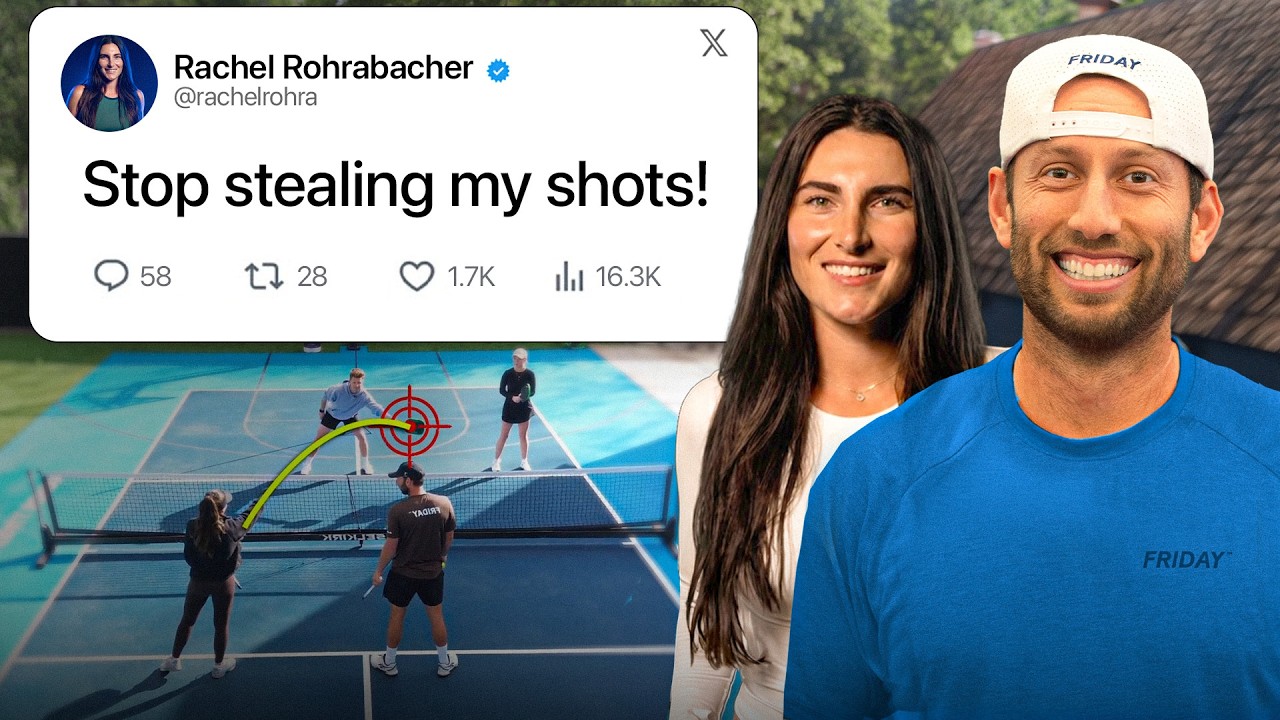
Mixed Doubles Strategy: Rachel Rohrabacher’s Guide
Rachel Rohrabacher breaks down the fundamentals of mixed doubles strategy in a masterclass with Kyle Koszuta. From understanding each player’s role to reading your opponent’s movement, this guide covers everything you need to elevate your mixed game.
 The Dink PickleballThe Dink Media Team
4. The Return That Quietly Wins Points
The best returners in mixed doubles do not bomb every ball. They control pace to drag opponents into trouble.
When an opponent is still running in toward the kitchen, Fu drops the pace to roughly 50 to 60 percent and tries to make the ball dip at their feet, so the next ball pops up for an easy put-away.
He also shapes his drops with spin. A dead drop lets a fast opponent get there in time, but spin carries the ball away from them.
"If you're going towards the middle, I want to hit spin away from you," he says.It is the same control that makes pro pickleball's most dominant player so hard to attack: pace and spin chosen on purpose, not by accident.
Understanding why professional pickleball players abandoned the slice shot in 2025 shows you exactly which spin patterns the pros are leaning on instead.
Layer this on top of a reliable third shot drop and you stop handing opponents free speedups.
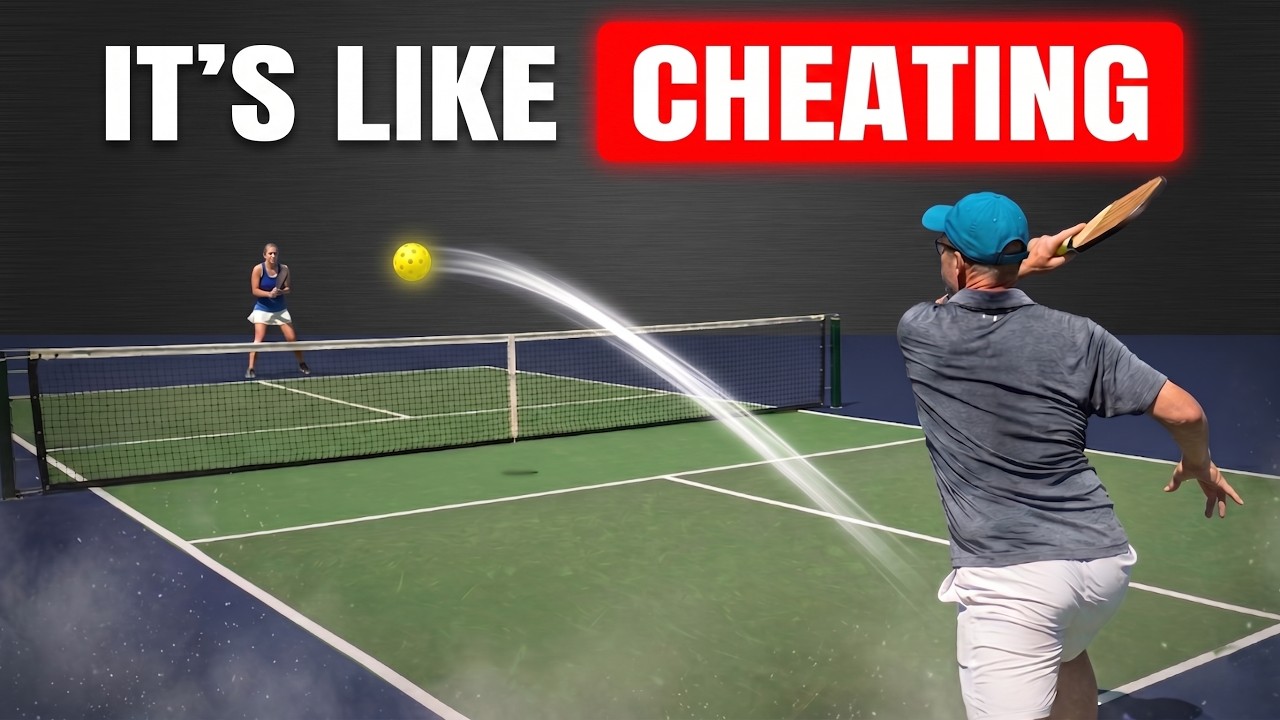
Pickleball Return Strategy: How Pros Control Every Rally
Professional pickleball players treat the return of serve as a strategic weapon, not just a way to get the ball back in play. Understanding the pickleball return strategy that separates elite players from the rest can transform your game.
 The Dink PickleballThe Dink Media Team
5. How Do You Handle Getting Picked On at the Kitchen?
You handle constant pressure with footwork and an early, set base, not with bigger swings.
When a ball comes hard and you are late, the instinct is to lunge and pop it up. Humberg flips it.
She gets her feet there early, sets her base, and handles the ball with no extra movement.
"I'm up, but I was still here and I'm ready to handle it. No movement," she says of the correct rep.That stillness is what separates calm hands from frantic ones.
Watch how Anna Leigh Waters resets under fire and you will see the same thing: feet first, body quiet, ball back down.
Get your base right and the speedups stop being scary.
Running the 12 drills you need to play your best pickleball in 2026 will hard-wire that footwork pattern faster than match play alone.
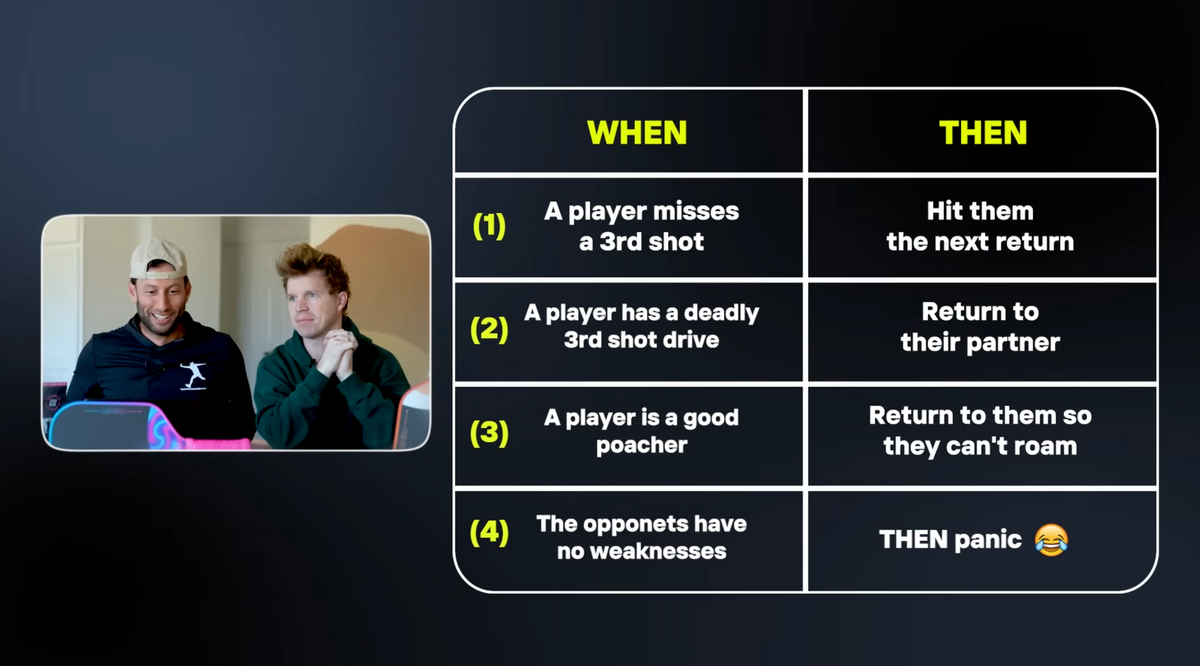
The 4 Essential Pickleball Return Targets to Play Like a Pro
By mastering these targets, you’ll improve your return consistency, put pressure on your opponents, and ultimately win more points.
 The Dink PickleballThe Dink Media Team
6. Warm Up the Mixed Doubles Shots You Actually Plan to Hit
If your game plan includes speedups, you have to warm them up before the match, not discover them in the middle of game one.
Fu sees the same mistake at every level. Players spend their entire warmup dinking a million balls, then start firing speedups cold once the match tightens.
The hands are not ready, and the errors pile up.
Fix it by rehearsing the real thing. Hit the different speedups you intend to use, feel the timing, and adjust based on what is landing.
A few minutes on our speedups and the rest of your mixed doubles strategy holds up when the pressure arrives.Checking the 5 pickleball shots you must master before 2026 gives you a clear warmup checklist so nothing gets skipped on match day.
Roll, Lunge, Jump: The Anna Bright Method for Warming Up Right
Take a page out of the pro book. Move your spine, lunge deep, and jump a little. Your knees and your win-loss record will thank you.
 The Dink PickleballThe Dink Media Team
7. Be the Mixed Doubles Partner People Actually Want to Play With
The smartest mixed doubles strategy in the world falls apart if you tilt on your partner.
Fu is blunt about the math. "My female partner is going to be hitting 90 percent of the shots, so of course they're going to miss more," he says.Getting angry about it makes no sense, and it makes your partner play smaller.
His answer: be relentlessly supportive. Confidence travels. A partner who feels backed plays freer, swings looser, and wins more.
That is true whether you are grinding rec play or learning to defend against stacking in a tournament.
Knowing the new USAP pickleball rules for 2026 also keeps you and your partner from giving up avoidable penalties when the stakes are high.
If you only fix one thing this week, become a better doubles partner.
Mixed Doubles Pickleball: The Pro Pattern That Works
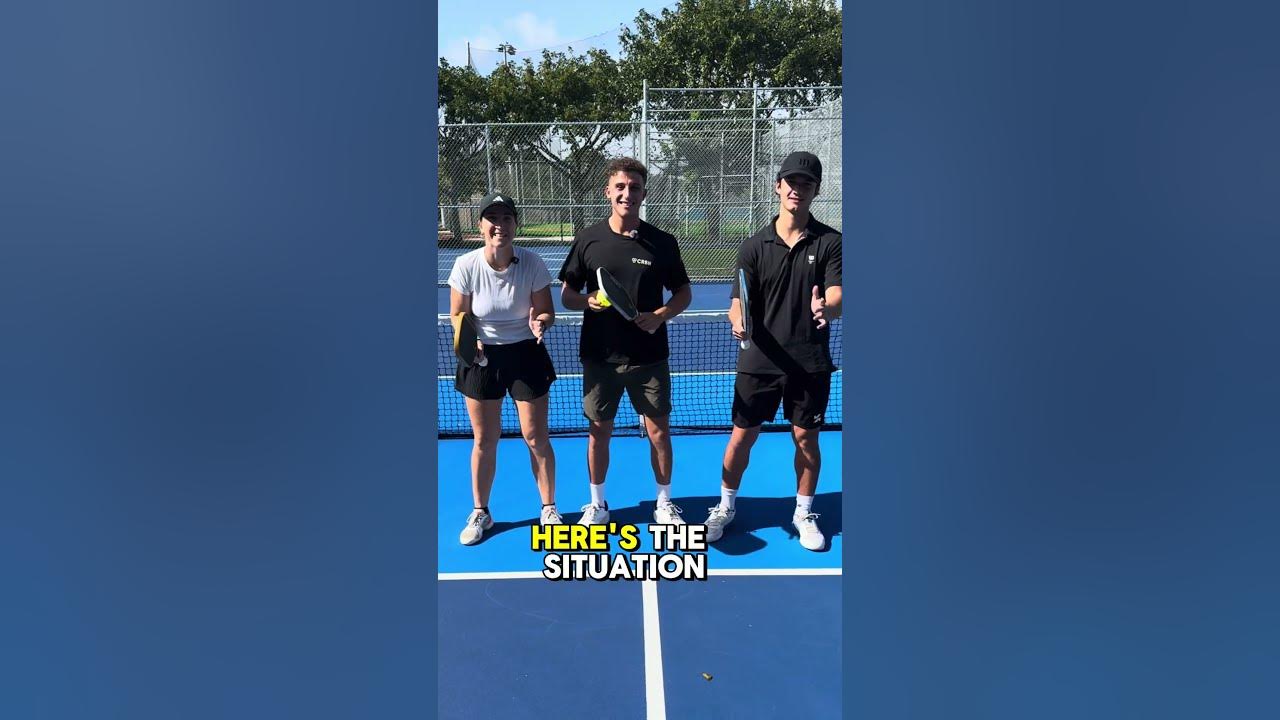
A mixed doubles strategy doesn’t have to be complicated. Top PPA Tour pros Mari Humberg and Ryan Fu break down a simple three-shot pattern that immediately improves your ability to involve your partner and escape targeting.
 The Dink PickleballThe Dink Media Team
Your Quick Mixed Doubles Checklist
Before your next match, run through these five reminders:
- Expect the targeting and stay aggressive with your dinks.
- Decide who takes the middle ball before the point starts.
- Serve deep every time to force a short return.
- Control your return pace and shape drops with spin.
- Set your feet early at the kitchen and support your partner loudly.
💡
Heads up: hundreds of thousands of pickleballers read our free newsletter.
Subscribe herefor cutting edge strategy, insider news, pro analysis, the latest product innovations and more.
Frequently Asked Questions
Why Does the Woman Get Targeted in Mixed Doubles Strategy?
Opponents target the player they believe is more likely to miss, which in many mixed teams is the female player. It is a percentage play, not a personal one. The counter is to stay aggressive, set up your partner with heavy dinks, and make the targeting cost them points.
Who Should Take the Middle Ball in a Mixed Doubles Pickleball Game?
Usually the player whose forehand is in the middle, so the team avoids a tougher backhand reset. Agree on it before the point. When the ball drifts back to the other player's forehand, the responsibility shifts to them.
Why Is Serve Depth So Important in Mixed Doubles?
A deep serve forces the returner to travel farther and usually produces a shorter return. That short return lets your partner step in and attack the third shot, turning your serve into an offensive weapon instead of a neutral start.
How Do I Stop Popping the Ball Up When I Get Attacked at the Kitchen?
Get your feet to the ball early and set a stable base before you contact it. Most pop-ups come from lunging late with the arm. Quiet feet and an early base let you absorb pace and reset the ball low.
How Can I Be a Better Mixed Doubles Partner?
Accept that your partner will touch more balls and miss a few more, and stay supportive instead of frustrated. Confidence makes your partner play better, which makes the team win more. Encouragement is part of the strategy, not separate from it.
Anuncie Aqui / Advertise Here
Sua marca para o mundo Pickleball! / Your brand for the Pickleball world!





 English (US) ·
  Portuguese (BR) ·