
 English
  Spanish
  Portuguese
  German
  Italian
  Japanese
  French
  Polish
  Russian
  Netherlands
  Hungarian
  Turkish
  Videos
  Thedink Pickleball

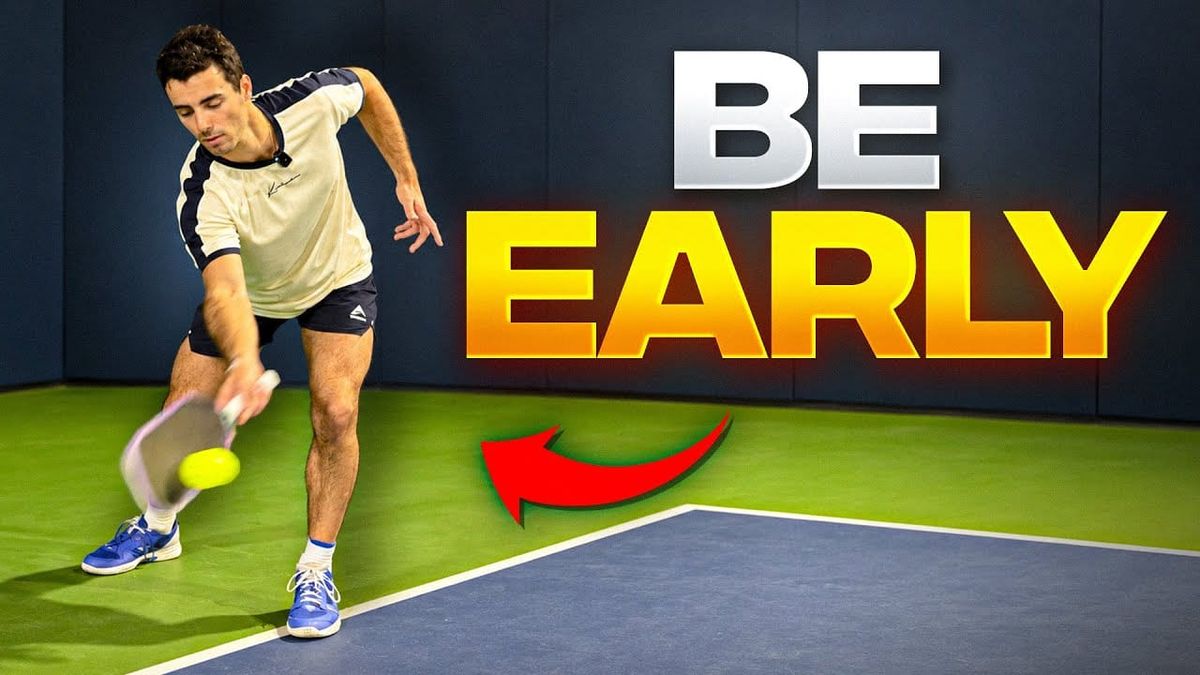
Most players think a weak pickleball drive needs more power. A Canadian national champion says the real problem is stance, timing, and knowing exactly how hard to swing.
If your pickleball drive keeps coming back harder than you sent it, the problem almost certainly is not your swing speed.
The problem is what happens before you ever make contact. Most recreational players chase more power by swinging harder.
That is the wrong direction. The real fixes are in your stance, your core rotation, and understanding exactly how hard you actually need to hit it.The breakdowns below come from Aylex Pickleball Academy on YouTube, featuring Canadian pickleball singles national champion, Mackonner Dy, who walks through each of these mistakes and corrections in detail.
Love pickleball? Then you'll love our free newsletter. We send the latest news, tips, and highlights for free each week.
The Real Reason Your Drive Has No Pop
Before you fix your swing, you have to fix your position.
Mackonner Dy is clear on this: the biggest factor across all shots is making sure you are in the right position before anything else happens.Most players set up too far from the ball, which forces them to reach.
When you are reaching, your arm carries the entire swing with nothing behind it. That is where power goes to die.
Two things cause the reaching problem.
You are either standing too far from the ball, or you are not bending your knees enough to load your body.
Usually it is both, and clean footwork solves both at once.
Fix 1: Get Your Stance Right Before You Swing
There are two stances that work for a forehand drive, and knowing when to use each one matters.
- Closed stance: Your back foot is behind you and you push off it to generate power. This is the stronger option and the one Dy uses when he wants a harder drive. Your torso faces the ball, and the back leg gives you something to load and push from. The deeper forehand drive mechanics all start from that loaded back foot.
- Open stance: Your hips and torso face the net more directly. This is what you reach for when you are rushed, and it generates less power because you are relying on body rotation instead of a leg drive.
The takeaway is simple. When you have time, use a closed stance and drive off that back leg.
When you are scrambling, an open stance keeps the ball in play, but do not expect the same result.
And regardless of which stance you choose, bend your knees. This is not optional.
Dy is explicit: if you are not bent, you cannot use your legs, and if you cannot use your legs, you are leaving the majority of your available power on the table.For more on how footwork affects your shot quality, the fixes transfer directly to your drive setup.
💡
Need some new pickleball gear? Get 20% off select paddles, shoes, and more with code THEDINK at
Midwest Racquet SportsFix 2: Stop Swinging in Two Pieces
This is the mistake most players never notice in themselves. Your body turns, and then your arm swings.
Those two things happen separately, and the result looks uncoordinated even if both pieces feel intentional.
Mackonner Dy flagged this immediately when watching an amateur drive.
The player was rotating before making contact, which meant the arm was trailing behind a body that had already moved on.
The fix is not to stop rotating. The fix is to let your core follow the ball instead of leading it.Here is how Dy explains it: as the ball comes toward you and passes beside you, your belly button and torso follow it naturally.
You do not think about turning your hips or firing your legs. You just track the ball with your core, and the rest of your body responds automatically.This produces a fluid, connected swing where your arm and body arrive at contact together. It sounds simple, and that is the point. Overcomplicating the rotation thought process is exactly what breaks the timing.
The down to up swing path matters here too.
If your swing is going up to down, you are hitting a slice. A slice is not a drive, and it will not generate the same pace or trajectory.Drive swings move from low to high through the contact zone.
Understanding forehand drive mechanics in more depth can help you lock in that swing path before it becomes a habit you have to undo later.
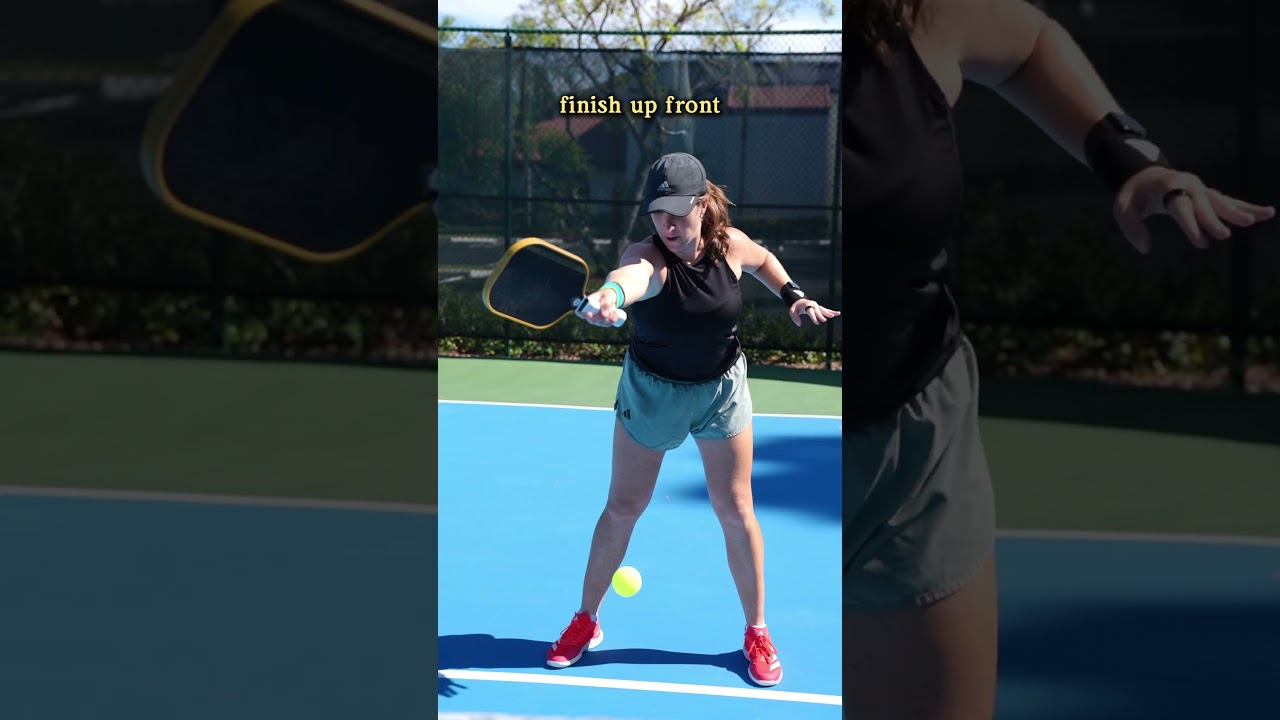
Fix Your Pickleball Overswing With One Simple Drill
A pickleball overswing is one of the most common mistakes players make at the kitchen line. This one drill will train compact contact and clean volleys fast.
 The Dink PickleballThe Dink Media Team
What About the Wrist?
Players from tennis backgrounds often think about lagging the whole body to generate power. Dy pushes back on this.
In pickleball, the lag is in the wrist, not the full kinetic chain.
You swing through the ball, and at the last moment you snap the wrist slightly, which is where wrist lag earns its reputation.Lagging your entire torso creates the two-part problem above. Keep the body movement connected and let the wrist do the final work at contact.
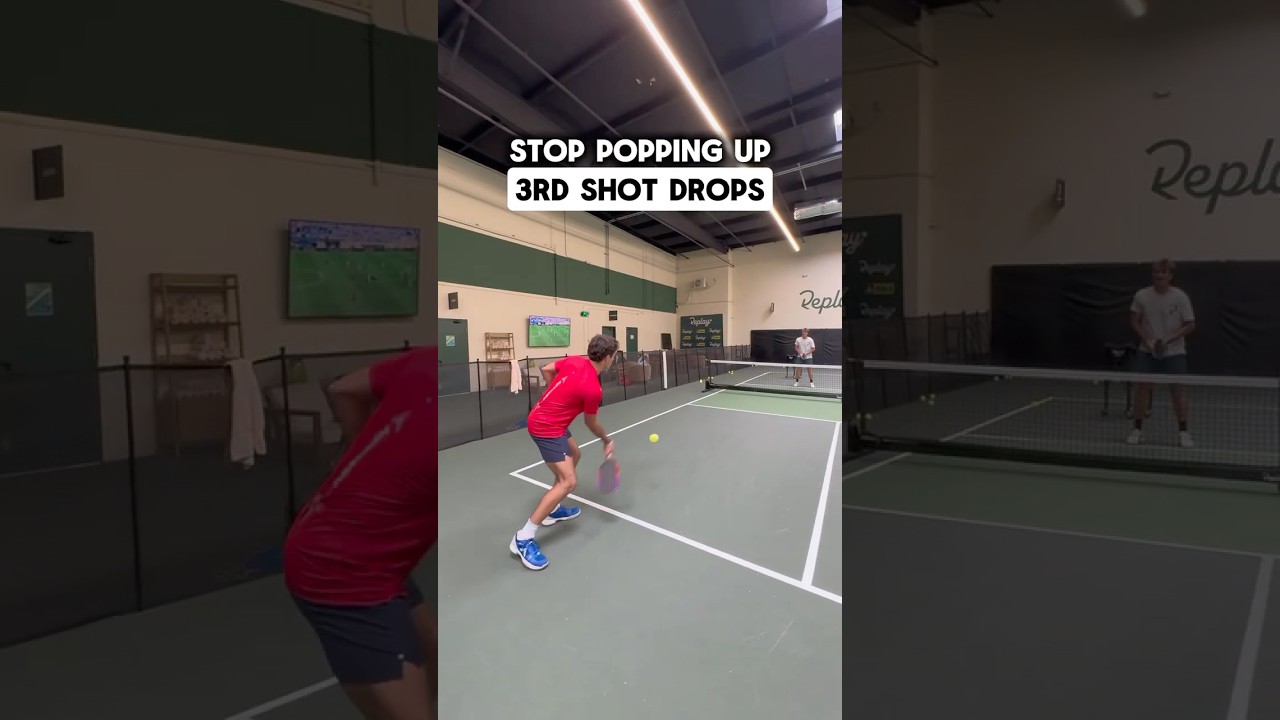
The Wrist Fix That Makes Your Pickleball Drop Better
Most players miss their pickleball drop because of one wrist mistake they don’t even notice. Fix this one thing and your drops become dramatically more consistent.
 The Dink PickleballThe Dink Media Team
Fix 3: Use Your Legs or You Are Leaving Power Behind
Most recreational players get into a decent position and then stop using their body from the waist down.
They turn the torso and swing the arm, and that is the entire shot. It works, but it is nowhere near as powerful as it could be.The power started in the ground, traveled through your knee and hip, and carried through to the paddle.
Building that out off court with lower body exercises makes the sequence repeatable instead of occasional.
Here is the sequence to feel for:
- Bend your knees and load your weight into your back leg as you set up.
- Push off the back leg as you begin your swing, not after it.
- Let that push carry your weight forward and through the contact point.
- Follow the ball with your core as described above, and your hips will rotate naturally as a result of the leg drive rather than as a separate conscious movement.
The power initiates from the back leg. That is the exact phrase Dy uses, and it is the most useful way to think about it. You are not rotating your hips on purpose.
You are pushing off your back leg and rotation is the result.
If you are a senior player or have limited knee mobility, Dy acknowledges the adjustment honestly. The leg drive becomes harder to access.Arm swing can compensate partially, but the effectiveness drops. The soft game and placement become more valuable tools in that situation.
There are specific pickleball tips for seniors around court positioning that can help offset the power gap.
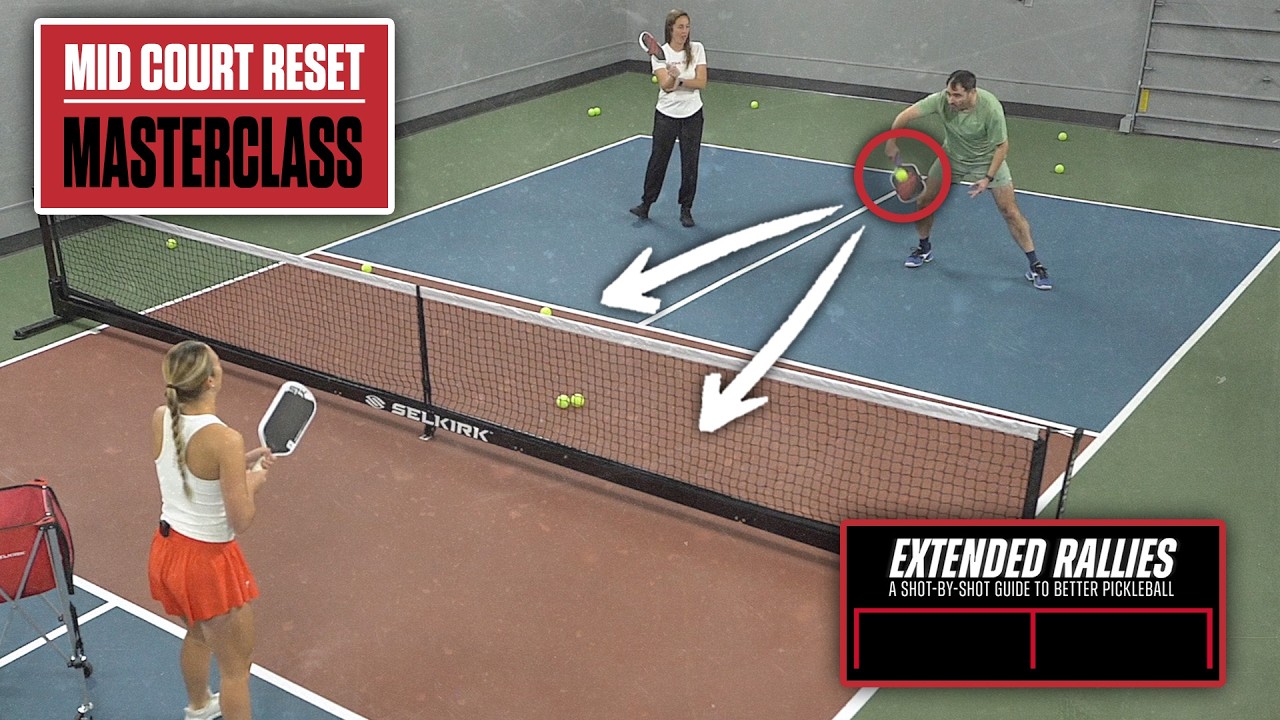
Why Your Pickleball Reset Fails and How to Fix It
Most players blow the fifth shot reset by fighting the ball instead of absorbing it. Fix your pickleball reset with these leg-driven techniques that actually work.
 The Dink PickleballThe Dink Media Team
How Hard Should You Actually Be Hitting It?
Here is where most players have the wrong mental model. They think the goal of a drive is to win the point outright.
Mackonner Dy says that at his level, 90% of his drives get blocked back. He is not trying to hit winners with them.The goal of a drive is to get a weak response. Specifically, you want the return to be a block, not a full swing attack coming back at you.
If someone can take a complete swing and crush your drive back, your drive is not doing its job.
The target power level Dy recommends is 80%. That is the threshold where a well-executed drive forces a block rather than inviting a counter attack.Going above that quickly raises your error rate while the reward barely changes.
Understanding the relationship between drive speed and winning points makes this concept much clearer with real examples.
Dy also showed what 100% looks like on camera. The ball went out.
Even keeping it down, the sheer pace made it nearly impossible to keep in the court without perfect topspin.
He pointed out that only a player like Chris Haworth, ranked number one in the world, can reliably execute a 100% drive and keep it in play.
You are not Chris Haworth. Neither is almost anyone reading this. Eighty percent is your ceiling for consistent results.
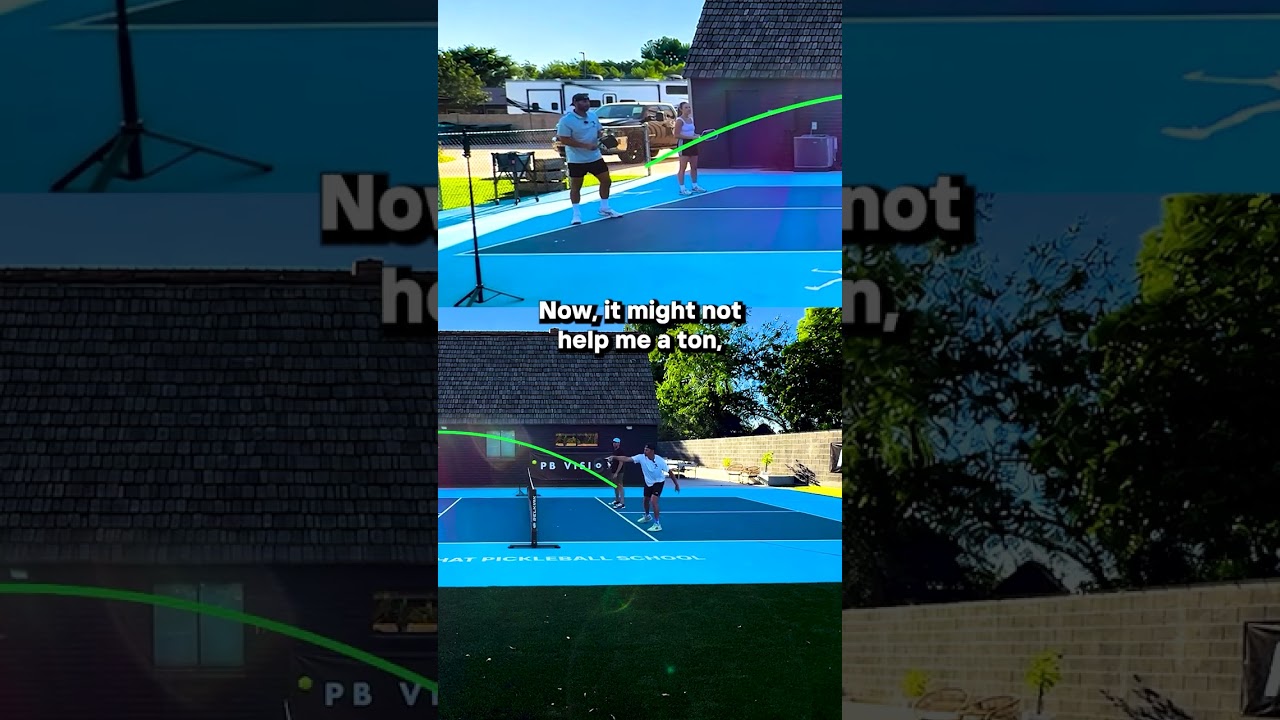
Pickleball Power Threshold: Why Hitting Hard Costs Points
Every player has a pickleball power threshold, a point where more swing speed means less control. Cross it too often and you start losing points you should win.
 The Dink PickleballThe Dink Media Team
Does Your Position on the Court Change How Hard You Hit?
Yes, and this part is often ignored entirely. Contact height matters more than where you are standing on the court.
If the ball is below your waist, do not hit it at 100%. The angle over the net makes it nearly impossible to keep in play at full power.Dy says he reserves near-maximum effort for balls that come up around shoulder height or higher, which usually means a poor return from the opponent.
As you move closer to the net, the angle you have to hit over it increases. The closer you get, the higher the ball needs to be before a hard drive makes sense.
A ball at your feet near the kitchen is not a pickleball drive opportunity. It is a reset opportunity.Recognizing the right ball to drive is just as important as knowing how to drive it, and that is the whole idea behind controlled aggression.
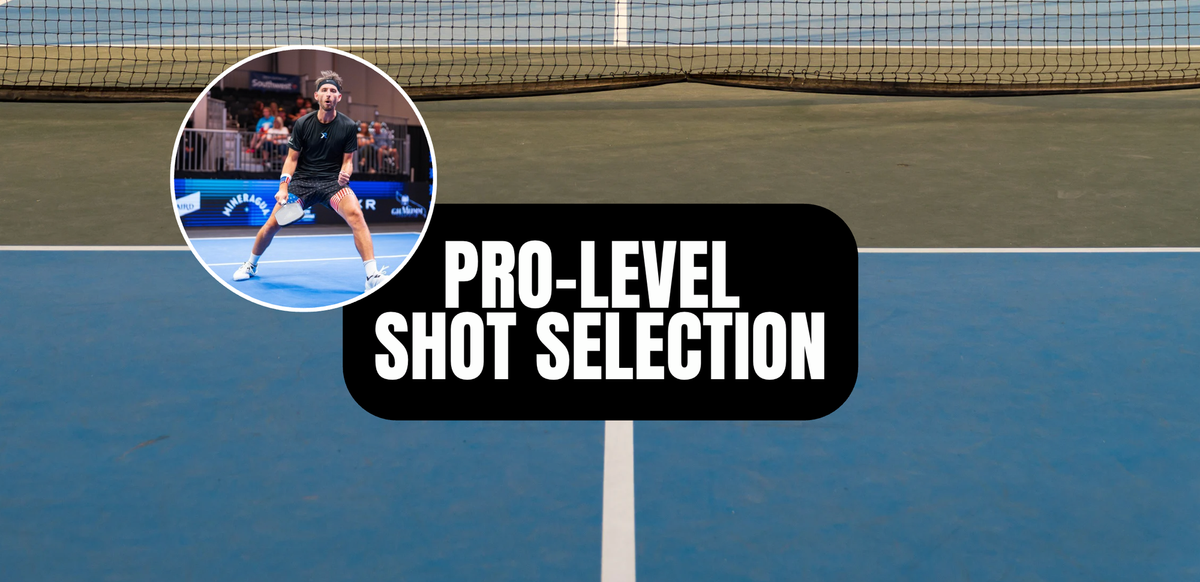
Pickleball Shot Selection: Ball Height & Court Positioning
Advanced pickleball means constantly analyzing the height of the ball and the court positioning off all four players in real time – and keeping this one rule sacred: just because you can hit a more aggressive shot doesn’t mean you should
 The Dink PickleballEric Roddy
The Thing Players Get Wrong About Drive Power
More power does not make a pickleball drive better. A drive that forces a block is a successful drive.
A drive that invites a full counter attack wasted your energy and handed the opponent a free shot. Smart shot decisions beat power at every level above 3.5.Your pickleball drive has one job: create a weak return you can attack on the next ball.
Eighty percent power, correct stance, fluid core rotation, and real leg drive will do that far more reliably than swinging as hard as you possibly can.
Once your mechanics hold up, the third shot drive and drop combo is the natural next step, and knowing when to use each third shot gives you targets that are hard to handle regardless of speed.If overall consistency is the real issue, cutting unforced errors is where most recreational players find the fastest improvement.
Pair that with the essential shots to master for 2026 and the drive stops being the shot that beats you.
💡
Heads up: hundreds of thousands of pickleballers read our free newsletter.
Subscribe herefor cutting edge strategy, insider news, pro analysis, the latest product innovations and more.
Frequently Asked Questions
Why does my pickleball drive keep going out even when I swing smoothly?
The most common cause is contact point. If you are making contact when the ball is too far out in front or too far to the side, the paddle face angle sends it wide or long. Focus on contacting the ball beside your body at a comfortable distance, not in front of it.
Should I use an open or closed stance for a pickleball drive?
Use a closed stance when you have time to set up. It generates more power because you can push off the back leg. Use an open stance when you are rushed and need to get a paddle on the ball quickly, even though the power output is lower.
What does "follow the ball with your core" actually mean?
It means your belly button and torso track the ball as it passes beside you, rather than rotating ahead of it. When your core follows the ball instead of leading it, your arm and body arrive at contact together, which produces a fluid and connected swing.
How do I know if I am hitting my drives too hard?
The clearest signal is that opponents are taking full swings and attacking your drives back at you. If your drive can be attacked rather than just blocked, you are either hitting into a bad contact zone or overswinging. Pull back to 80% and prioritize keeping the ball low.
What power level should recreational players target on a pickleball drive?
Mackonner Dy recommends 80% as the target for most players. At that level, a well-placed drive should force a block rather than invite a counter attack. Going above 80% raises your error rate significantly without adding meaningful benefit for most recreational players.
Anuncie Aqui / Advertise Here
Sua marca para o mundo Pickleball! / Your brand for the Pickleball world!




 English (US) ·
  Portuguese (BR) ·